

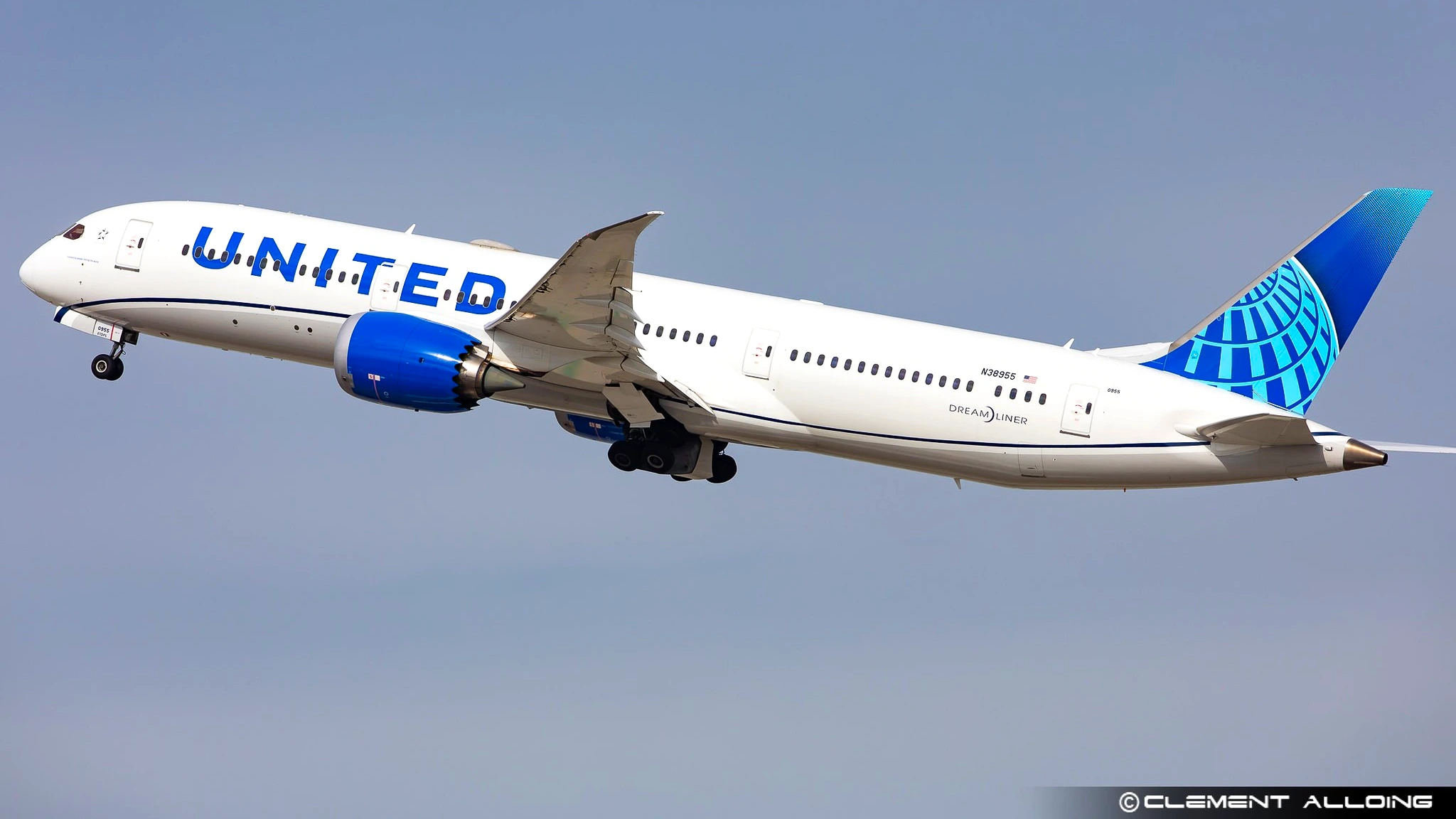
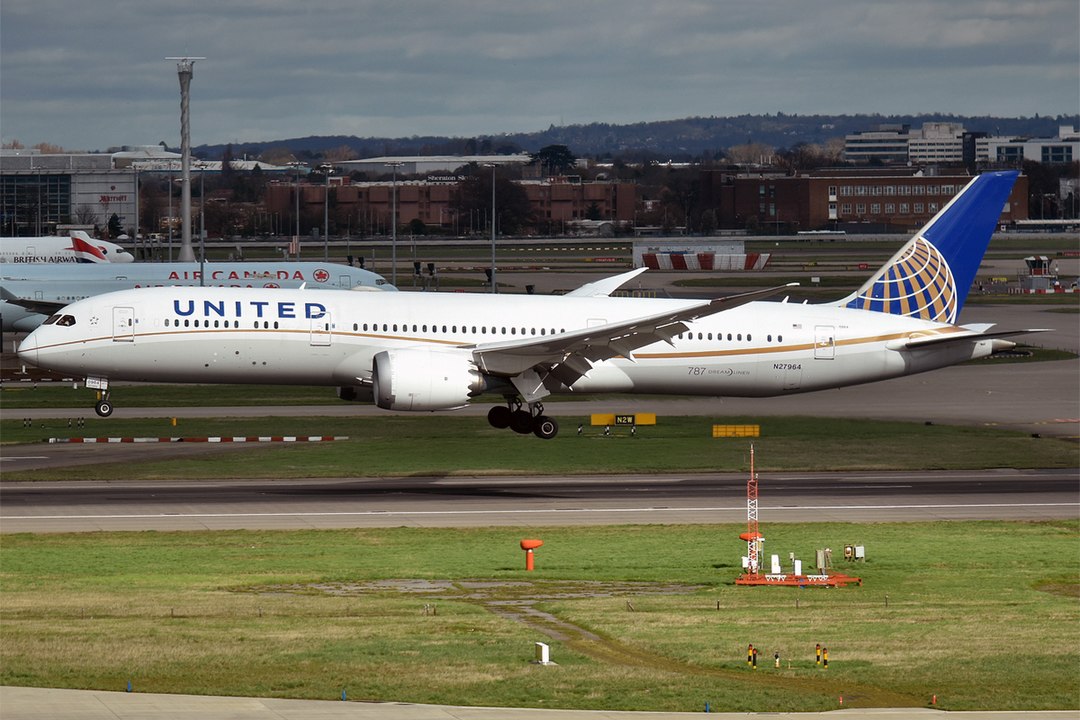
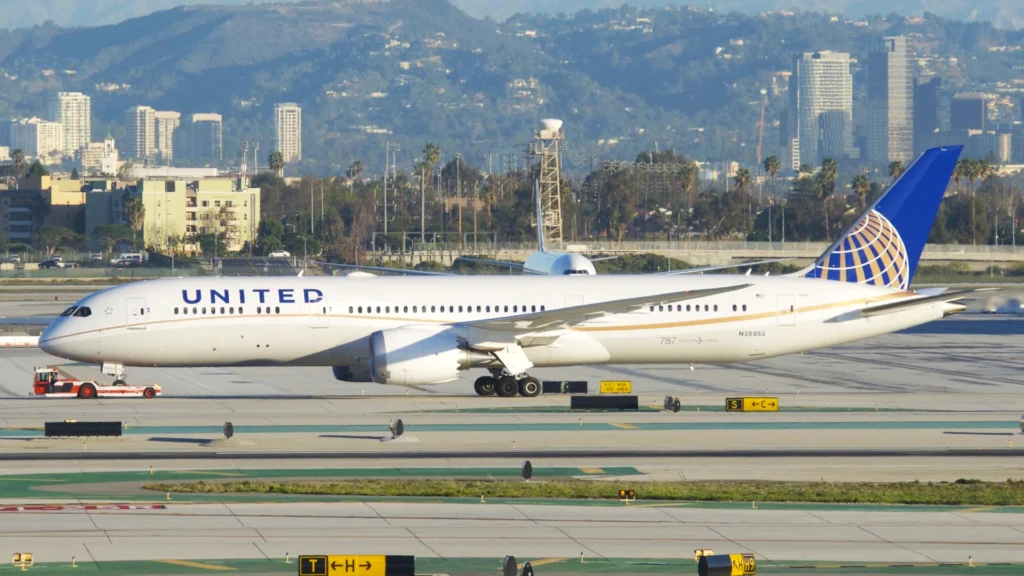
CHICAGO- United Airlines (UA) operated flight UA 2023 from Cape Town International Airport (CPT) to Washington Dulles International Airport (IAD). During the descent into Dulles after the 15 hour flight, a pilot was reportedly heard over the passenger address system criticizing flight attendants with repeated profanity.
The incident reportedly began shortly after the routine pre-arrival announcement, when the pilot appeared to believe the PA system was being used to contact the cabin crew privately. Passengers then heard several minutes of cockpit communication before the transmission stopped.

Open PA Mic Exposes Cockpit Conversation to Passengers
The incident was described by a passenger on Reddit who said that, after more than 1.5 million miles of flying, the experience was a first for the passenger and family while traveling from Cape Town to Washington Dulles.
According to the passenger, one of the pilots first made the standard arrival announcement. The message included the usual information about the aircraft’s upcoming landing, along with the temperature and conditions at the destination.
About 30 seconds after the announcement ended, the pilot’s voice returned over the PA system. It soon became clear that the pilot did not appear to realize that the entire cabin could hear the conversation.
The pilot reportedly began by trying to reach the purser or another flight attendant, saying, “Hello?…Hello?” When nobody answered, the pilot continued trying to establish contact.
The passenger said air traffic control communications could also be heard in the background, reinforcing the impression that the pilot believed the conversation was taking place through a cockpit communication channel rather than over the passenger PA.
The pilot then became increasingly frustrated while trying to reach the cabin crew.
According to the passenger account, the pilot said, “What a bunch of f**king m*rons! They won’t pick up the phone.”**
The transmission reportedly continued with another two or three F-b*mbs as the pilot tried to contact the flight attendants. Passengers began exchanging looks because it became obvious that the cockpit conversation was being broadcast throughout the cabin.
The passenger described the situation as especially awkward because the pilot did not appear to realize that more than 250 customers were listening.
The cabin crew reportedly continued carrying out their final safety checks while dealing with the communication problem. The purser also appeared to try to contact the cockpit to warn the flight crew that the microphone was still open.
Purser Could Not Appear to Break the Open Mic
The passenger said the purser’s attempts to contact the cockpit seemed unsuccessful while the PA connection remained active.
It was unclear whether the cabin crew eventually managed to reach the cockpit directly through the flight deck door. The passenger was seated too far back to determine exactly how the crew resolved the problem.
The unintended transmission reportedly continued for at least 7 minutes, and possibly longer, before the cockpit became silent.
The passenger described the moment as “very awkward,” with the cabin left to process what had just been heard.
PA System Message Remained Active
The communication problem appeared not to have been completely resolved immediately.
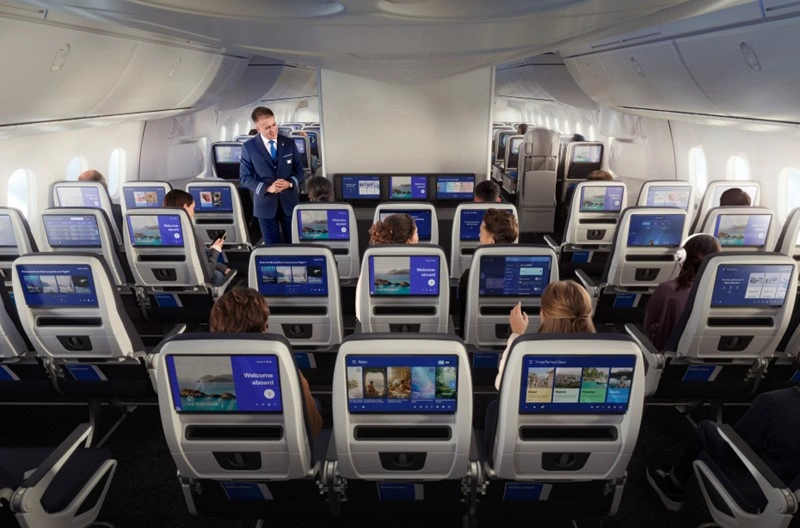
According to the passenger, the aircraft’s entertainment screens continued displaying the message “PA announcement in progress” for the rest of the flight.
The passenger also said the cockpit crew did not make another announcement after the incident. A purser or gate agent later addressed the issue and apologized for the problem with the PA system.
The account does not establish exactly why the system remained active or how the cockpit ultimately disconnected the open channel.
Open PA Connection May Have Caused Incident
The source material suggests a possible sequence involving the aircraft’s cockpit interphone and public address system.
One possibility is that the pilot used the cockpit interphone to make the arrival announcement but did not properly terminate the PA connection afterward. The pilot may then have attempted to contact the purser using the same communication equipment, without realizing that the PA channel was still open to the passenger cabin.
That could explain why the pilot believed the conversation was private while passengers continued hearing it.
Another possibility is that the communication system itself failed to release the PA connection normally. The available passenger account does not identify a confirmed technical cause, so the explanation remains an inference rather than an established finding.
Accidental Cockpit Transmissions Are Not New
The passenger noted that accidental cockpit communications had been heard on other flights in the past. In those cases, the crew accidentally transmitted messages intended for air traffic control, but quickly recognized the mistake and corrected it.
The unusual feature of this incident was therefore not simply an unintended cockpit transmission. The more significant problem was the apparent length of the open microphone episode and the profanity directed at cabin crew while hundreds of passengers were listening.
Crew Resource Management Comes Into Focus
The incident also raises questions about Crew Resource Management (CRM), which governs communication, coordination and teamwork between pilots and cabin crew.
A strong CRM process should help flight crew members recognize when a communication channel is open, confirm that the intended recipient has been reached and quickly correct an unintended cabin transmission.
The reported delay in identifying the open PA microphone therefore creates a clear communication concern. It is not possible to determine from the passenger account whether the delay resulted from a technical fault, an operational mistake, or a combination of both.
The profanity adds a separate professionalism issue. Frustration between crew members can occur during complex or tiring operations, but such comments becoming audible to passengers can undermine confidence in the crew and create an uncomfortable cabin environment.
The passenger’s account was later reported by PYOK, which brought wider attention to the incident.
The original account remains the primary source for the reported sequence, including the 7 minute plus open microphone, the profanity, the purser’s attempts to contact the cockpit and the continued “PA announcement in progress” message.
Those details should therefore be understood as a passenger-reported account unless independently confirmed by the airline or another authoritative source.
What Happened During Final Descent
The reported sequence can be summarized in order:
The pilot made the normal pre-arrival announcement during descent.
Approximately 30 seconds later, the pilot returned to the PA system and attempted to contact the cabin crew.
The pilot initially appeared unaware that the communication was reaching passengers.
After failing to reach the crew, the pilot reportedly used profanity and accused the flight attendants of not answering the phone.
Passengers realized the communication was unintended and watched as the cabin crew tried to manage the situation.
The purser reportedly attempted to contact the cockpit while the open PA connection remained active.
The transmission continued for at least seven minutes before going silent.
The PA system message reportedly remained visible on the passenger screens for the rest of the flight.
After landing, a purser or gate agent apologized for the PA problem, while the cockpit crew did not make another announcement about the incident.
Why Incident Drew Attention
The episode combined three unusual elements: a long-haul flight nearing its destination, a cockpit-to-cabin communication error that reportedly lasted several minutes, and profanity directed at cabin crew while passengers were listening.
The available account does not establish the precise technical cause or confirm what happened inside the cockpit.
It does, however, describe a significant communication breakdown during the final phase of a flight and an unusually public exchange between cockpit and cabin crew.
Stay tuned with us. Further, follow us on social media for the latest updates.
Join us on Telegram Group for the Latest Aviation Updates. Subsequently, follow us on Google News
