

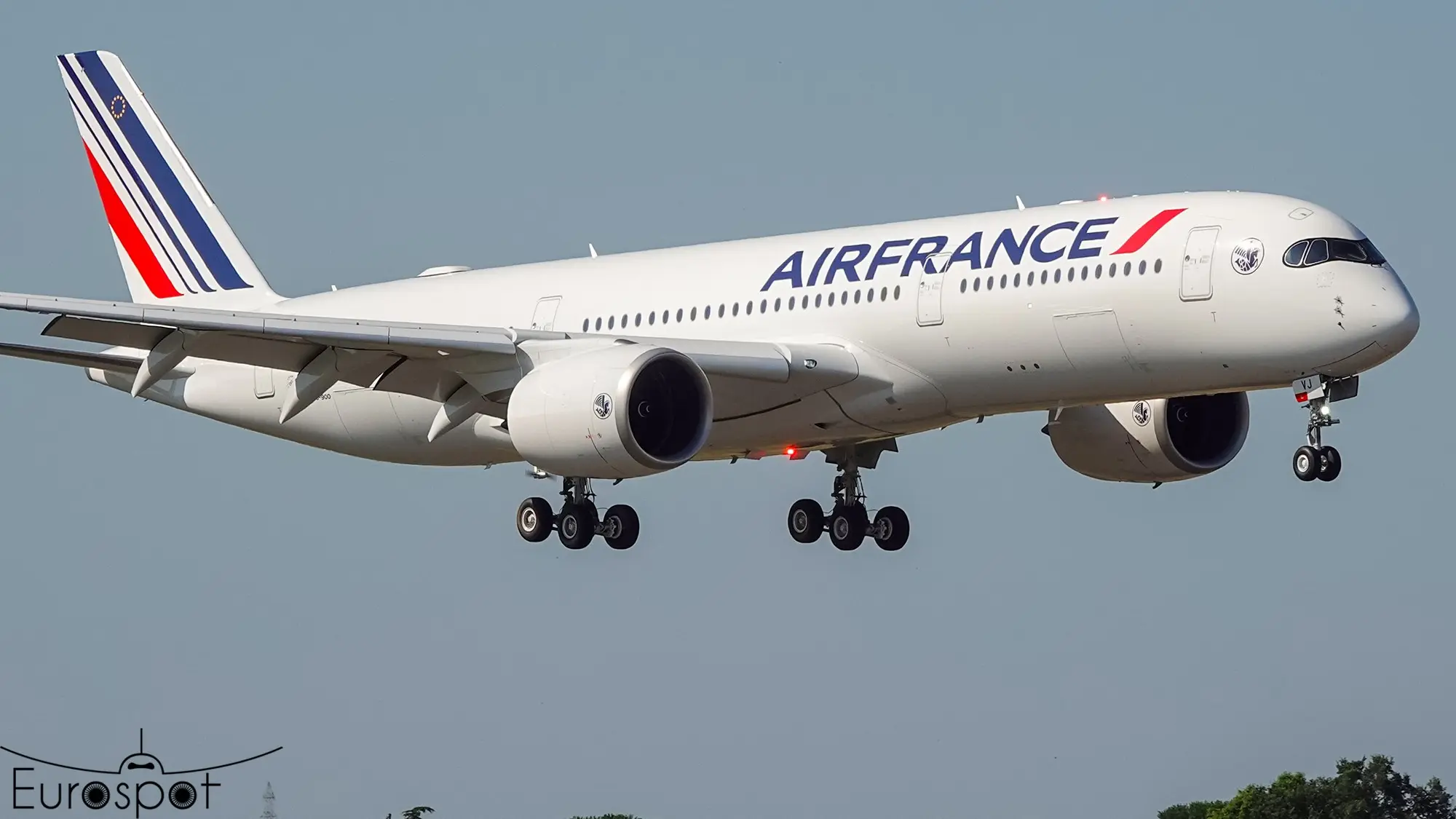
MUNICH— Pilots of an Air France (AF) Airbus A350-900 declared an emergency while en route from Paris Charles de Gaulle Airport (CDG) to Seoul Incheon Airport (ICN) after reporting a burning smell in the cockpit.
Air France flight AF264, operating with the aircraft registered F-HUVC, diverted to Munich Airport (MUC), where it landed safely. The flight had departed Paris at 14:51 CET, around 30 minutes behind schedule.
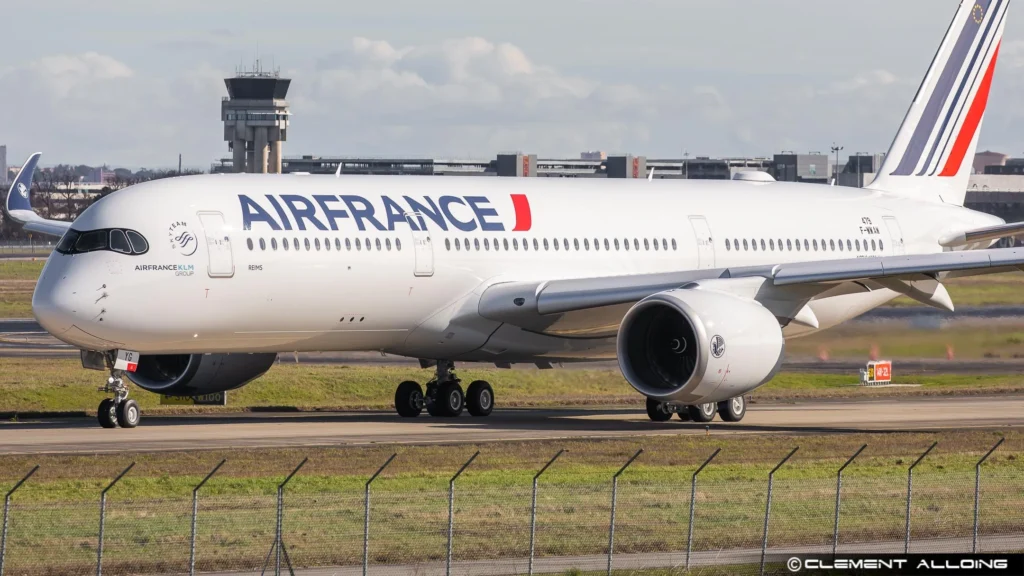
Air France A350 Emergency Landing
The Airbus A350 was cruising at 35,000 feet over Austrian airspace when the crew transmitted the emergency squawk code 7700, signaling an in-flight issue.
The pilots reported a strong burning odor in the cockpit, prompting immediate precautionary measures. About an hour and a half after departure, the aircraft initiated a controlled descent and diverted toward Munich, Airlive reported.
Upon landing on runway 26L, the aircraft was met by emergency services. Ground units inspected the aircraft, and passengers remained on board for approximately 25 minutes before the plane was towed to a remote stand for disembarkation. No injuries were reported among passengers or crew.
Response and Passenger Arrangements
Air France confirmed the diversion and initially scheduled a replacement flight from Munich at 18:30 CET. However, this was later revised to a 22:00 departure before ultimately being cancelled.
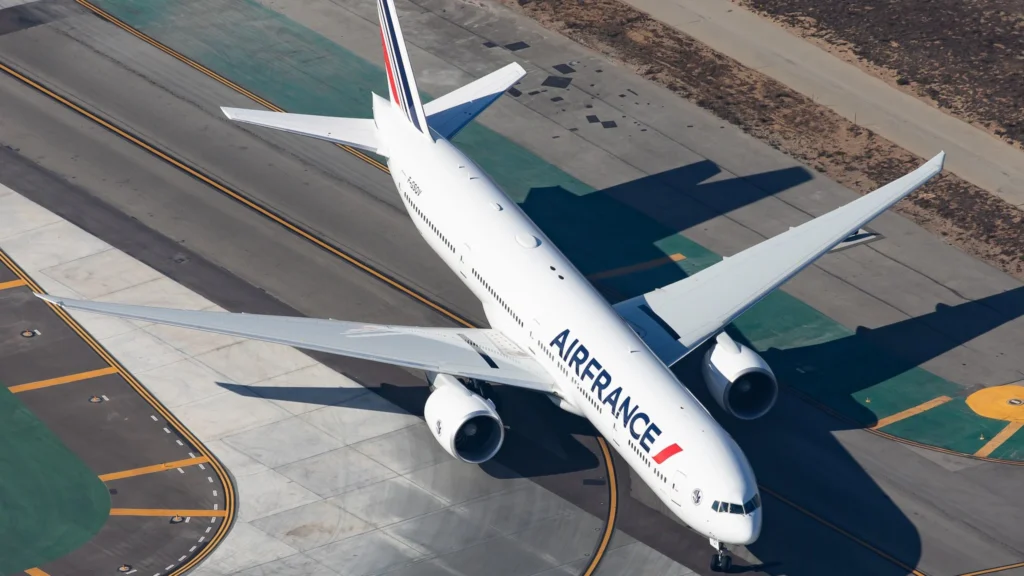
To return passengers to Paris, the airline dispatched a Boeing 777-300ER (registration F-GZNC) to Munich.
The backup aircraft is expected to transport the affected travelers back to France, while the Airbus A350 undergoes inspection by maintenance teams.

Routine Safety Measures and Investigation
Declaring an emergency code 7700 is a standard safety protocol, ensuring priority handling from air traffic control and ground support.
Although the source of the burning smell remains under investigation, early indications suggest a possible technical or electrical issue. The aircraft will remain grounded in Munich until engineers complete detailed checks.
Air France emphasized that passenger safety remains its top priority and that such diversions, while disruptive, are handled in full compliance with international safety procedures.
Similar Incident
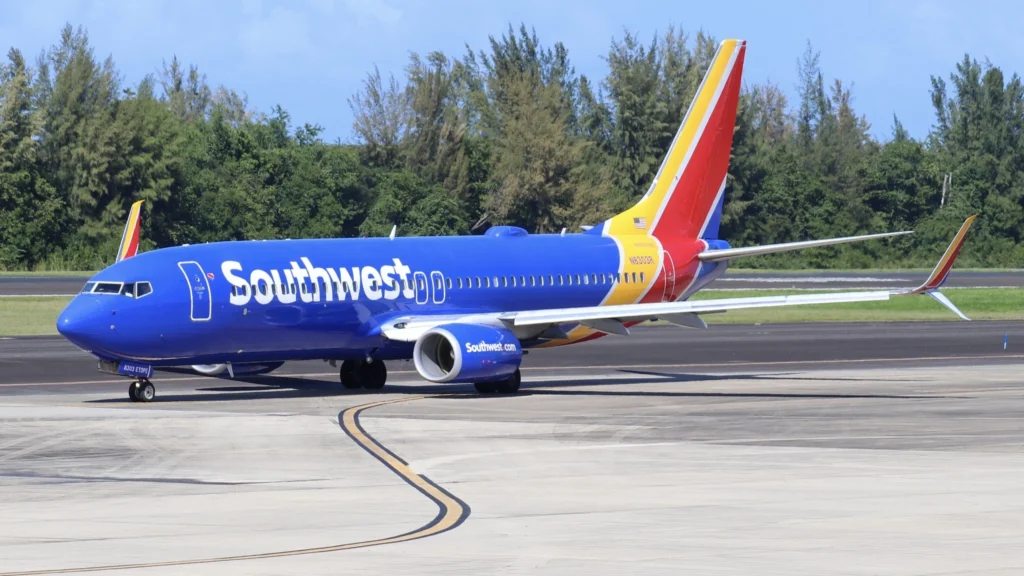
A Southwest Airlines (WN) Boeing 737 MAX 8 operating as Flight SWA1384 / WN1384 from New Orleans International Airport (MSY) to Los Angeles International Airport (LAX) was forced to return shortly after takeoff due to reports of a burning odor and smoke smell in the cabin.
The aircraft, registered N1803U, landed safely back in New Orleans following an emergency declaration.
The crew leveled off at 4,000 feet before requesting to return to MSY, reporting a “weird odor” and later confirming the presence of smoke in the cabin. Emergency services inspected the aircraft after landing, with no visible smoke or fire detected, You
Cabin Smoke Odor
Shortly after departure from New Orleans, the Southwest Airlines Boeing 737 MAX 8 encountered an unusual smell that prompted the flight crew to halt their climb and assess the situation. At the time, the aircraft was cleared to 15,000 feet, but the pilots requested to maintain 4,000 feet to troubleshoot the issue.
The odor, initially described as “weird,” was later reported by cabin crew as a “smoke smell,” leading the pilots to declare an emergency.
According to recorded ATC communications, the crew informed controllers of the situation, citing discomfort among flight attendants due to the smell. They were vectored for an ILS approach to Runway 11 at New Orleans International Airport (MSY) and landed safely approximately 20 minutes after takeoff.
Upon landing, the aircraft exited the runway and stopped on a taxiway, where emergency response teams conducted external inspections.

Crew Communication and Safety Measures
ATC transcripts show clear and measured coordination between the flight crew and air traffic control. Initially, the pilots indicated no emergency, but later declared one as the smell persisted. The flight carried 114 passengers and crew, and had sufficient fuel for over four hours of flight, ensuring operational flexibility during the emergency.
Throughout the event, there were no cockpit smoke warnings or fire indications. The pilots maintained calm communication and prioritized passenger safety by opting for a precautionary landing. Emergency vehicles were positioned near the taxiway for inspection once the aircraft came to a stop.
Inspection and Operational Follow-Up
Ground crews and emergency responders found no visible smoke or fire. Passengers were deplaned safely after a brief delay on the taxiway.
The aircraft remained grounded for inspection to identify the source of the odor. Preliminary reports did not indicate any mechanical or electrical faults, though Southwest Airlines and maintenance teams initiated a detailed examination.
Such precautionary returns are part of standard safety protocol, allowing flight crews to address potential risks early. The Federal Aviation Administration (FAA) will likely review the incident as part of routine oversight.
Stay tuned with us. Further, follow us on social media for the latest updates.
Join us on Telegram Group for the Latest Aviation Updates. Subsequently, follow us on Google News
