

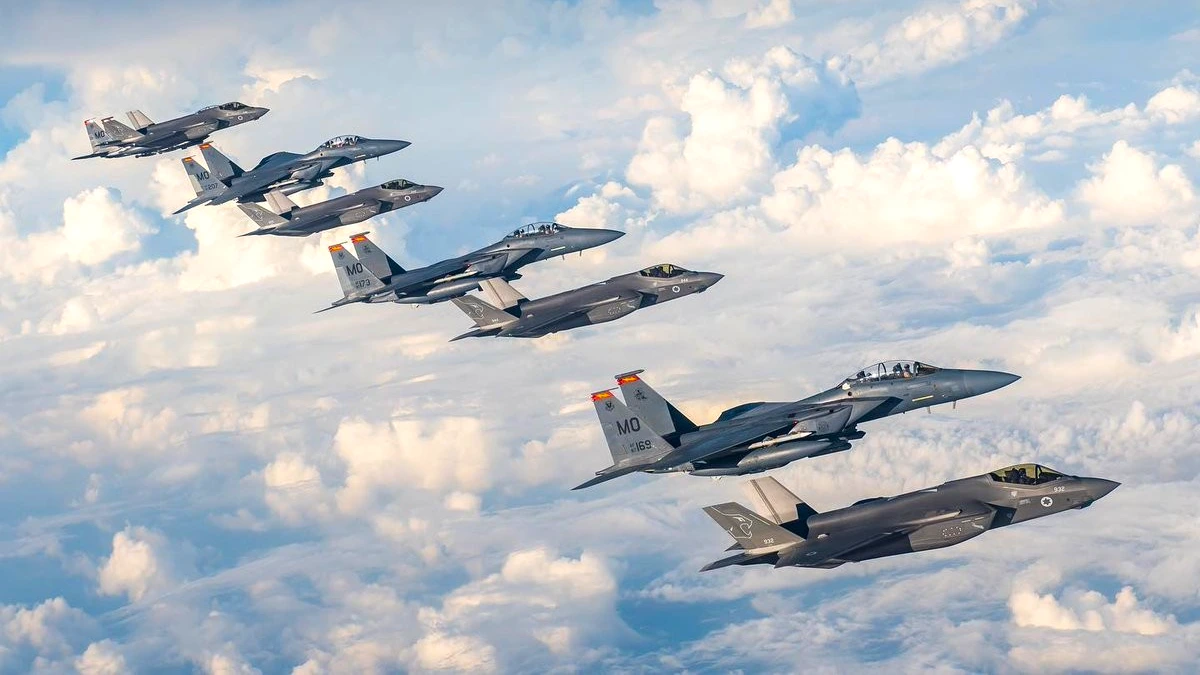
WASHINGTON- The US Air Force plans to retain a select group of F-15C/D Eagles through 2030, extending their service for homeland defense duties originally set to end in 2026.
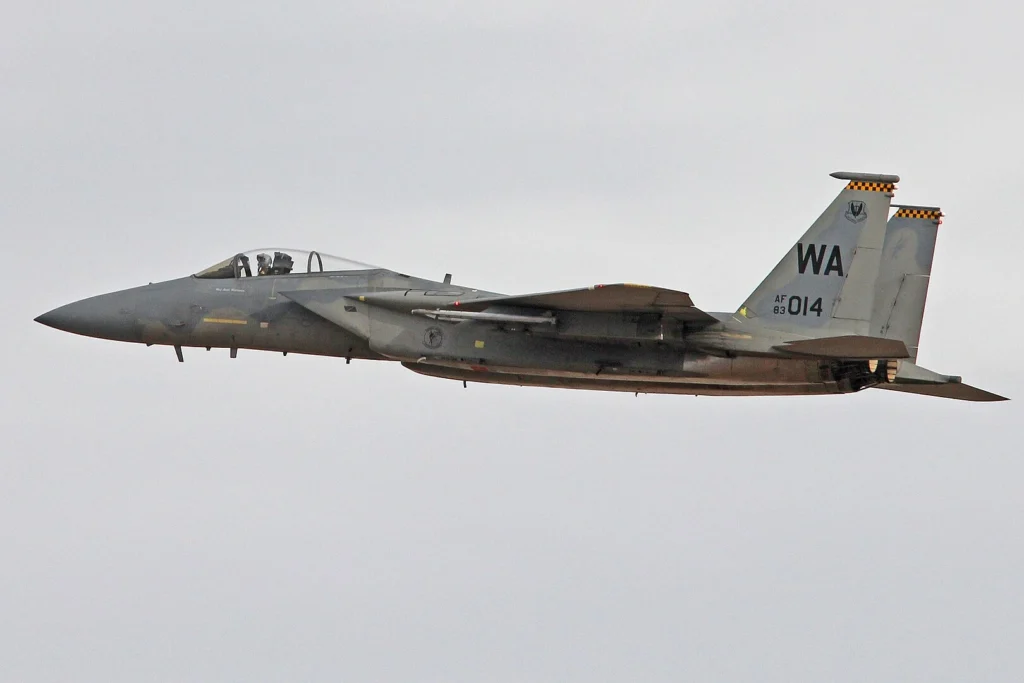
According to a report submitted to Congress, these upgraded “Platinum Eagles” will remain stationed at Fresno Yosemite International Airport (FAT) with the California Air National Guard’s 144th Fighter Wing, ensuring airspace control and rapid response capabilities across U.S. air defense zones.
US Air Force Extends F-15 Service
The Air Force’s “Long-Term Fighter Force Structure” report, dated August 2025 and mandated by the 2025 National Defense Authorization Act, confirms the continued use of F-15C/Ds for at least four more years.
Initially slated for retirement in fiscal 2026, the aircraft will now remain in service until 2030, when full divestment is expected as the F-15EX Eagle II replaces the aging fleet.
Charts in the report outline a gradual phase-out: 42 aircraft will remain combat-coded through 2028, with 21 extending to 2030. These aircraft, referred to as “Platinum Eagles,” are the most structurally sound and technologically upgraded of the remaining F-15C/D fleet.
Air Combat Command continues to manage the fleet to ensure only the most viable jets remain operational. These aircraft will maintain the U.S. Air Force’s ability to quickly intercept and identify unidentified or hostile aircraft entering U.S. air defense identification zones—a critical homeland defense role.
Modernization and Fleet Transition
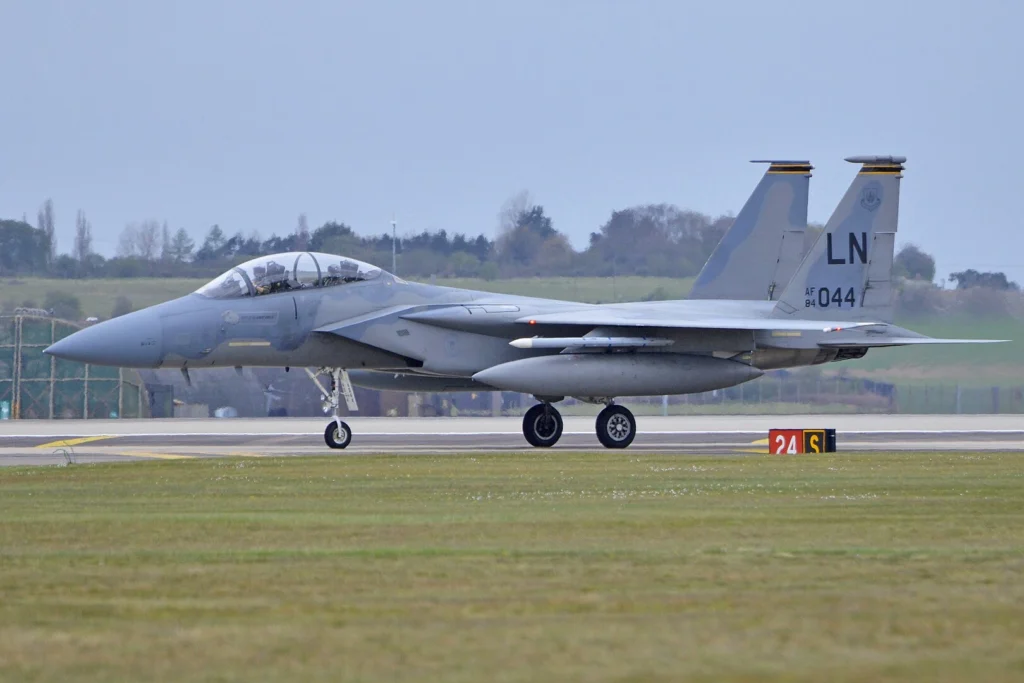
The F-15C/D fleet, over 40 years old, is nearing the end of its structural life. More than 75 percent of the aircraft have operational limitations due to fatigue, affecting both speed and G-load tolerance.
Despite these challenges, the remaining upgraded aircraft—featuring Active Electronically Scanned Array (AESA) radars and modern avionics—remain capable of fulfilling interception duties.
The Air Force originally planned to replace the fleet with F-22 Raptors, but reduced procurement left a gap that the F-15C/Ds continued to fill. In recent years, F-15 units at RAF Lakenheath (LKZ) in the United Kingdom and Kadena Air Base (OKA) in Japan have transitioned to F-35 Lightning II and F-16 Fighting Falcon rotations.
The Air Force intends to permanently station F-15EX fighters at these locations once production increases.
The Path to F-15EX Integration
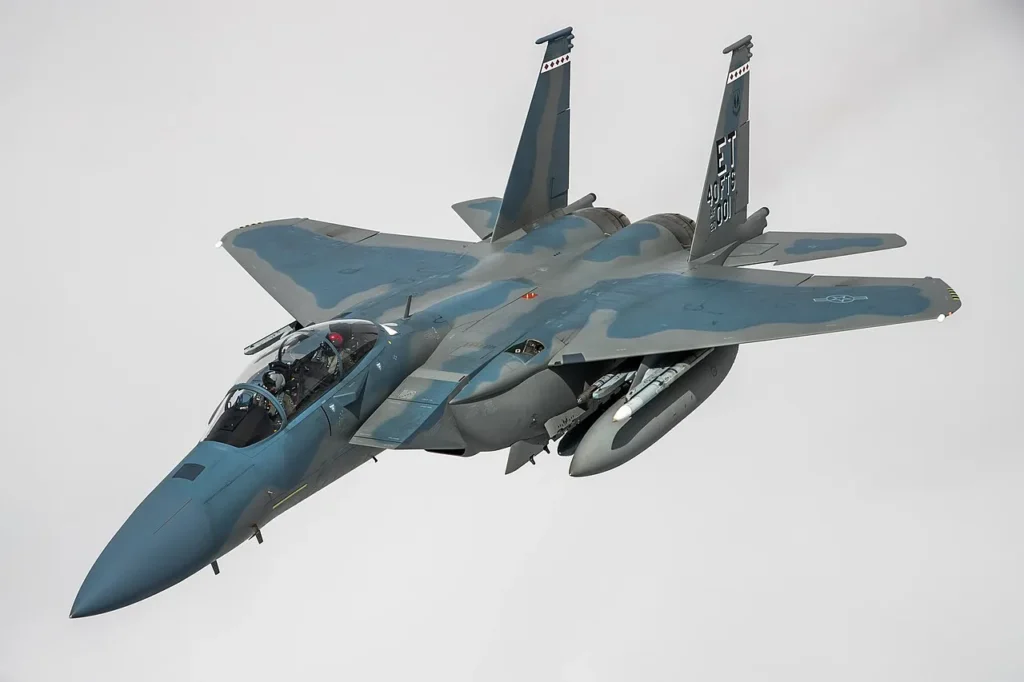
The Air Force expects complete divestment of legacy F-15C/Ds by fiscal 2031 as the F-15EX enters full operational status.
The new variant offers advanced avionics, digital fly-by-wire systems, and increased payload capacity, addressing limitations of the older platforms.
Despite the modernization push, officials emphasize the importance of maintaining a ready defensive posture. The “Platinum Eagles” will ensure continued air defense coverage while the F-15EX fleet expands.
The report also highlights increasing cannibalization among F-15C/Ds due to parts shortages, reinforcing the urgency of F-15EX acquisitions. Alongside this transition, select F-15E Strike Eagles will remain active into the 2030s, extending the platform’s overall legacy.
Future Fighter Force Planning
The Air Force’s 2025 report introduces a revised count of its operational fleet, referring to 1,558 aircraft as the “Combat-Coded Total Aircraft Inventory.”
This term replaces the older “Primary Mission Aircraft Inventory” to more accurately represent active, reserve, and backup assets.
The service is also pursuing legislative changes to formalize this updated terminology and fleet accounting system. Officials describe these updates as essential for aligning operational readiness with long-term modernization goals.
Stay tuned with us. Further, follow us on social media for the latest updates.
Join us on Telegram Group for the Latest Aviation Updates. Subsequently, follow us on Google News
