

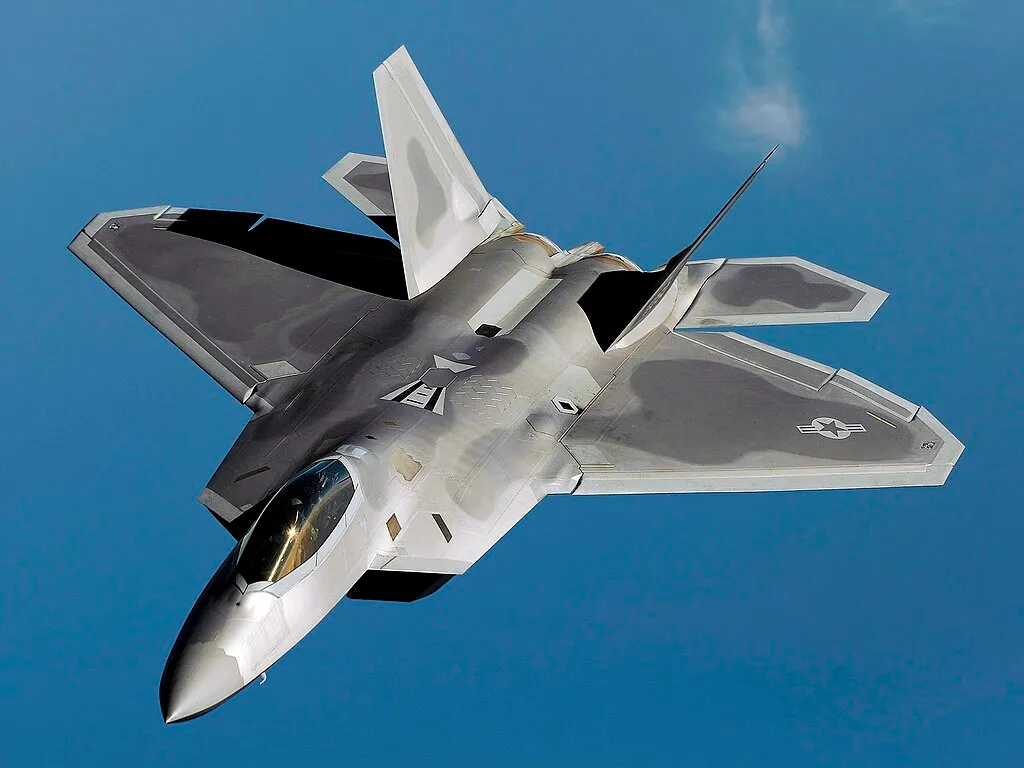
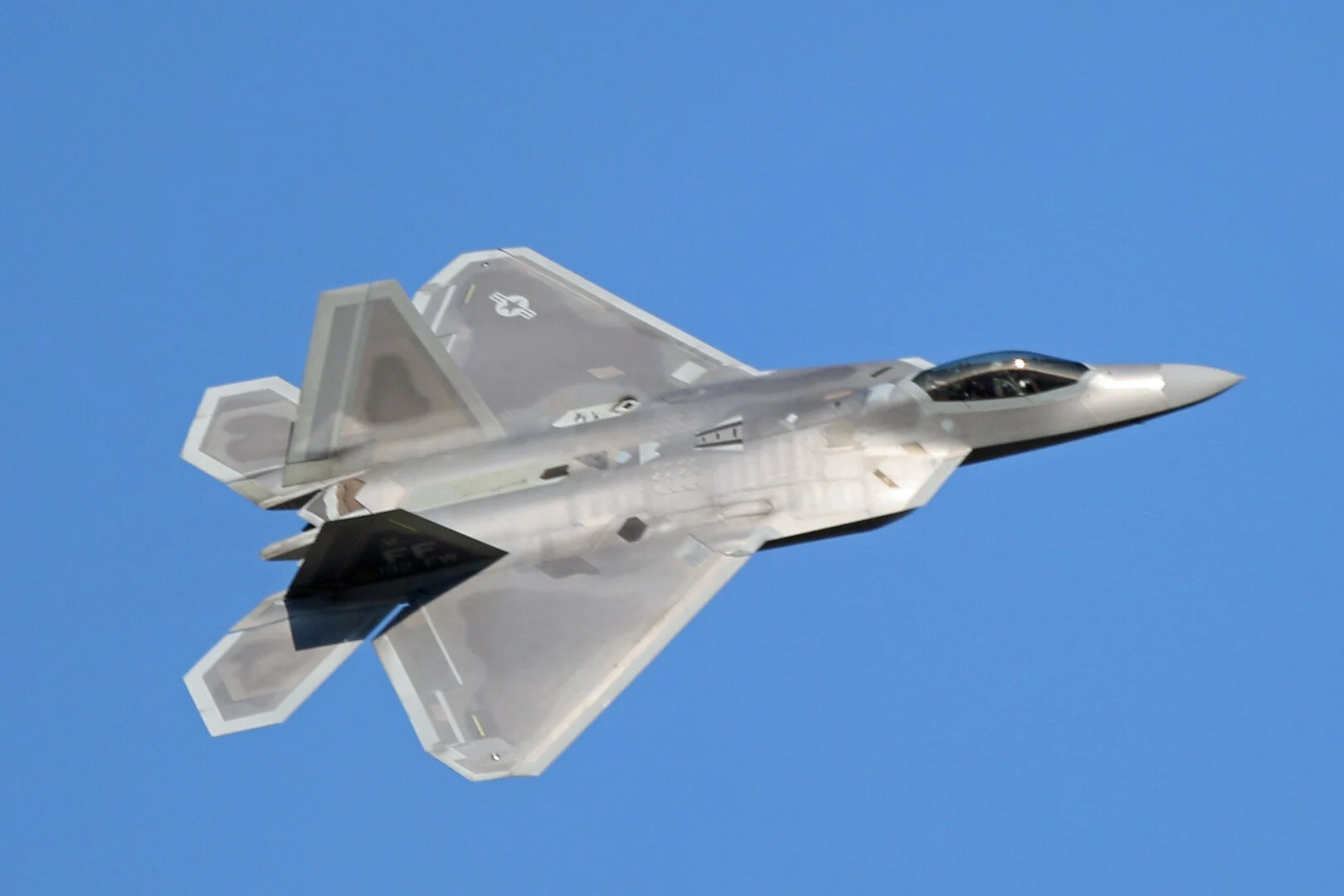
WASHINGTON– The United States Air Force (USAF) has identified the Lockheed Martin F-22 Raptor as the “threshold platform” for its Collaborative Combat Aircraft (CCA) program, marking a pivotal step in integrating uncrewed systems with manned fighters.
The report, recently submitted to Congress, indicates that while the F-22 will lead the first phase of CCA integration, other platforms—including the F-16 Fighting Falcon, F-35A Lightning II, F-15E Strike Eagle, and F-15EX Eagle II—remain under active consideration, reported Aviation Week.
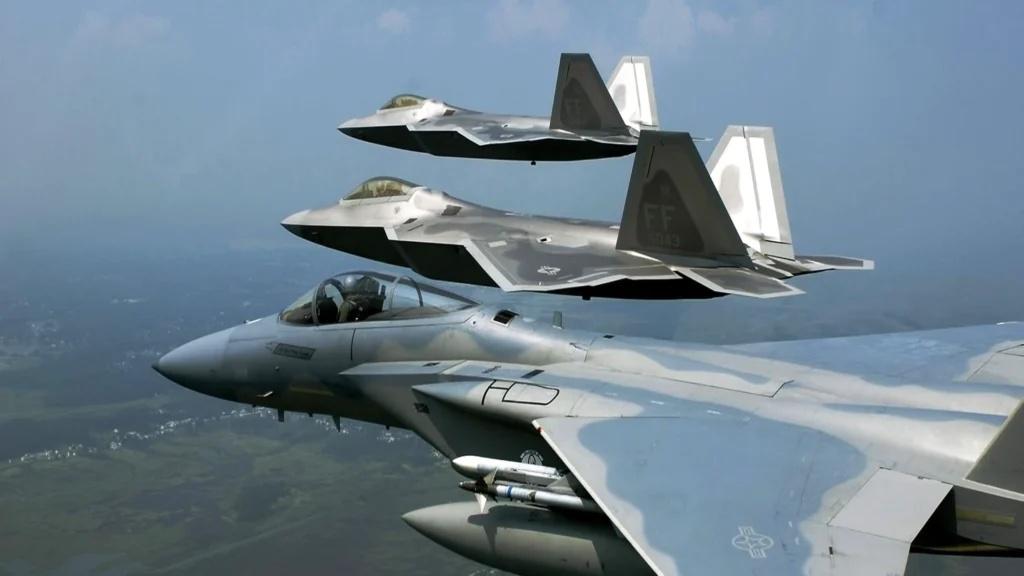
USAF F-22 to Lead CCA Integration
The Air Force’s fiscal year 2026 budget outlines specific funding for modifications to the F-22 (Lockheed Martin) to enable compatibility with CCAs. This makes the Raptor the first operational aircraft designed to coordinate missions with autonomous systems.
The service confirmed that two initial CCA prototypes—General Atomics’ YFQ-42 and Anduril’s YFQ-44—are under development for the program’s first increment. These aircraft are designed to enhance mission survivability and extend the range and flexibility of crewed platforms.
The CCAs will carry additional sensors, weapons, and communications systems, offering new operational layers in combat environments where U.S. air superiority faces growing challenges.
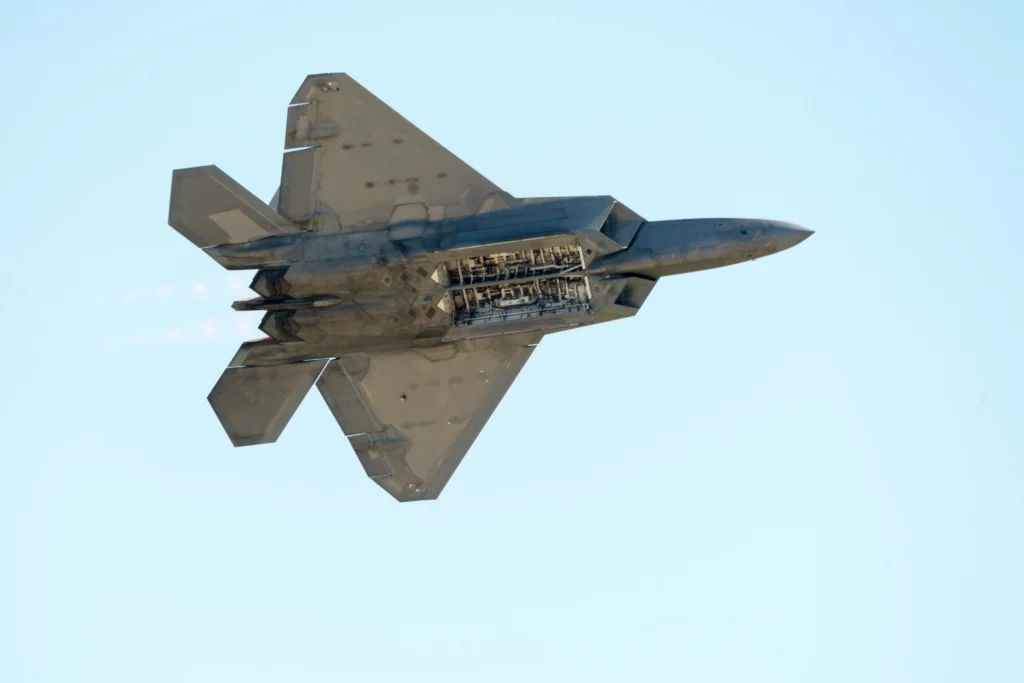
Strategic Role of CCAs in USAF
The Air Force emphasized that CCAs will serve as “risk-tolerant” aircraft capable of absorbing threats that would otherwise endanger crewed fighters.
With their modular designs, these systems can perform tasks ranging from surveillance to offensive operations at a fraction of the cost of traditional combat aircraft.
According to the service, integrating CCAs with the F-22 will allow U.S. pilots to project air power in contested areas where conventional tactics may not succeed.
The networked nature of these platforms enables multiple uncrewed aircraft to work in tandem with a single fighter, multiplying force projection and operational endurance.
The Air Force views this integration as essential to addressing emerging threats, particularly those from adversaries deploying dense air defense networks and high-volume aerial assets.
The CCA initiative aims to ensure that the USAF maintains technological and strategic superiority well into the next generation of air warfare. The eventual goal is to build a cohesive, multi-platform fleet capable of executing advanced joint missions using both crewed and uncrewed assets.
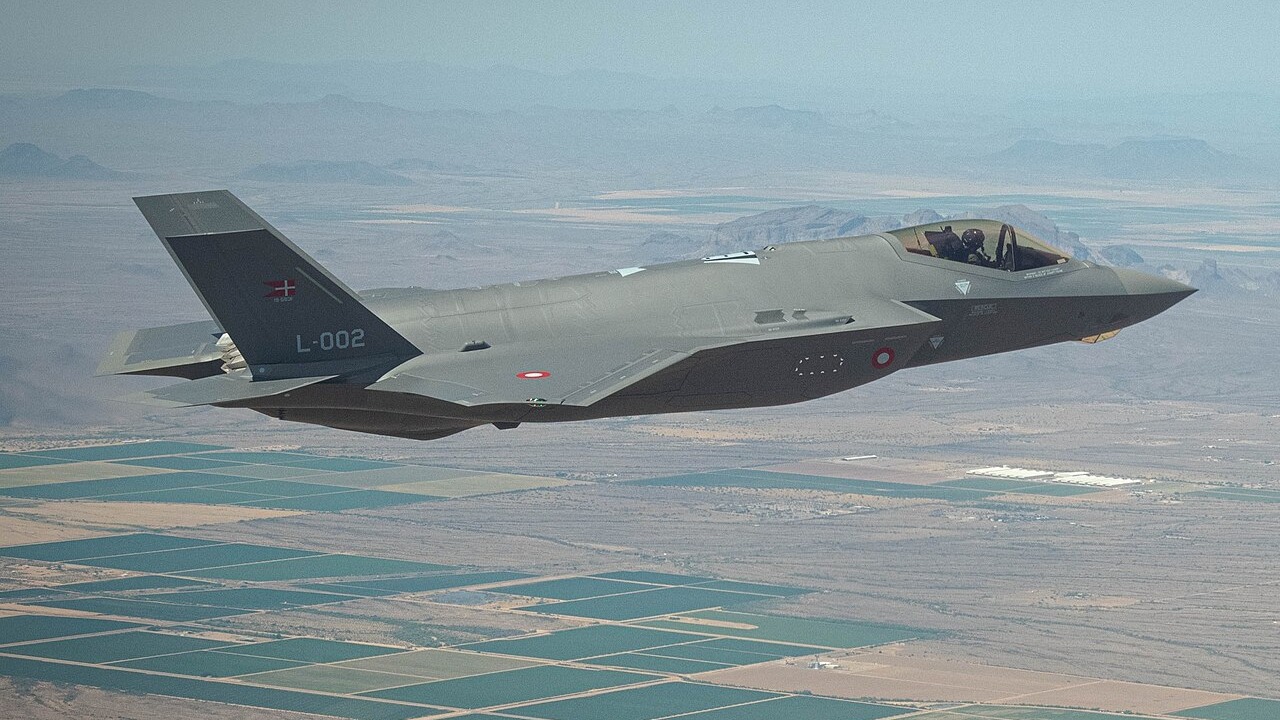
https://commons.wikimedia.org/wiki/File:RDAF_F-35A.jpg
USAF’s Future Fighter Integration
Beyond the F-22, the Air Force is studying how to extend CCA capabilities to the F-35, F-15, and F-16 fleets. Lockheed Martin has already begun conceptual work on a pod system that would allow the F-35 to link directly with CCAs via secure data exchange.
Meanwhile, Boeing’s forthcoming F-47 platform is expected to be designed with built-in CCA compatibility.
The inclusion of these aircraft in the long-term plan would allow the Air Force to deploy CCAs across a broader range of missions, from homeland defense to deep-strike operations.
This modular integration approach could allow rapid scalability of the CCA network across the entire U.S. tactical fleet.
Bottom Line
The designation of the F-22 as the threshold aircraft for Collaborative Combat Aircraft integration underscores the USAF’s commitment to shaping a hybrid combat force.
While early integration efforts focus on one platform, the long-term objective remains a fleet-wide network of manned and unmanned cooperation.
As technology matures, the CCA program could redefine air combat, shifting the balance between crewed operations and autonomous support systems.
The Air Force’s forward-looking strategy positions it to adapt quickly to the complex demands of 21st-century warfare while maintaining operational dominance.
Stay tuned with us. Further, follow us on social media for the latest updates.
Join us on Telegram Group for the Latest Aviation Updates. Subsequently, follow us on Google News
