


ATLANTA— Delta Air Lines (DL) is moving forward with plans to launch nonstop flights between Atlanta (ATL) and Riyadh (RUH), marking a significant shift from its earlier stance on operating in Saudi Arabia. The new service is tied to Delta’s strategic partnership with Riyadh Air (RX), a state-backed carrier set to begin operations in 2025.
The move comes despite Delta’s previous objections to partnerships with Middle Eastern airlines receiving government subsidies and its earlier declaration that it would not operate flights to Saudi Arabia due to the country’s restrictive entry policies at the time.

Delta CEO on Riyadh Flights
When CNN’s Richard Quest questioned Delta CEO Ed Bastian about the rationale for launching the Atlanta–Riyadh route, Bastian emphasized the goal of carrying U.S. passengers to Saudi Arabia rather than focusing on inbound Saudi traffic.
The explanation underscores Riyadh Air’s broader objective: to position Saudi Arabia as a new global business hub and diversify its economy beyond oil.
Saudi Arabia’s aviation strategy, supported by the Public Investment Fund (PIF), aims to enhance connectivity and attract foreign investment. The planned Delta–Riyadh Air partnership aligns with this vision, offering Delta access to a potentially growing market in the Middle East while giving Riyadh Air a U.S. gateway through Atlanta.
A Reversal from Past Positions
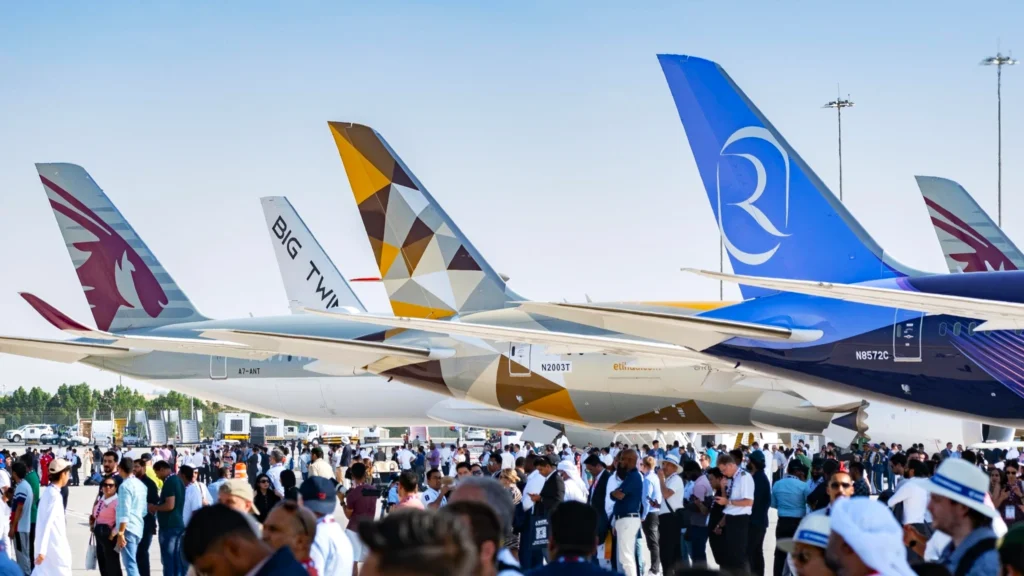
Delta’s renewed interest in Saudi Arabia contrasts sharply with its earlier rhetoric. Years ago, Delta vocally criticized Gulf carriers—Emirates (EK), Etihad Airways (EY), and Qatar Airways (QR)—for receiving state subsidies and using hub-based models to capture connecting traffic between third countries. At the time, Delta argued that these practices created unfair competition and threatened U.S. carriers.
Now, Bastian claims the difference lies in the “size of the local market,” suggesting that partnerships are acceptable when the airline’s home country has significant domestic demand.
However, data shows that Dubai International Airport (DXB) handles over 90 million passengers annually—nearly three times Riyadh’s current volume—raising doubts about this reasoning, says Gary Leff.
Partnerships, Politics, and Public Perception
Bastian acknowledged that Delta had been working “a couple of years with the PIF,” confirming deep engagement with Saudi Arabia’s state apparatus.
This collaboration marks a striking turnaround for an airline that once cited human rights and religious inclusion concerns to justify avoiding Saudi partnerships.
Analysts note that the timing is not coincidental. Saudi Arabia, seeking stronger U.S. ties, is pushing to normalize relations with Israel and attract international business. With Crown Prince Mohammed bin Salman expected to visit Washington soon, Delta’s entry into the market may align with broader diplomatic and economic shifts.
Profit Over Principle?
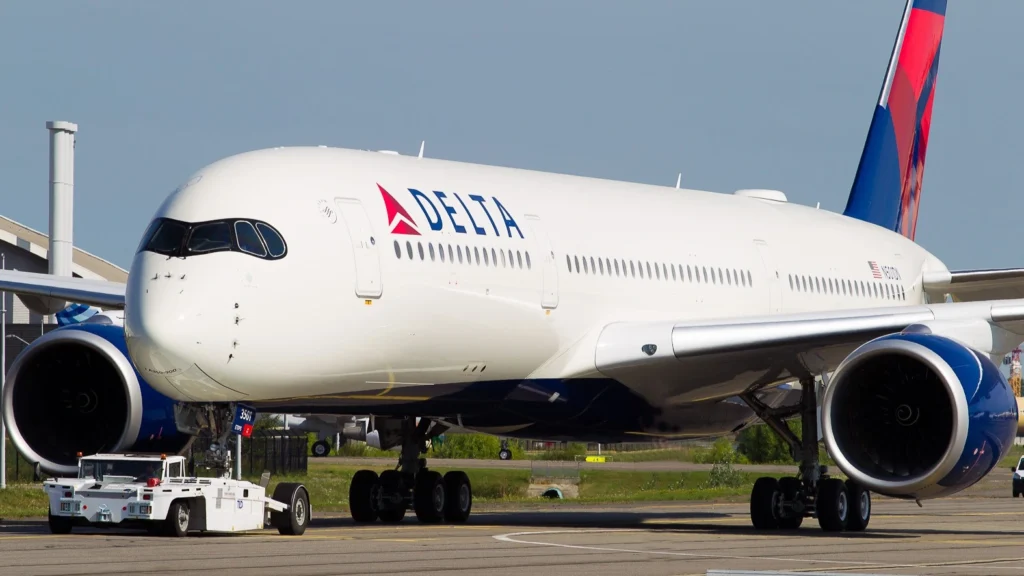
Critics argue that Delta’s evolving position on subsidies and partnerships reflects convenience rather than conviction.
The airline benefited from substantial U.S. government aid during the COVID-19 pandemic, including payroll support funds that were later scrutinized for executive compensation use.
Ultimately, Delta’s new Saudi partnership highlights a familiar pattern: policy positions that adapt when financial incentives align. Bastian’s defense—that Saudi Arabia’s domestic market justifies the move—may serve as a talking point, but the underlying motivation appears firmly rooted in business opportunity.
Delta Resumes Tel Aviv Flights from ATL and BOS
Delta Air Lines will restart nonstop flights to Tel Aviv (TLV) from both Atlanta (ATL) and Boston (BOS), marking a key expansion of its transatlantic network. The move reconnects major U.S. hubs with Israel, strengthening the airline’s global footprint.
The service from Atlanta begins April 15, 2026, with three weekly flights on Wednesdays, Fridays, and Sundays, followed by daily operations from Boston starting October 24, 2026.
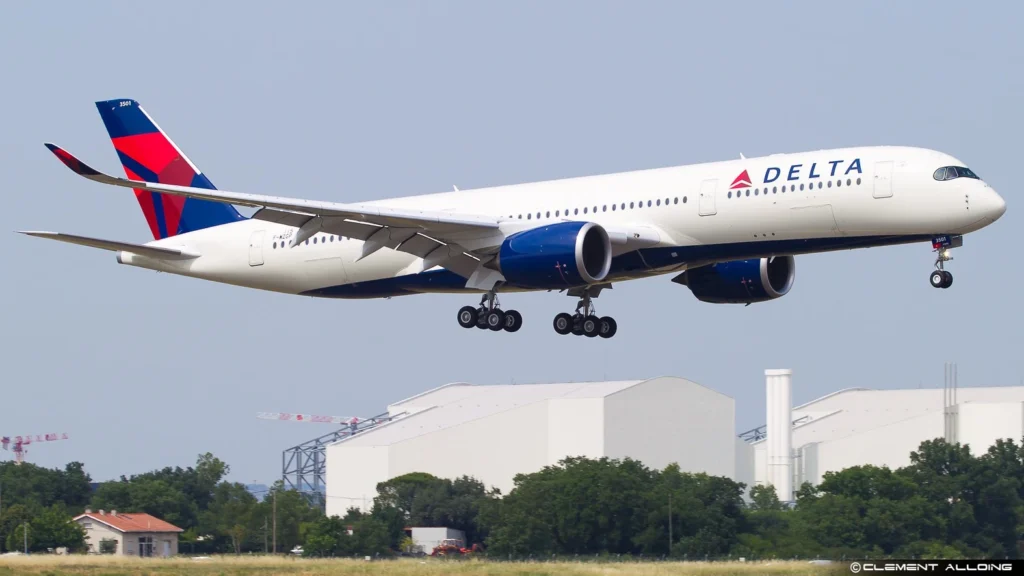
Both routes will feature Delta’s Airbus A350-900 and Airbus A330-900neo aircraft, offering Delta One, Delta Premium Select, Delta Comfort+, and Main Cabin options.
The upcoming routes to Tel Aviv (TLV) reinforce Delta’s (DL) strategy of rebuilding its long-haul network in markets with strong business, cultural, and diaspora ties. The Atlanta (ATL) route restores a key link between the southeastern United States and Israel, while the Boston (BOS) service expands Delta’s reach in New England.
Atlanta’s flights will operate using the Airbus A350-900, Delta’s flagship widebody known for fuel efficiency and long-range performance. The Boston route, operated with the Airbus A330-900neo, offers a similar premium onboard experience, including lie-flat Delta One suites and an upgraded Delta Premium Select cabin.
These additions follow Delta’s resumption of daily New York-JFK to Tel Aviv flights on September 1, 2025. A temporary second daily frequency from New York-JFK will operate between November 30, 2025, and January 19, 2026, to handle peak winter demand.
Strengthening U.S.–Israel Connectivity
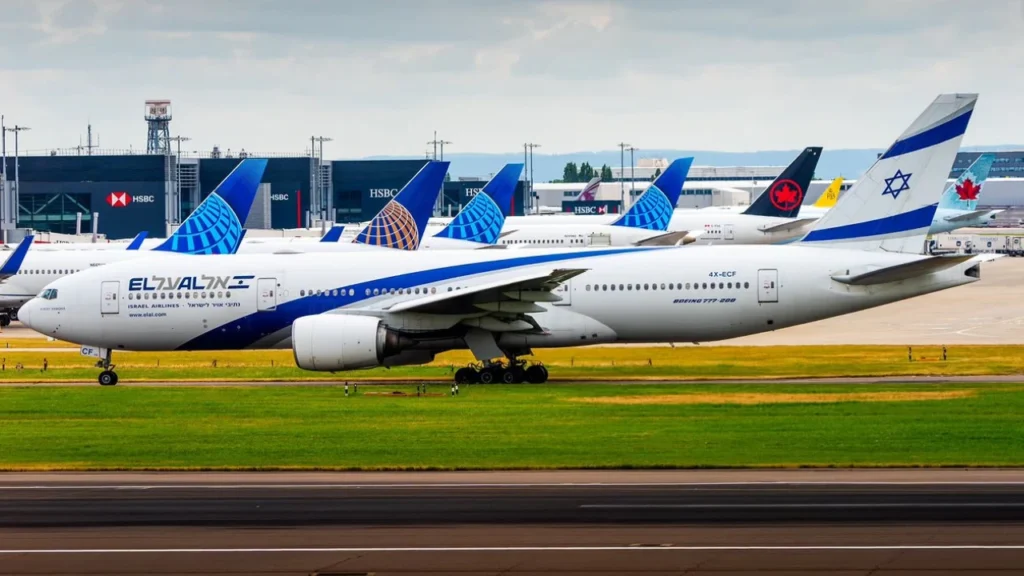
Delta’s renewed presence in Tel Aviv highlights growing travel demand between the U.S. and Israel. The Atlanta route provides the only nonstop connection between the southeastern U.S. and Israel, supporting both tourism and business travel.
Georgia Governor Brian Kemp welcomed the decision, noting the importance of direct service for strengthening economic and cultural links between Georgia and Israel.
From the Northeast, Massport Executive Director of Aviation Ed Freni emphasized that Boston Logan’s (BOS) resumed service enhances connectivity and gives travelers more international options.
Stay tuned with us. Further, follow us on social media for the latest updates.
Join us on Telegram Group for the Latest Aviation Updates. Subsequently, follow us on Google News
