

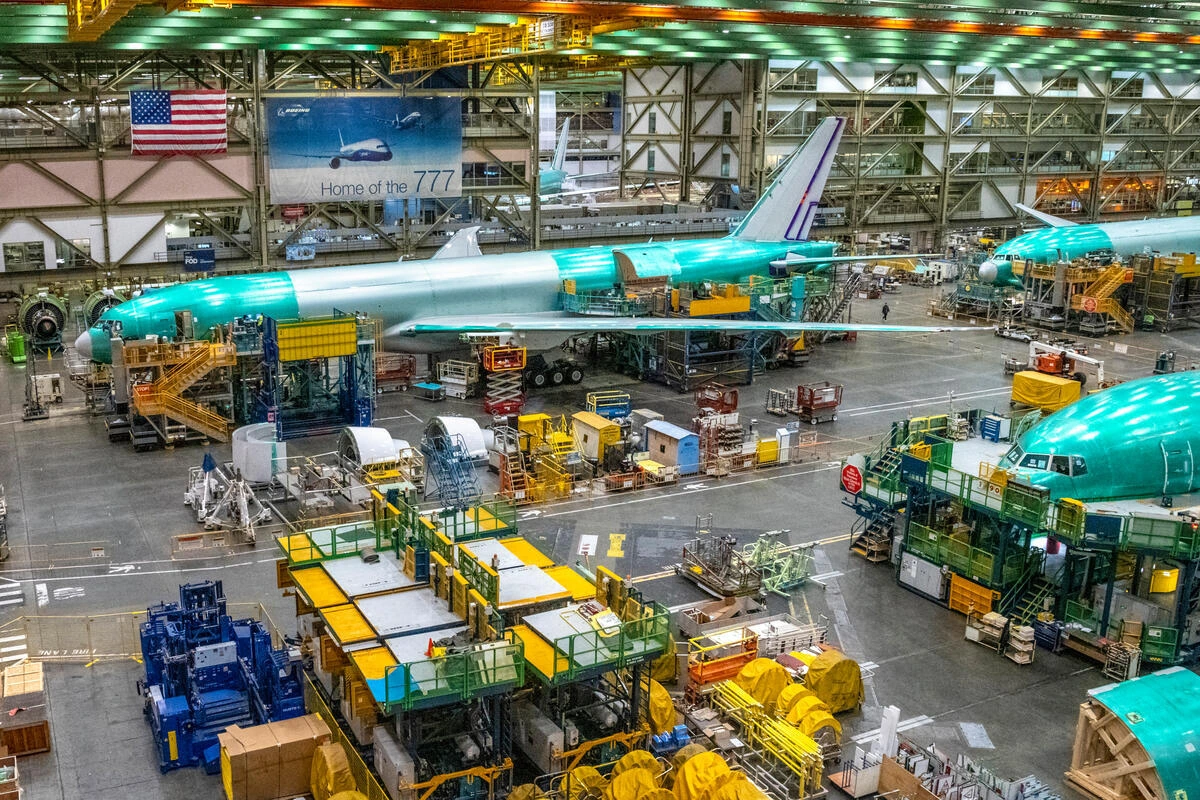
EVERETT- Boeing Commercial Airplanes has started assembling the wings for its first Boeing 777-8 Freighter, set to become the world’s largest and most capable twin-engine cargo aircraft.
The milestone marks a major step in Boeing’s production program at its Everett facility (PAE), highlighting the precision and teamwork that define the company’s advanced manufacturing process.
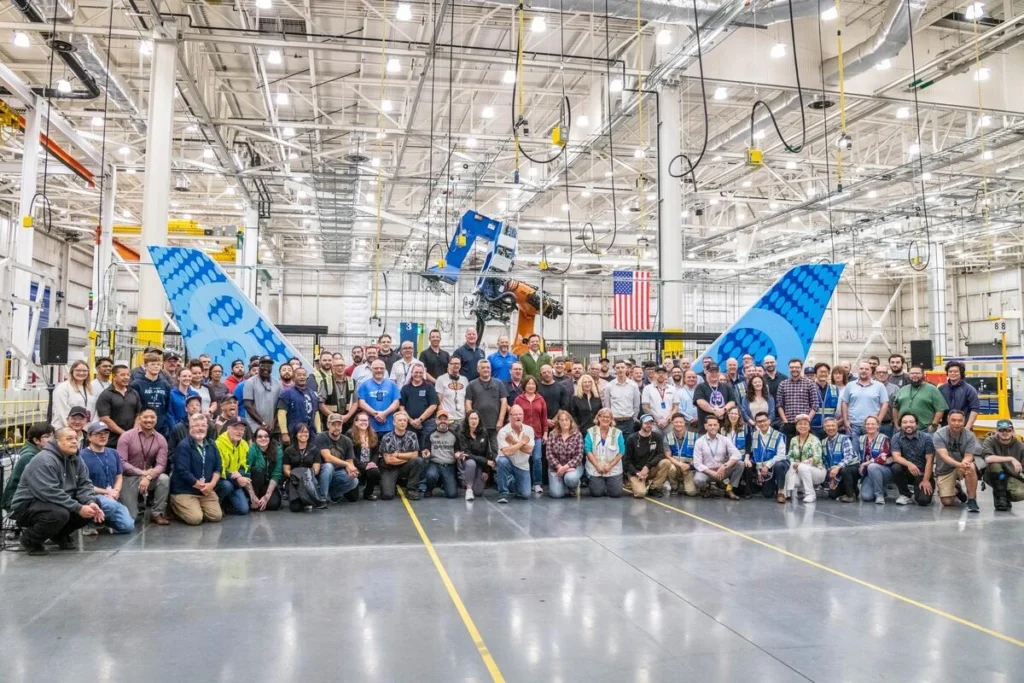
Boeing Begins Wing Assembly of 777-8 Freighter
The Boeing 777-8 Freighter is part of the 777X family and is designed to set new efficiency and performance standards in air cargo.
The aircraft will carry a maximum payload of over 118 tonnes with extended range capabilities, offering airlines improved operational economics and lower emissions.
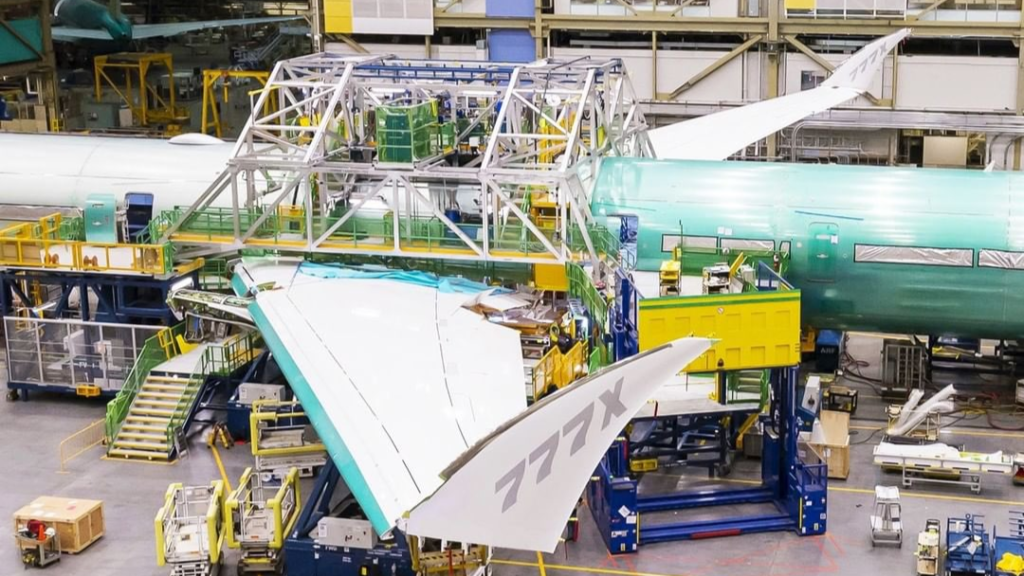
Assembly of the first 777-8F wings involves an intricate process led by Boeing’s skilled mechanics and engineers. Each wing includes 45 ribs, two spars, and two composite panels spanning more than 100 feet.
The work requires precision, strength, and coordination from teams like the one led by mechanic Travis Haegele, who helps bring the structural components together in Boeing’s massive high bay line (HBL).
According to a LinkedIn post shared by the Boeing Commercial Airplanes President and CEO Stephanie Pope, the start of wing assembly reflects the company’s long-standing expertise in aircraft manufacturing and its commitment to innovation in commercial aviation.
Shaping the Future of Air Cargo
Once completed, the Boeing 777-8 Freighter will deliver unmatched efficiency for global cargo operators. It builds on the proven 777 Freighter’s success while incorporating the latest advancements from the 777X passenger variant.
The aircraft’s size, payload, and fuel efficiency are expected to reshape long-haul freight operations, offering carriers new opportunities to optimize route networks and reduce operating costs.
As Boeing marks Manufacturing Month, the 777-8 Freighter program stands as a tribute to the dedication of its production teams and their role in shaping the next generation of global air cargo transport.
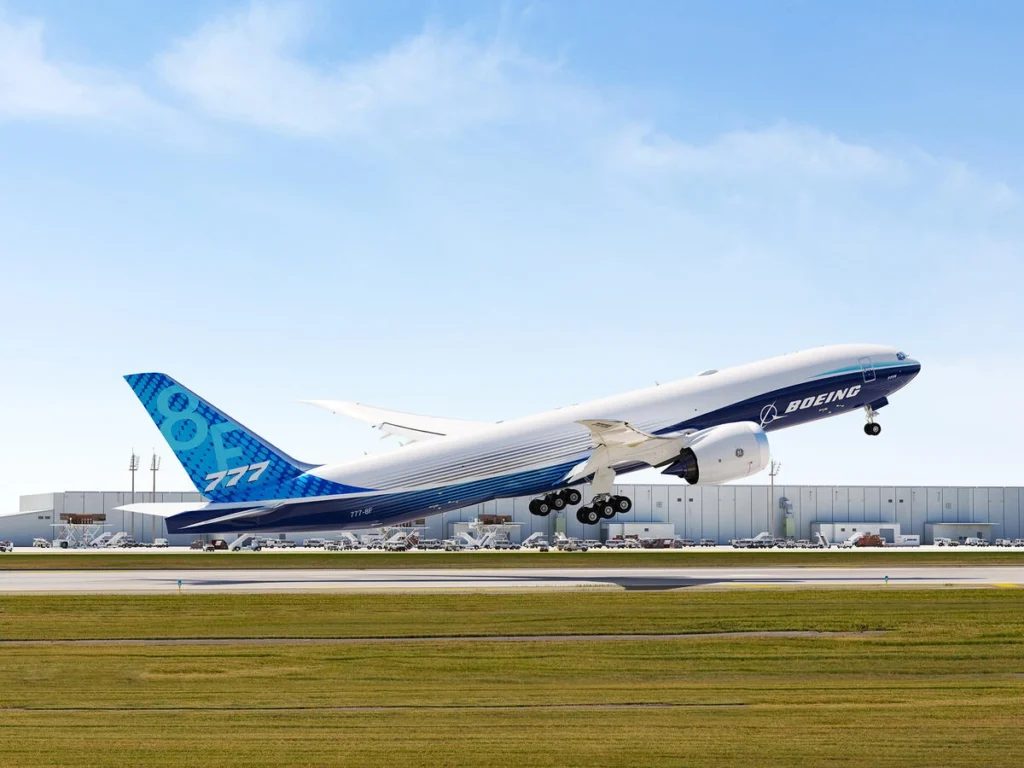
About the World’s Largest Twin-Engine Freighter Aircraft
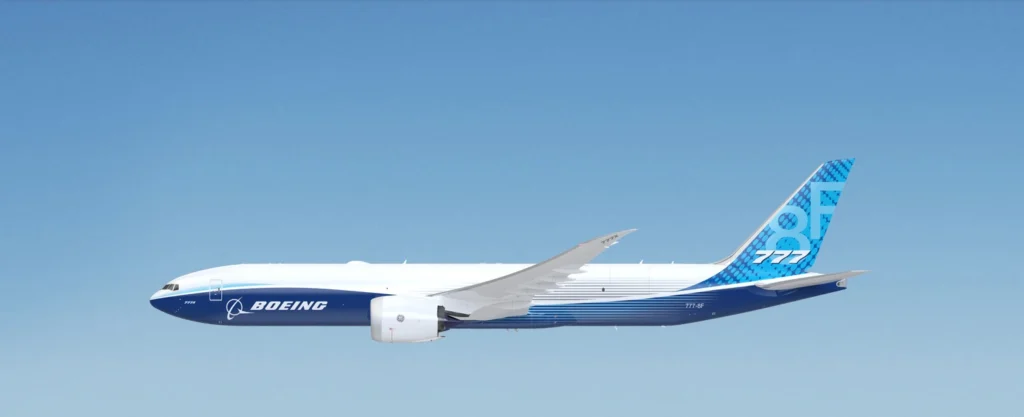
Boeing introduced the 777-8 Freighter, expanding its successful 777X family with the world’s most capable and fuel-efficient twin-engine freighter. Designed for a sustainable future, it combines range, payload, and operating economics unmatched in its class.
The launch of the 777-8F strengthens Boeing’s position in the global air cargo market, addressing the surge in e-commerce and general freight.
With cargo demand expected to grow over 70% in the next two decades, the new freighter is built to meet the needs of airlines operating from major cargo hubs like DOHA (DOH), DUBAI (DXB), and HONG KONG (HKG).
The 777-8 Freighter joins Boeing’s diverse lineup of freighters, which already includes the high-volume 747-8F, the long-range 777F, and the versatile 767-300F and 737-800BCF. Together, they form a complete solution for airlines balancing capacity, range, and operational efficiency.
Boeing’s freighter family serves a broad spectrum of cargo operators. The 747-8F remains ideal for heavy and oversized freight, while the 777F and 777-8F cater to high-yield, long-haul cargo. The 767-300F and 737-800BCF continue to dominate regional and standard-body markets.
777-8F: Power, Range, and Efficiency
Built on the 777X platform, the 777-8 Freighter offers:
- Structural Payload (Gross): 118.2 tonnes
- Revenue Payload (Net): 112.3 tonnes
- Range: 4,410 nautical miles
- Length: 70 m / 232 ft 6 in
- Wingspan: 71 m / 235 ft 5 in (extended)
- Height: 19 m / 64 ft
These capabilities make it the world’s most capable twin-engine freighter, allowing airlines to reach farther markets with lower operating costs and reduced emissions.
The 777-8F also features a larger cargo volume and advanced aerodynamics for improved fuel burn, making it a key aircraft for airlines focusing on sustainability and profit.
Meeting Global Cargo Growth
Boeing forecasts a 70% increase in global air freight over the next 20 years. The 777-8F is strategically designed to meet this surge, supporting a mix of express delivery, e-commerce, and traditional cargo operations. It complements the 747 and 777 families by offering optimal payload and range for medium to long-haul routes.
With lower emissions per tonne and high operational reliability, the aircraft provides airlines with the lowest cost per tonne-kilometer in the market. This ensures profitability and flexibility in a sector facing rising fuel prices and sustainability targets.
Complementary Range and Payload Options
The 777-8F sits alongside other Boeing freighters such as:
- 777F: Range 4,970 nmi, Net Payload 102 tonnes
- 747-8F: Heavy and oversized cargo specialist
- 767-300F: Versatile medium-haul workhorse
- 737-800BCF: Standard-body leader for regional markets
Each aircraft fulfills a distinct market role, ensuring Boeing’s freighter family covers every major cargo segment.
Stay tuned with us. Further, follow us on social media for the latest updates.
Join us on Telegram Group for the Latest Aviation Updates. Subsequently, follow us on Google News
