

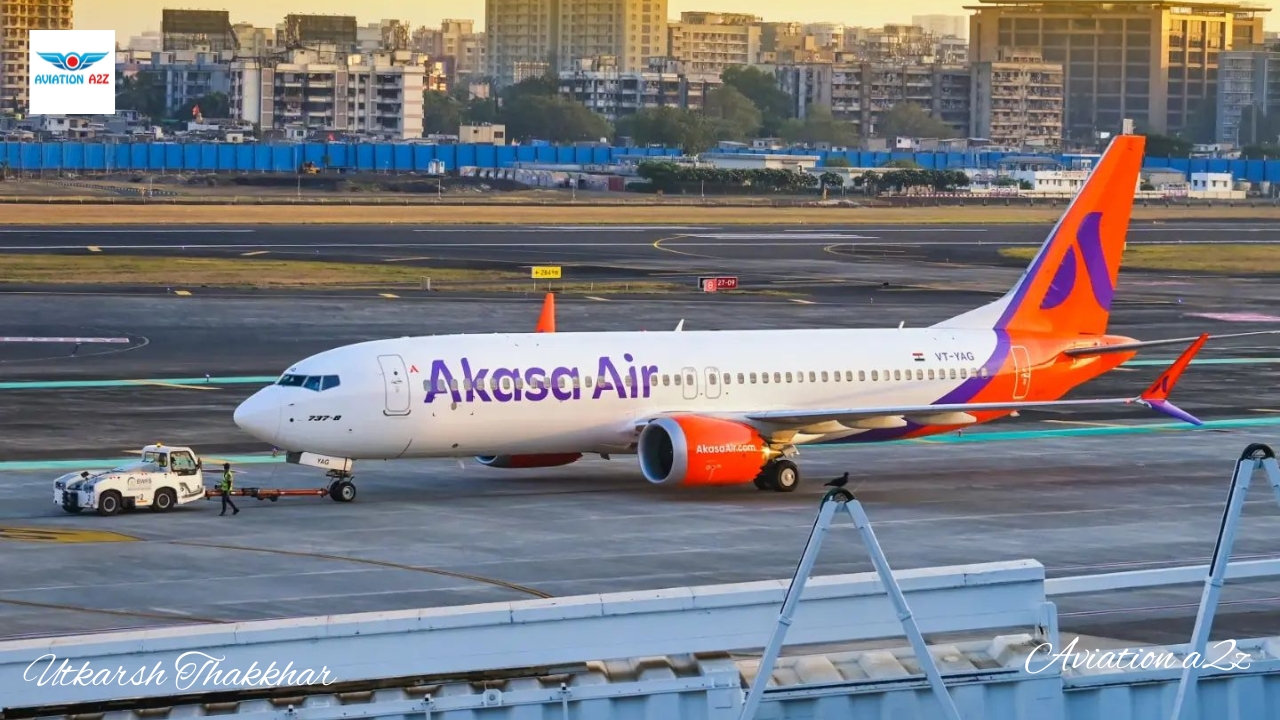
BENGALURU- An incident unfolded at Bengaluru’s Kempegowda International Airport (BLR) early on August 13, 2025, involving an Akasa Air (QP) Boeing 737 MAX aircraft that sustained damage at Bengaluru Airport after being struck by ground service equipment. The vehicle was being operated by a third-party agency.
There were no passengers or crew nearby at the time, and fortunately, no injuries were reported. An internal investigation is underway to determine the cause. While no injuries were reported, the incident has reignited concerns over ground handling safety at India’s busiest airports.
Akasa Air began operations in 2022. The airline currently operates a fleet of 30 Boeing 737 MAX aircraft, with plans to expand to 72 by 2027. The airline’s rapid growth has been matched by a growing presence in competitive metro-to-metro routes. Operational reliability is a key priority for any airline.
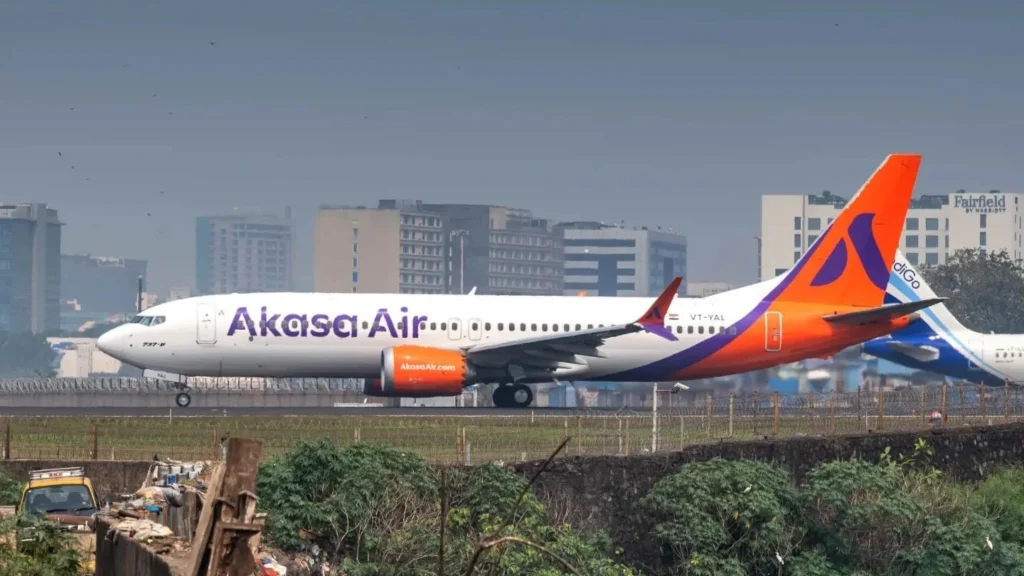
Akasa Air 737 Hit by Ground Equipment
According to the statement by Akasa Air, a ground power unit was being towed by a third-party ground handler. The ground power unit came in contact with a parked Akasa Air Boeing 737 MAX, causing damage to the aircraft.
The collision occurred at approximately 12:15 PM, involving a parked Akasa Air Boeing 737 MAX which was not operational at that time. A ground vehicle, reportedly operated by a contracted handling agency, grazed the aircraft’s undercarriage.
An airport spokesperson confirmed there were no passengers or crew on board at the time. Akasa Air has launched an internal investigation.
It is believed that it is a possible driver error, and the company is working with the ground handling company to determine accountability. The extent of the damage is still being assessed, and the aircraft is currently undergoing thorough checks. If the damage is severe, the aircraft could require temporary grounding for repairs.
Mechanical and human-error-related ground incidents are becoming more prominent. Experts attribute this to rising air traffic and the increasing use of outsourced ground handling services, where training and oversight vary across agencies.
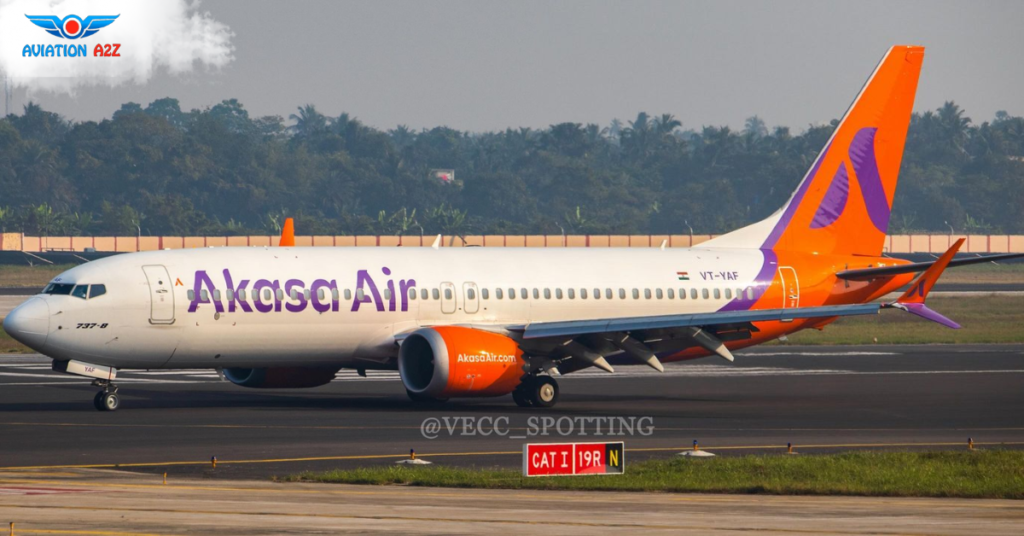
Airline and Airport Response
Akasa Air issued a statement where the airline confirmed the incident. The airline said that the incident has not impacted any of the immediate operations. Airport authorities have also stepped in to review safety protocols for ground movements. Bengaluru Airport, which handled 41.9 million passengers in FY 2024–25, has seen a noticeable uptick in minor ground incidents this year.
The airport saw an alarming 15% more incidents than last year. This is the second such case in 2025 at the airport. In April, a tempo traveller struck an IndiGo aircraft in a separate incident. Bird strikes have historically been a major safety concern at Indian airports—with KIA reporting 343 such cases since 2020.
Despite assurances, the incident has fueled concerns and calls from safety advocates for stricter regulation of ground handling operations. Suggestions include standardized nationwide training for ground staff, enhanced vehicle movement controls on aprons, and greater accountability for contracted service providers.
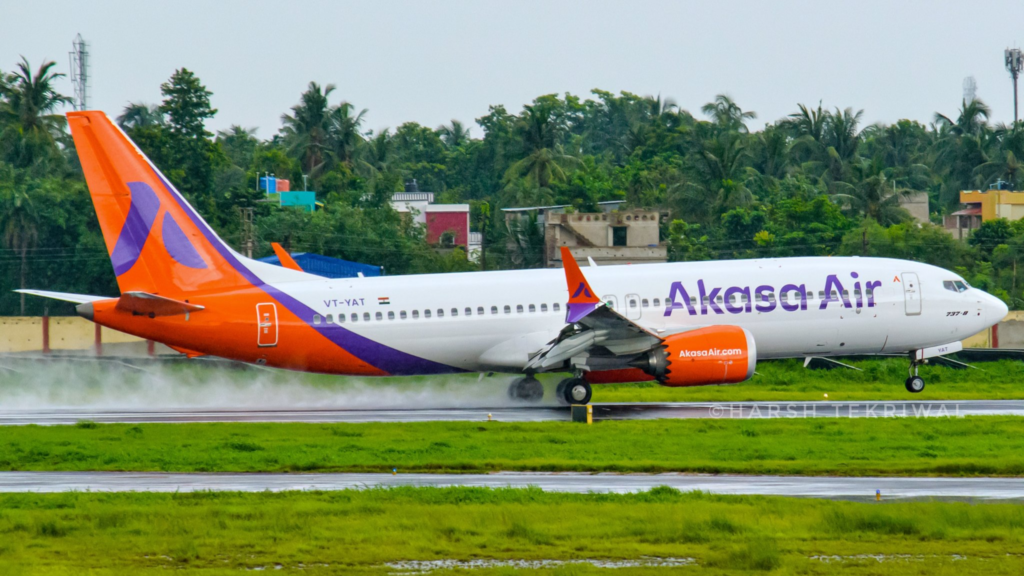
Impact on Airlines’ Scheduling
If the damaged aircraft requires extended repairs, Akasa may need to shuffle its fleet, potentially needing to adjust schedules. However, as per the statement from the airline, the operations have not been affected.
It obviously is not pleasant news for the airline. Akasa is in the midst of network expansion to new domestic and international destinations. The airline recently announced flights to Phuket. Such incidents disrupt the operations and would lead to the grounding of affected aircraft.
India’s aviation industry is experiencing unprecedented growth, having handled a record 150 million passengers in FY 2024–25. New airlines—such as the soon-to-launch Alhind Air—will be entering the market. This makes operational safety a critical focus area.
The Directorate General of Civil Aviation (DGCA) is going to closely monitor the findings of Akasa’s investigation. They may also issue updated guidelines on ground operations. For airports like KIA, which serve as major hubs for multiple carriers, avoiding such incidents will be vital to maintaining efficiency.
Bottom line
The final investigation report should be out in the coming days and will likely recommend corrective actions for both Akasa Air and the airport’s ground handling agencies. In the meantime, the airline continues to operate the flights without major disruptions.
However, if the airline needs to ground the aircraft for longer than expected during the checks, it might have to cancel some of its flights.
