

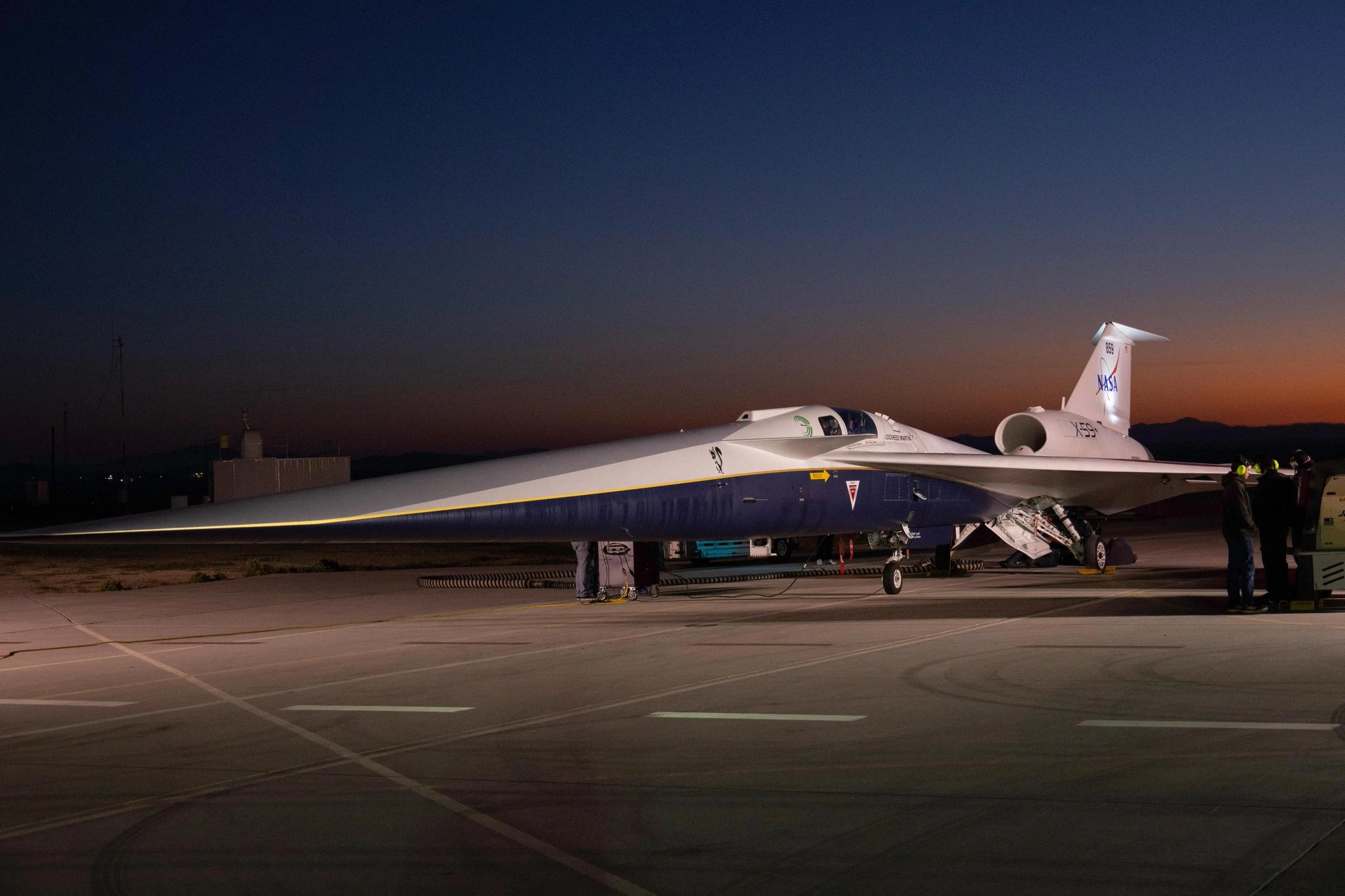
EDWARDS – NASA has officially taken ownership of its experimental X-59 Quesst aircraft from Lockheed Martin, marking a major milestone in the agency’s effort to make quieter supersonic commercial flights possible. The ownership transfer took place on November 18, 2026, following the completion of an aircraft acceptance review between the two organisations.
The aircraft, developed by Lockheed Martin’s Skunk Works division for NASA’s Quesst mission, will continue its flight-testing programme under NASA’s control. Based at NASA’s Armstrong Flight Research Center in Edwards, California, the X-59 is designed to demonstrate that aircraft can travel faster than the speed of sound without producing the disruptive sonic booms associated with conventional supersonic flight.
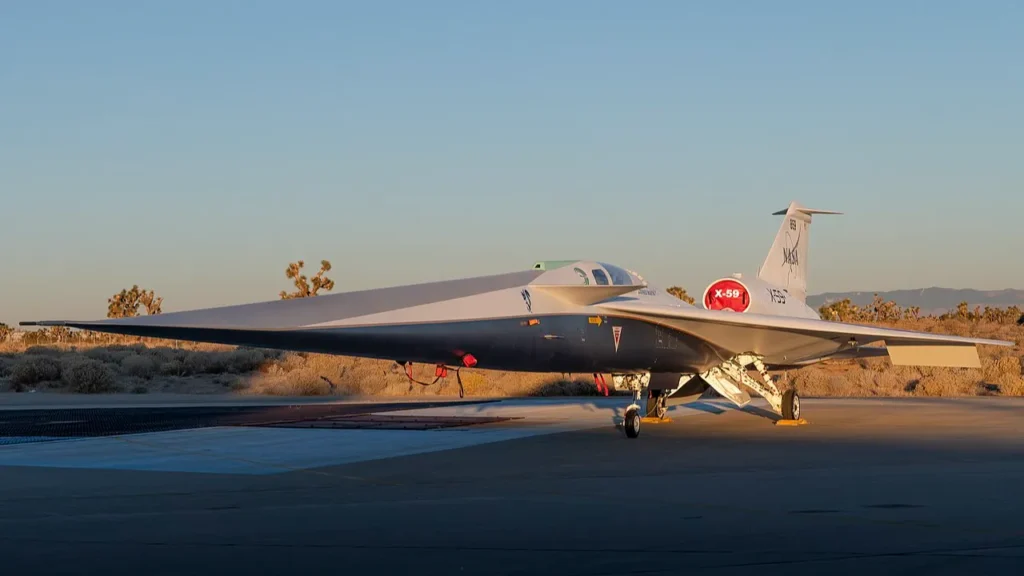
NASA Completes X-59 Ownership Transfer
NASA selected Lockheed Martin to help design, build and test the X-59 as part of its research into quieter supersonic technology.
Although the aircraft had already moved to NASA’s Armstrong Flight Research Center after its first flight, Lockheed Martin retained legal ownership throughout the initial testing period.
The transfer followed an aircraft acceptance review, which represented an important step towards completing the contractor’s responsibilities under the programme. With the review completed, NASA has officially taken responsibility for the experimental aircraft.
Lockheed Martin will not completely leave the project. The company will continue providing additional technical support whenever required as NASA progresses through the remaining testing activities.
Cathy Bahm, project manager for NASA’s Low Boom Flight Demonstrator programme, described the ownership transfer as another significant achievement.
She explained that the milestone reflects the progress made by the teams and brings NASA closer to collecting the information needed to support future commercial supersonic operations over land.
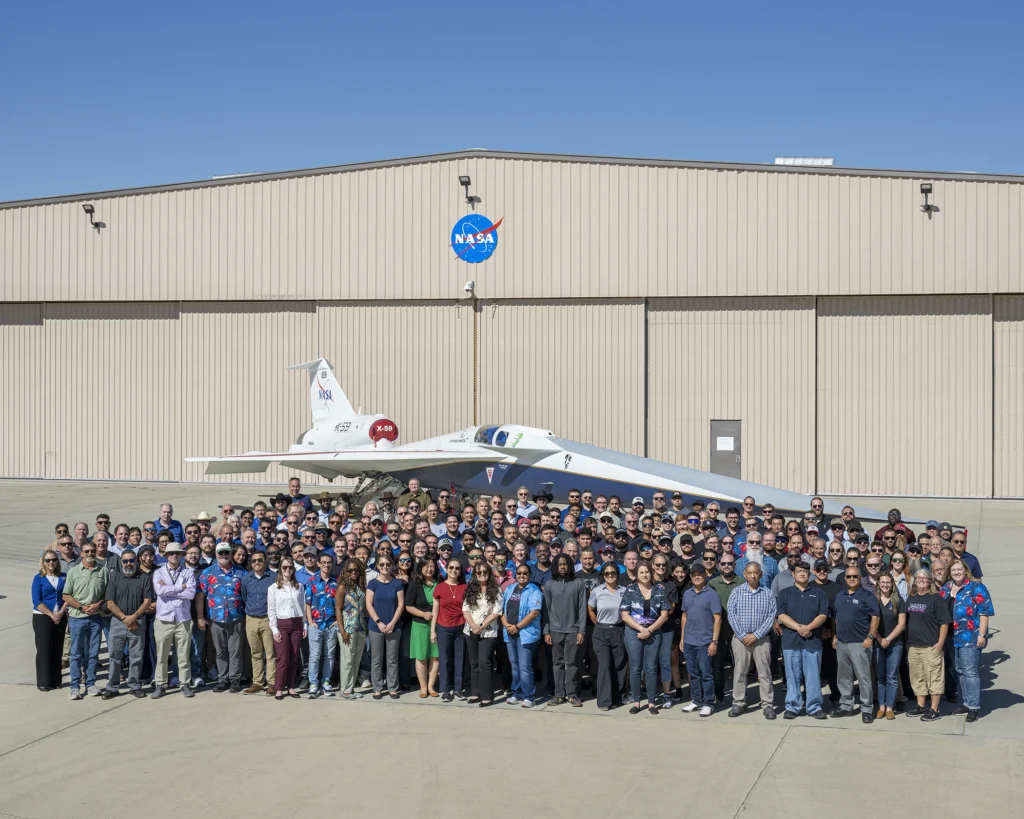
X-59 Targets Quieter Sonic Booms
The X-59 is the centrepiece of NASA’s Quesst mission, which aims to address one of the biggest obstacles to commercial supersonic aviation: the loud sonic boom produced when an aircraft travels faster than sound.
The aircraft uses an unusually long, tapered nose and a carefully designed aerodynamic structure to manage the shock waves created during supersonic flight.
Instead of producing the traditional explosive boom, NASA expects the aircraft to generate a much quieter sound known as a sonic thump.
The difference could have major implications for the aviation industry. In the United States, regulations introduced in 1973 prohibit civilian aircraft from flying faster than the speed of sound over land because of concerns about sonic booms and their impact on communities.
The restriction has historically limited commercial supersonic operations, contributing to the challenges faced by aircraft such as Concorde. NASA hopes the X-59’s research will provide regulators with reliable evidence to reconsider existing noise standards.
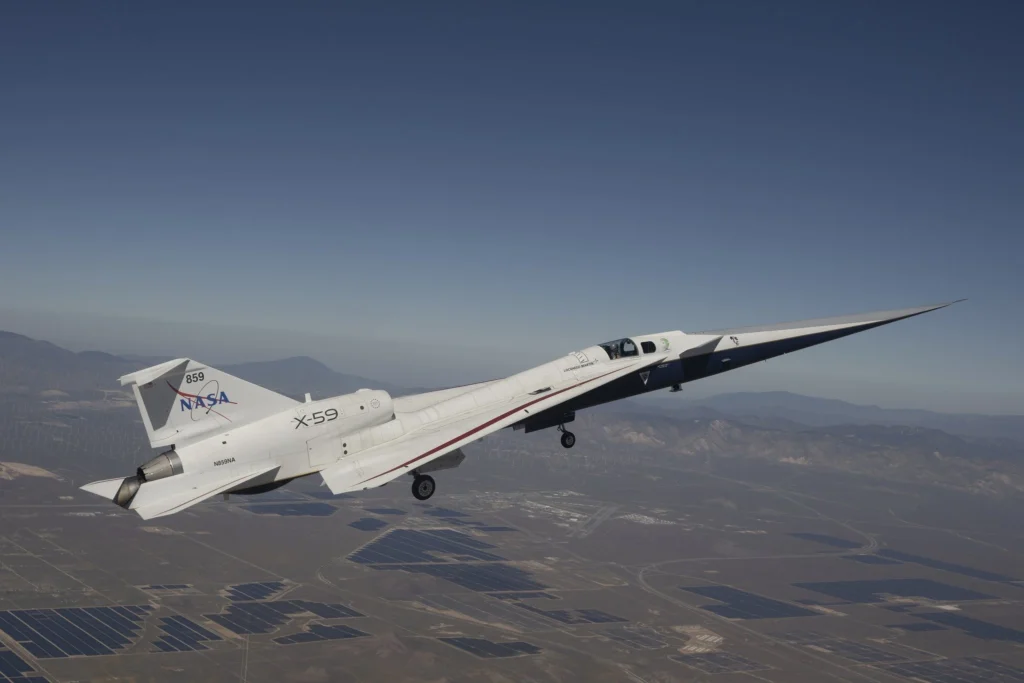
NASA Prepares For Acoustic Flight Testing
The X-59 completed its first flight on October 28, 2025, and has since progressed through an extensive flight-testing programme. By October 2026, the aircraft had completed 40 additional flights, reaching speeds of Mach 1.53 and altitudes exceeding 56,000 feet, Australian Aviation reported.
The next major stage focuses on acoustic validation, during which NASA will examine the sound produced by the aircraft during supersonic operations. Researchers will use specialised equipment to measure its sonic signature and determine whether the technology performs as expected.
NASA also plans to fly the aircraft over selected communities to collect public feedback about the sound heard on the ground. The results will help the agency prepare data for national and international aviation regulators.
Meanwhile, NASA is expanding its experimental aircraft programme with the newly announced X-70 Fractal research platform. Together, these projects demonstrate the agency’s broader effort to develop advanced aviation technologies and explore the future of faster commercial air travel.
Although the X-59 is not a commercial passenger aircraft, its research could eventually help establish the conditions needed for a new generation of supersonic passenger services.
Stay tuned with us. Further, follow us on social media for the latest updates.
Join us on Telegram Group for the Latest Aviation Updates. Subsequently, follow us on Google News
