

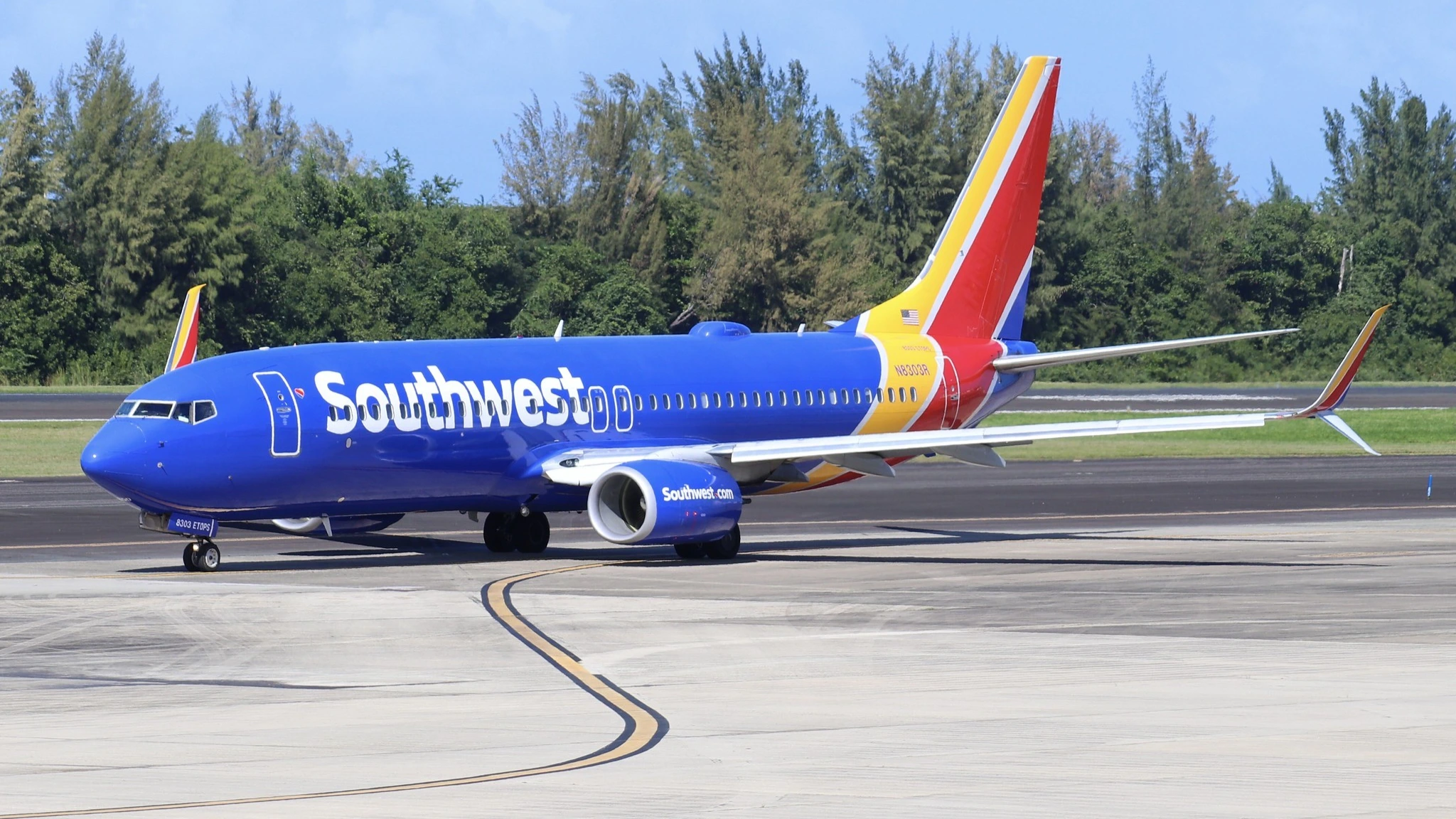
DALLAS- Southwest Airlines (WN) faces a disability discrimination lawsuit from flight attendant Lisa Patterson. She says the airline refused to accommodate her pet dander allergy.
Patterson, based at Chicago Midway International Airport (MDW), says cats and dogs in the cabin make her “violently ill.” She says rejected requests forced her to drop trips without pay.

Southwest Pet Policy Change Triggered Allergy Dispute
Lisa Patterson has worked as a Southwest Airlines flight attendant since 1998 and says she has suffered from an allergy to pet dander since childhood.
According to the lawsuit, the condition became a workplace problem after Southwest began allowing small domestic cats and dogs to travel in the passenger cabin in 2018.
Southwest’s policy permits eligible small, vaccinated domestic cats and dogs on domestic flights, subject to its carrier, reservation, and other travel requirements.
Before the policy change, Patterson’s allergy reportedly had not caused the same difficulties in her assigned duties because pets were not permitted in the cabin under the airline’s previous arrangements.
In 2019, Patterson contacted Southwest’s then vice president of inflight operations to request an accommodation. She explained that exposure to cats and dogs could make her seriously ill while performing her duties.
The complaint says she waited approximately 3 months for a response before being told that the airline could not provide an accommodation.
Patterson alleges that she continued to face exposure to pet dander on flights, leading to breathing difficulties and other severe symptoms. She describes becoming “violently ill” when exposed to cats and dogs, according to the original report.
Southwest’s Accommodation Options for Allergic Crew
In 2021, Southwest introduced options for flight attendants who reported allergies to pet dander. However, Patterson claims the measures did not provide a reliable way to avoid exposure while continuing to work and earn her regular income.
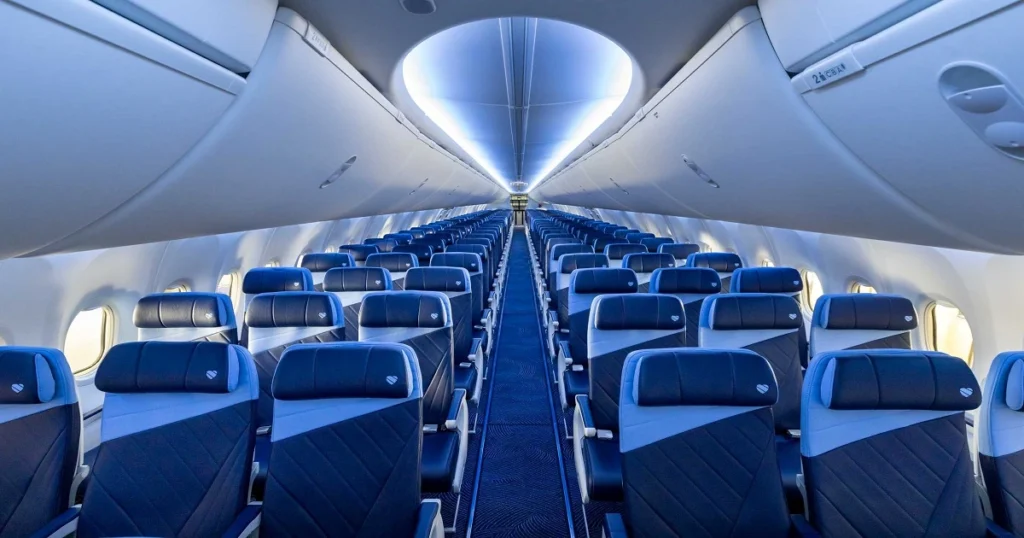
The airline’s proposed options included three alternatives:
- Change cabin positions: Patterson could try to exchange her assigned working position with another flight attendant so that she would not serve the section where a passenger’s pet was located.
- Switch to another flight: If a position exchange was unavailable, she could try to move to a different flight without a pet listed in the cabin.
- Stay home without pay: If neither alternative worked, she could give up the trip and lose the associated income.
Patterson says these options were difficult to use in practice. Southwest flight attendants bid for specific flights as well as working positions within the cabin, so changing assignments depended on finding colleagues willing to exchange positions. She alleges that other flight attendants were rarely willing to make those changes.
Finding a suitable alternative flight also proved difficult because flights without a pet listed in the cabin were not always available. As a result, Patterson says she repeatedly faced the possibility of losing income when she chose to avoid potential allergic reactions.
The lawsuit argues that a meaningful accommodation should have allowed Patterson to continue performing her work without being forced to choose between her health and her earnings.
Rejected Proposals to Move Passengers With Pets
Patterson alleges that the available options were ineffective, so she proposed additional arrangements intended to reduce her exposure to pet dander without requiring her to surrender her trips.
Her first suggestion was to move passengers travelling with cats or dogs away from the cabin section where she had been assigned to work. According to the complaint, Southwest rejected the proposal.
After Southwest moved away from its open-seating model, Patterson made another suggestion. She proposed seating passengers travelling with pets toward the front of the aircraft when suitable seats were available, allowing her to work farther back in the cabin.
She says Southwest rejected that proposal as well.
Patterson argues that these alternatives could have helped her avoid the areas where pets were present while allowing her to continue working. The complaint alleges that the airline’s unwillingness to implement workable arrangements resulted in substantial lost revenue on trips she could not work.
The lawsuit also alleges that, on some occasions, Patterson remained on flights with cats or dogs in her assigned section because she needed to receive compensation. She claims that these experiences left her ill, requiring medical attention and resulting in additional medical expenses.
Disability Discrimination Lawsuit Against Southwest Airlines
Patterson filed a complaint with the Equal Employment Opportunity Commission (EEOC) earlier in 2026 and subsequently received authorization to pursue legal action.
She filed her lawsuit against Southwest Airlines on October 20, 2026, in the U.S. District Court for the Northern District of Illinois. The complaint alleges that the airline discriminated against her because of her disability by failing to provide a reasonable accommodation for her pet allergy.
The lawsuit seeks compensation for alleged losses associated with wages, benefits and seniority, as well as legal fees. Reports on the complaint also describe a request for a court order preventing similar employment practices. These are claims and requested remedies, not findings that the airline has violated the law.
PYOK reported that Southwest said it does not comment on pending litigation. The airline’s position in court and the evidence presented during the case will determine how the dispute proceeds.
The case raises a workplace accommodation question under the Americans with Disabilities Act (ADA): whether an employer has provided a reasonable and effective solution for an employee’s documented medical condition.
The court will need to evaluate the accommodation options, their practical limitations and the evidence supporting Patterson’s allegations before reaching a decision.
Southwest’s Response
The employment lawsuit also draws attention to wider concerns about how airlines respond to severe allergic reactions during flights.
In 2024, Southwest announced that its enhanced onboard emergency medical kits would include epinephrine auto-injectors, such as EpiPens, to help address serious allergic reactions.
Its reported additions also included naloxone, used to reverse opioid overdoses, and ondansetron, a medication used to treat nausea. These supplies expand the medical resources available to respond to emergencies onboard.
The development followed calls for airlines to improve their ability to respond to potentially fatal allergic reactions.
Traditional airline medical kits have included injectable epinephrine in single-dose ampule or equivalent form. Unlike a prefilled auto-injector, this format can be more difficult to administer, particularly when no appropriately trained medical professional is available.
Anaphylaxis is a severe allergic reaction that can cause swelling of the mouth or throat, breathing difficulties, dizziness, vomiting or loss of consciousness. It can become life-threatening without prompt treatment.
Medical advocates have therefore raised concerns about whether existing airline equipment provides practical access to epinephrine during an in-flight emergency.
FAA Proposal Could Change Airline Medical Kit Requirements
In August 2026, the Federal Aviation Administration (FAA) proposed replacing the existing prescriptive lists of required items in airline emergency medical and first-aid kits with performance-based requirements.
The proposal would give airlines greater flexibility to choose equipment while requiring the kits to address specified medical emergencies, including anaphylaxis.
The proposal does not specifically mandate epinephrine auto-injectors on every flight. In October 2026, lawmakers and medical advocates urged the FAA to retain protections ensuring that airlines carry epinephrine, warning that greater flexibility could leave passengers without consistent access to easy-to-use treatment.
As of October 28, 2026, the FAA proposal remains a proposed rule rather than a final regulation. Its eventual requirements will depend on the regulatory process and the agency’s consideration of submitted comments.
These regulatory questions are separate from Patterson’s employment lawsuit. Her case concerns the airline’s alleged failure to accommodate a crew member’s allergy, while the medical-kit debate focuses on the supplies airlines must carry to respond to passenger and crew medical emergencies.
Stay tuned with us. Further, follow us on social media for the latest updates.
Join us on Telegram Group for the Latest Aviation Updates. Subsequently, follow us on Google News
