

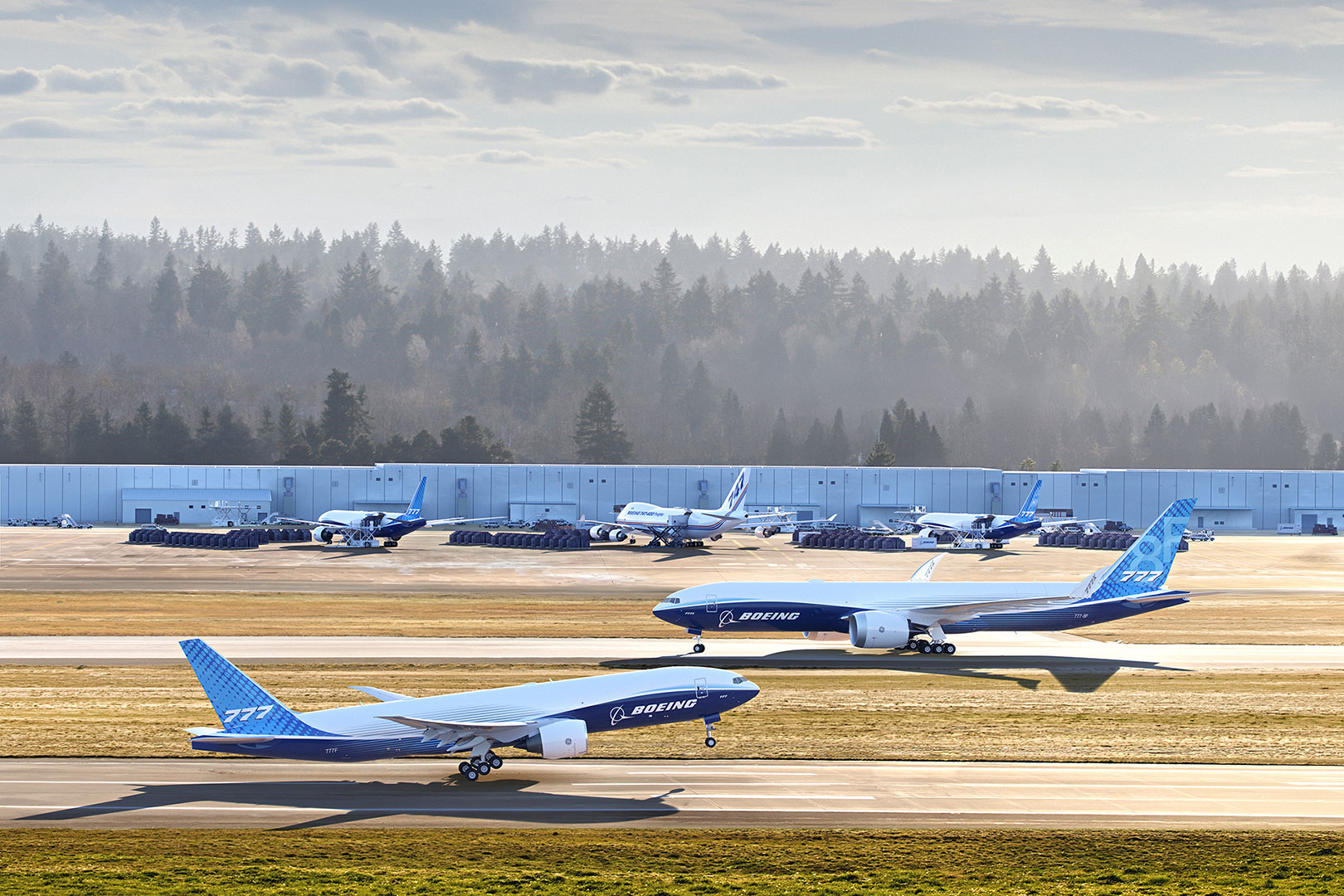
CHICAGO- Boeing’s 777 Freighter has overtaken the 747 freighter fleet in active service, marking a significant shift in the aircraft manufacturer’s long-haul cargo business. With more than 330 aircraft in service, the Boeing 777 Freighter (777F) has become the world’s most widely operated widebody freighter, replacing the iconic 747 as the leading aircraft type for global air cargo operations.
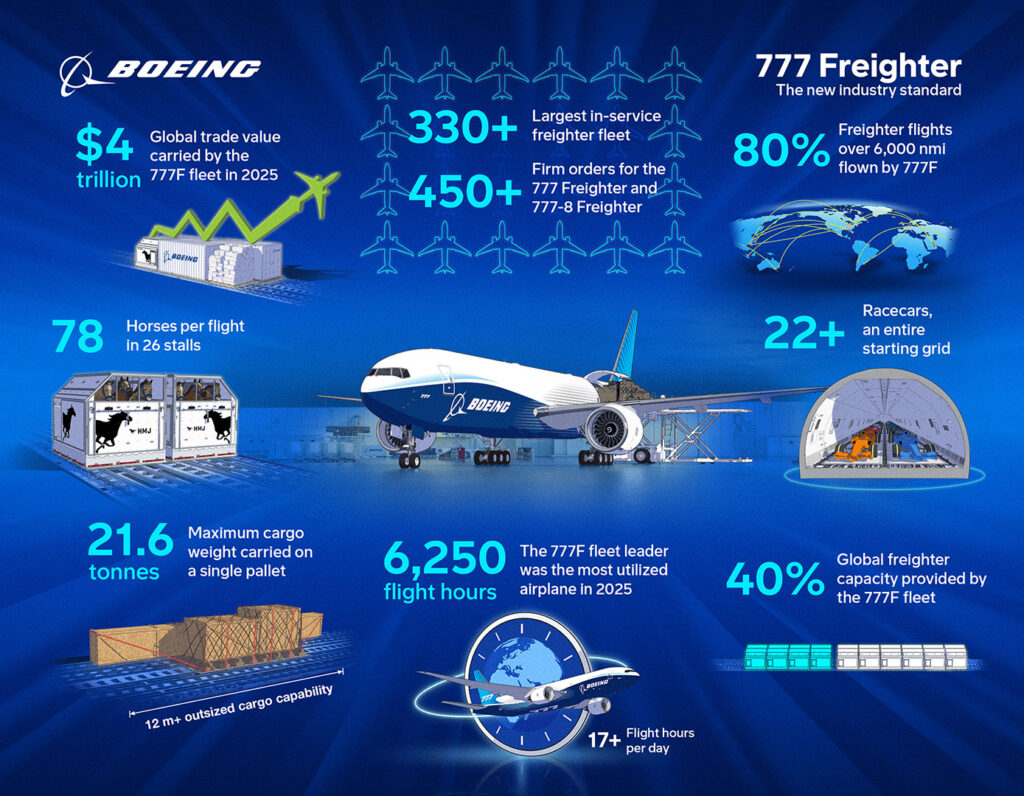
The milestone reflects the growing role of twin-engine aircraft in long-distance freight transportation, where fuel efficiency, payload capability, and high utilization influence airline fleet decisions. Boeing says the 777F fleet accounted for around 40% of global freighter capacity and transported goods worth an estimated $4 trillion in 2025, underlining its importance to international trade and logistics.
Boeing 777F Overtakes 747
The Boeing 747 has played a central role in air cargo for decades, beginning with the delivery of the first 747-200 Freighter in 1972.
Successive variants improved the aircraft’s performance and cargo capabilities, with the 747-8 Freighter representing the final production version of the four-engine jumbo jet.
The 777 Freighter began entering service in 2009 and gradually established itself as a major aircraft in long-haul cargo operations. Its twin-engine configuration, substantial payload capacity, and long-range performance have helped cargo operators deploy it across major international freight routes.
According to Boeing, more than 330 777 Freighters are now in service, making the type the largest in-service widebody freighter fleet.
The aircraft’s high utilization also contributes to its position in the market, with Boeing reporting that 777Fs operate approximately 80% of freighter flights covering more than 6,000 nautical miles.
The manufacturer estimates that the fleet carried approximately $4 trillion worth of global trade in 2025. Its aircraft transport a broad range of goods, including electronics, fresh produce, medicines, aircraft engines and other oversized or time-sensitive cargo.
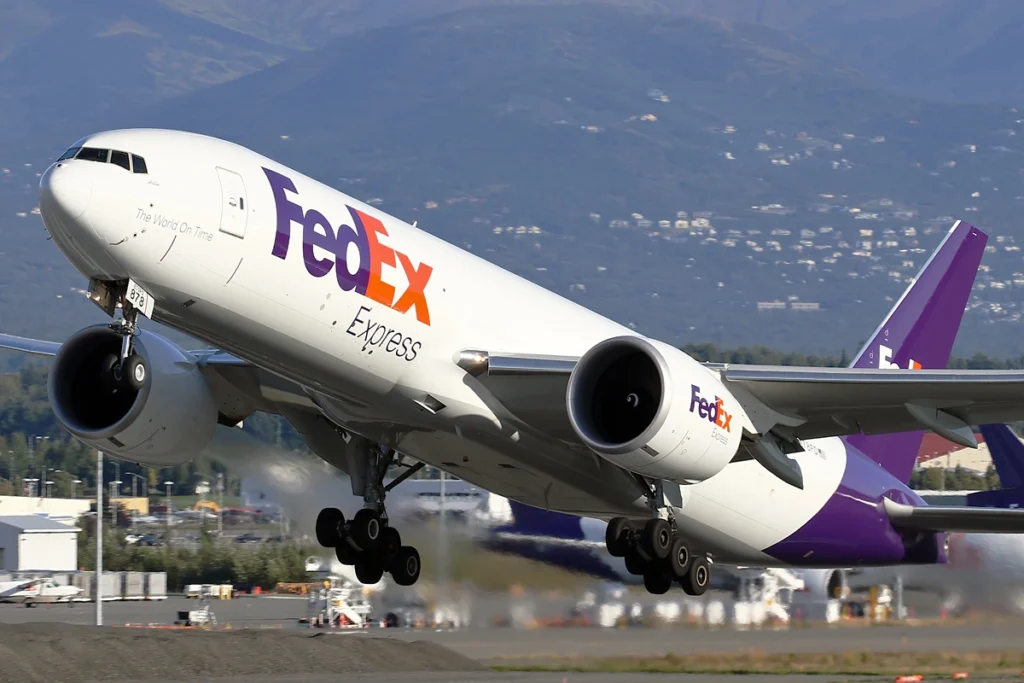
Cargo Capacity and Operations
The 777F’s role extends beyond conventional commercial freight.
Its large cargo capacity supports specialized shipments, including horses and motorsport equipment, while its range allows operators to connect major cargo hubs without relying on intermediate stops on many long-haul routes.
Boeing highlights the aircraft’s ability to transport up to 78 horses in 26 stalls and more than 22 racecars, demonstrating its flexibility for specialized cargo missions.
The manufacturer also reports that a single pallet can carry up to 21.6 tonnes, depending on the cargo configuration and operating requirements.
The aircraft’s operational record has also contributed to its position among cargo airlines. Boeing says the fleet leader accumulated 6,250 flight hours in 2025, averaging more than 17 hours per day, illustrating the intensive utilization possible in freight operations.
Since the first delivery in 2009, the 777F has supported commercial supply chains and humanitarian missions. Its ability to carry high-value goods, essential medical supplies, and large equipment makes it an important part of international logistics networks.
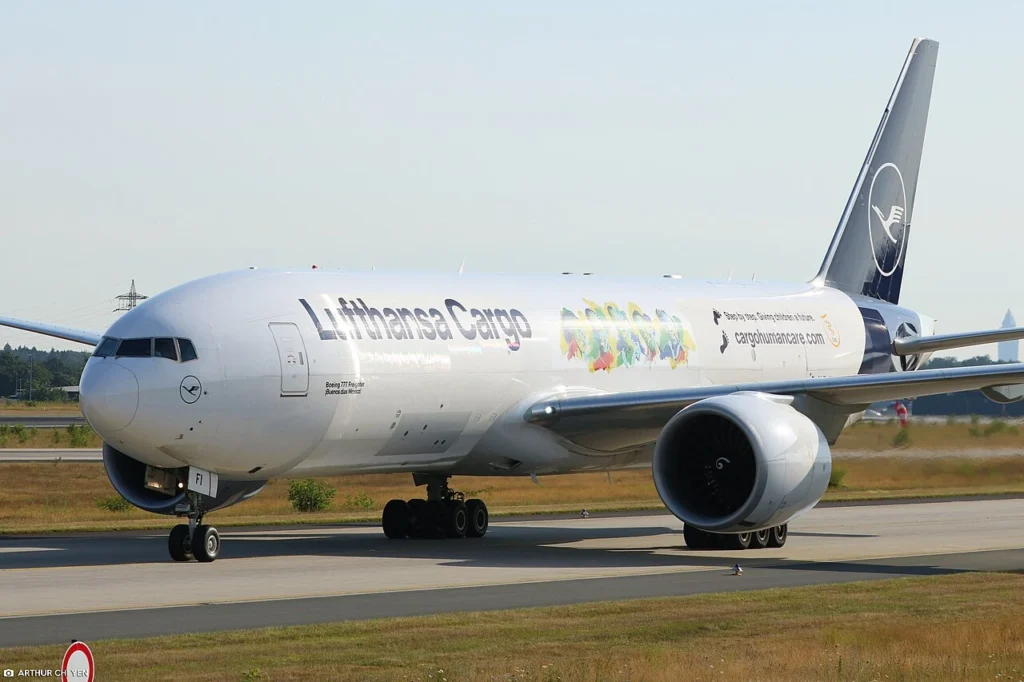
Boeing 777-8F Development
Boeing is preparing the 777-8 Freighter as the next step in its widebody cargo portfolio. The aircraft belongs to the 777X family and incorporates a new carbon-fibre composite wing and engines designed for the programme.
Boeing says the 777-8F is designed to carry a payload of 118 tonnes while using 30% less fuel than previous-generation aircraft.
The company also aims to preserve operational commonality with the existing 777F, helping airlines maintain familiar operating procedures and fleet efficiencies.
The programme has attracted 89 firm orders from cargo operators, including Cargolux, Qatar Airways, Lufthansa, Korean Air Cargo, China Airlines, Ethiopian Airlines and Silk Way West Airlines. Other customers named by Boeing include ANA, China Southern Cargo and MSC Air Cargo.
The transition from the 747 to the 777F reflects changing priorities in the global air cargo industry, where airlines increasingly rely on efficient twin-engine aircraft for long-distance operations.
As the current 777F fleet continues to expand and Boeing develops the 777-8F, the manufacturer is positioning the 777 family to remain central to widebody cargo operations in the coming years.
Stay tuned with us. Further, follow us on social media for the latest updates.
Join us on Telegram Group for the Latest Aviation Updates. Subsequently, follow us on Google News
