


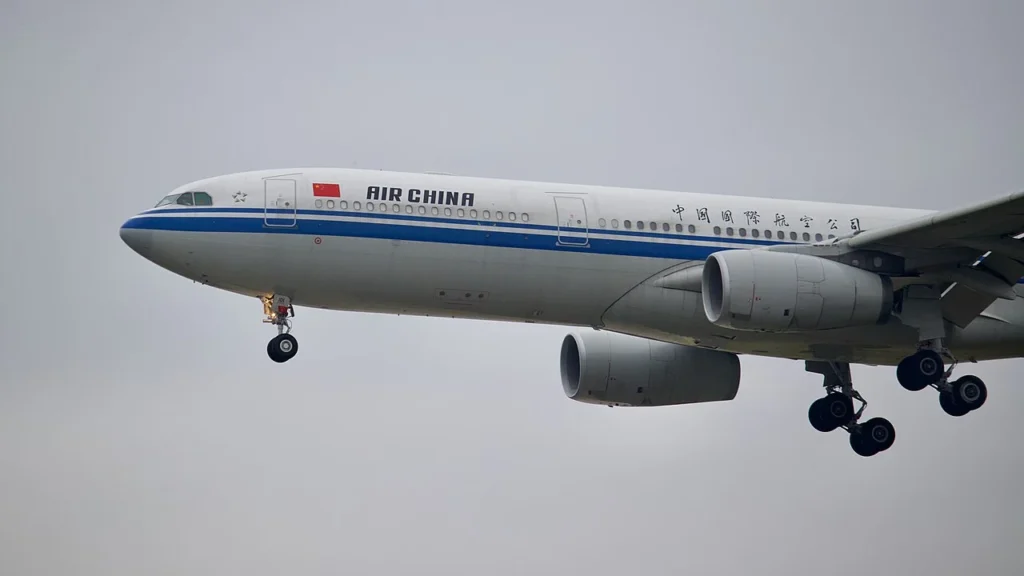
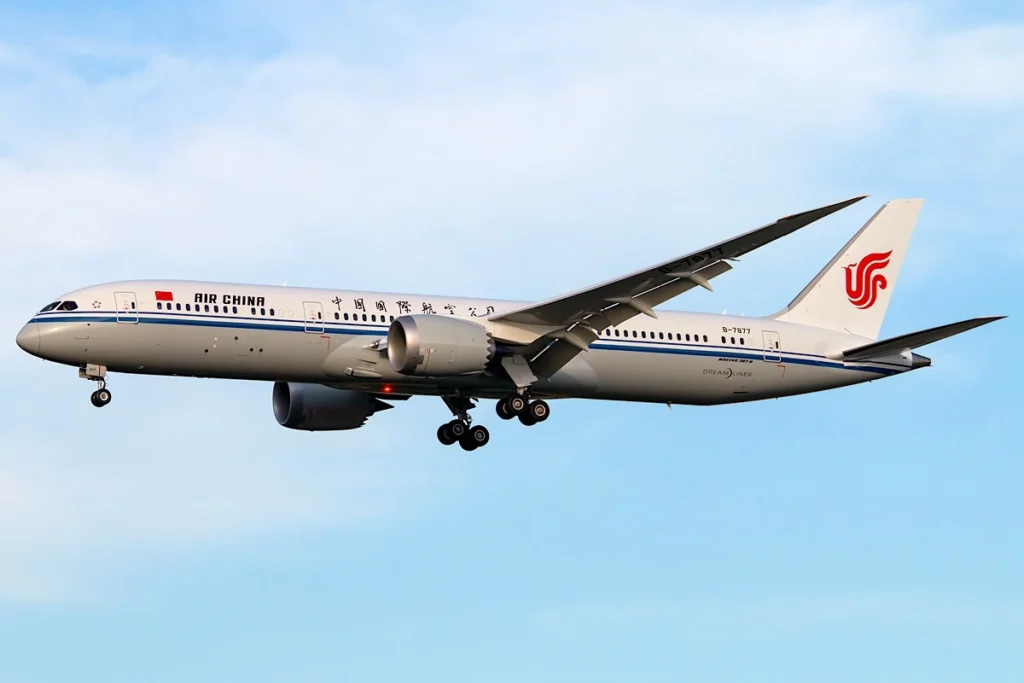
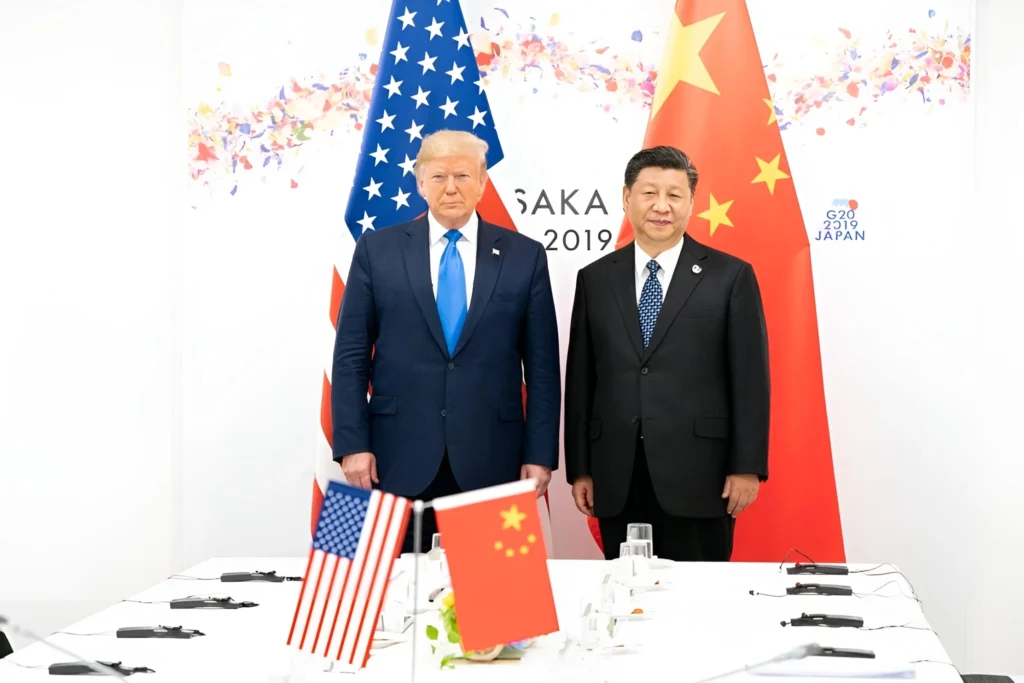
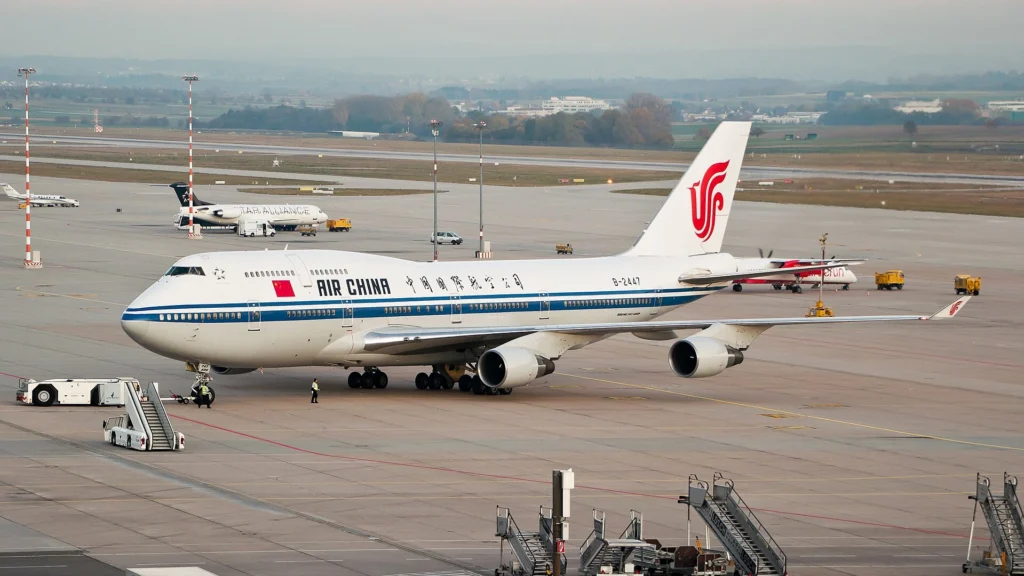
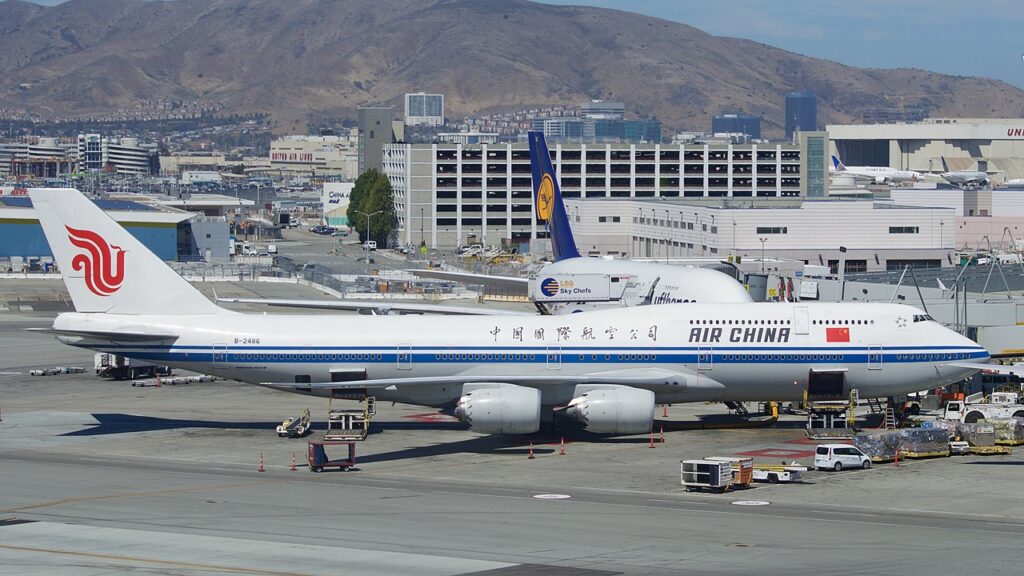
BEIJING- Air China (CA) carried Chinese President Xi Jinping to Joint Base Andrews (ADW) in Maryland on Sept. 23, 2026, where President Donald Trump personally greeted him during a formal arrival ceremony.
The unusual tarmac welcome included a red carpet, military honors, national anthems and a planned bomber flyover. Trump’s heavy coat and gloves in weather around 64 degrees Fahrenheit also became a focus of social-media commentary.
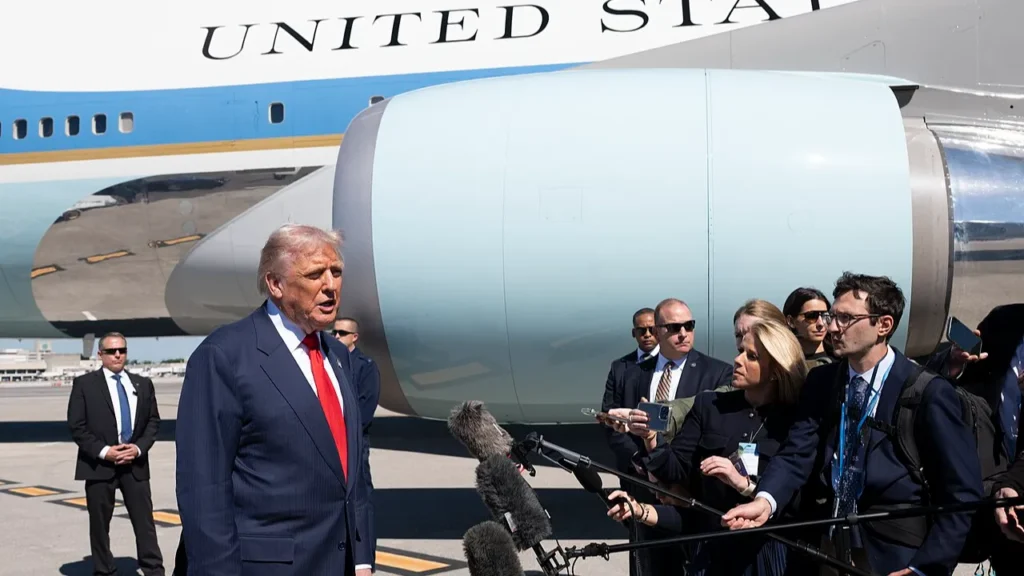
Trump’s Unusual Welcome for Xi at Joint Base Andrews
Trump and first lady Melania Trump traveled to Joint Base Andrews to meet Xi and his wife, Peng Liyuan, after the Air China aircraft arrived.
The Chinese president’s arrival was followed by a formal ceremony that included US military personnel, a long red carpet, the US and Chinese national anthems, a gun salute and a military flyover.
The scene stood out because Trump chose to greet Xi at the military airfield rather than wait for the Chinese leader at the White House or at the main summit venue. Reuters had described the planned airport greeting as a rare protocol move for a US president.
Trump’s appearance quickly became an online talking point. Temperatures at Joint Base Andrews were reported at about 64 degrees Fahrenheit, or roughly 18 degrees Celsius, yet Trump wore a long winter-style coat and leather gloves.
Xi and the other members of the 2 presidential couples were dressed more lightly, making the difference particularly visible.
According to The Independent, Trump removed a glove to shake Xi’s hand before putting it back on during the ceremony. Journalist Aaron Rupar highlighted the weather and Trump’s clothing, while Twitch streamer Hasan Piker questioned Trump’s reaction to the flyover. The comments added to the online attention surrounding the ceremony.
The clothing itself did not carry an official explanation in the reporting reviewed for this article. The discussion therefore remained focused on the visual contrast between Trump’s winter clothing and the mild conditions.
The arrival ceremony involved more than a conventional diplomatic handshake. US service members prepared the red carpet and adjusted it before Xi came down the aircraft stairs. Chinese officials briefly waited while the carpet was positioned correctly.
The event then moved through several formal elements. The 2 national anthems were played, military personnel stood along the route, and guns were fired in salute. Two B-1 bombers conducted the flyover as Trump, Xi and their spouses stood together on the tarmac.
Video of the ceremony showed Trump reacting visibly when the aircraft passed overhead, while Xi appeared comparatively composed. That contrast became another subject of online discussion.
Why Airport Greeting Was Unusual
The planeside welcome marked a departure from the way US presidents have often handled visits by major foreign leaders. Trump had also used a prominent tarmac ceremony for Russian President Vladimir Putin in Alaska in 2025, including a red carpet and military elements.
Recent US practice provides other points of comparison. When King Charles III and Queen Camilla visited the United States in April 2026, Trump and Melania Trump greeted the royal couple at the White House rather than receiving them personally at the airport. The White House documented the meeting at the South Portico.
Joe Biden’s 2023 meeting with Xi offers another comparison. Biden greeted the Chinese president at Filoli in Woodside, California, during the APEC summit after Xi arrived at the meeting site by car.
The original account of the comparison describes a military guard and red carpet there, but not a comparable red-carpet reception transported onto the Joint Base Andrews tarmac.
This makes the location and staging of Trump’s greeting significant as a matter of presidential protocol, even though ceremonial elements themselves are common in high-level diplomatic meetings.
Trump Had Used Similar Pageantry Before
The Xi ceremony was not the first time Trump had opted for an unusually visible airport reception. His 2025 meeting with Putin in Alaska also featured a red-carpet welcome and military aircraft.
The White House has therefore used high-profile arrival ceremonies with major geopolitical figures during Trump’s second term.
The difference with Xi was the broader diplomatic backdrop. The United States and China remain engaged in negotiations while disagreeing over trade, advanced technology and broader security issues.
Trade, AI and Semiconductors Remain Major Issues
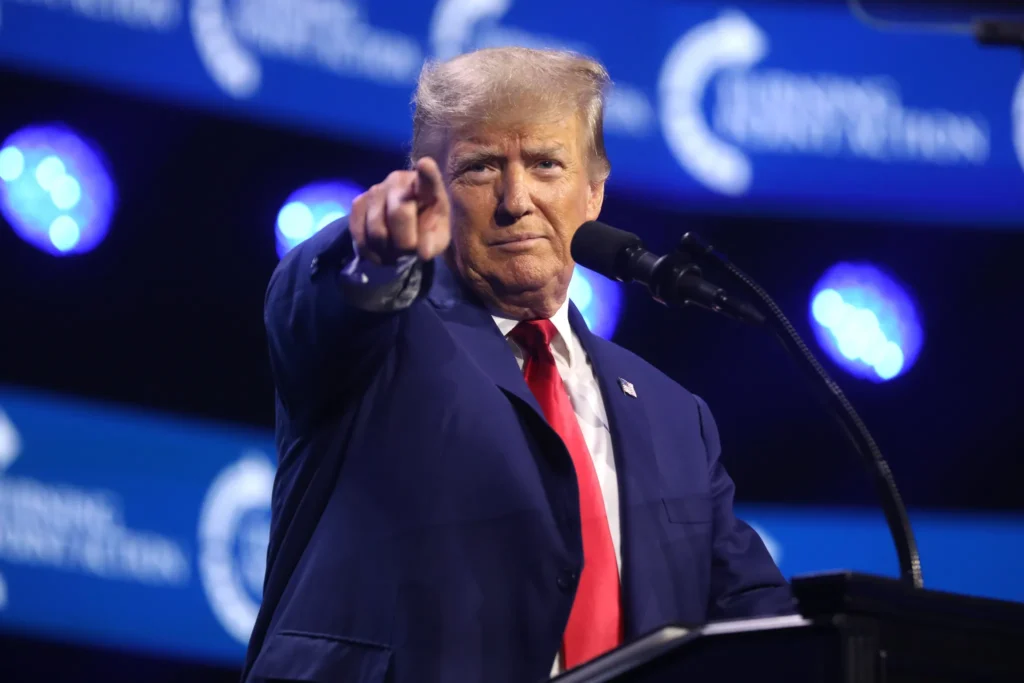
Xi’s visit comes as Washington and Beijing continue to manage disputes over tariffs, artificial intelligence, semiconductors and other technology-related matters. The agenda also includes wider issues affecting the bilateral relationship and global security.
The U.S. and China have also been dealing with questions involving strategic technology and economic policy. The visit was therefore not simply a ceremonial exchange. The arrival was the public opening of a larger round of leader-level discussions between two governments with significant economic and military interests.
American domestic critics have questioned whether Trump’s approach toward Beijing is sufficiently firm on issues including AI and semiconductors. Those criticisms formed part of the political backdrop to the welcome.
Senator Criticizes the Welcome
Mississippi Republican Sen. Roger Wicker, chairman of the Senate Armed Services Committee, criticized the scale of the planned reception before Xi arrived.
Wicker said he would not have invited Xi to Washington for what he called such a “lavish” welcome, citing disputes involving China and the Chinese Communist Party.
Wicker also urged Trump to raise concerns about China’s military buildup, its reported support for Iran, human rights issues and Taiwan.
During his Senate speech, Wicker referred to Xi using the characterization of a “brutal, unelected, and oppressive dictator.” That description was Wicker’s own political characterization and not an independent description adopted here.
His criticism was significant because it came from a senior Republican lawmaker who chairs the Senate committee responsible for major defense legislation and oversight.
Xi’s Visit Takes Place During Domestic Political Pressure
The arrival also occurred amid wider political pressure on Trump over the war in Iran and the cost of living.
A Reuters/Ipsos poll conducted in September 2026 put Trump’s approval rating at 32%, described by Reuters as the lowest of his political career. The poll surveyed 1,277 US adults and had a margin of error of three percentage points.
Republican disagreement over the Iran war had also become more visible. Republican Senate candidates Mike Rogers in Michigan and Ashley Hinson in Iowa publicly called for a swift end to the conflict, reflecting disagreements within the party over the war and its economic effects.
The original political context also linked those disagreements to the approaching November midterm elections. Early voting had already begun in some states by late September, with control of Congress at stake.
These developments formed the domestic backdrop to Xi’s visit, although they were separate from the formal diplomatic purpose of the ceremony.
White House Media Dispute
Another factor affecting the event was the White House dispute with major news organizations. Trump announced that CNN, MS NOW and Politico would be barred from the White House, and journalists from those organizations were subsequently denied access. The outlets later challenged the restrictions in court.
The television press pool responded by suspending pooled coverage. Fox News Media, ABC News, CBS News, CNN and NBC News said they would suspend joint coverage of Trump after the ban on the three organizations.
The dispute had a direct effect on Xi’s arrival coverage. CNN reported that its journalists could not show viewers what was happening at Joint Base Andrews because of the White House restrictions.
As a result, the ceremony received less conventional White House television-pool coverage than such a high-profile presidential event normally would. That added a media dimension to an already unusual diplomatic spectacle.
Ceremony Sets the Tone for High-Stakes Visit
Xi’s arrival marked the beginning of a three-day U.S. state visit focused on managing a relationship defined by both cooperation and strategic competition. Trade, AI, technology and broader security questions remain central to the talks.
The opening ceremony itself combined traditional diplomatic symbolism with a level of public pageantry that drew unusual attention.
Trump’s decision to greet Xi personally at Joint Base Andrews, the military honors, the bomber flyover and the discussion of his clothing all became part of the public narrative surrounding the visit.
At the same time, the ceremony took place against domestic disagreements over China policy, the Iran war, economic pressures and the White House’s dispute with major media organizations. Those separate issues helped shape the political environment in which Trump received Xi.
Conclusion
Trump’s personal airport greeting for Xi represented an uncommon choice in US presidential protocol and created a highly visible opening to the Chinese leader’s state visit.
The ceremony combined military honors and diplomatic symbolism while generating attention over Trump’s clothing, his reaction to the flyover and the scale of the welcome.
The wider significance of the visit lies beyond the arrival ceremony. Washington and Beijing still face disputes over trade, AI, semiconductors and security, while Trump is dealing with political pressure at home.
The Joint Base Andrews welcome therefore served as both a diplomatic event and the public starting point for a much broader set of negotiations.
Stay tuned with us. Further, follow us on social media for the latest updates.
Join us on Telegram Group for the Latest Aviation Updates. Subsequently, follow us on Google News
