


LONG ISLAND CITY- JetBlue Airways (B6) is facing a proposed class action alleging that it sold higher-priced fares with free seat selection even when no qualifying seats were available. The case stems from a February booking involving Fort Lauderdale Airport (FLL) and Los Angeles International Airport (LAX).
The lawsuit does not argue that JetBlue should provide every seat at no charge. Instead, plaintiff Saman Kohanof alleges that the airline should warn customers before payment when the advertised free seat-selection benefit cannot actually be used.
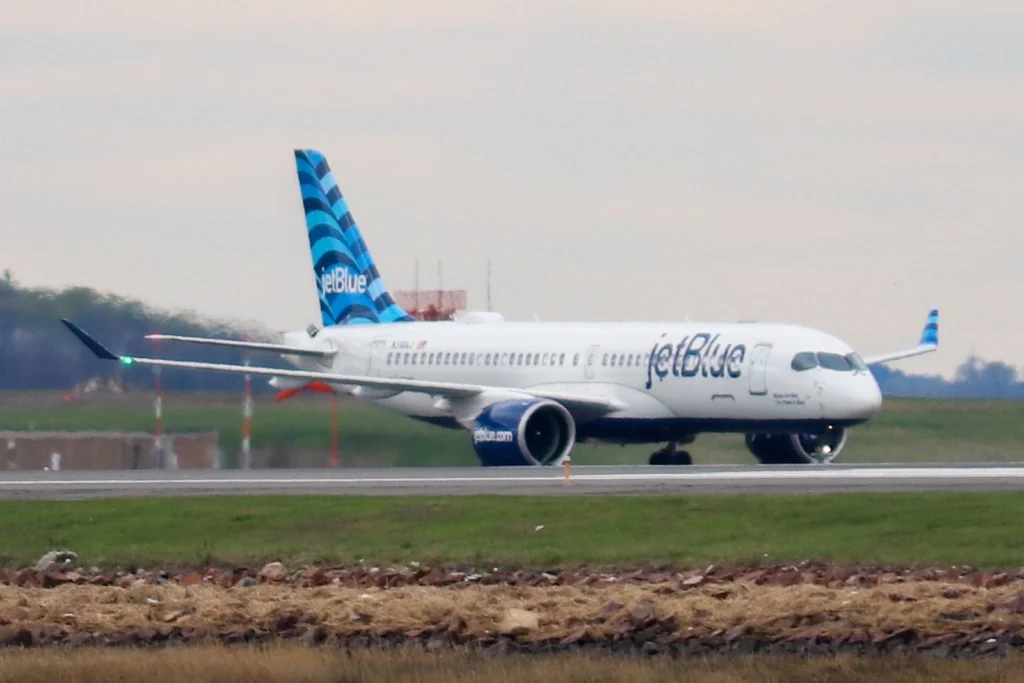
JetBlue Faces Class Action Over Free Seat Selection
Saman Kohanof filed a proposed class action against JetBlue Airways Corporation in the U.S. District Court for the Central District of California on August 31, 2026.
The case is Kohanof v. Jetblue Airways Corporation, No. 2:2026cv09701. The public docket identifies the matter as a contract case based on diversity jurisdiction and shows that the complaint was filed by Kohanof on August 31.
The complaint alleges that JetBlue could face at least $5 million in claimed damages and that the proposed class could include potentially thousands of passengers who paid for a fare advertised with free seat selection but allegedly could not use that benefit without paying an additional fee.
The dispute centers on how JetBlue presented two fare choices for the same flight at the time of Kohanof’s booking. The complaint says the JetBlue mobile app showed Blue Basic and Blue fares.
Blue Basic stated that free seat selection was not included, while the more expensive Blue fare listed free seat selection among its benefits.
Kohanof alleges that he specifically paid the higher Blue fare because he wanted to select a seat without paying another charge.
After completing the transaction, however, the complaint says that the seats available for free selection were shown as unavailable or grayed out on JetBlue’s seat-selection tool. According to the lawsuit, he would have needed to pay an additional fee to choose a seat.
Kohanof’s complaint draws a clear line between paid seat selection and the alleged failure to disclose that a promised fare benefit was unavailable.
The plaintiff does not claim that every seat on an aircraft must be available for free. The complaint acknowledges that JetBlue can charge additional fees for more desirable seats and that there can be legitimate reasons why seats that were once available are no longer available.
The alleged problem is different. Kohanof argues that JetBlue continued to market a more expensive fare with free seat selection even when no qualifying seat remained available for the particular flight.
That distinction forms the central consumer issue in the case. The allegation is that a customer could pay more because of an advertised benefit and only learn after completing the purchase that the benefit could not actually be exercised without another payment.
JetBlue’s Reservation System Is Central to Claim
The complaint argues that JetBlue has the information necessary to identify when its free seat-selection benefit is unavailable.
According to the lawsuit, JetBlue controls the seat map shown to passengers and determines whether individual seats appear available, unavailable, occupied, blocked, restricted or otherwise incapable of advance selection.
The complaint therefore argues that JetBlue’s reservation system can readily indicate whether a standard seat is available for advance selection on a particular flight.
Based on that allegation, Kohanof contends that JetBlue could warn customers before payment when the advertised free seat-selection benefit was no longer available.
The legal theory does not depend on proving that JetBlue must make premium or otherwise paid seats free.
Instead, it focuses on whether the airline accurately communicates the availability of an included benefit before a customer commits to the higher fare.
JetBlue Has Since Changed Its Fare Names
JetBlue has since moved away from the Blue Basic and Blue fare labels used in the complaint’s underlying booking.
The airline’s current fare structure uses Main Base, Main and Main Flex within its Main experience. JetBlue states that seat selection is not included with Main Base, while seat selection is included with Main and Main Flex.
JetBlue also states that Main Base customers can purchase a seat for an additional fee and that seat selection is limited to available seats. Customers who do not purchase a seat with Main Base are assigned a seat before departure.
The current fare information provides useful context, but it does not determine whether the specific conduct alleged in Kohanof’s lawsuit was unlawful. The pending case concerns the representations and booking experience described in the complaint.
Timing of JetBlue’s Disclosure
The complaint’s central concern is what customers are told before they pay compared with what they discover after payment.
Kohanof alleges that JetBlue displays free seat selection as a benefit during fare comparison, accepts payment for the higher fare and then allows the passenger to discover during seat selection that no seat covered by the advertised benefit is actually available.
The complaint argues that this sequence prevents customers from making a fully informed comparison between fares. A customer who knows that no free seat remains could choose the lower fare, accept a seat assignment later or decide that paying for a seat is preferable.
A customer who believes free seat selection is available could instead choose the more expensive fare based on information that the lawsuit says is incomplete.

Related JetBlue Seating Case
Kohanof’s complaint refers to another lawsuit involving a passenger who alleged that members of her party were not seated together.
In that separate dispute, JetBlue’s lawyers reportedly argued that the passenger should have purchased the Blue fare instead of Blue Basic.
Kohanof’s lawsuit uses that position to support its own argument, saying that simply buying the higher-priced fare did not necessarily mean that a passenger would be able to select any desired seat.
The complaint contends that JetBlue’s defense in that related matter did not fully address the possibility that the more expensive fare could still leave a passenger without a standard seat available for free advance selection.
That point is important to Kohanof’s theory because it challenges the idea that purchasing the higher fare automatically solves the underlying seating problem.
JetBlue’s Control of Seat Map
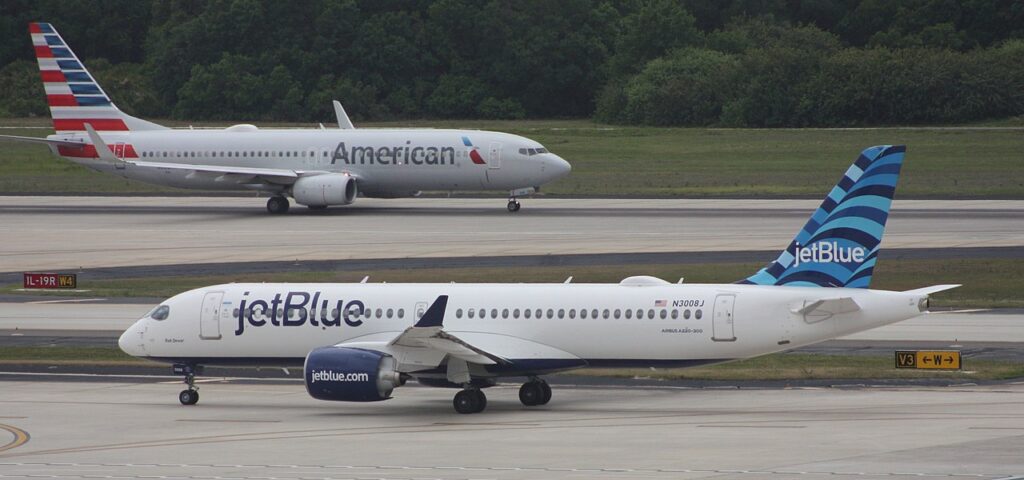
The lawsuit makes the seat map a key part of its argument.
According to the complaint, JetBlue decides which seats passengers see as available, unavailable, occupied, blocked or restricted.
The plaintiff therefore argues that JetBlue should be able to determine whether a customer purchasing a fare with included seat selection can actually exercise that benefit.
The complaint says this information could be used to provide a warning during the booking process.
Such a warning could tell a customer that free advance seat selection is no longer available for the flight, allowing the passenger to decide whether the higher fare still offers enough value to justify the additional cost.
Lawsuit Points to December 2025 BBB Complaint
Kohanof’s complaint also points to an earlier consumer complaint submitted to the Better Business Bureau in December 2025 involving the availability of free seat selection.
The lawsuit alleges that JetBlue had already received a complaint about the same issue but did not change its booking system afterward.
This allegation comes from Kohanof’s court filing and should not be treated as an independently established finding unless supported by additional evidence.
The reference is nevertheless significant to the plaintiff’s argument because it is presented as evidence that JetBlue had prior notice of the alleged problem.

What Plaintiff Is Seeking
Kohanof is seeking to have the lawsuit proceed as a class action on behalf of similarly affected JetBlue customers.
The complaint seeks compensatory damages, benefit-of-the-bargain damages and restitution. It also alleges that the amount in controversy exceeds $5 million and that the proposed class could include thousands of passengers.
The exact number of customers who could ultimately qualify for any proposed class remains unresolved. Class certification has not been established simply because the complaint was filed.
As of September 16, 2026, the publicly available federal docket shows the case at an early filing stage. The docket records the filing of the complaint and related opening documents but does not establish that JetBlue has been found liable.
What JetBlue Passengers Should Understand
The case highlights an important distinction between including seat selection in a fare and having a specific seat available for selection at no additional cost.
JetBlue’s current published fare information says Main Base does not include seat selection, while Main and Main Flex include it. The airline also separately offers paid seat options, including preferred and extra-legroom seats.
The lawsuit argues that the problem arises when an airline advertises free seat selection as a reason to pay more but does not clearly communicate that the benefit may be unusable because no qualifying seat remains.
The case remains an allegation-driven dispute. No court finding in the publicly available docket establishes that JetBlue unlawfully sold fares under the circumstances alleged by Kohanof.
Stay tuned with us. Further, follow us on social media for the latest updates.
Join us on Telegram Group for the Latest Aviation Updates. Subsequently, follow us on Google News
