

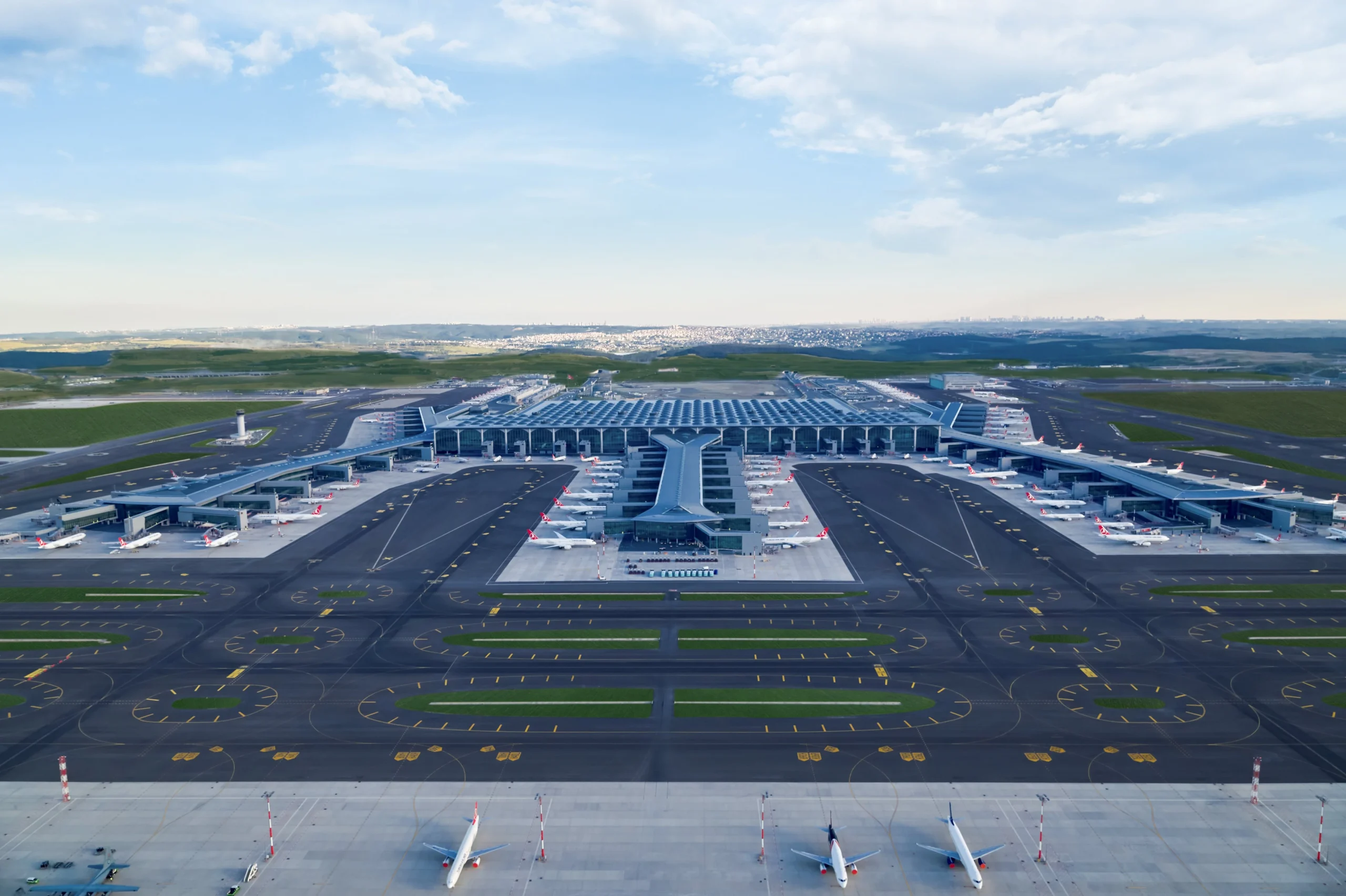
ISTANBUL- Istanbul Airport (IST) is scheduled to inaugurate its fourth main runway on September 18, adding capacity and greater flexibility to its runway system.
The new 2,820 meter by 45 meter east-west runway will complement 3 existing main runways and 2 backup runways. The project comes as Istanbul continues to expand its network and competes closely with London Heathrow (LHR) for Europe’s top hub position.
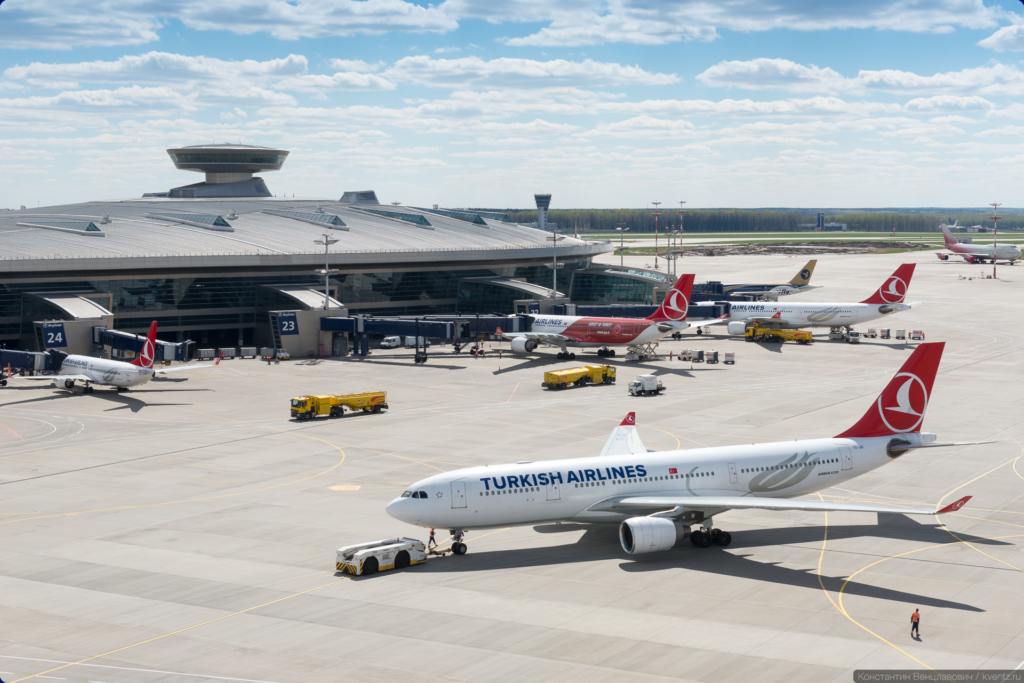
Istanbul Airport Adds Fourth Main Runway
Transport and Infrastructure Minister Abdulkadir Uraloğlu announced that Istanbul Airport’s fourth main runway will officially open on September 18, with President Recep Tayyip Erdoğan expected to attend. The runway is the airport’s first main runway aligned east-west, while its 3 existing main runways run north-south.
The new concrete runway measures 2,820 meters (9,250 feet) long and 45 meters wide. Its different orientation is designed to give air traffic controllers greater operational flexibility, particularly when weather conditions affect runway use.
Uraloğlu said the runway will be particularly useful for domestic flights and routes heading east. Aircraft using it can reduce taxiing times and, on some routes, spend less time in the air. The expected result is lower fuel use, shorter operating times and more efficient aircraft movements.
The additional runway is also intended to improve operations during adverse weather. A second runway orientation provides more options when wind conditions change, while authorities expect the infrastructure to support larger safety margins and better on-time departure performance.
Istanbul Airport connects more than 340 destinations through cooperation with more than 110 airlines, according to the source material. Its location between Europe, Asia and Africa has helped it develop as a major transfer hub.
The airport opened in 2018 as the replacement for Istanbul Atatürk Airport. Its development plan was designed for long-term expansion, with an initial annual capacity of about 90 million passengers and later phases intended to increase capacity toward 120 million and ultimately as much as 200 million passengers.
The airport has already become one of Europe’s largest hubs by traffic. ACI EUROPE reported that Istanbul handled 84.44 million passengers in 2025, only 40,000 fewer than London Heathrow’s 84.48 million. Istanbul ranked second in Europe, while Heathrow remained first.
The airport has continued to set high traffic records in 2026. Daily Sabah reported that Istanbul Airport reached 1,739 flights and about 290,000 passengers on August 16, before setting another flight record of 1,787 movements on August 30.

Why Istanbul Replaced Atatürk Airport
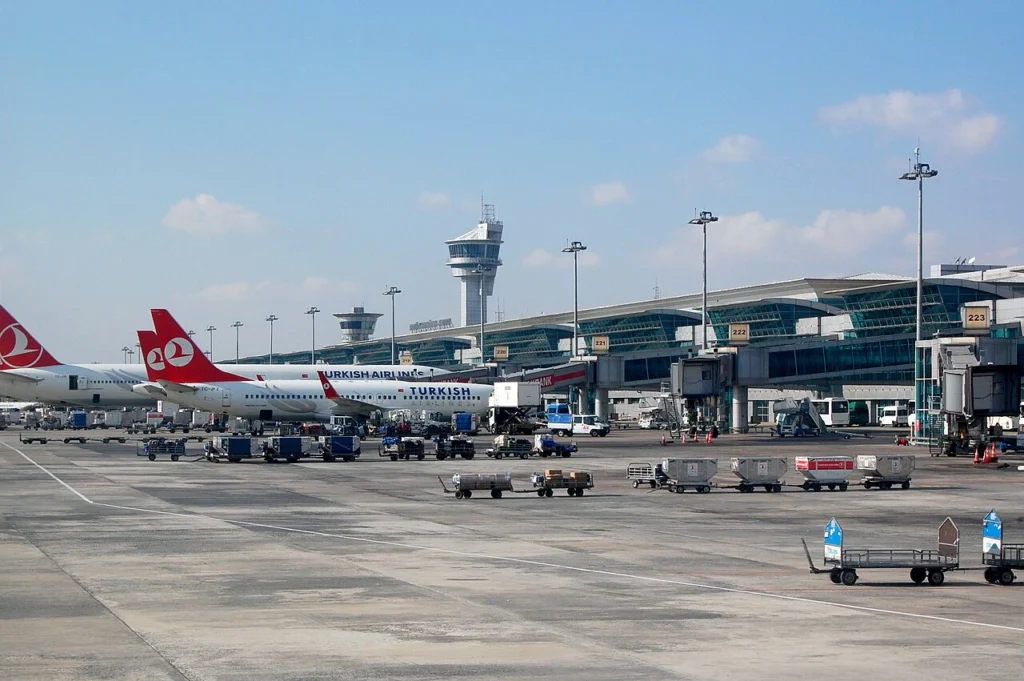
The decision to build Istanbul Airport followed growing capacity constraints at Atatürk Airport, which opened in 1953. Atatürk was surrounded by the city on 3 sides and the Sea of Marmara on the other, leaving limited scope for long-term expansion.
During the early 2000s, Turkey debated whether to add another runway at Atatürk or develop a new airport. An additional runway could have postponed the capacity problem, but a new hub offered much greater room for future growth.
The selected site near the Black Sea, roughly 20 miles north of the old airport, presented significant challenges. It contained former open-cast mining areas and thousands of acres of forest, requiring extensive earthworks and generating environmental concerns.
The proposal divided public opinion. Bilgen said the country was roughly split between supporters and opponents of the new airport. Political backing, including support from Erdoğan, eventually helped the project move forward.
Construction began in 2014 and was accompanied by legal challenges related to environmental impacts and controversy over working conditions, including allegations concerning deaths among construction workers.
Moving operations from Atatürk Airport to the new Istanbul Airport was one of the project’s most demanding stages. About 20,000 employees and 10,000 pieces of equipment weighing approximately 50,000 tons were relocated in just 29 hours.
The airport opened with two main runways and added a third independent runway in 2020. Istanbul subsequently became the first airport in Europe to operate three independent runways simultaneously. The fourth main runway represents the next stage of that expansion.
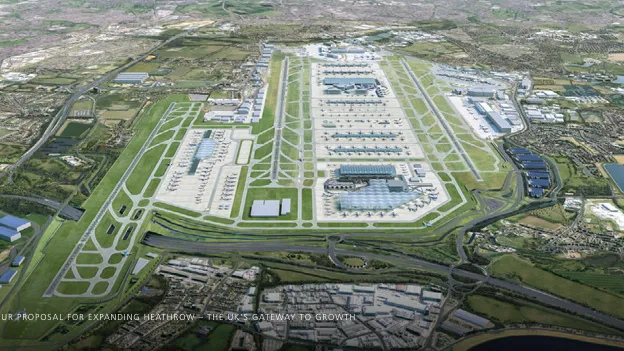
Istanbul and Heathrow Take Different Expansion Paths
Istanbul Airport’s development has become part of the debate over Heathrow’s future. Selahattin Bilgen, the chief executive of Istanbul Airport operator iGA, has argued that Britain should consider constructing a new airport rather than relying on a third runway at Heathrow.
Bilgen argues that a new London hub could provide greater scope for phased expansion over the long term. His position reflects Istanbul’s experience and does not represent UK government policy.
The UK government is currently pursuing Heathrow expansion through a proposed northwest runway. In June 2026, it published a draft Heathrow Expansion National Policy Statement to establish the planning framework for any future expansion application. The policy remains subject to consultation, parliamentary scrutiny and the statutory planning process.
As reported by The Telegraph, the debate has a long history. Earlier British proposals included a new airport in Buckinghamshire following the Roskill Commission, the Maplin Sands proposal in the Thames Estuary, Norman Foster’s Thames Hub concept and Boris Johnson’s proposed airport near the Isle of Grain.
The 2015 Davies Commission ultimately recommended Heathrow expansion over the alternatives.
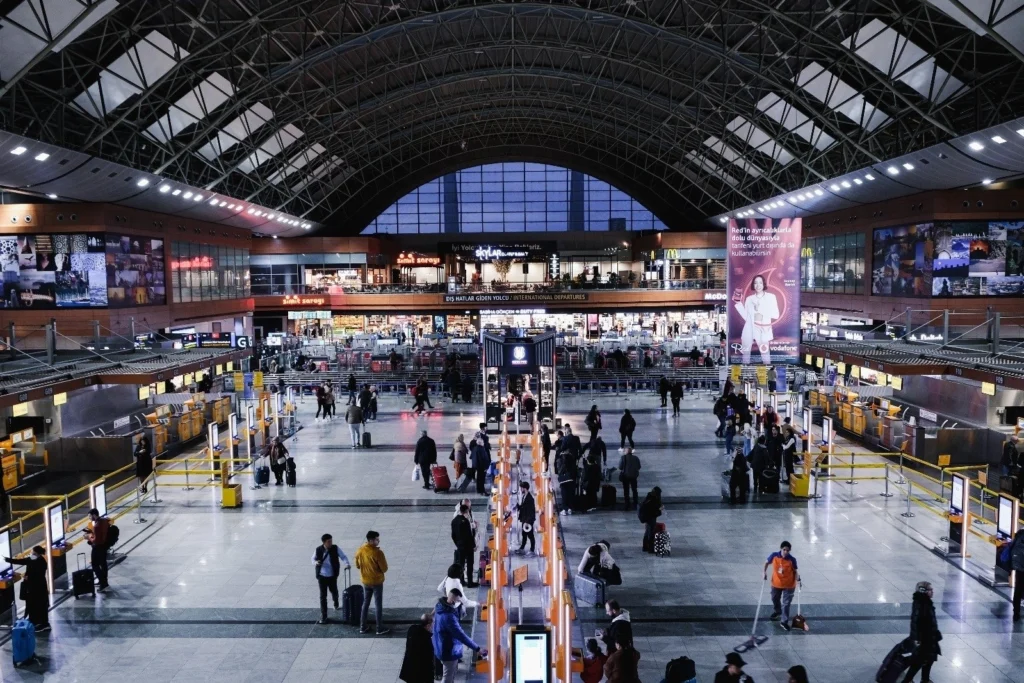
Capacity, Cost and Airport Competitiveness
Bilgen has argued that Heathrow’s proposed third runway could eventually leave the airport with capacity of around 140 million passengers a year while providing little room for further growth. The source article also cited an estimated expansion cost of about £49 billion.
By comparison, Istanbul Airport opened after reported construction spending of about £9 billion in the source article. Bilgen argues that lower development costs can support lower airport charges, helping an airport remain competitive with airlines.
Heathrow retains significant advantages, particularly its established position in the London market and strong airline demand for its slots. The economic comparison therefore involves more than construction costs.
Airport charges, airline demand, surface access, land constraints and future expansion potential all affect a hub’s competitiveness.
Istanbul’s Single-Terminal Design
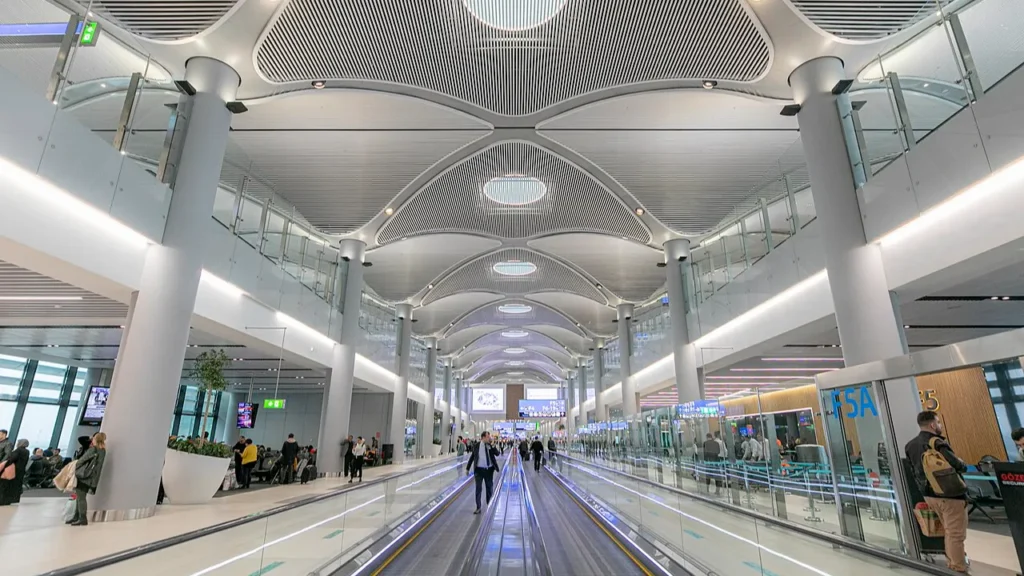
Istanbul Airport was designed around a single main passenger terminal rather than several separate terminals.
Bilgen said the approach focused on the passenger journey and aimed to simplify connections by reducing the need for transfer passengers and baggage to move between terminal buildings.
The single-terminal concept also created a trade-off. Because the terminal is extremely large, some passengers must walk considerable distances between facilities.
The design supports Istanbul’s role as a major connecting hub, where efficient transfers are important to the airport’s global network.
iGA’s Operating Structure
The airport was privately financed and is operated by iGA. The original source article states that iGA is owned by Turkish construction groups Kalyon and Cengiz and operates under a 25-year contract, after which control is expected to revert to the Turkish government.
The operating model also includes rent payments to the state. This structure is relevant to the wider discussion about how major airports finance infrastructure while keeping charges competitive for airlines.
Istanbul’s Changing Place Among World’s Busiest Airports
In 2005, London Heathrow ranked third worldwide, while Chicago O’Hare ranked second. In the 2025 ranking cited by the source, Heathrow had fallen to seventh and Istanbul had entered the top 10 in eighth place.
The broader ranking included Atlanta, Dubai, Tokyo Haneda, Dallas/Fort Worth, Shanghai Pudong, Chicago O’Hare, Paris Charles de Gaulle, Istanbul, Guangzhou Baiyun and Denver.
The change reflects the growth of major connecting hubs outside the traditional European and North American markets. Istanbul’s rapid rise is particularly notable because the airport only began operations in 2018.
Why the Fourth Runway Matters
The fourth main runway gives Istanbul Airport another operating option at a time when traffic is approaching Heathrow’s scale.
Its east-west alignment complements the existing north-south runway configuration and is intended to reduce taxiing time on selected flights while improving operational flexibility.
The runway is also consistent with the airport’s original expansion strategy. Istanbul has continued adding infrastructure as traffic grows instead of treating its initial capacity as a fixed ceiling.
Daily Sabah has also highlighted the runway project as part of Istanbul Airport’s continuing capacity expansion.
Istanbul Airport’s Long-Term Strategy
The fourth runway is more than an additional strip of pavement. It is part of a wider strategy that combines runway expansion, a large single-terminal design and long-term passenger-capacity planning.
Istanbul Airport’s 2025 passenger total of 84.44 million placed it only 40,000 passengers behind Heathrow, demonstrating how quickly the Turkish hub has moved into Europe’s highest tier.
The September 18 inauguration will strengthen that position by adding a new runway orientation and increasing the airport’s operational options. For Istanbul, the project continues a long-term expansion model built around a purpose-designed hub.
For Heathrow, it provides a contrasting example of how a mature airport can face difficult decisions over additional capacity.

Conclusion
Istanbul Airport will inaugurate its fourth main runway on September 18, adding a 2,820-meter east-west runway to an airport already operating three main and two backup runways. The project is designed to improve capacity, reduce taxiing times on selected routes and increase operational flexibility during changing weather conditions.
The runway also reinforces Istanbul Airport’s broader growth strategy. With 84.44 million passengers recorded in 2025 and a long-term development plan extending toward 200 million passengers annually, the airport is increasingly challenging established European hubs.
The contrast with Heathrow is ultimately a debate over long-term airport planning. Istanbul chose a new hub with substantial expansion potential, while Britain continues to examine additional capacity at an established London airport. The fourth runway gives Istanbul another significant step toward its long-term capacity ambitions.
Stay tuned with us. Further, follow us on social media for the latest updates.
Join us on Telegram Group for the Latest Aviation Updates. Subsequently, follow us on Google News
