

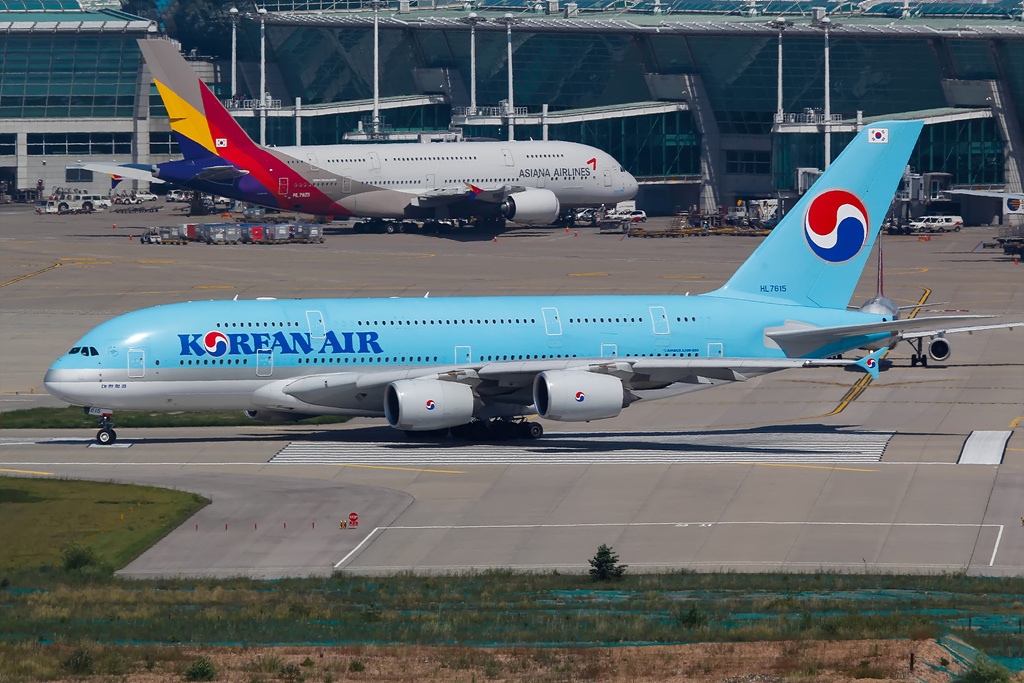
SEOUL— South Korea’s aviation market is entering a major period of restructuring as Korean Air (KE) and Asiana Airlines (OZ) move toward their December integration, while low-cost carriers reshape their fleets, brands and international networks.
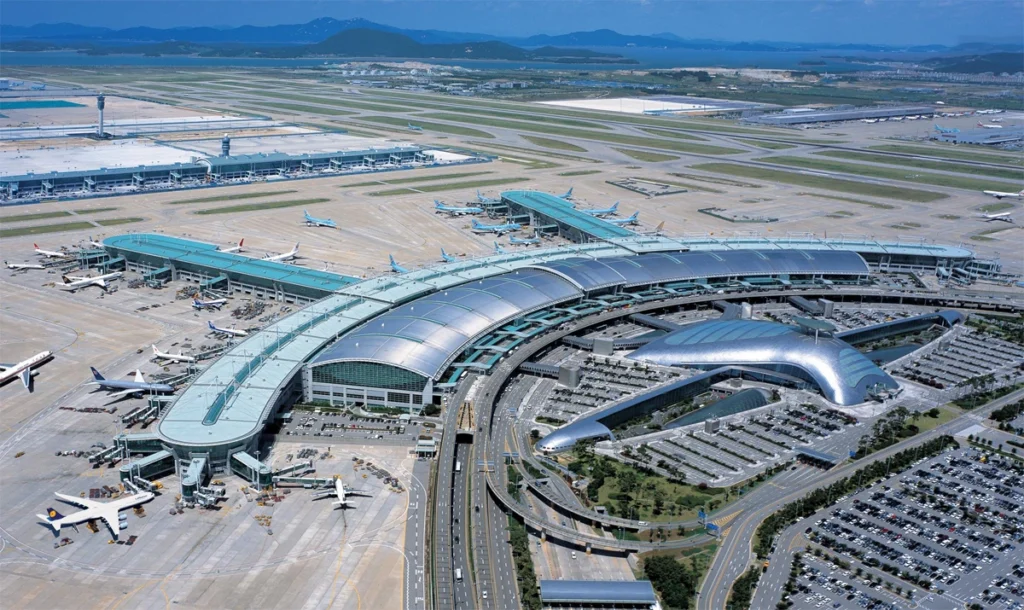
The changes are also affecting Seoul Incheon International Airport (ICN), the country’s main international gateway, as airlines position themselves for a more competitive market.
The Korean Air-Asiana Airlines merger received shareholder approval in August and is scheduled to create an integrated national carrier on December 17, 2026.
At the same time, Jin Air (LJ), Air Busan (BX) and Air Seoul (RS) are preparing their own combination, while other airlines are pursuing independent strategies in long-haul flying and differentiated services.
Korean Air Asiana Merger Drives Industry-Wide Change
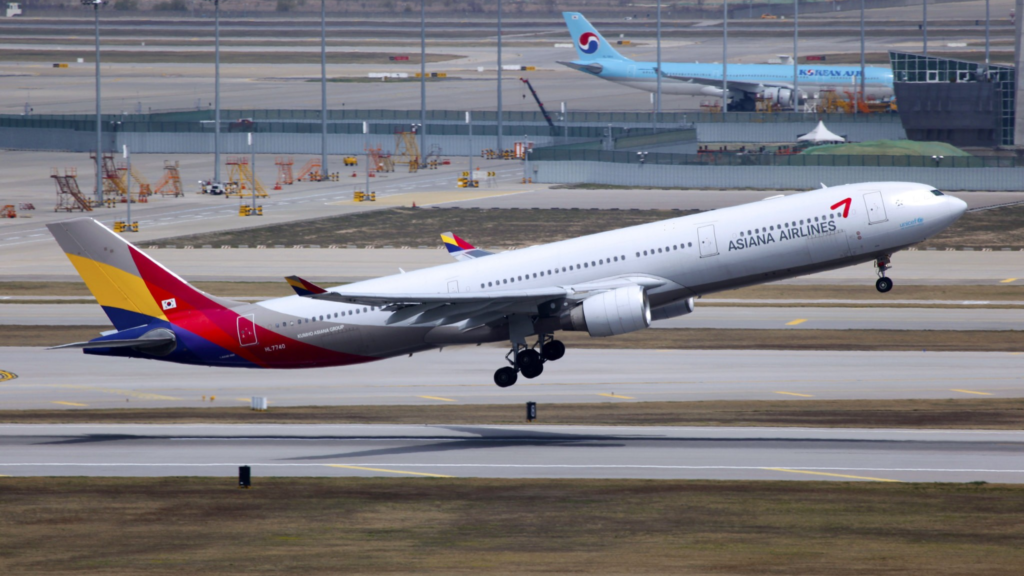
The Korean Air and Asiana integration represents the largest structural change in South Korea’s airline industry in years.
The transport ministry approved the integration in June, with authorities requiring the combined airline to maintain aviation safety and protect consumer convenience during the transition.
Asiana shareholders subsequently approved the merger, bringing the nearly six-year acquisition process closer to completion.
Korean Air has said December 17 is the planned integration date, following a lengthy preparation period designed to reduce operational disruption.
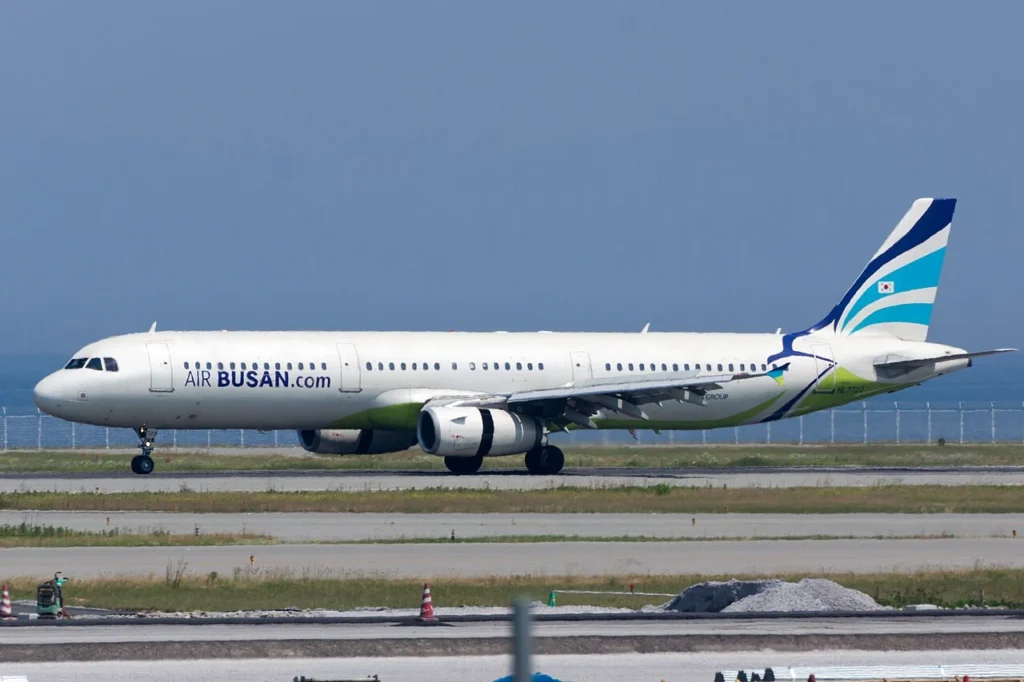
The consolidation is also changing the country’s low-cost airline segment. Jin Air will absorb Air Busan and Air Seoul, with the integrated carrier expected to begin operations on March 17, 2027, subject to the remaining approval process.
The merger is designed to combine fleets, routes and management resources under one airline.
Trinity Airways Rebrand Signals Major Strategic Shift
While some airlines are pursuing greater scale, T’way Air is taking a different route.
The carrier will begin operating as Trinity Airways on September 10, ending the T’way Air name after 16 years while retaining its TW airline code, flight numbers and existing reservations.
The new airline plans to follow a selective service carrier model, offering competitive pricing on shorter routes while adding services such as meals, entertainment and enhanced airport facilities on longer flights.
It also plans to introduce Airbus A330-900neo aircraft and additional Boeing 737-8 jets to strengthen its medium- and long-haul network.
Trinity Airways currently serves 58 international routes, giving the rebranded carrier a substantial network from which to develop its new strategy.
Its challenge will be converting wider international operations and higher service levels into stronger financial performance.
New Routes Expand Across Key International Markets
Other South Korean airlines are also expanding through partnerships and targeted route additions rather than relying solely on consolidation.
Jeju Air (7C) has strengthened its international connectivity through an interline agreement with Air Premia (YP), linking Air Premia’s US services with Jeju Air’s domestic and Asian network through single-ticket itineraries.
Parata Air (WE) is preparing for its first US service, with Incheon-Los Angeles planned for around April 2027. The airline has secured regulatory approval for the route and added an Airbus A330-200 as it prepares for long-haul operations.
Eastar Jet (ZE) is expanding its presence at Busan Gimhae International Airport (PUS), including services to destinations such as Fukuoka and Taipei, The Korea Herald reported.
Aero K (RF), meanwhile, continues to diversify from Cheongju International Airport (CJJ), supporting a broader shift toward regional airports and new international markets.
The changing landscape suggests that South Korea’s airline competition will increasingly depend on network quality, aircraft efficiency, and service differentiation.
As consolidation creates larger operators, carriers that can combine sustainable route growth with reliable cash flow will be better positioned for the next stage of the market.
Stay tuned with us. Further, follow us on social media for the latest updates.
Join us on Telegram Group for the Latest Aviation Updates. Subsequently, follow us on Google News
