

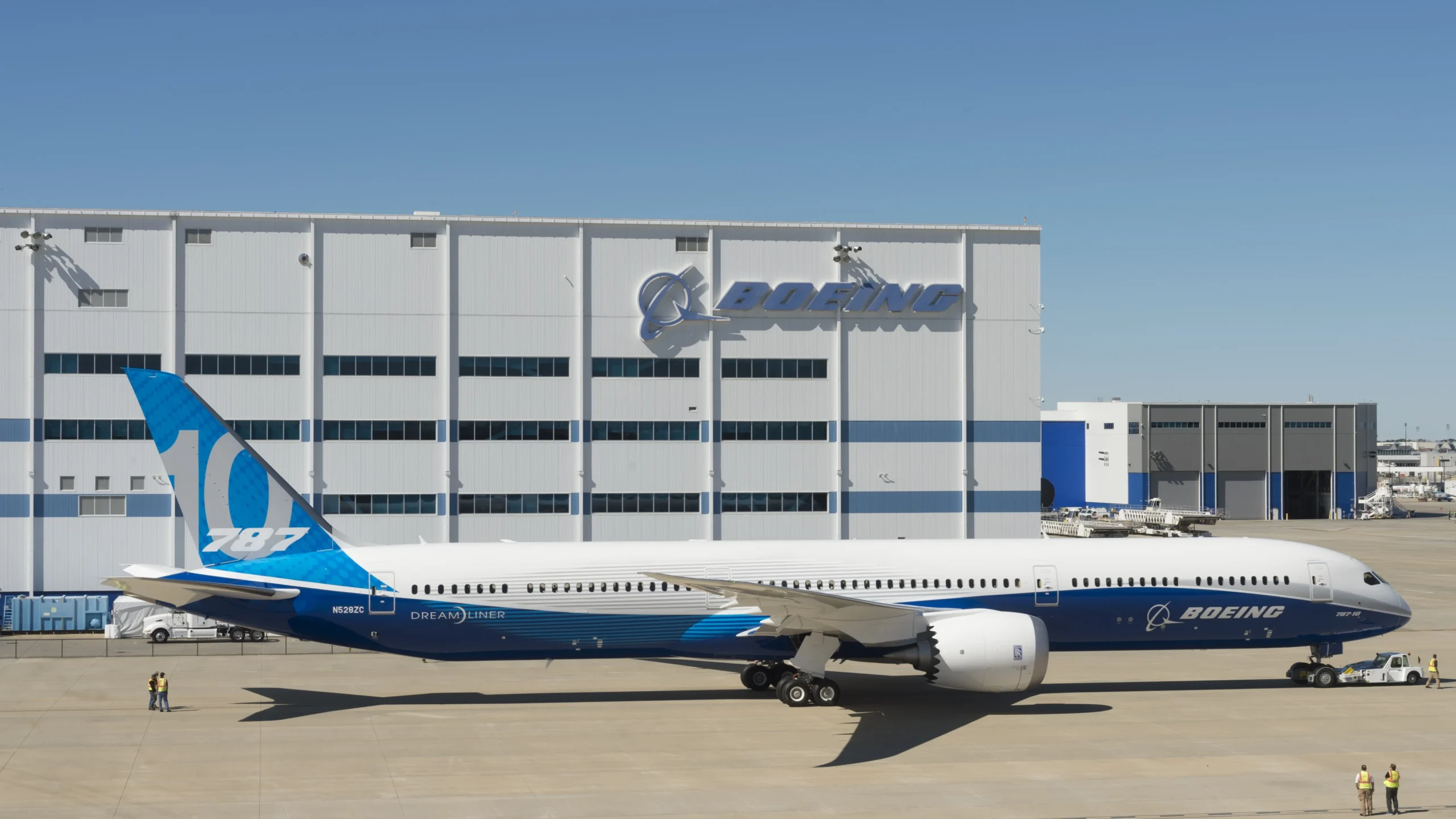
WASHINGTON- The Federal Aviation Administration (FAA) has ordered inspections of certain Boeing 787 Dreamliner aircraft operated by airlines worldwide after concerns about possible fatigue cracks in wing-related structural components.
The directive covers 17 Boeing 787s operating in the United States and 77 aircraft worldwide. Boeing says the issue was corrected in production and that affected aircraft can continue normal operations.
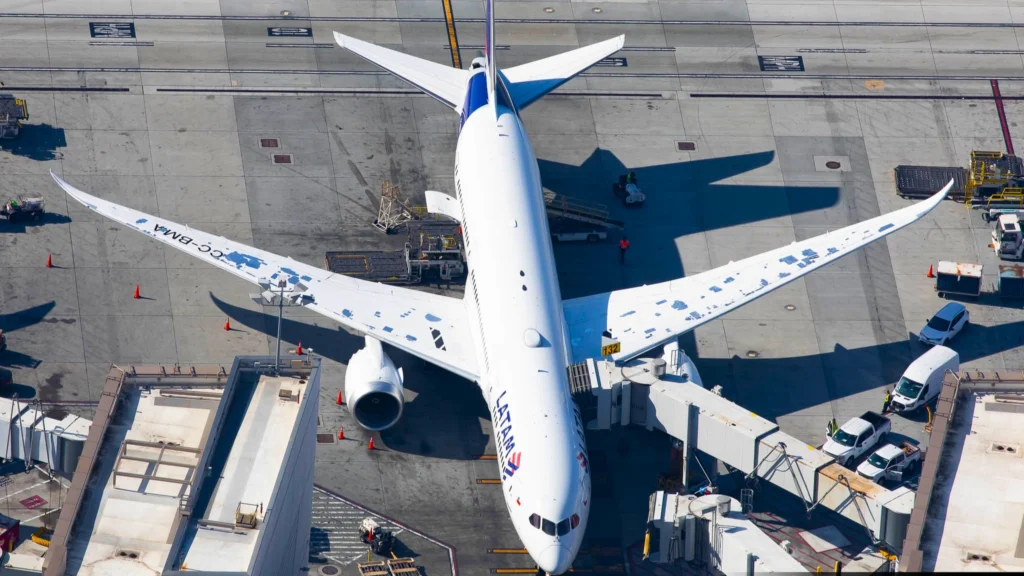
FAA Mandates Structural Inspections on Boeing 787
The FAA issued a final airworthiness directive requiring operators of specific Boeing 787 aircraft to inspect structural components for possible cracks. The action follows a proposed rule issued by the regulator in March.
The inspections are intended to identify cracks before they can grow and potentially weaken the aircraft’s wing structure. The FAA said the affected components are located on the lower side of body splice plates near the wing skins.
The directive applies to 94 aircraft in total, including 17 operating in the United States and 77 elsewhere around the world. Boeing had more than 1,100 787 aircraft in its global fleet as of last year.
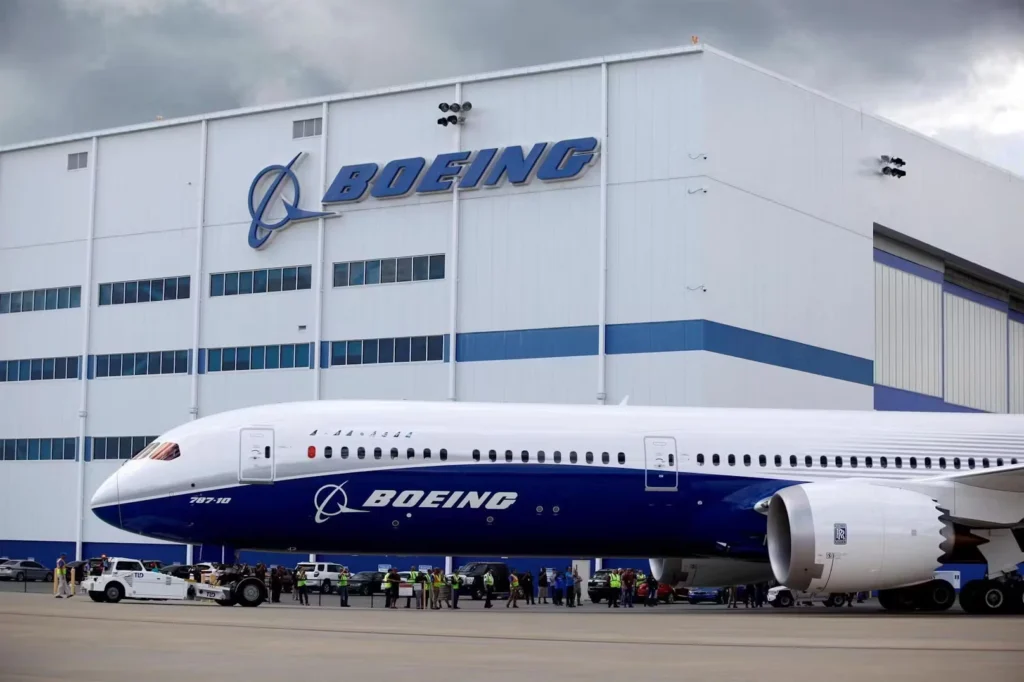
Boeing Discovered the Issue During 2019 Investigation
Boeing identified the structural concern during an investigation in 2019. The investigation found that some shim gaps exceeded the dimensions permitted under Boeing’s engineering specifications.
A shim is used to fill a gap between aircraft components when mechanics join structural parts together. Fasteners are then used to secure the components in place.
According to the FAA, Boeing’s investigation found that excessive shim gaps and high pull-up forces could contribute to fatigue cracks developing around fastener holes.
Fatigue cracks can develop after repeated exposure to structural loads over time. If they remain undetected, they can potentially grow and reduce the strength of the affected structure.
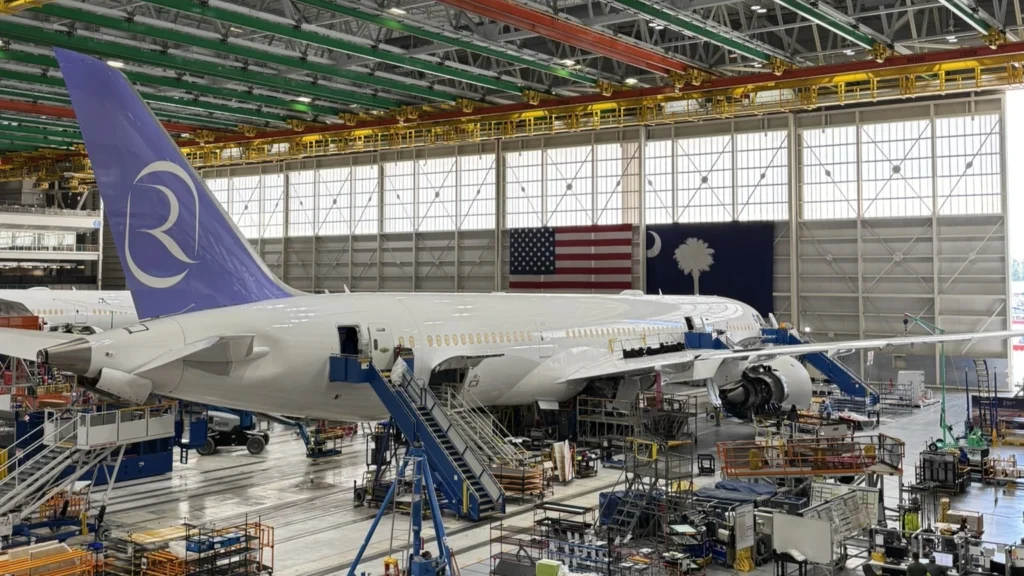
Inspection Focuses on Wing-Body Structural Area
The mandated inspections target the lower side of body splice plates positioned close to the wing skins.
These structural components form part of the connection between the aircraft’s fuselage and wing area. The inspection requirement is designed to ensure that any cracks associated with the identified manufacturing or assembly condition are detected and addressed.
The FAA’s final directive makes the previously issued guidance mandatory for operators of affected aircraft.
Boeing Says Production Issue Was Corrected
Boeing said the airworthiness directive represents the next stage of a process that began after the company identified an outdated method for measuring shims in 2019.
The company said the issue was corrected during production and that aircraft currently operating in the global fleet can continue normal operations.
Boeing also said it updated its guidance for 787 operators in August 2025. Since then, the company has worked with operators to revise their inspection schedules.
The manufacturer supports the FAA’s decision to make the inspection guidance mandatory.
Previous FAA Action Involved 787 Structural Gaps
The latest directive follows earlier FAA scrutiny of structural gaps on the Boeing 787.
In 2025, the FAA required inspections related to gaps in the aircraft’s aft pressure bulkhead. The regulator had warned that certain gaps, if left unaddressed, could contribute to fatigue cracking and weaken the structure.
The 787 has also faced scrutiny from a whistleblower who alleged in 2024 that some gaps at major fuselage joints exceeded Boeing’s engineering requirements. Boeing disputed the safety implications and maintained that the aircraft was safe.
The latest FAA directive specifically addresses the shim-gap and fatigue-crack concern identified during Boeing’s 2019 investigation.
FAA Directive Targets Specific Aircraft
The inspection requirement does not apply to the entire Boeing 787 fleet. It covers specific aircraft identified by the FAA based on the structural condition under investigation.
For affected operators, compliance with the directive will require inspections and any necessary corrective action specified by the FAA.
The action reflects the regulator’s approach of making manufacturer guidance mandatory when a known structural condition could affect continued airworthiness if it is not monitored or corrected.
Stay tuned with us. Further, follow us on social media for the latest updates.
Join us on Telegram Group for the Latest Aviation Updates. Subsequently, follow us on Google News
