

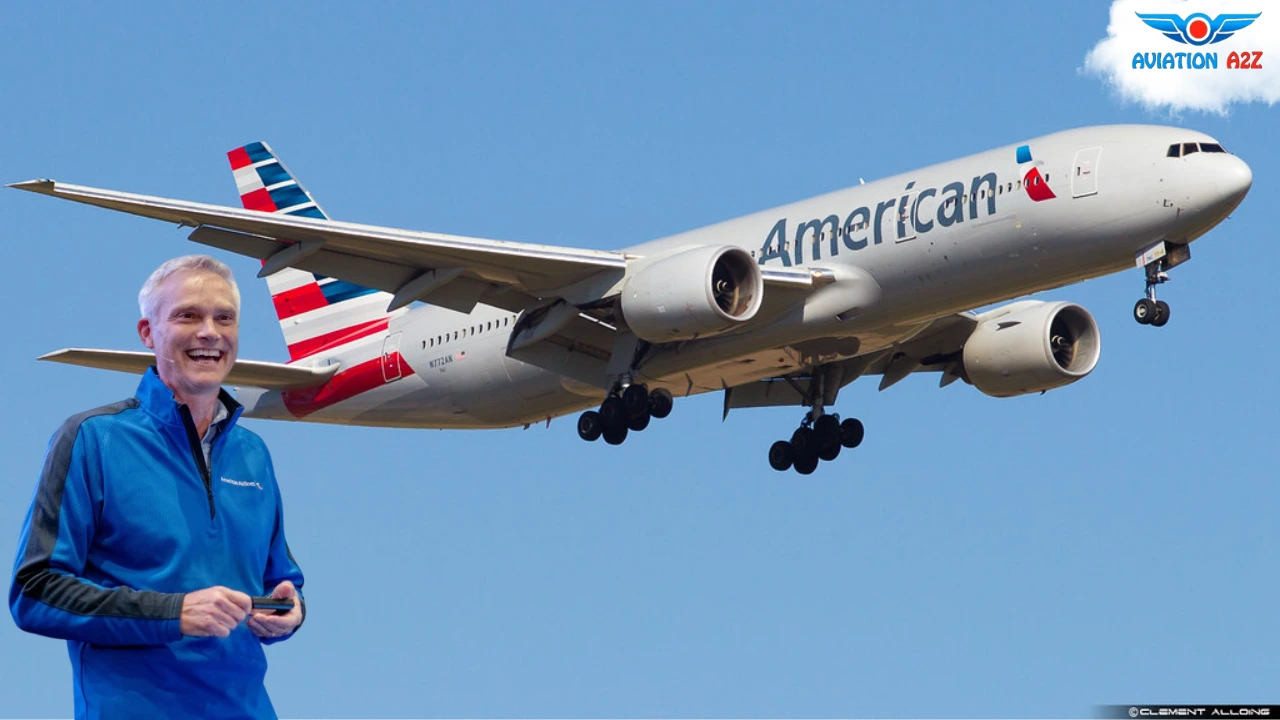
FORT WORTH- American Airlines (AA) is pushing deeper into a premium strategy, with investments in first class, extra-legroom seating, seatback entertainment, lounges and long-haul cabins. The airline’s broader goal is to build a product customers actively choose rather than one they select mainly for price or schedule.
At Dallas Fort Worth International Airport (DFW), American’s largest hub, CEO Robert Isom has also been seen spending more time around the operation and speaking with employees. The move comes as the airline faces the larger challenge of turning its product investments into stronger revenue and a more clearly defined premium identity.
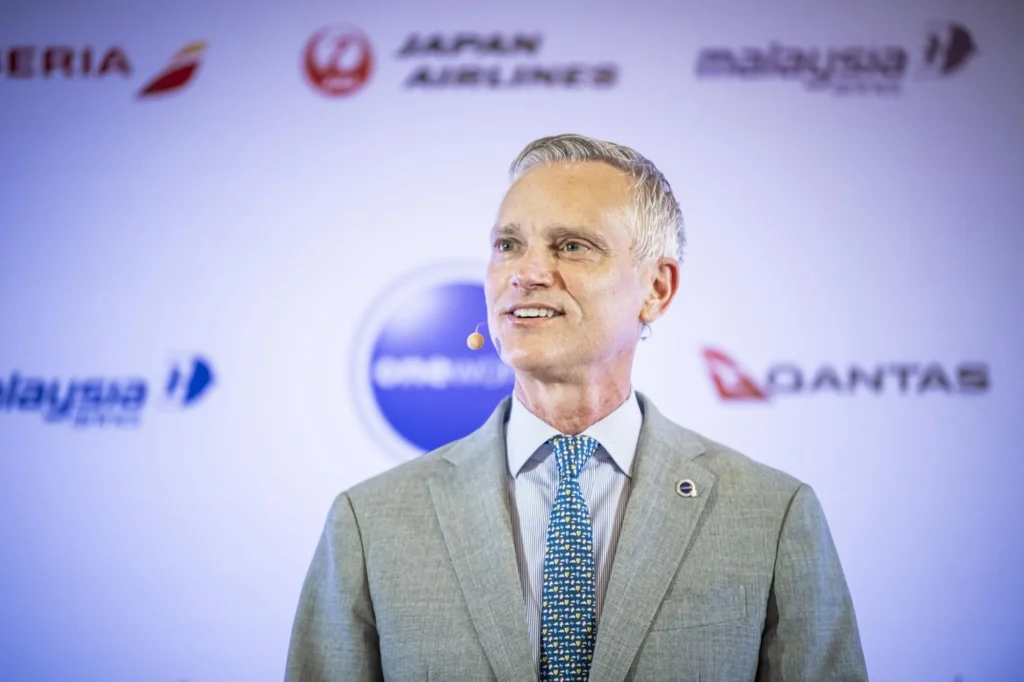
American Airlines’ Premium Strategy Needs Employee Support
American Airlines has spent the past 18 months making a series of changes aimed at strengthening its premium offering. The airline is increasing the number of premium seats, restoring seatback entertainment, improving lounges and upgrading products across multiple cabins.
However, the strategy involves more than installing new seats or adding entertainment screens. The airline has roughly 130,000 employees whose daily interactions with passengers determine whether those investments translate into a better customer experience.
The source argues that employees need to understand what American Airlines is trying to become and why their individual roles matter to that strategy. That requires leadership to communicate a clear direction rather than presenting individual product upgrades as disconnected projects.
For American, the central message is a shift toward becoming a premium global carrier. That positioning requires employees to understand the vision, believe that it is achievable, and see how their work contributes to the airline’s future, View from the Wing reported.

American Is Expanding Its Premium Product
American’s product strategy has changed significantly from the cost-focused approach described in the source.
Premium seating, including extra-legroom economy, is planned to increase from 25% to 40% of the airline’s narrowbody seats. The airline is also bringing seatback entertainment to more aircraft while improving food, coffee and onboard connectivity.
American is adding another row of first class to Airbus A319 and A320 aircraft and plans additional first-class capacity on Airbus A321neos and Boeing 737 MAX 10 aircraft.
The strategy creates more differentiation between standard economy and first class. Extra-legroom seating provides another product tier for passengers who want more space without purchasing a first-class ticket.
The airline is also expanding premium products on its long-haul fleet. Its new premium-heavy Boeing 787-9 configuration includes 51 business-class suites and 32 premium-economy seats. The Airbus A321XLR features business-class suites with doors and a premium-economy cabin, while Boeing 777-300ER aircraft are undergoing retrofits. The source also states that Boeing 777-200ER and 787-8 aircraft are expected to follow.
American is additionally seeking proposals from Airbus and Boeing for another widebody aircraft order, according to the source. Such an order would support the airline’s longer-term international strategy after a significant reduction in its long-haul fleet during the pandemic.
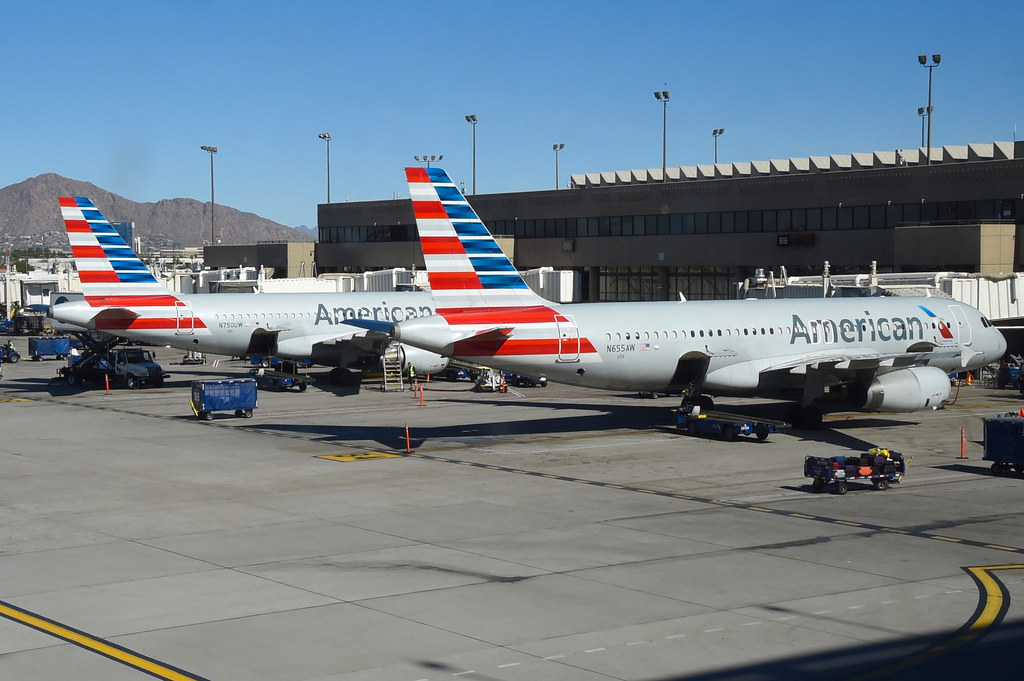
Seatback Screens Signal a Major Product Shift
The return of seatback entertainment represents one of the clearest changes in American’s product philosophy.
The airline previously removed screens from many aircraft as part of its cost-focused strategy. The current approach treats the cabin experience as a factor that can influence customer preference and revenue, rather than simply as an operating expense.
American is also investing in new and renovated lounges, expanding mattress-pad availability in long-haul business class and improving wine and catering selections.
The source points to experiments with recognizable local food offerings, including Pecan Lodge barbecue, as another example of the airline attempting to make the onboard experience more distinctive.
These changes matter because American cannot rely solely on lower fares or convenient schedules to create customer preference. A premium strategy requires passengers to see enough value in the product to choose the airline even when competing airlines offer comparable schedules.
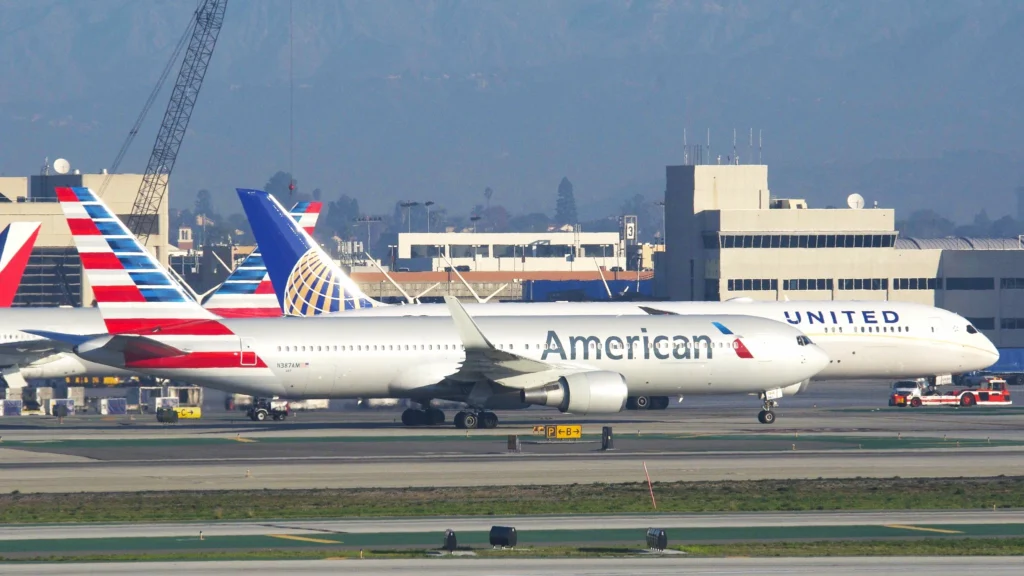
American’s Challenge Is More About Revenue Than Costs
The source argues that American’s long-term problem has not simply been controlling expenses. Its larger challenge has been generating enough revenue from each unit of capacity to compensate for its relatively high cost structure.
American operates a large global network with major hubs, extensive infrastructure, and unionized work groups. That structure makes it difficult to compete directly with ultra-low-cost carriers purely on production costs.
The source contrasts American’s financial performance with Delta Air Lines and United Airlines, arguing that those carriers have generated more revenue from their capacity through stronger premium offerings, exposure to high-spending markets and brands that customers may prefer when fares and schedules are similar.
This is the economic logic behind American’s premium push. Higher-value cabins, stronger loyalty engagement and an improved customer proposition can potentially increase revenue per available seat rather than forcing the airline to compete primarily through lower fares.
The Airline Is Moving Away From Its Previous Cost Focus
The source describes the previous decade as a period in which American emphasized efficiency, cost control, and operational performance.
Following the US Airways leadership era, the airline focused heavily on avoiding unnecessary spending and improving operational efficiency. Management also looked toward low-cost airlines such as Spirit and Frontier as competitors for price-sensitive passengers.
That philosophy influenced the cabin itself. American reduced some premium seating, removed business-class seats from certain widebody aircraft, increased seating density, and removed seatback entertainment screens from parts of its fleet.
The source argues that this approach created a mismatch between American’s global network and the product it offered customers. Instead of establishing a clear premium identity, the airline increasingly competed on price and schedule.
The current strategy represents a significant change in direction. Rather than attempting to resemble a low-cost carrier, American is investing in features intended to encourage customers to pay more and remain loyal to the brand.

Robert Isom Faces a Leadership Test
The source places considerable importance on CEO Robert Isom’s interaction with employees.
Isom is described as highly prepared and scripted during employee sessions, while American has reduced some of the regular employee-facing forums that existed under previous leadership. Monthly Crew News sessions were discontinued, and quarterly State of the Airline presentations stopped including live question-and-answer sessions, according to the source.
The argument is not simply that the CEO should make more appearances. The larger issue is whether senior leadership can explain the transformation in a way that connects the company’s investments with employees’ daily responsibilities.
The source points to former United Airlines CEO Oscar Munoz as an example. After taking over United, Munoz traveled throughout the airline’s system, met employees and sought to rebuild confidence in the company’s future.
For American, similar engagement could help employees understand that premium service is not limited to the cabin itself. Gate agents, flight attendants, mechanics, reservations employees and baggage handlers all influence the customer experience.
Turning Premium Investments Into Revenue
American’s current challenge is converting its product investments into measurable commercial results.
More first-class seats, larger premium cabins, better lounges and seatback entertainment can increase costs. They become strategically valuable only if customers respond through higher fares, greater loyalty, stronger credit-card engagement, or other sources of incremental revenue.
The source therefore argues that American needs a single message connecting these investments. Employees should understand that the airline is building a premium global carrier and that every customer interaction can influence whether passengers recognize and pay for that value.
The strategy also needs to reach employees through tangible incentives. The source suggests using profit sharing, smaller bonuses, and recognition programs to make the airline’s priorities more visible to frontline workers.
That would connect financial performance with employee interests and give workers a direct reason to support the transformation.
American’s Premium Identity Is Taking Shape
American Airlines has already made a broad range of product changes, from premium seating and new business-class suites to entertainment, lounges, catering and connectivity.
The bigger question is whether these individual initiatives can become a coherent brand proposition.
The source argues that American must communicate a clear identity to both employees and customers. The airline cannot simply spend more on the product and assume that passengers will automatically pay a premium.
Its success will depend on whether employees understand the strategy, whether the customer experience consistently reflects it, and whether the improved product generates the revenue needed to support American’s higher-cost global operation.
The appearance of Robert Isom directly engaging with employees therefore carries significance beyond a single visit. If that engagement becomes a sustained leadership effort, it could help connect American’s substantial product investments with the workforce responsible for delivering them.
Stay tuned with us. Further, follow us on social media for the latest updates.
Join us on Telegram Group for the Latest Aviation Updates. Subsequently, follow us on Google News
