


DUBAI- Emirates (EK) is facing a lawsuit in the United States over allegations that it misappropriated confidential technology used to develop its passenger meal pre-order system. The legal action was filed in the U.S. District Court for the District of Colorado and centers on technology introduced by the airline in 2023.
The lawsuit claims Emirates used proprietary information shared during partnership discussions involving dnata and later launched its own meal pre-order service for flights departing from Dubai International Airport (DXB). The airline has not publicly responded to the allegations.

Lawsuit Challenges Emirates’ Meal Pre-Order Technology
Nourish Aviation Holdings LLC and Aviation Nutrition Network Investment Holdings Ltd. filed the lawsuit against The Emirates Group, Emirates Airlines, and Dubai National Air Travel Agency.
The complaint alleges misappropriation of trade secrets after discussions that began in 2020 regarding a possible joint venture.
According to the lawsuit, Nourish developed a digital platform allowing airline passengers to pre-order meals before departure through an integrated system connected to airline reservation records. The company argues that its innovation extends far beyond simply allowing passengers to choose meals in advance.

The platform was designed to connect passenger reservation information, commonly known as Passenger Name Record (PNR) data, with a dynamic ordering system.
It could present menus tailored to each passenger’s itinerary and cabin class while managing the complete workflow between airlines, airport caterers, food production facilities, and cabin crews.
The technology also calculates the exact meals that need to be prepared and loaded for individual flights. Cabin crews receive the necessary information to identify and serve each passenger’s selected meal. The company says this process helps airlines improve catering efficiency while reducing unnecessary food waste.
Partnership Discussions With dnata
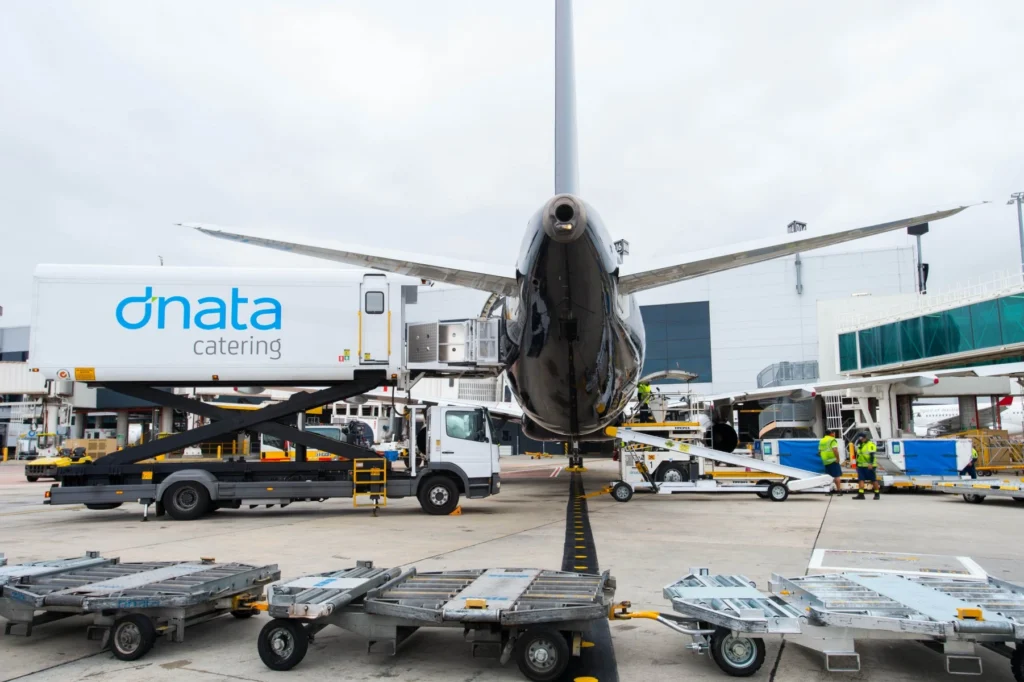
The complaint states that Nourish approached Emirates in 2020 with a Joint Venture Proposal that would have integrated its technology with dnata, the Emirates-owned aviation services and catering company.
During several months of discussions, Nourish claims it shared confidential implementation details, technical methods, and operational processes under expectations of confidentiality while exploring a commercial partnership.
According to the filing, Emirates had previously attempted to develop a similar meal pre-order platform but had encountered technical challenges. Nourish alleges the airline later used knowledge gained during the discussions to independently launch its own passenger meal pre-order feature in July 2023 without entering into a business agreement.
The lawsuit was filed one day before the third anniversary of Emirates’ July 18, 2023 announcement of its meal pre-order service. The timing appears intended to ensure the claims remain within the applicable statute of limitations; View from the Wing flagged.
Key Issues Before the Court
For the plaintiffs to succeed, they must demonstrate that the information shared with Emirates qualified as legally protected trade secrets rather than publicly available industry knowledge.
They must also establish that Emirates acquired or used the information in violation of confidentiality obligations created during the partnership discussions.
These issues are expected to become central to the legal proceedings, particularly because airline meal pre-order services have existed across the aviation industry for many years.
Industry Background May Influence the Case
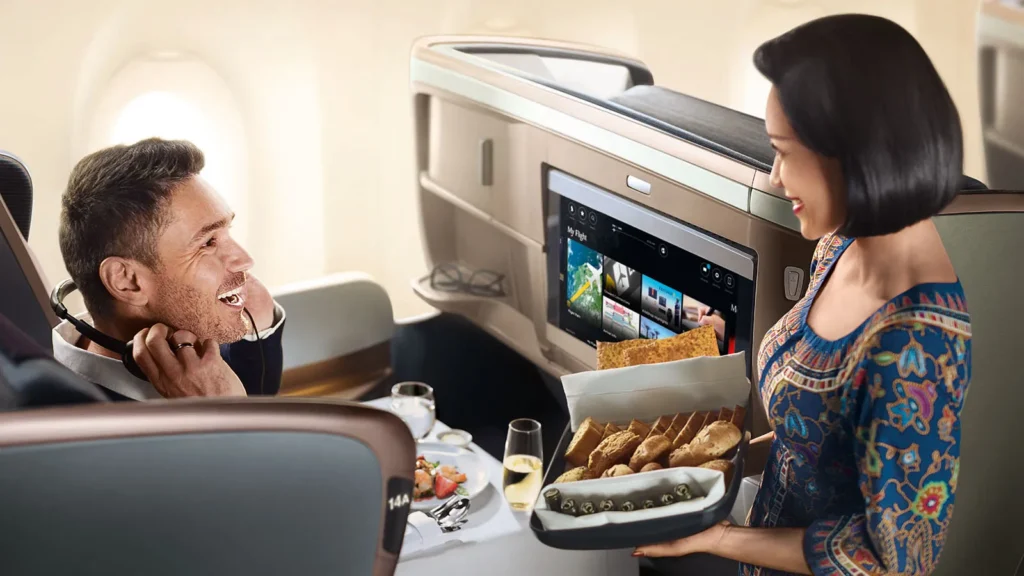
Advance meal selection is not a new concept in commercial aviation. Singapore Airlines (SQ), for example, introduced pre-order meal services through its Book the Cook program in 1998, allowing premium cabin passengers to reserve meals before travel.
Because similar services have been available for decades, Emirates may argue that its own technology was independently developed using industry-standard practices rather than confidential information obtained from Nourish.
The complaint also acknowledges that Emirates’ current meal pre-order feature remains relatively limited. It primarily allows eligible Business Class passengers to select meals before departure rather than offering a broader digital marketplace or airport food delivery platform, which Nourish says formed part of its overall business model.
This distinction could become significant as the court evaluates whether the technology used by Emirates substantially resembles the confidential systems allegedly shared during the earlier discussions.
Questions Over Colorado Filing
The lawsuit was filed in the U.S. District Court for the District of Colorado, even though Emirates is headquartered in Dubai and the reported meetings did not take place in Colorado.
The plaintiffs maintain a limited liability company registered in Colorado, which likely provides the legal basis for filing in that jurisdiction. However, observers may question whether Colorado is the most appropriate venue given that Emirates does not currently operate scheduled passenger flights to Denver International Airport (DEN).
Jurisdiction and venue issues could become part of the litigation if Emirates challenges where the case should proceed.
Regardless of where the lawsuit is ultimately heard, the dispute highlights the importance of protecting confidential business information during partnership negotiations, particularly as airlines continue investing in digital passenger services and personalized onboard experiences.
Stay tuned with us. Further, follow us on social media for the latest updates.
Join us on Telegram Group for the Latest Aviation Updates. Subsequently, follow us on Google News
