

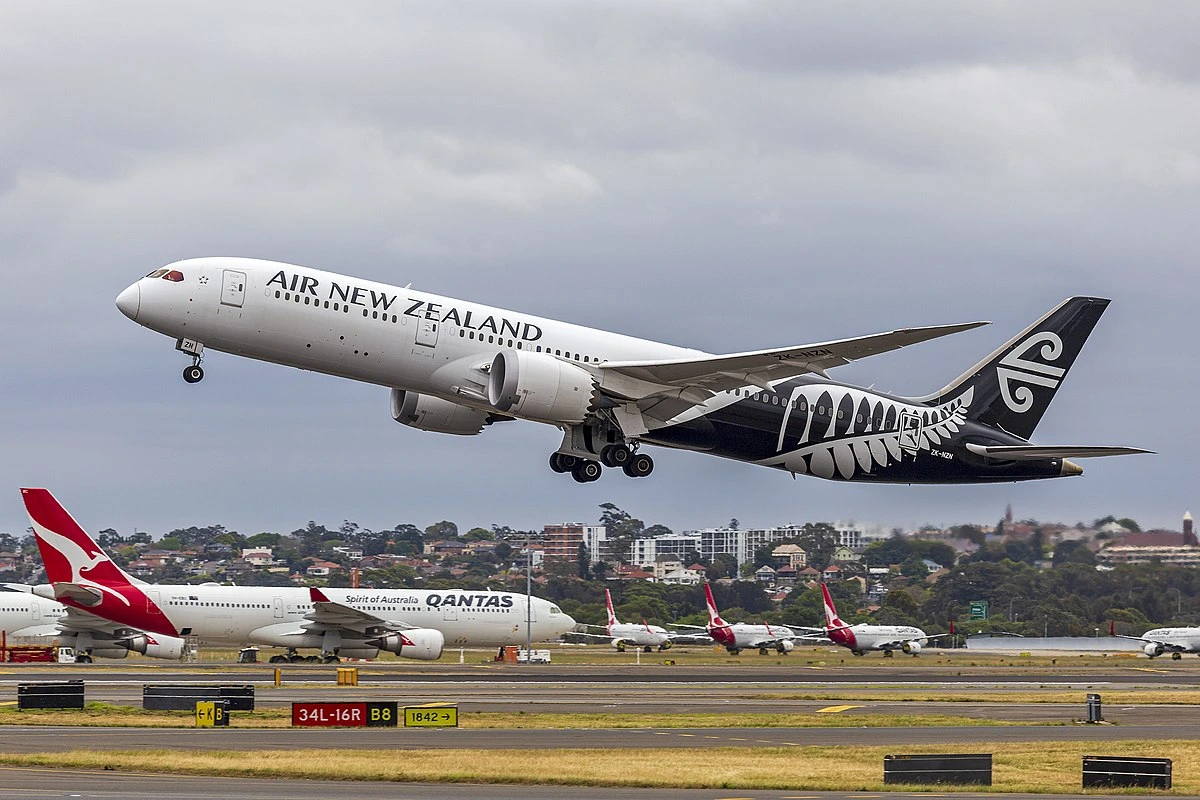
AUCKLAND— Air New Zealand (NZ) has emerged from several years of operational setbacks with a major fleet modernization program, positioning itself to compete more effectively as Qantas (QF) accelerates its long-haul expansion.
The carrier says its extensive cabin upgrades and improving aircraft availability mark a turning point after persistent engine issues disrupted operations following the COVID-19 pandemic.
Auckland Airport (AKL) remains central to the airline’s international strategy as it prepares for stronger competition across the Pacific.
Air New Zealand’s recovery comes as Qantas advances its ambitious Project Sunrise initiative, which aims to launch nonstop Sydney Airport (SYD) to New York John F. Kennedy International Airport (JFK) flights in 2028.
Rather than directly matching its rival’s strategy, Air New Zealand says it will focus on premium leisure travelers, business passengers, and visitors traveling between New Zealand, Australia, and North America while introducing one of the world’s newest international cabin products.
Air New Zealand Fleet Modernization
Air New Zealand believes the most difficult phase of its post-pandemic recovery is over after resolving long-running engine maintenance challenges affecting its Airbus A320 family, Boeing 787-9 Dreamliner, and Boeing 777-300ER fleets.
Chief Customer Officer Jeremy O’Brien described the airline’s current position as a fresh beginning after years of operating with reduced aircraft availability and relying on expensive leased wide-body jets.
The improved fleet reliability has allowed the airline to restore confidence across its international network while accelerating cabin refurbishment work.
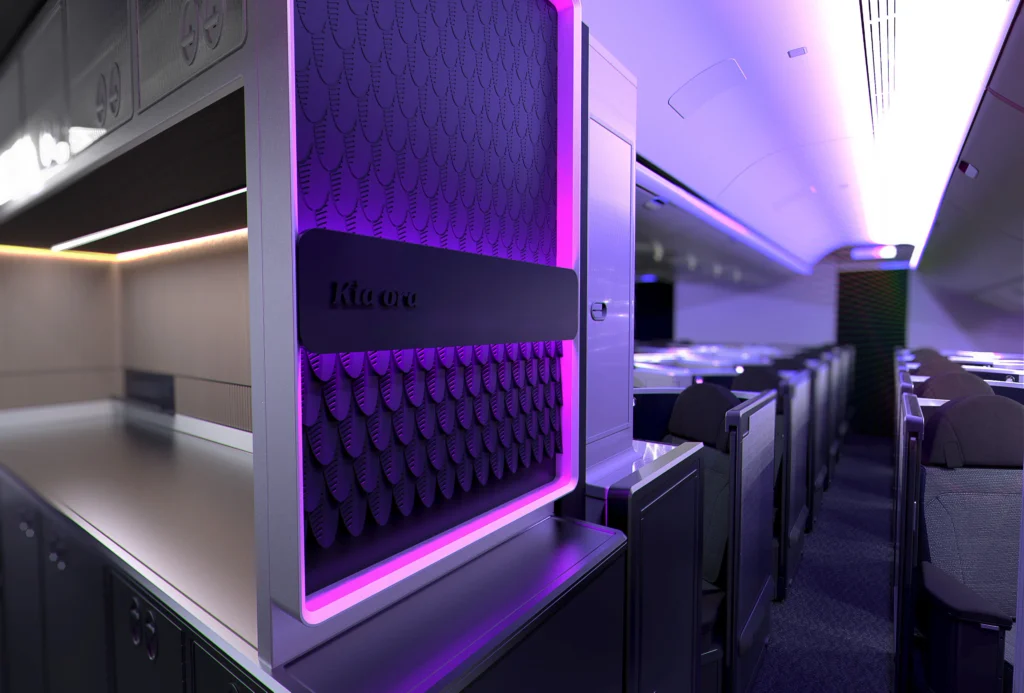
The carrier has already begun retrofitting its Boeing 787 fleet with redesigned premium cabins and upgraded onboard products.
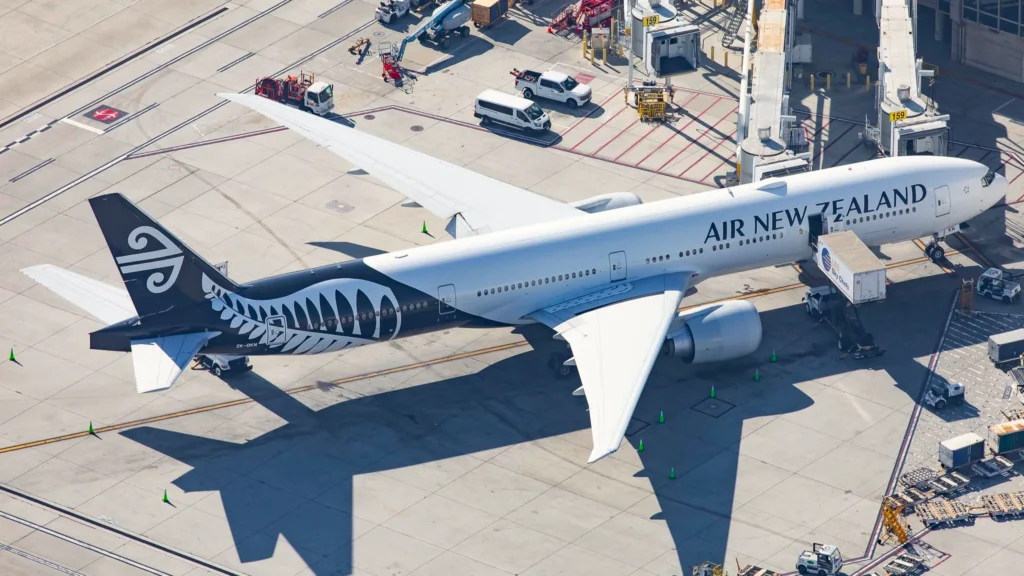
Its Boeing 777-300ER retrofit program is also progressing, introducing new business class suites with privacy doors based on a proven seat platform already used by another international airline.
Air New Zealand expects the 777 refurbishment project to conclude by the end of 2027. Once complete, every aircraft in its international fleet will feature cabins that are two years old or newer, creating one of the youngest wide-body interiors among global airlines.
Qantas Competition Heats Up
While Qantas continues investing heavily in New Zealand and prepares to introduce Project Sunrise nonstop services, Air New Zealand says its strategy targets different customer segments rather than directly competing on ultra-long-haul routes.
Qantas recently announced its largest investment in New Zealand, expanding airport facilities and strengthening its presence in Auckland. However, Air New Zealand believes healthy competition benefits travelers while encouraging both airlines to improve their products.
The airline remains focused on offering convenient connections between New Zealand and North America, supported by strong demand from leisure travelers, visiting friends and relatives, and business passengers.
Meanwhile, Qantas has confirmed it will continue operating Auckland services even after nonstop Sydney-New York flights begin, allowing the airline to serve multiple pricing segments across both markets.

Network Expansion Through New Routes
Improved aircraft availability has already enabled Air New Zealand to strengthen its international network beyond Auckland.
The airline has introduced new services from Christchurch to Japan, South Korea, and Perth, reinforcing direct access to New Zealand’s South Island without requiring passengers to transit through Australia.
The airline also expects strong customer interest in its upcoming Skynest product, featuring economy-class sleeping pods that can be reserved in four-hour blocks.
The first aircraft equipped with Skynest are scheduled to enter service later this year, adding another distinctive feature to Air New Zealand’s evolving long-haul offering, AFR reported.
Stay tuned with us. Further, follow us on social media for the latest updates.
Join us on Telegram Group for the Latest Aviation Updates. Subsequently, follow us on Google News
