

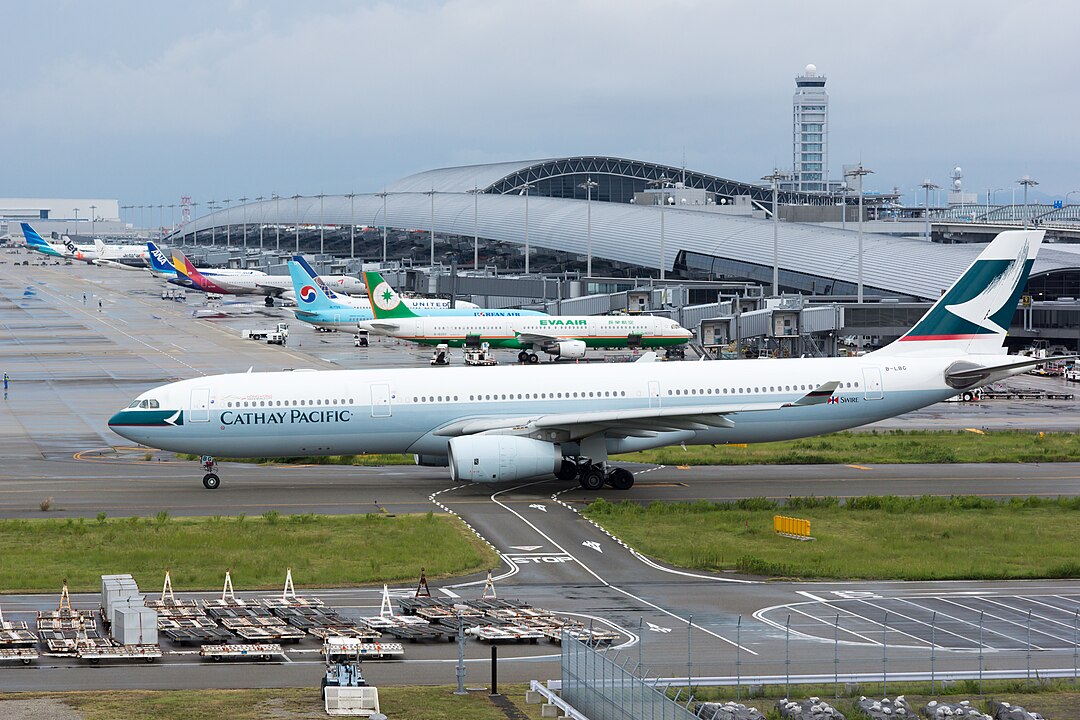
HONG KONG– A Cathay Pacific (CX) Airbus A330-300 operating from Tokyo Narita Airport (NRT) to Hong Kong International Airport (HKG) sustained a tail strike while performing a go-around during landing on July 3.
The aircraft landed safely on its second approach, with no injuries reported among passengers or crew.
The incident has prompted Hong Kong’s Civil Aviation Department (CAD) to request a detailed report from the airline, while the Air Accident Investigation Authority (AAIA) has begun following the established investigation process.
The aircraft remains under inspection as engineers assess the extent of the structural damage before it can return to service.
Incident Details and Investigation
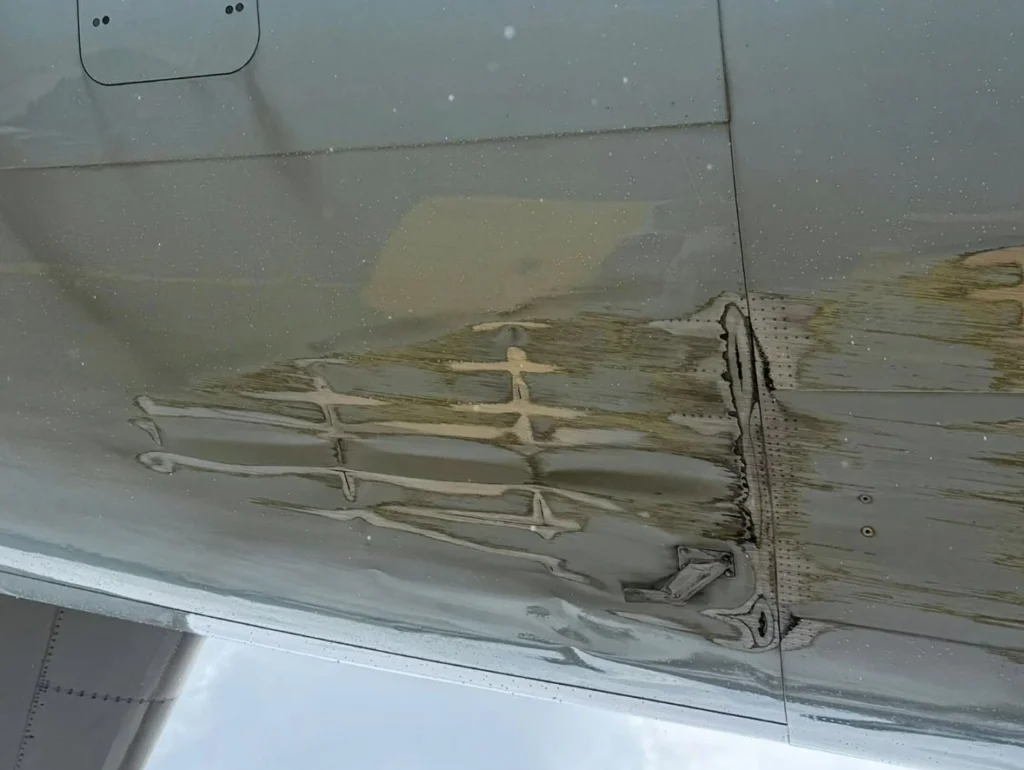
Cathay Pacific confirmed that the tail of Flight CX509 contacted the runway while the flight crew initiated a standard go-around after abandoning its initial landing attempt.
A go-around is a routine aviation safety maneuver in which pilots discontinue an approach and climb away to prepare for another landing.
Following the tail strike, the Airbus A330-300 successfully completed a second approach and landed safely at Hong Kong International Airport. The aircraft then taxied to its assigned parking stand, allowing passengers to disembark normally without any reported injuries.
The airline stated that its engineering team immediately began a comprehensive inspection of the aircraft and will complete all required maintenance before returning it to commercial operations.
Cathay attributed the event to poor weather conditions during the approach but did not disclose additional operational details.
Investigation Begins Into Tail Strike
Hong Kong’s Civil Aviation Department confirmed that Cathay Pacific promptly reported the occurrence under mandatory reporting procedures.
The regulator subsequently informed the Air Accident Investigation Authority and instructed the airline to submit a formal report detailing the event.
According to aviation specialists, investigators are expected to analyze information from the aircraft’s flight data recorder and cockpit voice recorder.
The investigation will likely examine the aircraft’s speed, descent profile, glide path, g-forces, communications between the flight crew and air traffic controllers, and any indications of a bounced landing.
Authorities are also expected to review meteorological information available during the approach.
Aviation experts noted that pilots rely on operational weather data such as visibility, wind direction, crosswind limits, wind shear alerts, and runway conditions rather than public weather warnings when determining whether it is safe to continue a landing.
Aircraft Assessment for Service
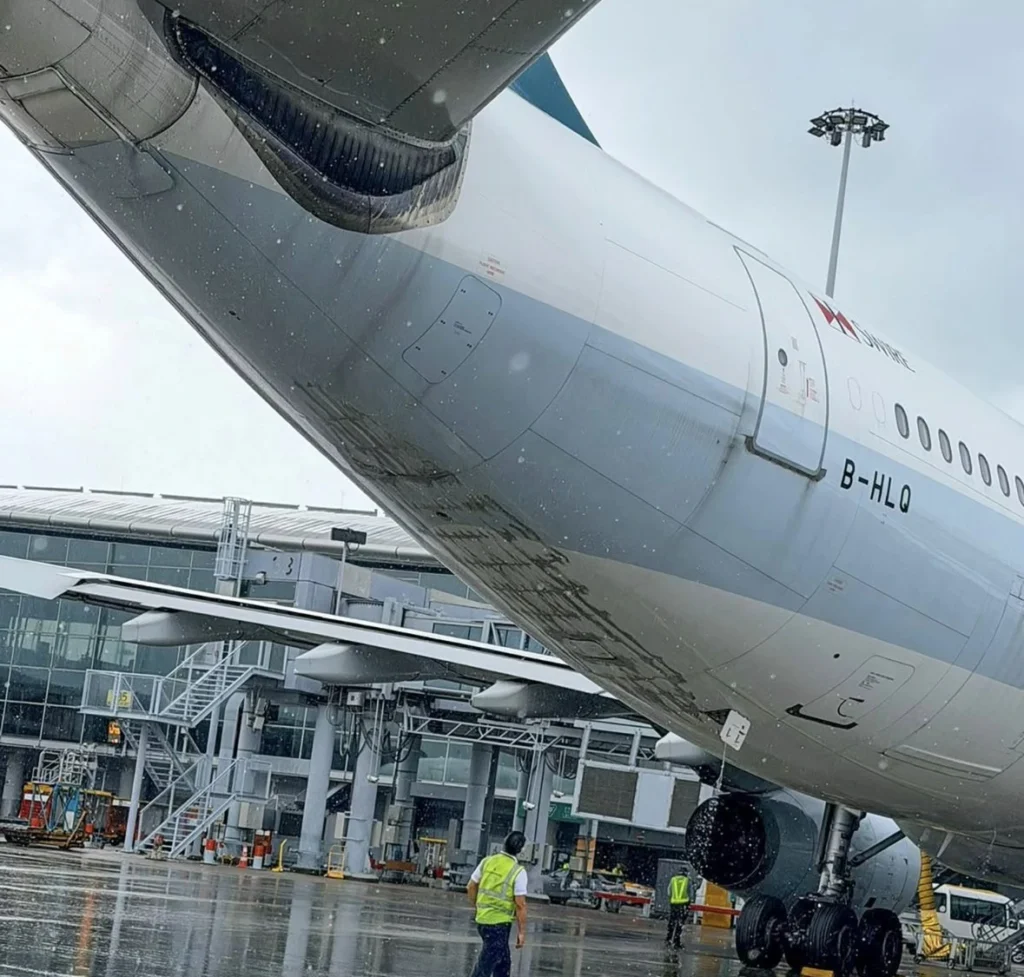
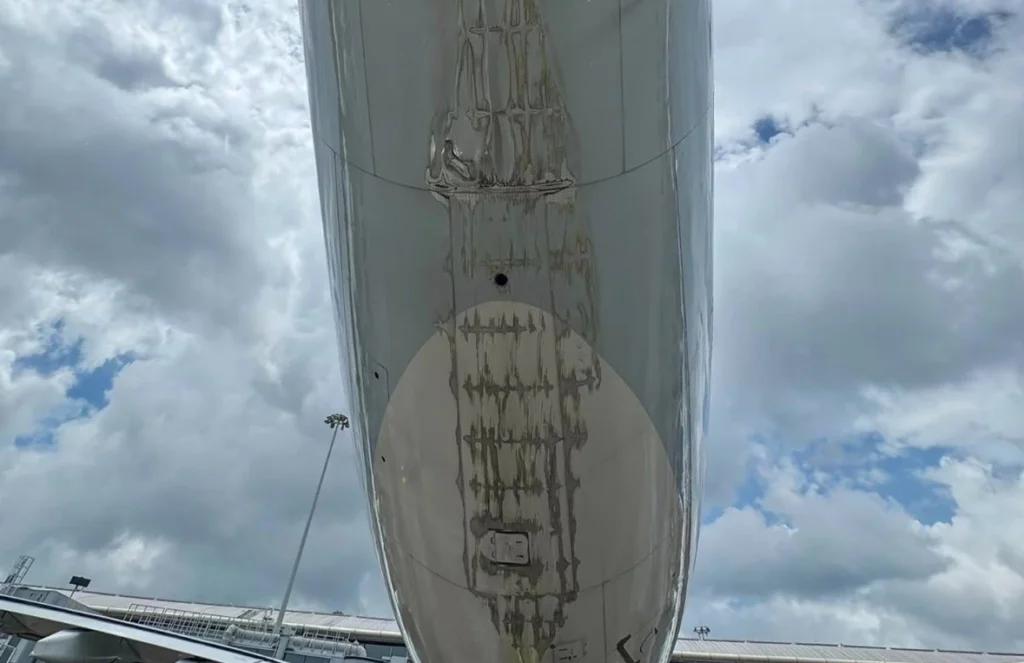
Photographs circulating after the incident show extensive scraping along the underside of the aircraft’s rear fuselage, indicating a significant tail strike. However, experts emphasized that the visible damage alone cannot determine the aircraft’s overall condition.
The aircraft involved, registered B-HLQ, is an Airbus A330-300 delivered to Cathay Pacific in 2001 and has been in service for nearly 25 years, SCMP reported
Engineers must inspect internal structural components, including frames and stringers, before determining the full extent of the damage and developing an appropriate repair plan.
Aviation specialists added that the aircraft’s return-to-service timeline will depend entirely on inspection findings. If structural components require replacement or extensive repairs, the maintenance process could take considerably longer than routine inspections.
Until the investigation concludes, the exact cause of the tail strike and the aircraft’s repair schedule remain under review by the airline and Hong Kong aviation authorities.
Stay tuned with us. Further, follow us on social media for the latest updates.
Join us on Telegram Group for the Latest Aviation Updates. Subsequently, follow us on Google News
