

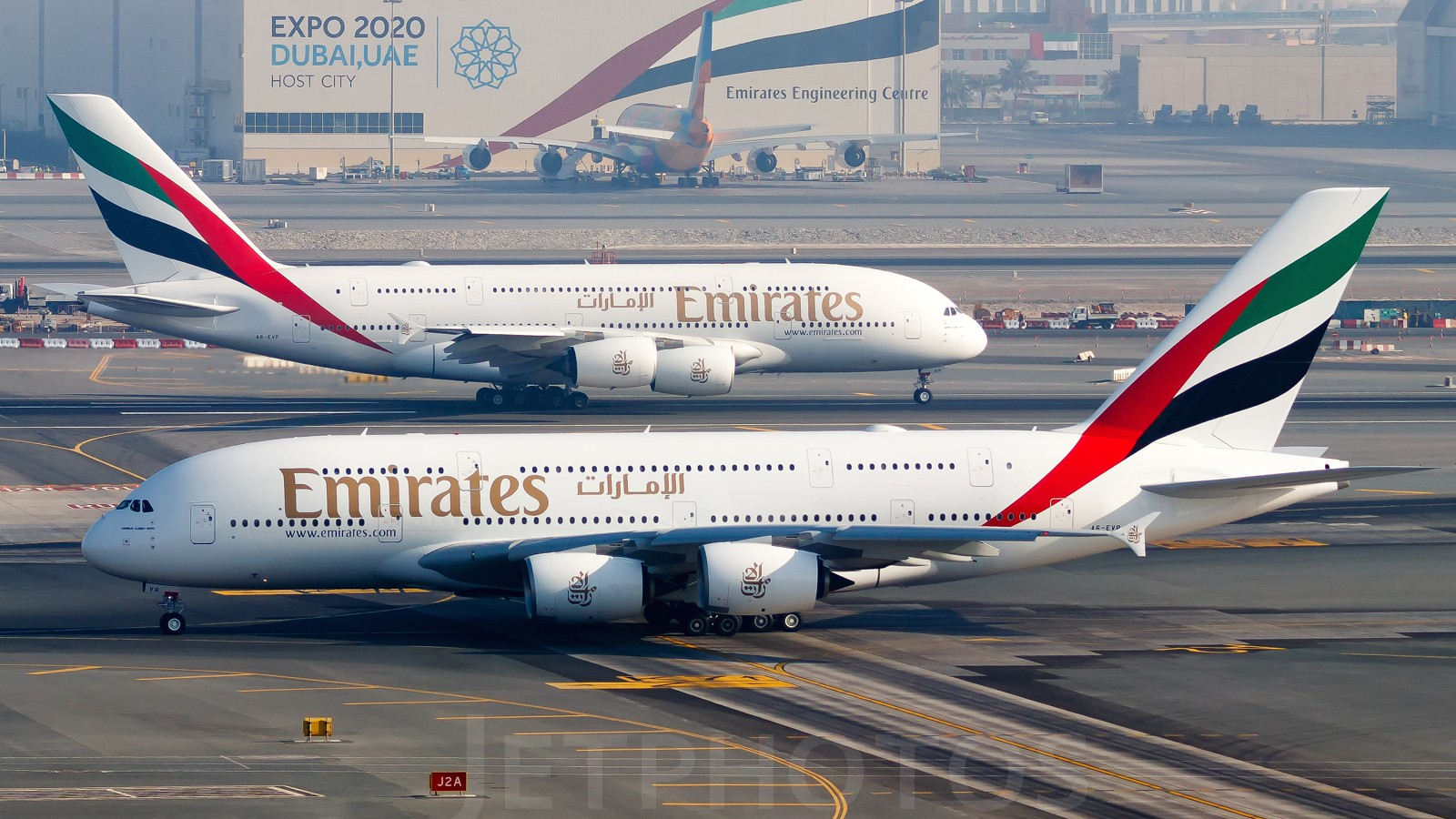
DUBAI- Emirates (EK) has spent nearly a decade running two different long-haul strategies on the same route, connecting Dubai International Airport (DXB) with Auckland Airport (AKL).
Rather than choosing between a record-setting nonstop flight and a traditional hub connection, the airline operates both, using the pairing as a live comparison of how each model performs under identical market conditions.
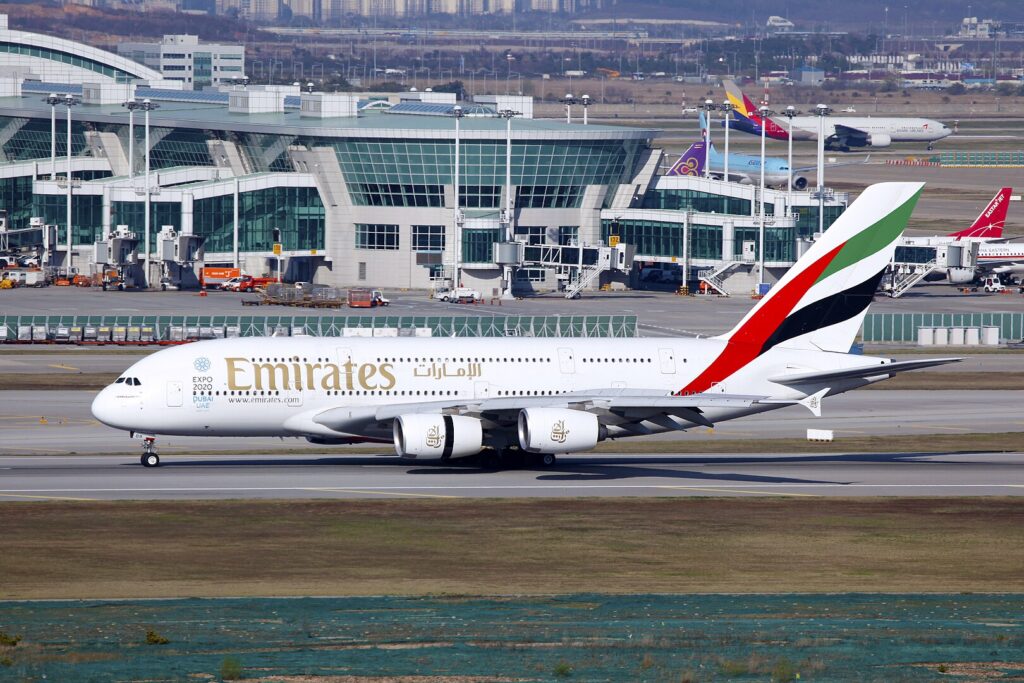
The roughly 8,820-mile (14,200-kilometer) DXB-AKL sector is the longest in the Emirates network and is flown by the Airbus A380. Alongside it, Emirates keeps a one-stop option through Australia, most often via Sydney (SYD), giving Auckland two ways to reach the carrier’s Dubai hub.
In June 2026, the airline increased the nonstop service to daily flights while continuing to lean on its Australian network, turning the route into a real test of nonstop versus connected long-haul flying.
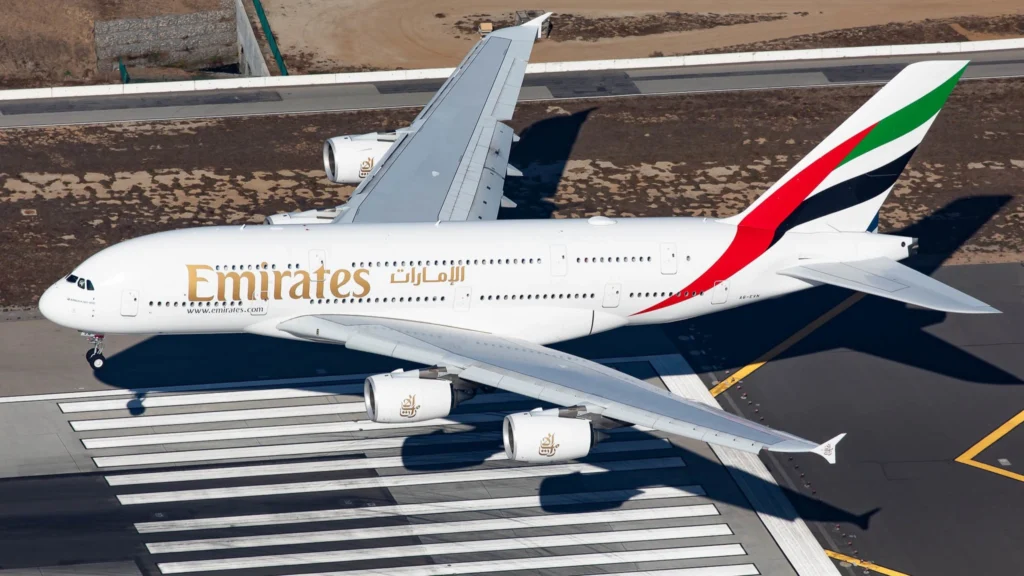
Emirates Two Competing Models On A Single City Pair
When Emirates launched the nonstop A380 service to Auckland in 2016, it added the flight on top of its existing Australia-based network rather than replacing it. The airline had already built strong passenger flows between New Zealand and Europe, the Middle East, and Africa through Australian gateways such as Sydney, Melbourne, and Brisbane.
The nonstop flight was designed to cut total journey time on a market that had grown sensitive to travel duration, particularly for business travelers and premium leisure demand. It offers the fastest eastbound time between Dubai and Auckland at roughly 15 hours and 50 minutes.
Keeping the one-stop option serves a different purpose: network resilience. Ultra-long-haul flights are highly sensitive to payload limits, wind conditions, and seasonal operational constraints.
By maintaining the Australia connection, Emirates ensures Auckland does not depend on a single near-daily ultra-long sector. The airline can move demand between the nonstop and connecting flows based on aircraft availability, fuel efficiency, and passenger loads.
The combined routing via Sydney can be more attractive during periods of lower premium-cabin demand or when cargo optimization takes priority over passenger speed. In those cases, splitting capacity across two sectors can produce stronger overall revenue than concentrating demand on one ultra-long flight, Simple Flying flagged.
ALSO READ: Emirates to Fly Largest Passenger Aircraft in the World to These 48 Destinations
Economics Of The World’s Longest A380 Sector
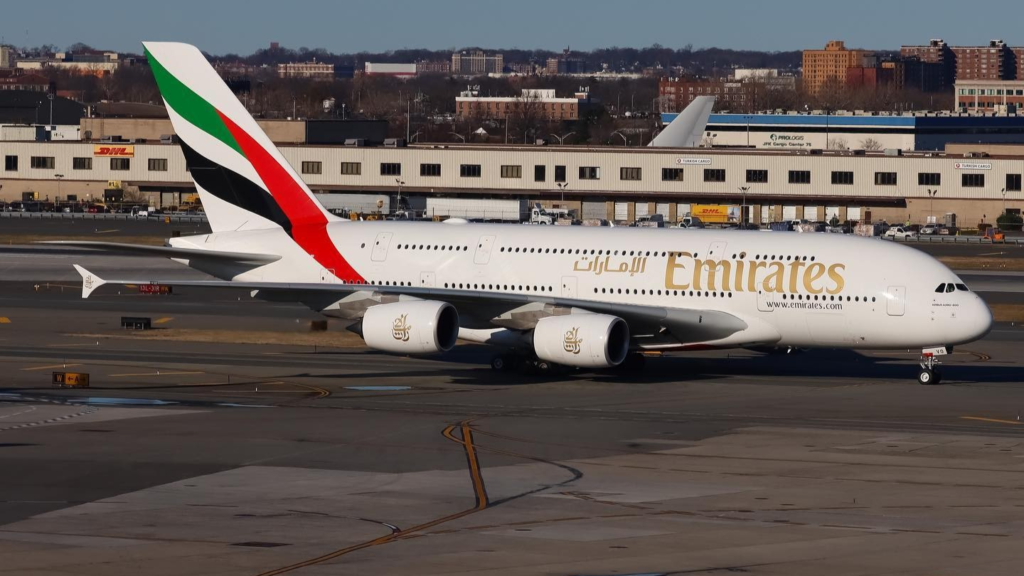
The Dubai-to-Auckland route is shaped by both its distance and the characteristics of the A380. The westbound leg takes more than 17 hours, placing it at the upper edge of what current widebody aircraft are routinely scheduled to fly in commercial service.
Emirates uses the A380 here because its high seat count helps offset the cost of such an extended flight.
With over 400 seats in a typical configuration, each departure adds significant capacity, totaling roughly 6,800 seats across the schedule during peak deployment. That scale matters on a route where costs are driven heavily by fuel burn over long distances and extended crew duty periods.
The economics are not fixed. For June 2026, Emirates raised the nonstop A380 service from four weekly flights to daily operations, as noted by Aero Routes, consolidating capacity into a higher-frequency schedule during a peak travel period. The move reflects a balance between maximizing aircraft utilization and holding a consistent presence in New Zealand.
Payload and range performance also shape how the route is managed. Ultra-long-haul flying of this length requires careful weight planning, especially in warmer months when temperature and wind conditions affect fuel efficiency. The A380’s payload capacity lets Emirates prioritize passenger volume while still carrying cargo, but these variables can decide whether the nonstop or the one-stop routing is favored.
Opportunity cost adds another layer. An A380 assigned to Auckland cannot serve other high-demand trunk routes such as London, New York, or Sydney at the same time. This makes scheduling sensitive to yield expectations, and Emirates treats the Auckland nonstop as part of a broader global optimization model in which aircraft rotations are continuously adjusted.
A380-800 Key Weights
| Weight | Value |
|---|---|
| Maximum Takeoff Weight | 1,268,000 lb (575,000 kg) |
| Fuel Capacity | 559,937 lb (253,983 kg) |
| Operating Empty Weight | 628,000 lb (284,856 kg) |
How The Tasman Fifth-Freedom Network Adds Flexibility
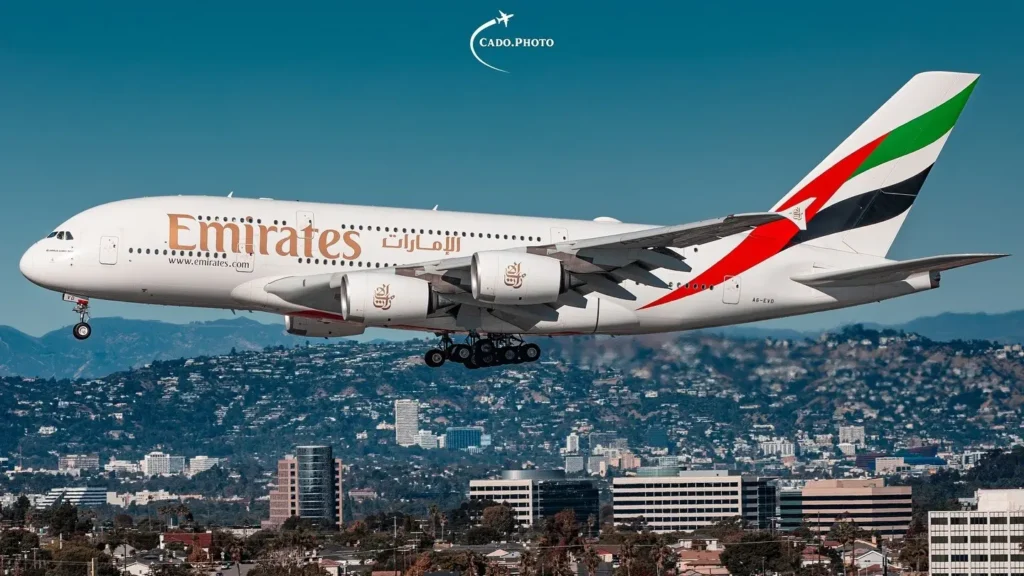
Beyond the nonstop flight, Emirates maintains a less visible but important layer of connectivity across the Tasman Sea. Its fifth-freedom rights allow the airline to operate services between Australia and New Zealand, most notably via Sydney, extending its Pacific network.
While the Auckland nonstop draws attention as the ultra-long-haul flagship, the Australia routing acts as a structural backup, absorbing demand swings and operational constraints without forcing a schedule-wide disruption.
Historically, the Sydney service fed both Auckland and Christchurch (CHC). Over time, Christchurch has increasingly become the primary Tasman destination from Sydney, letting Emirates avoid overconcentrating capacity in Auckland where the nonstop already serves the market directly.
The value of this structure is clearest when disruption hits the ultra-long sector. Weather variability in Auckland, air traffic congestion in Dubai, or payload limits on the A380 can all affect the feasibility of a full nonstop schedule. In those cases, the one-stop pathway through Australia preserves market access without cancellations or major schedule restructuring.
The Tasman network also diversifies revenue. The shorter Australia-New Zealand sectors let Emirates deploy premium products, including the A380’s First Class suites, on relatively short flights where such cabins are usually absent. This lifts yield on regional segments and strengthens brand positioning in markets often dominated by narrowbody operators.
The result is a layered revenue structure where long-haul Dubai-Auckland traffic and regional Tasman passengers contribute independently to overall profitability.
Aircraft Variables And Sydney Slot Economics
The A380 operates near the upper practical limit for long-haul service on the Dubai-to-Auckland sector. Route length places it in a category where payload, wind patterns, and temperature can materially affect fuel planning and passenger uplift.
Westbound flights are especially sensitive to headwinds over the Indian Ocean and Southeast Asia, which can influence whether Emirates flies nonstop or routes passengers through Australia to optimize weight and fuel.
Seasonality adds further complexity. Demand for New Zealand travel is driven by Northern Hemisphere holidays, Southern Hemisphere summer peaks, and shoulder seasons that produce uneven load factors.
During peak windows, Emirates increased nonstop frequency to as many as seven weekly flights in June 2026. In lower-demand periods, the airline can rely more on its Australia connections, where demand is spread across multiple city pairs.
Sydney is central to this balance. As one of Emirates’ most important fifth-freedom gateways, it is also a slot-controlled airport where timing rights directly influence network design.
Access to favorable arrival and departure slots affects onward connections to Christchurch and other Tasman destinations, which in turn shapes how Emirates structures its one-stop offerings against nonstop Auckland capacity.
Where The Hybrid Strategy Fits In Ultra-Long-Haul’s Future
Emirates’ approach to Auckland offers a counterpoint to the industry’s growing focus on record-breaking route lengths. Instead of relying only on ultra-long-haul flying, the airline has refined a model that pairs nonstop service with a complementary hub-and-spoke alternative, giving it flexibility few carriers on comparable routes can match.
The contrast is relevant as Qantas (QF) prepares to launch Project Sunrise, connecting Sydney and Melbourne with destinations such as London and New York using Airbus A350-1000 aircraft. Those flights are built around a pure nonstop strategy, leaving little room to reroute passengers through an alternative network if disruptions, shifting demand, or aircraft availability affect the schedule. Emirates, by comparison, can move traffic while still serving the same market with limited impact on passengers.
This flexibility also reduces commercial risk. If premium demand softens or seasonal patterns change, Emirates is not dependent on filling every seat on a single ultra-long flight. It can distribute passengers across multiple Australian gateways or adjust frequencies to match conditions.
The strategy underlines the enduring value of a global hub. Nonstop flights remove a connection but also remove the chance to aggregate passengers from many origins onto one departure.
Emirates continues to use Dubai’s extensive network to feed both its nonstop and one-stop Auckland services, while the Australian component generates local traffic under fifth-freedom rights, adding revenue beyond the long-haul sector itself.
By operating both nonstop and hub-fed services on the same city pair, Emirates has created a real-world benchmark for comparing two network models under the same market conditions. As more carriers invest in 18-hour-plus routes, the question may shift from whether an aircraft can fly farther to whether a nonstop consistently delivers more value than a flexible connecting network.
Stay tuned with us. Further, follow us on social media for the latest updates.
Join us on Telegram Group for the Latest Aviation Updates. Subsequently, follow us on Google News
