

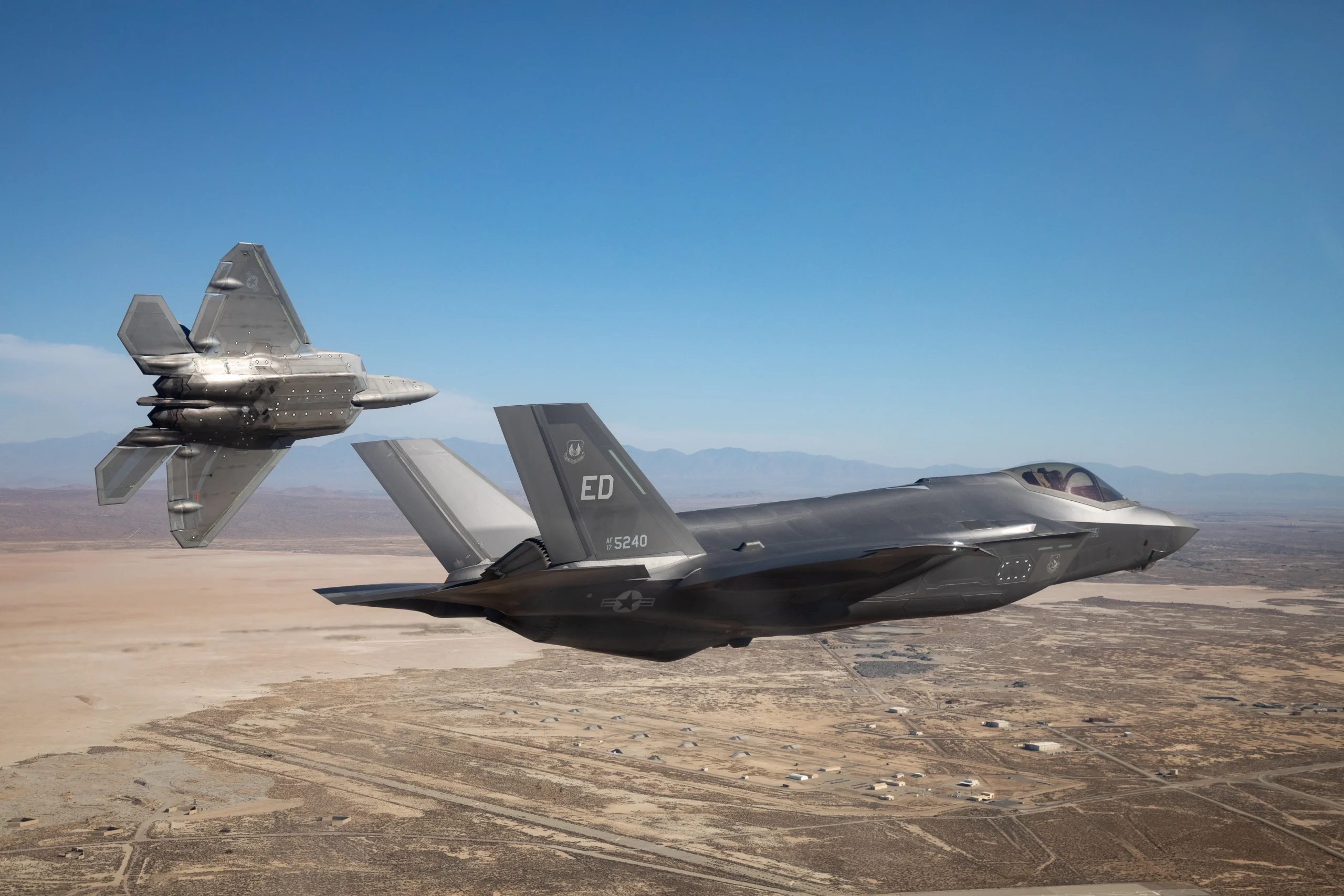
The Lockheed Martin F-22 Raptor remains one of the world’s most capable air superiority fighters, but its pilots do not use the advanced Helmet Mounted Display System (HMDS) that has become a defining feature of the newer F-35 Lightning II.
While the F-35’s custom-built helmet costs about $400,000 and replaces the traditional Head-Up Display (HUD), the F-22 continues to rely on conventional flight helmets and cockpit displays.
The difference is not the result of outdated equipment alone. Instead, it reflects two aircraft designed for different eras and operational concepts.
Although both are fifth-generation stealth fighters, the F-22’s cockpit architecture, canopy design, and mission requirements make the F-35’s sophisticated helmet impractical without a costly redesign.
F-35 Helmet Technology Explained in Detail
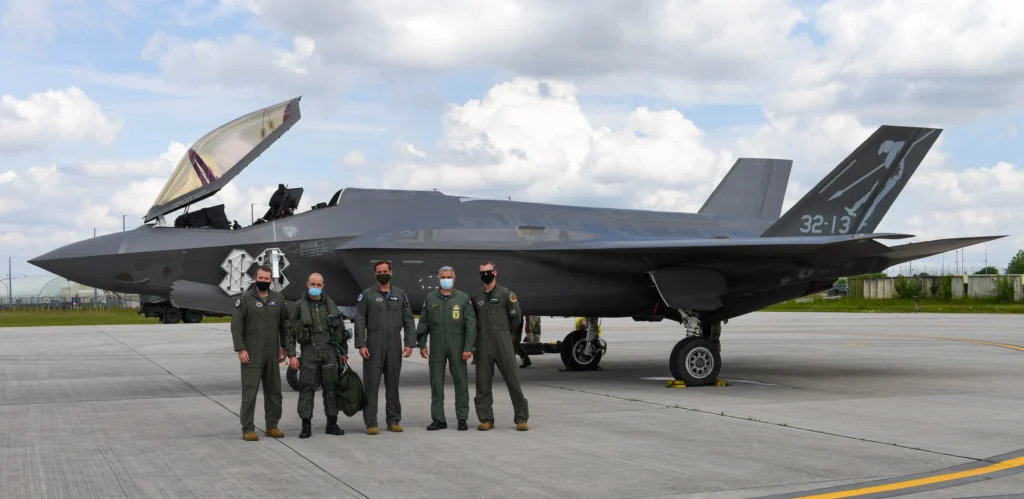
Unlike most modern fighters, the F-35 was built without a conventional HUD. Instead, all essential flight, navigation, targeting, and sensor information is projected directly onto the pilot’s visor through the HMDS, making the helmet the aircraft’s primary flight display.
The helmet also connects with six infrared cameras mounted around the aircraft, allowing pilots to effectively “look through” the fuselage.
This provides a 360-degree view of the surrounding airspace, significantly improving situational awareness during combat missions, especially at night or while tracking incoming threats.
Each helmet is individually fitted to its assigned pilot to ensure accurate alignment of the display with the pilot’s eyes.
The custom manufacturing process, combined with its advanced electronics and integrated night vision capabilities, contributes to its approximately $400,000 price tag.
Why F-22 Uses Standard Helmets
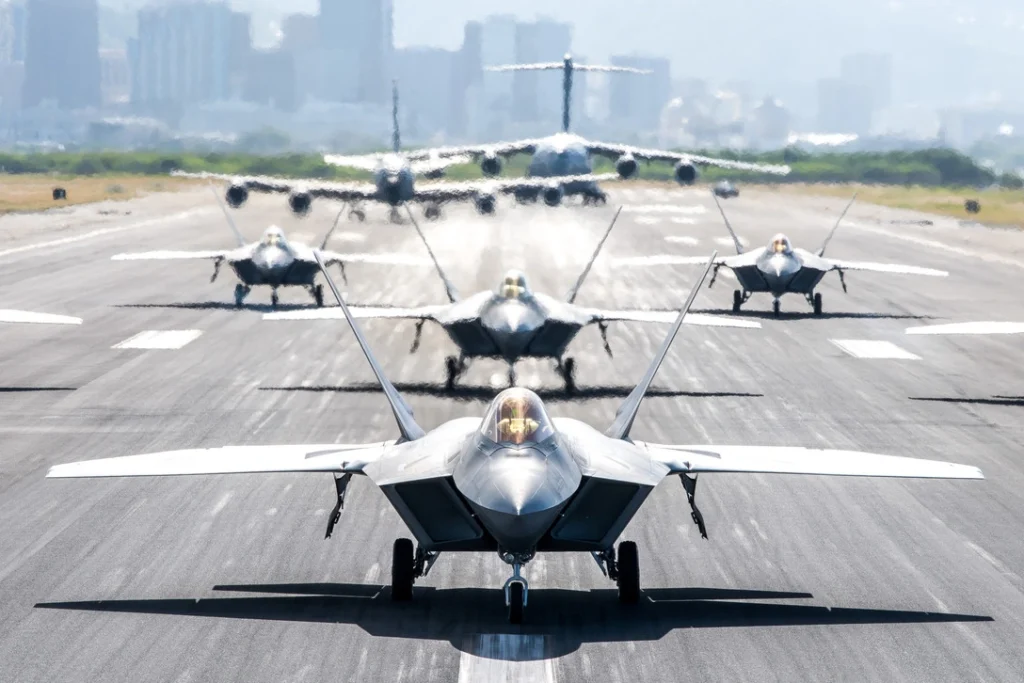
The F-22 entered service years before the F-35 program and was designed around a traditional cockpit layout. It features a large glass HUD positioned above its primary flight displays, giving pilots immediate access to essential flight information without requiring visor-based projections.
The aircraft’s compact canopy also presents a significant challenge. Designed in the 1990s to reduce radar reflections, the cockpit leaves little extra headroom for larger helmet systems, Wio News reported.
During high-G manoeuvres, a bulkier helmet could restrict pilot movement or make contact with the canopy.
Another technical limitation involves head-tracking technology.
Traditional helmet-mounted display systems often rely on magnetic tracking, but the F-22’s stealth coatings, legacy wiring, and dense internal systems create an environment that complicates the installation of those sensors.
Integrating the additional computing hardware needed to support an F-35-style helmet would also require extensive modifications to the aircraft’s avionics.

Cost Versus Mission Priorities Explained
Retrofitting the F-22 fleet would be an expensive undertaking. Only 187 Raptors were produced, making large-scale cockpit redesigns difficult to justify from a cost perspective.
The U.S. Air Force continues to prioritise the F-22’s original mission of long-range air dominance, where stealth, advanced sensors, and beyond-visual-range weapons provide its primary combat advantage.
Because pilots already receive critical flight information through the aircraft’s HUD and displays, the operational benefits of replacing the existing helmet system remain limited.
Instead, F-22 pilots continue using lightweight HGU-55/P flight helmets paired with compact optical devices where required.
This approach preserves cockpit compatibility, reduces weight during demanding manoeuvres, and allows the Raptor to maintain its intended combat performance without the expense of a comprehensive cockpit redesign.
As fighter technology evolves, the contrast between the F-22 and F-35 highlights how aircraft design decisions made decades apart continue to influence pilot equipment today.
Rather than representing a technological shortcoming, the absence of the F-35’s advanced helmet on the F-22 reflects two different engineering philosophies shaped by distinct operational priorities.
Stay tuned with us. Further, follow us on social media for the latest updates.
Join us on Telegram Group for the Latest Aviation Updates. Subsequently, follow us on Google News
