

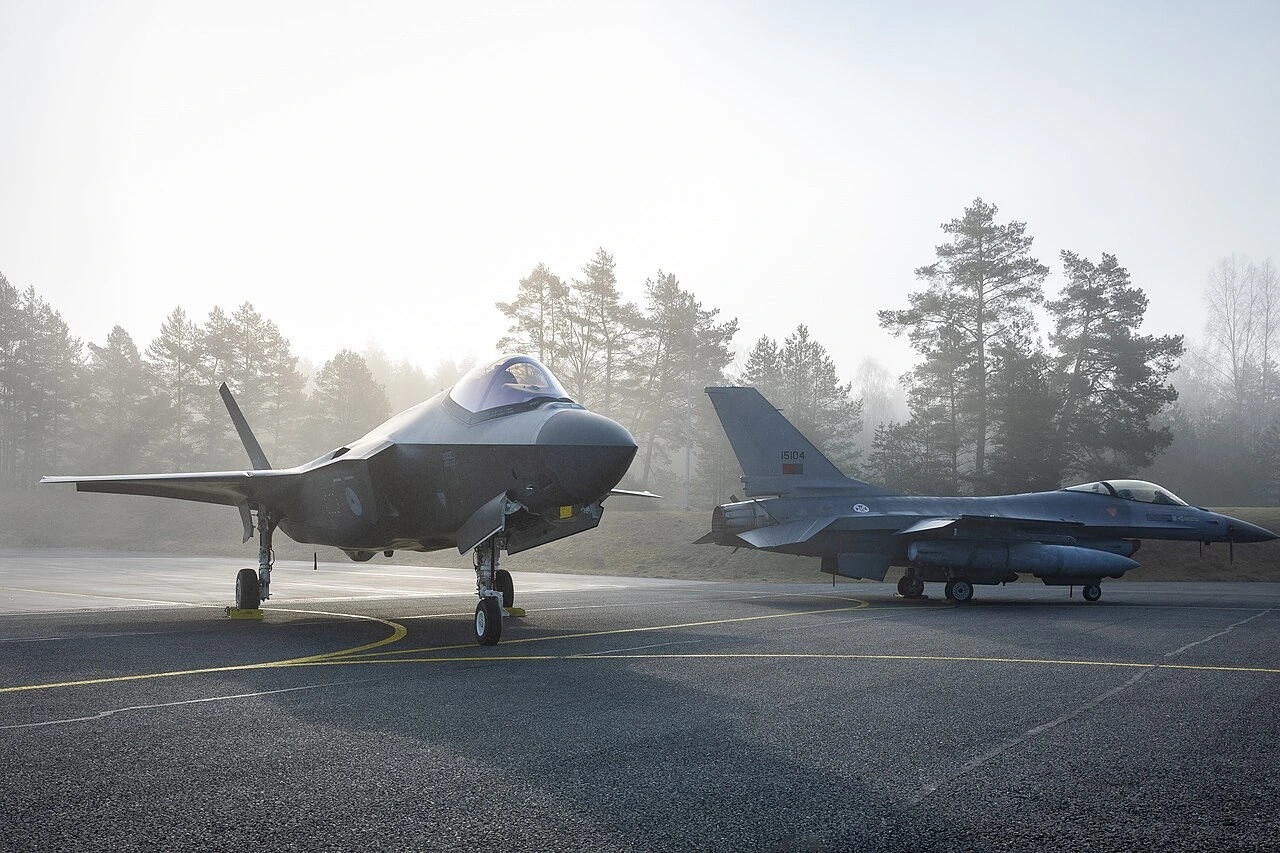
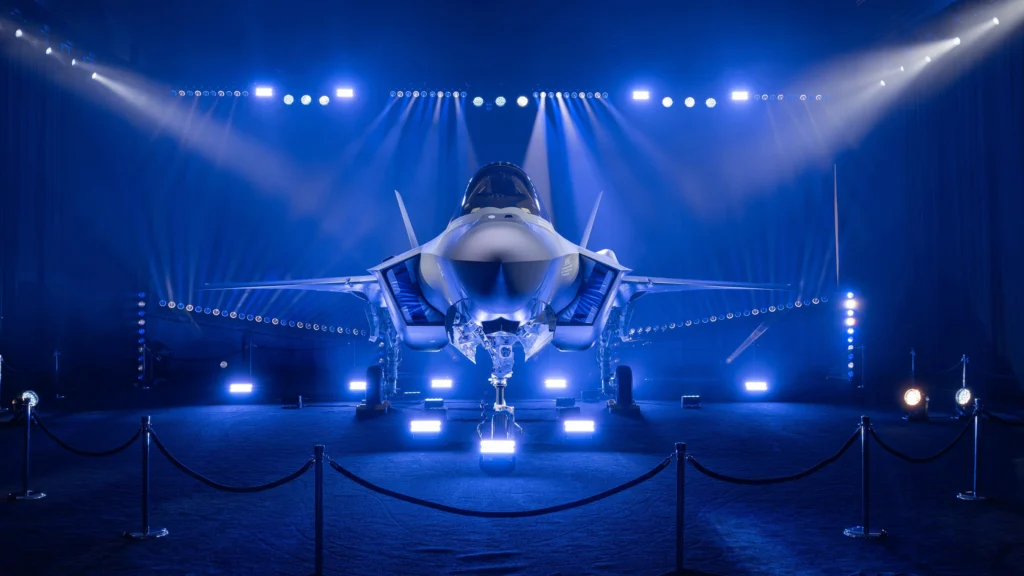
WASHINGTON, D.C.- The United States Marine Corps has accepted 6 F-35B fighter jets without their operational nose-mounted radar after delays hit the new Northrop Grumman AN/APG-85 radar.
Each aircraft was delivered with ballast installed in place of the radar to maintain correct weight and balance, allowing production and acceptance to continue despite the temporary capability gap.
The US Air Force and US Navy are also expected to receive F-35 jets without installed radars later this year if deliveries of the new radar remain delayed.
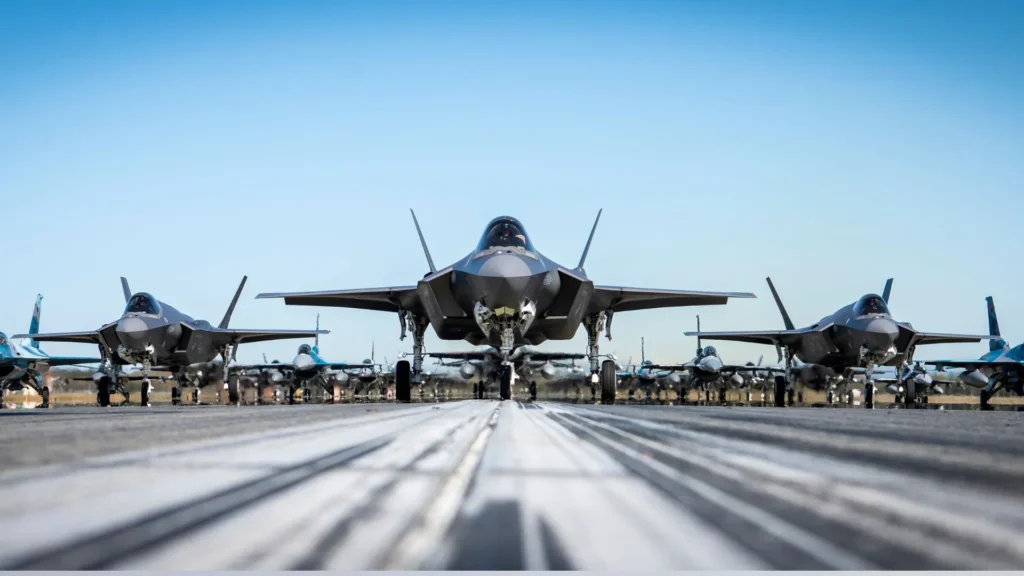
New F-35 Deliveries Miss Radars
The issue affects aircraft produced under Lot 17, the first production batch designed around the AN/APG-85 radar rather than the older AN/APG-81. These aircraft incorporate a redesigned forward bulkhead engineered specifically for the new radar.
Because the mounting arrangement differs from that of the AN/APG-81, manufacturers cannot fit the previous radar as a temporary substitute.
The radar is also purchased separately by the US government rather than through Lockheed Martin’s aircraft production contract, so the delay is linked to Northrop Grumman’s radar program rather than the aircraft manufacturer.
Reported by Air & Space Magazine, the current approach allows aircraft production to continue while the delayed radar is installed after delivery.
Marine Corps Lt. Gen. Gregory Masiello, director of the F-35 Joint Program Office, told the Senate Armed Services Committee on June 23 that only 6 Marine Corps F-35B aircraft had been delivered without radars at the time of his testimony.
Those jets were manufactured earlier in the year and entered acceptance testing in February.
Asked later to clarify, officials confirmed that no Air Force or Navy F-35 aircraft had yet been delivered without radars, although both services are expected to receive similarly configured jets later this year if production continues ahead of radar availability.
The absence of the radar does not prevent the aircraft from flying. Pilots can use the jets for basic flight training, but the aircraft cannot conduct combat training or operational missions because the radar is a critical mission system required for full combat capability.
Once the delayed radar is installed and integrated, the affected aircraft are expected to reach their intended operational configuration.

Pentagon Accepted the Development Risk
In a June 25 email response, the Joint Program Office said the Pentagon knowingly and deliberately undertook a highly concurrent development and production program for advanced capabilities.
Under this approach, aircraft manufacturing continues while certain technologies complete development, which reduces production delays but raises the likelihood that some capabilities will be installed after delivery.
The response noted the decision was made with full understanding of the risk of having production aircraft ready ahead of the capabilities they were designed to carry.
Similar Situations
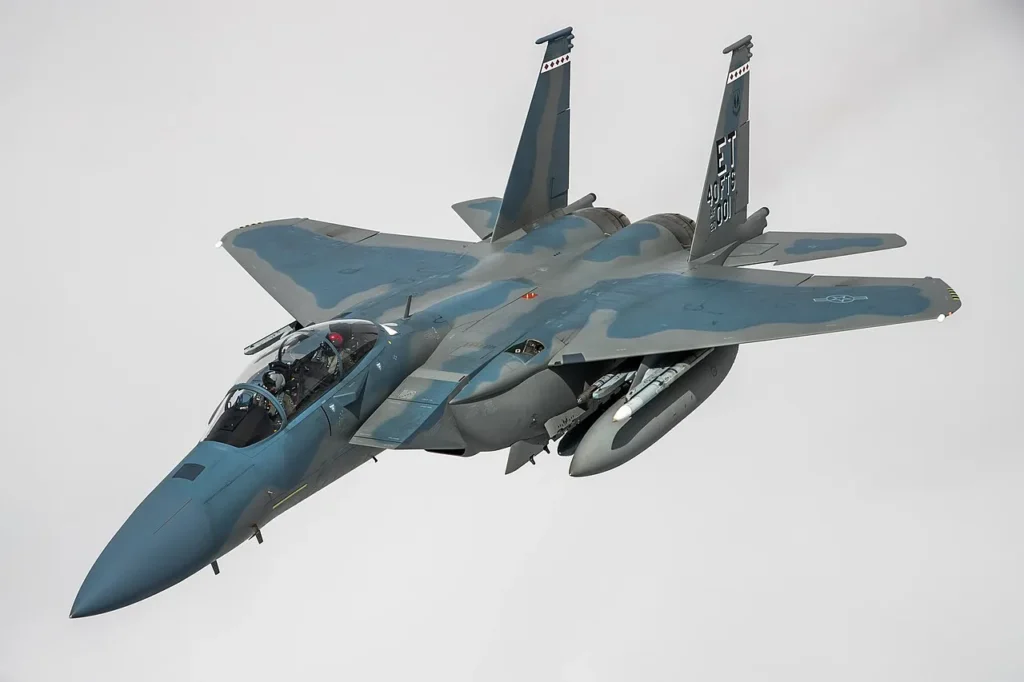
Accepting aircraft before every component is available is not unprecedented in US military aviation.
During the 1970s, some newly delivered F-15 Eagle fighters faced engine shortages that forced engines to be pulled from delivered aircraft and installed in other newly built jets. Once engine production recovered, the affected aircraft returned to service.
The current radar situation follows a similar production strategy, though it comes at a time when the overall F-35 program is already facing increased scrutiny.
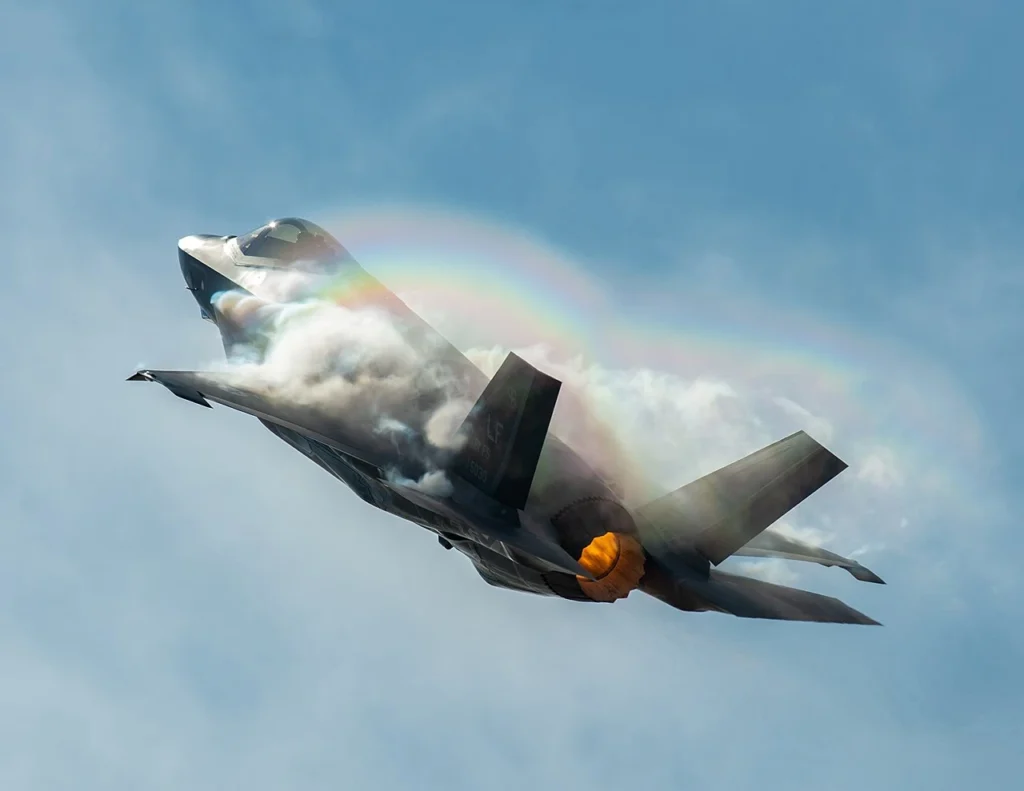
F-35 Readiness Draws Attention
A recent Government Accountability Office report found that only about one-quarter of the fleet was fully mission capable during 2025, meaning those aircraft could perform their complete mission set.
The report also found that 44.1% of the fleet could perform at least one assigned mission, still well below historic targets.
Masiello said he would not dispute the GAO figures or its methodology, but argued the findings lack context because the Joint Program Office measures readiness differently.
Using the program’s own calculation, he put the mission-capable rate at roughly 56%. He acknowledged that aircraft delivered without radars cannot be classified as fully mission capable until the missing equipment is installed.
Cooling the New Radar
The AN/APG-85 is one of the most significant hardware upgrades in the still-pending Block 4 configuration, and it generates considerably more heat than the AN/APG-81 it replaces. That makes thermal management one of the program’s most important engineering priorities.
Masiello said F-35s will eventually need enough cooling to manage systems consuming 62 to 80 kW of power, more than double the 32 kW that current hardware draws and the same figure at which today’s cooling system maxes out.
He described cooling as the central challenge and said there is no margin left, which he called an unwise way to operate. The program is taking an incremental approach to raise that capacity while studying a more systemic and affordable upgrade across the fleet.

Future Improvements
The Joint Program Office previously funded development of a next-generation engine that would have provided significantly greater cooling capability, but that effort was discontinued because of its projected cost.
Instead, the program will rely on an upgraded Pratt & Whitney engine core expected to enter production after 2031, which officials expect to deliver only a marginal increase in cooling.
More comprehensive improvements to the aircraft’s power and thermal management system are planned for later phases following the upgraded engine, in time for post-Block 4 capabilities.
Masiello deferred further questions about the AN/APG-85’s capabilities and cooling requirements to the hearing’s classified session.
Stay tuned with us. Further, follow us on social media for the latest updates.
Join us on Telegram Group for the Latest Aviation Updates. Subsequently, follow us on Google News
