

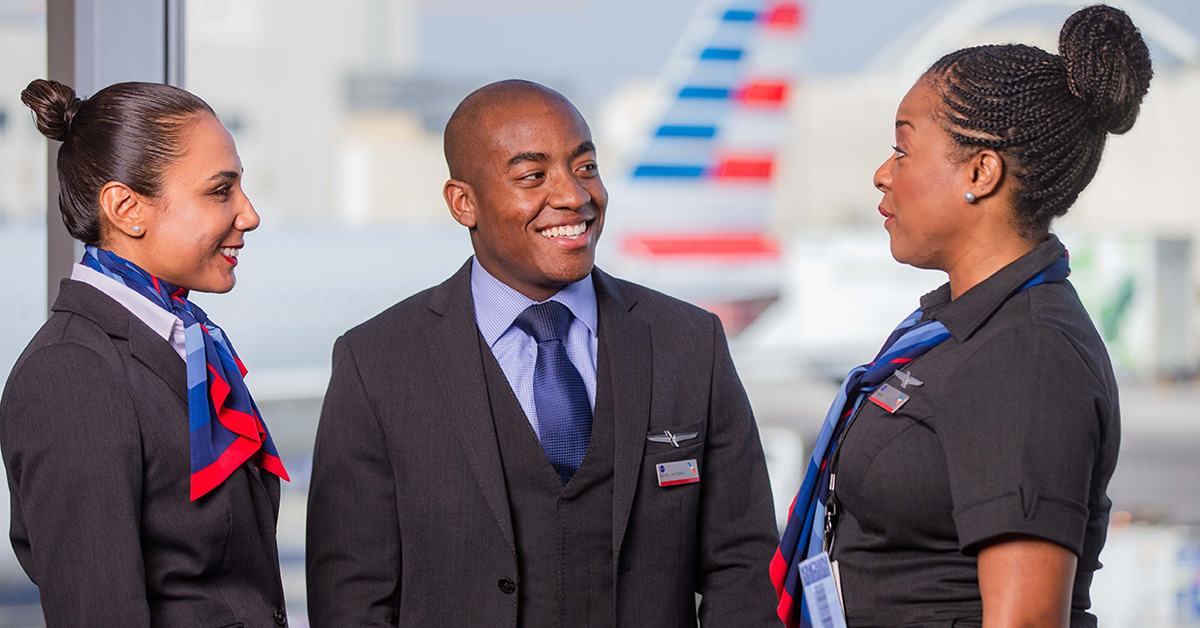
FORT WORTH- American Airlines (AA) has won a long-running legal fight over the grey uniforms it rolled out nearly a decade ago.
On Tuesday, the Seventh Circuit Court of Appeals upheld summary judgment for the carrier and uniform maker Twin Hill, ending a case first filed by 70 employees who said the garments made them sick.
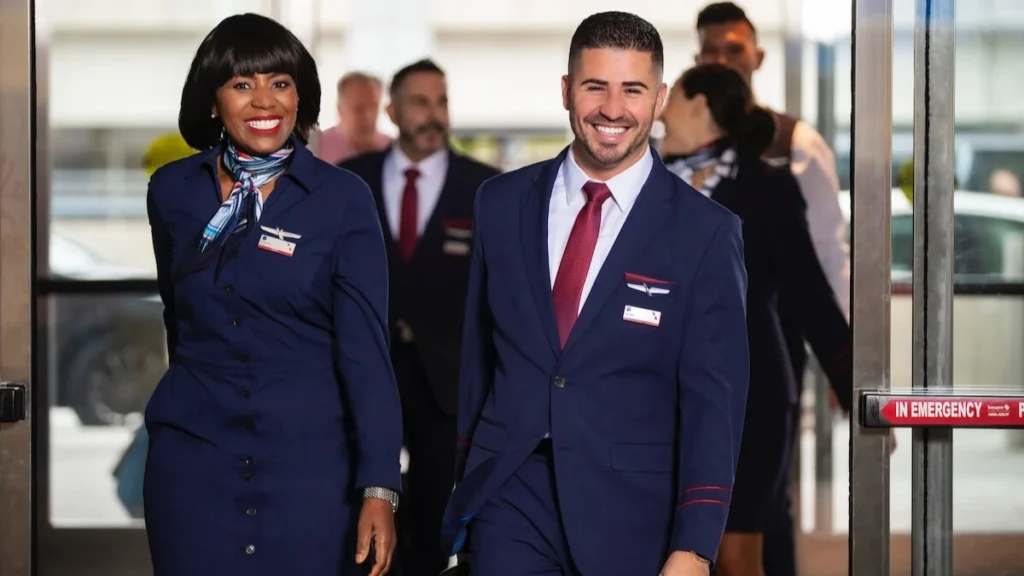
The dispute traces back to 2016, when the Fort Worth-based carrier, whose primary hub sits at the Dallas Fort Worth International Airport (DFW), swapped its older blue uniforms for grey ones supplied by Twin Hill.
Several employees reported reactions. They pointed to earlier complaints about Twin Hill uniforms at Alaska Airlines (AS) as evidence that the carrier should have seen the issue coming.
Appeals Court Sides With Airline and Twin Hill
The Seventh Circuit affirmed a lower court ruling that had already gone against the employees.
The judges agreed there was no admissible expert proof that the uniforms were defective or that they caused the reported symptoms. Without that evidence, the panel found nothing left for a jury to weigh beyond complaints and general testing.
The plaintiffs had asked the court to revive their suit under the idea of res ipsa loquitur, meaning the thing speaks for itself. They argued a jury could infer both defect and causation from the timing of the rollout and the wave of reactions, without naming a specific chemical or dose.
Federal courts treat that as a weak argument, since strict standards govern scientific evidence at the national level.
American signed with Twin Hill in February 2015 to supply uniforms for roughly 70,000 customer-facing employees, including flight attendants, pilots, and above-wing airport staff. The grey uniforms reached the workforce around September 2016.
Complaints began before and during the rollout. Workers reported skin, respiratory, eye, neurologic, gastrointestinal, and reproductive issues.
According to View from the Wing, employees also claimed that pilots had reported rashes and other symptoms during a pre-launch field test, yet the airline moved ahead anyway.
Complaint Numbers and Lab Testing
The flight attendants union logged 3,758 complaints out of roughly 18,000 flight attendants. The union also encouraged members to report more, a factor that shaped the volume of reports.
The National Institute for Occupational Safety and Health (NIOSH) broke the figures down into 3,686 symptom reports, 796 reports involving medical care, and 47 reports of symptoms from simply being near the uniforms.
Early testing found most chemicals unlikely to cause reactions and flagged some potential irritants. As with most such cases, concentration is what matters, since the dose makes the poison. A chemical present at a low enough level may pose no real risk.
Once complaints climbed, American had Intertek test 123 Twin Hill garments alongside legacy uniforms and off-the-rack retail items.
Intertek found some potential sensitizers but concluded it was unlikely that anything unique to the Twin Hill garments would cause the reported reactions, beyond the normal range for people already prone to clothing allergies.
NIOSH reached a similar view. It found it was possible that textile chemicals contributed to skin symptoms for some workers, but its testing did not pinpoint a responsible chemical. The agency concluded the uniforms were unlikely to be the cause.
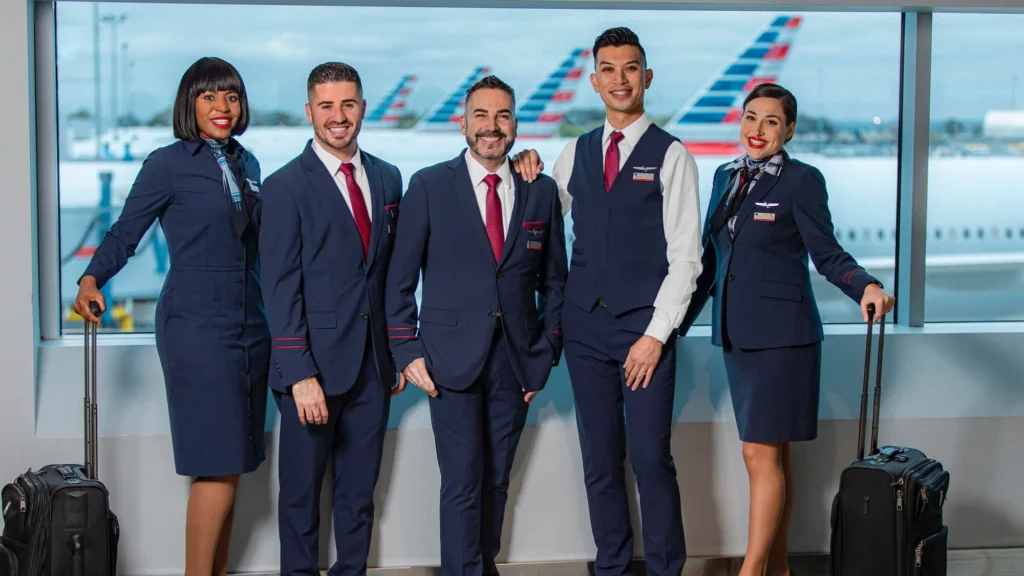
American let employees return to their old uniforms and buy off-the-rack substitutes soon after the complaints grew. The airline ended its contract with Twin Hill and brought in other suppliers, including Lands’ End. The grey uniforms at the center of the case were replaced again in 2020.
Why Case Collapsed in Federal Court
The airline’s legal position rested on three points. Workers compensation exclusivity blocks ordinary workplace injury claims against an employer.
There was no showing that American acted with substantial certainty to injure its staff. And the plaintiffs lacked admissible expert proof that the uniforms were defective or caused harm.
A district court had earlier granted summary judgment against the employees. It ruled that key plaintiff experts failed to meet the scientific standard required by law.
One expert tried to infer causation from the overlap between the rollout and the complaints, paired with testing that flagged irritants, but offered no theory explaining how a specific chemical at a specific dose produced the symptoms.
Federal rules set clear limits on when a witness can testify as an expert. A judge must be satisfied that the person is qualified, that their background fits the specific question, that the opinion helps the jury, that it addresses something the jury cannot reliably work out on its own, and that it rests on real data and a legitimate method.
The case of Daubert v. Merrell Dow Pharmaceuticals requires judges to act as gatekeepers and keep weak science away from juries.
State Lawsuits Have Gone the Other Way
The federal loss does not end every claim. State cases such as Poole v. Twin Hill still involve hundreds of American employees, and state courts have proven friendlier to these arguments.
A California jury awarded more than $1 million to 4 flight attendants in 2023. Another California jury awarded $18.6 million to five flight attendants in 2025, assigning 90 percent of the fault to Twin Hill and 10 percent to American.
Similar claims remain easier to pursue in states like California, New York, Minnesota, and Pennsylvania, where courts apply different rules on inferring cause.
Stay tuned with us. Further, follow us on social media for the latest updates.
Join us on Telegram Group for the Latest Aviation Updates. Subsequently, follow us on Google News
