

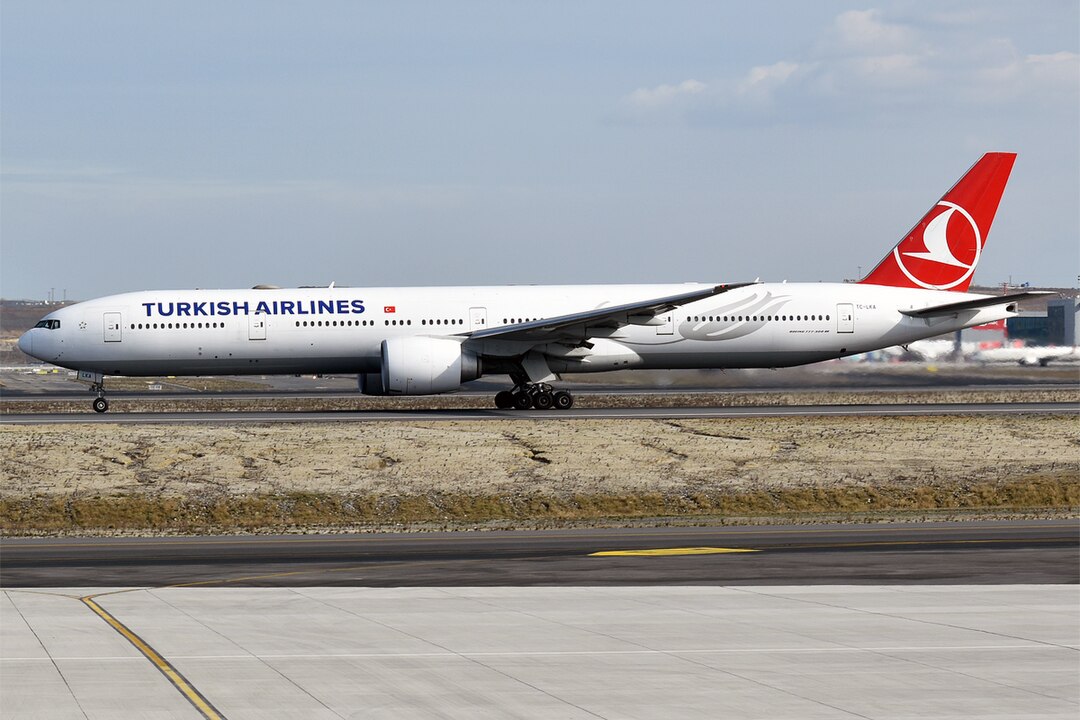
ANTALYA- A Turkish Airlines (TK) Boeing 777-300ER suffered significant damage after colliding with a radar antenna mast while taxiing at Antalya Airport (AYT) on Thursday evening, June 11, 2026.
The aircraft had just completed a routine domestic flight from Istanbul Airport (IST) and landed safely before the ground incident occurred.
Flight TK2430 was carrying 267 passengers when the widebody aircraft struck the radar structure while maneuvering toward its parking stand.
The impact damaged the aircraft’s right wing and fuselage, triggered the deployment of oxygen masks, and led to a precautionary evacuation. Reports indicate that at least one passenger sustained injuries, although some local media outlets suggest the number may have been higher.
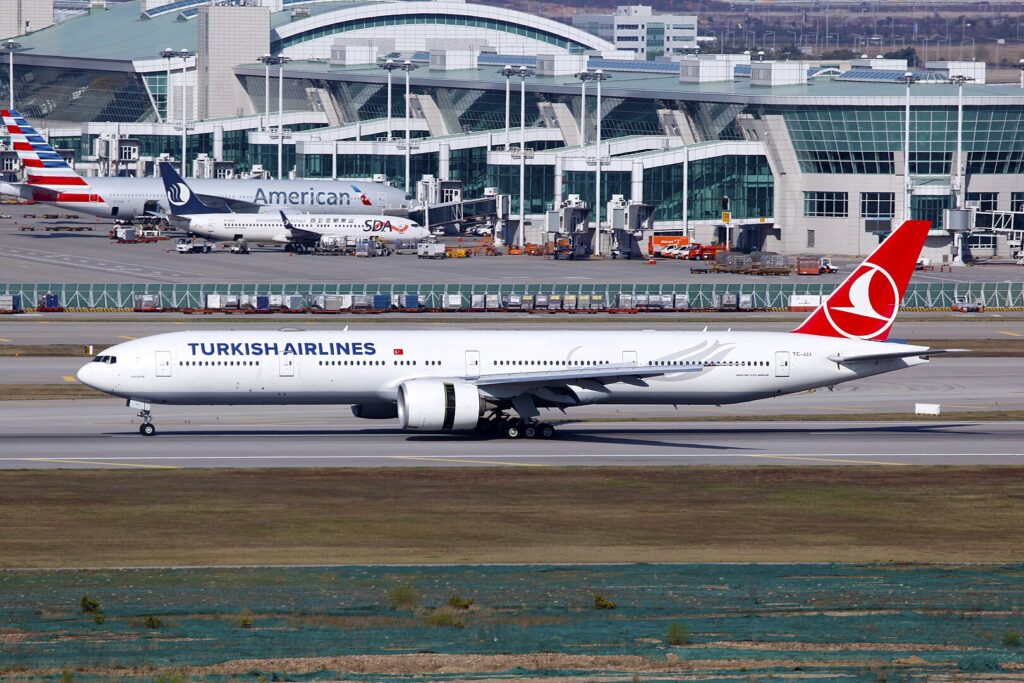
Turkish Airlines Incident
The aircraft involved was Boeing 777-300ER registration TC-LKD, a 17-year-old jet that recently returned to Turkish Airlines following a three-year lease with IndiGo.
According to local reports, the radar mast penetrated the aircraft’s fuselage after the initial impact, causing structural damage and dislodging an overhead storage bin inside the cabin.
Cabin crew and airport emergency responders quickly evacuated all passengers from the aircraft. Authorities confirmed that no life-threatening injuries were reported.
Emergency services remained on site while airport personnel secured the damaged aircraft and assessed the extent of the impact.
Turkey’s Ministry of Transport stated that the aircraft entered a taxi route incorrectly after landing and subsequently collided with a ground radar mast located on Apron-1.
Following the evacuation and safety inspections, the aircraft was towed away from the active operating area.
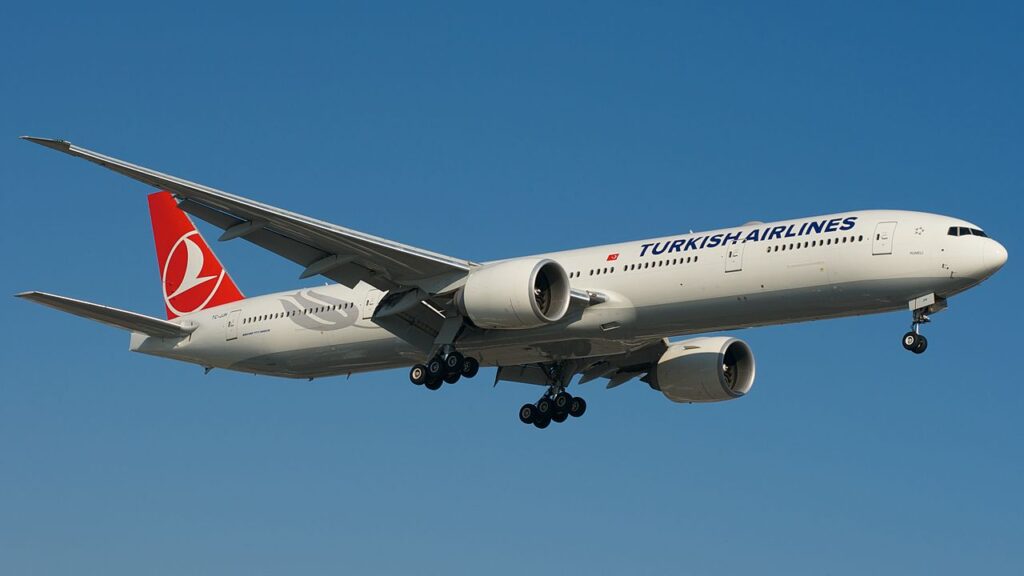
Investigation Underway
Turkish Airlines has launched a technical investigation into the incident. Officials have not yet determined whether the collision resulted from a routing error, communication issue, or another operational factor.
Early information indicates the aircraft may have entered a taxiway that was not suitable for an aircraft with the Boeing 777-300ER’s wingspan.
Aviation safety data shows that the distance between the taxiway centerline and the radar mast was approximately 29 meters, while the aircraft’s wings extend roughly 32.4 meters from the centerline on either side.
Investigators are expected to review taxi instructions, airport markings, ground control communications, and aircraft movement data.
The findings will help determine why the aircraft came into contact with airport infrastructure after an otherwise uneventful landing.
Aircraft Repair Timeline
The damage to TC-LKD could keep the aircraft out of service for an extended period. Engineers will need to conduct detailed inspections of the fuselage, wing structure, fuel systems, and internal cabin components before repairs can begin.
Structural repairs will likely include replacing damaged fuselage sections, restoring the aircraft’s pressurization integrity, and repairing affected cabin equipment such as oxygen mask systems and overhead bins.
The right wing will also undergo extensive examination to ensure no hidden structural damage exists, Simple Flying flagged.
While Turkish Airlines has not released an estimated return-to-service date, aviation maintenance experts note that repairs involving both wing and fuselage damage on a widebody aircraft can take several weeks or even months, depending on the severity of the impact and the availability of replacement components.
Stay tuned with us. Further, follow us on social media for the latest updates.
Join us on Telegram Group for the Latest Aviation Updates. Subsequently, follow us on Google News
