

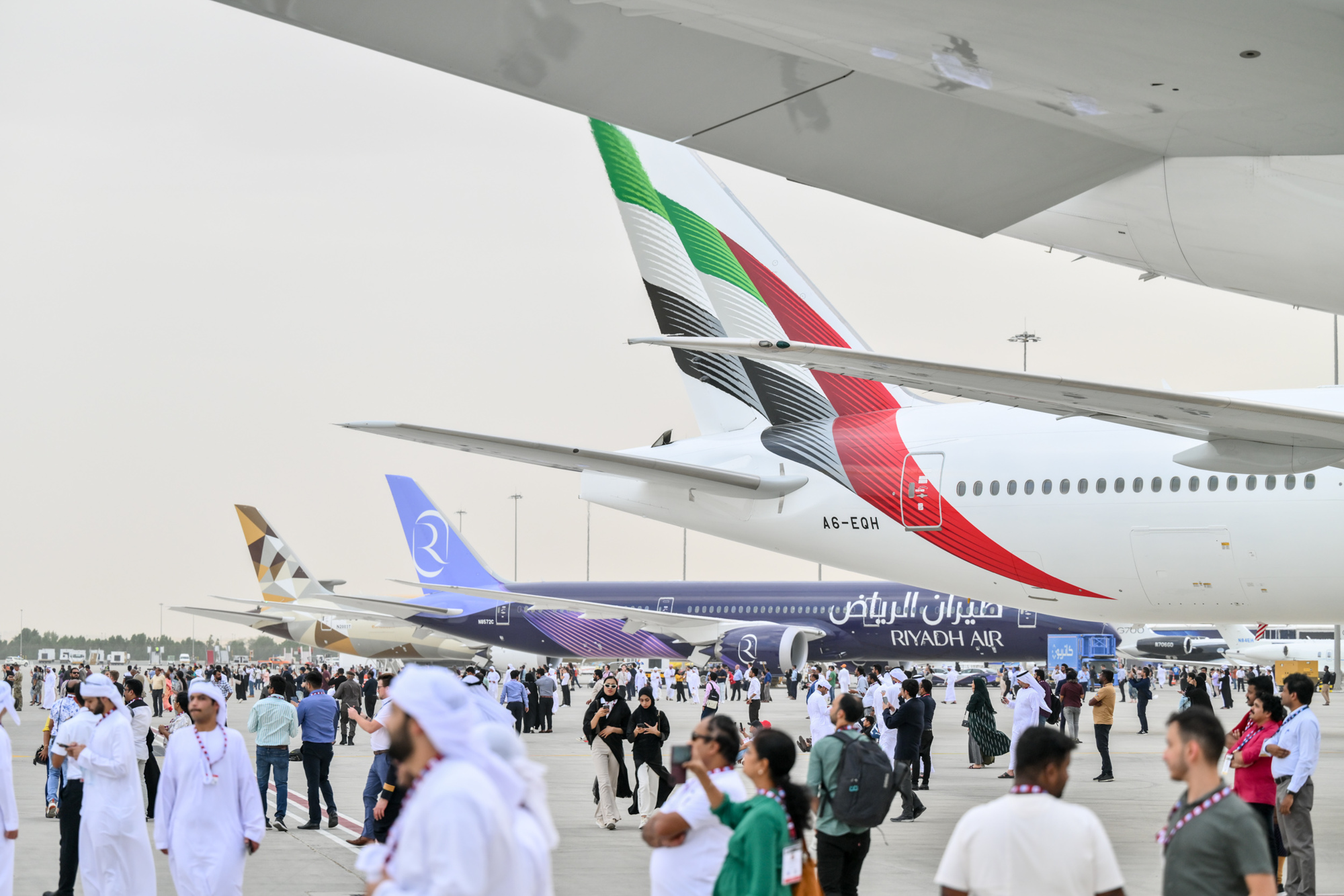
DUBAI- Emirates (EK), Qatar Airways (QR), and Etihad Airways (EY) each operate business class products that rank among the strongest available, yet picking a single winner is difficult because the experience changes depending on the aircraft a passenger actually flies.
These carriers compete for every type of traveler, with connecting passengers becoming a larger part of each business model.
Qatar Airways flies its Qsuite from Doha Hamad International Airport (DOH), and the seat remains a key reference point for a suite-like business class feel on routes where it is installed.
Emirates is retrofitting Boeing 777s out of Dubai (DXB) to a modern 1-2-1 layout, an important shift from the older 2-3-2 cabin that many travelers have aimed to avoid, while Etihad pitches a quieter, design-led cabin from Abu Dhabi (AUH).
This comparison breaks down the hard product, soft product, and ground experience to show which carrier fits solo travelers and couples, along with the caveats worth knowing before booking.
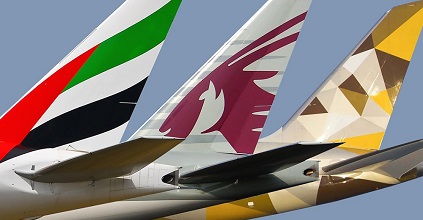
How The Three Gulf Carriers Stack Up Against Each Other
Each airline follows a different philosophy. Qatar Airways builds its cabin around privacy and flexibility, Emirates leans into network scale and a wow factor, and Etihad focuses on a calm, sleep-friendly environment.
The right choice depends heavily on which aircraft operates the route and what a traveler values most, since the gap between an airline’s best and weakest cabin can be significant.
Qatar Airways’ Business Class
Qatar Airways’ business class is built on a simple promise of making long-haul travel feel private, flexible, and restful, especially on overnight journeys.
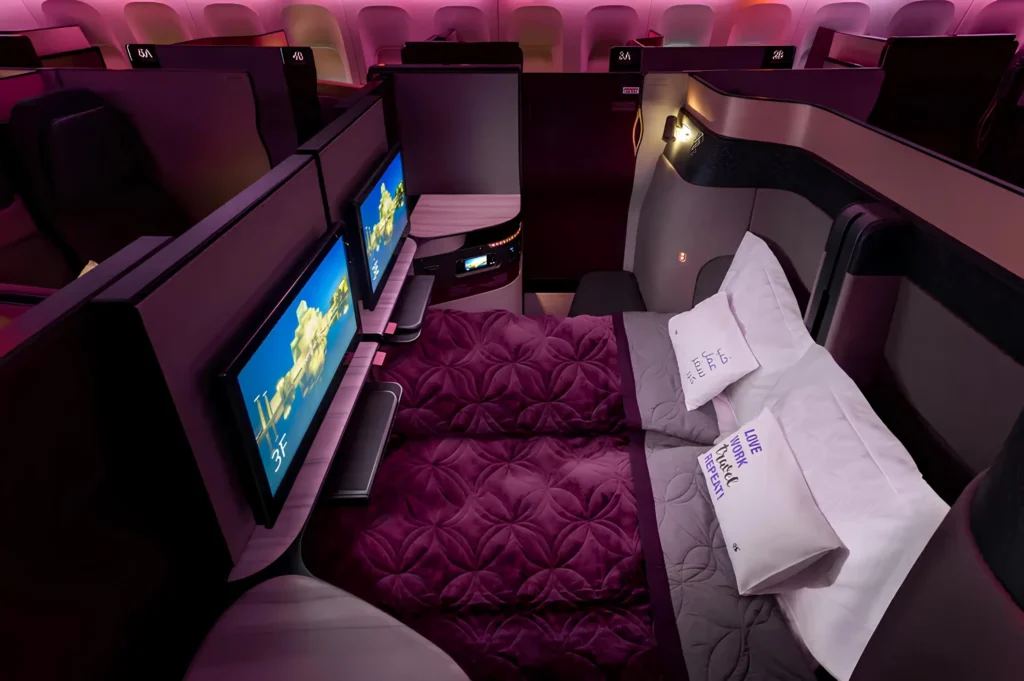
The headline product is Qsuite, a suite-style seat with a door, ambient lighting, and a fully lie-flat bed. Passengers can deploy a Do Not Disturb indicator to protect their sleep.
The cabins mix forward and rear-facing seats and feature a signature quad configuration, where four center seats open into a shared space for dining or conversation while still giving solo flyers strong privacy.
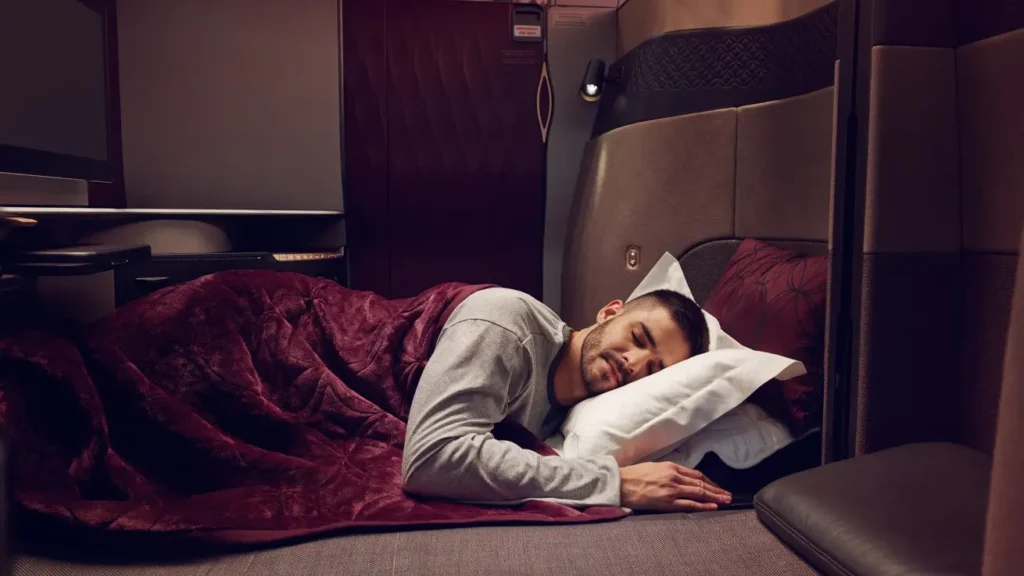
Onboard details lean premium. The airline offers a dedicated turndown service with a mattress and plush bedding.
London-based The White Company supplies sleepwear on long-haul and ultra-long-haul flights, while fashion house Diptyque, known for its high-priced candles desired by many high-spending travelers, provides the amenity kits on select routes.
Dining is a core strength through the ‘Dine Anytime’ service, which lets business class passengers order from an à la carte menu whenever they want rather than following fixed meal times. This suits business travelers who do not want to be confined to an airline’s fixed schedule.
One important caveat is that Qatar Airways’ seats vary significantly by aircraft. Qsuite is only offered on select routes and can disappear due to last-minute aircraft swaps, so checking the seat map ahead of time pays off.
On the ground, business class passengers can access the Al Mourjan Business Lounge at the airline’s Doha Hamad International Airport (DOH) hub.
Examining What Emirates Offers In Business Class
Emirates aims to lead in everything it does, and premium travel is no exception. The carrier leans into the scale of its network, its polished cabins, and its award-winning entertainment system.
Its most iconic experience sits onboard the Airbus A380, where the cabin uses a 1-2-1 lie-flat configuration.
The social bar and lounge at the back of the upper deck give passengers ample space to stretch their legs, grab a drink, and make a long flight feel less arduous.
Onboard, Emirates pairs strong catering with a deep beverage program and the ICE system, which offers up to 6,500 channels of on-demand entertainment.
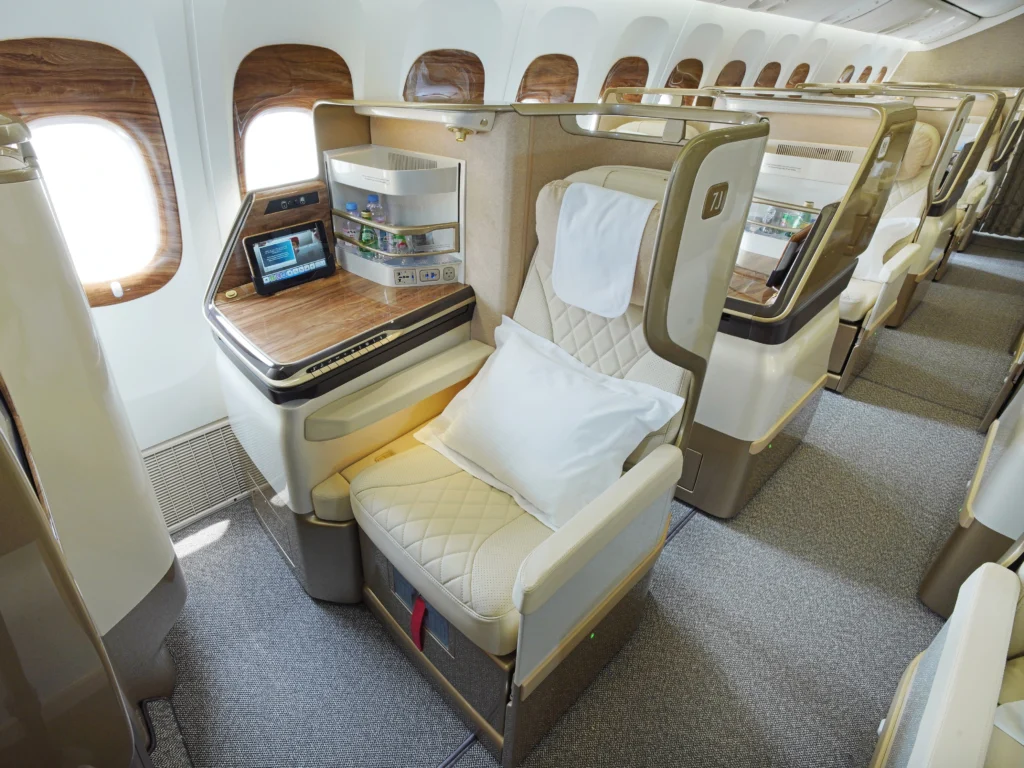
The big catch is consistency. Some Boeing 777 models still use the older 2-3-2 business class layout, while retrofitted aircraft feature the modern 1-2-1 setup with direct aisle access.
Checking the seat map before booking is essential. Seat choice matters on the A380 too, since the rows closest to the lounge are significantly noisier on busy flights.
On the ground, Emirates runs an impressive lounge setup, especially in Dubai, and also at other major nodes across its fairly simple network. Some passengers are even offered chauffeur-driven rides to the airport.
The carrier remains an incredibly competitive option for travelers seeking top-tier entertainment and a luxurious experience, provided they keep an eye on the specific aircraft type they want to fly.
What Is Etihad Bringing To The Table?
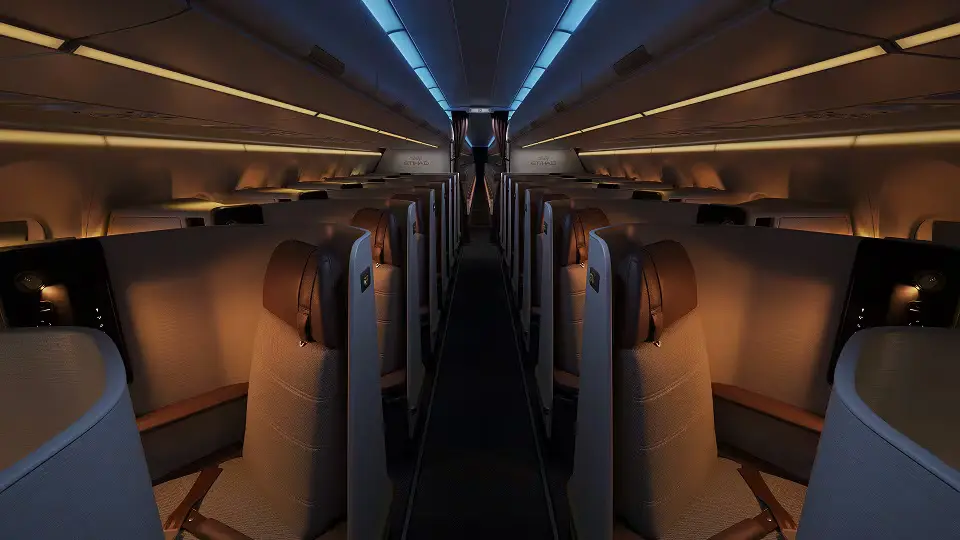
Etihad Airways is the boutique luxury option in this trio. The product is less loud, more design-forward, and primarily focused on being as sleep-friendly as possible. The best Etihad Business Studios are modern, with a fully flat bed and good storage.
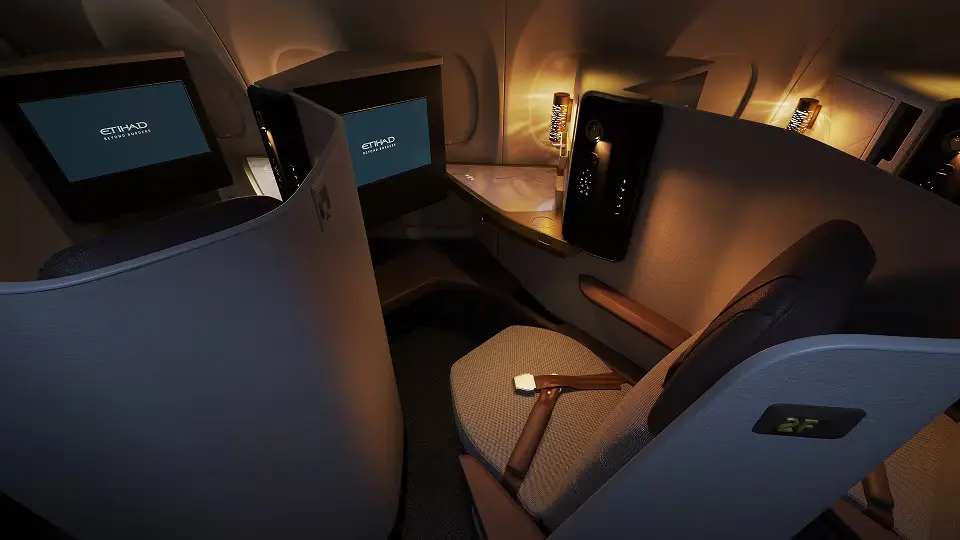
On the Airbus A350, seats include a privacy door that turns them into quiet pods. Etihad has also refreshed its Boeing 787 experience, adding direct aisle access in a 1-2-1 layout along with newer technology like Bluetooth pairing and wireless charging.
The soft product is where Etihad tries to stand out. The carrier offers memory foam mattresses on longer flights, flexible dining, and other elevated service elements.
Etihad also offers Armani bedding and allows passengers to order from an à la carte menu whenever they are interested in eating, rather than restricting them to fixed meal times.
Service styles are polished and calm, which pair well with overnight flights and travelers who want to eat, sleep, and arrive.
One practical caveat is that Etihad has experimented with lower business class fares where perks like lounge access may not be included, so travelers should check the fare rules before they commit.
The lounge in Abu Dhabi strengthens the ground game. The carrier is a strong choice for premium travelers who value privacy, sleep quality, and an understated premium feel, which emerges the strongest on an Airbus A350 or an updated Boeing 787.
Which Airline Offers The Best Hard Product?
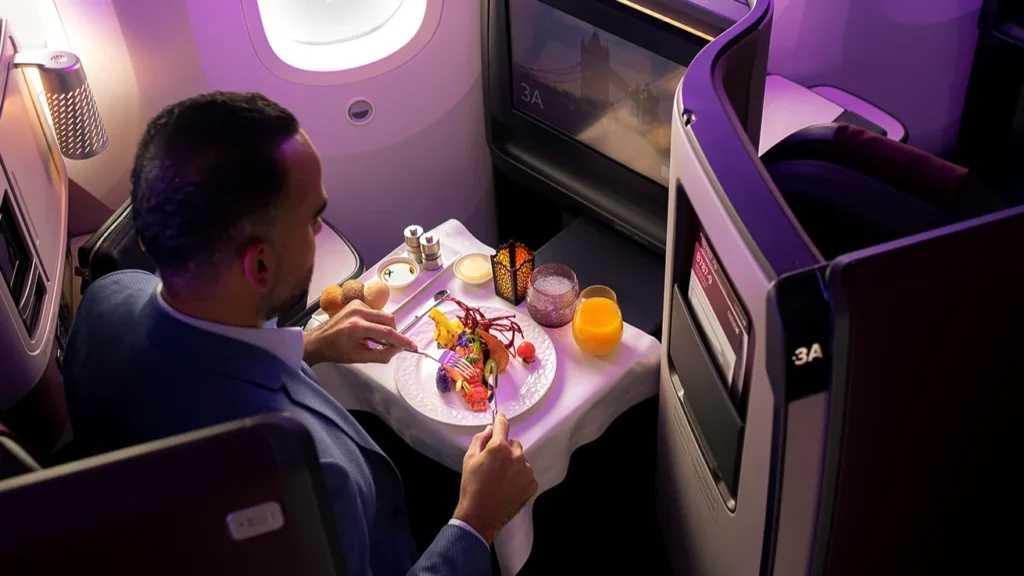
Three different philosophies are at play. Qatar Airways’ Qsuite is built for maximum privacy and flexibility, Emirates is mostly designed for the wow factor, and Etihad aims to be quieter while still offering a luxurious product and a competitive in-flight experience.
The Qsuite delivers the best seat of the three, with a flexible suite-style setup, a fully flat bed, a generous side console for working, and ample personal storage.
Etihad’s best hard product is on the Airbus A350, where the Business Studio adds a privacy door and a very modern, well-contained footprint with a large screen and thoughtful table space, making it likely the best choice for solo travelers who want to go into their own world onboard.
Emirates can also be an excellent choice, but fleet differences matter. On the A380, the 1-2-1 layout is ideal, but some older Boeing 777s still use the 2-3-2 cabin, which offers a considerably weaker experience.
Refurbished 777s are increasingly moving toward the industry’s standard configuration, though travelers should still keep an eye out.
Which Airline Offers The Best Soft Product?
Qatar Airways likely edges out its rivals on the soft product. On a route with full premium service, the offering provides superior flow, since passengers can dine at any time and sleep on their own schedule, which is especially valuable on long overnight sectors.
The carrier also anchors a strong ground experience with its flagship Al Mourjan Garden lounge in Doha.
As reported by Simple Flying, Skytrax names Qatar Airways the winner in this category, and while awards are not everything, they offer a decent proxy for consistency at scale.
Emirates offers a fun soft product, with an award-winning entertainment system and an onboard lounge and bar that make long flights feel significantly more social. Etihad Airways feels the most boutique, leaning heavily into designer-led amenities and a calmer overall vibe.
Bottom Line
Determining which carrier has the best business class is difficult because so much depends on route and individual preference.
There are also situations where one carrier suits a traveler better, especially when oriented toward sleep schedules.
Customers should weigh a full range of factors before deciding. Abu Dhabi, Doha, and Dubai are all nice airports for a layover, and all three business class lounges will undoubtedly give the comfort and space needed to relax.
Passengers can expect nothing less than the best in terms of product and quality. Across the board, there really are no bad choices when it comes to these three airlines.
Stay tuned with us. Further, follow us on social media for the latest updates.
Join us on Telegram Group for the Latest Aviation Updates. Subsequently, follow us on Google News
