

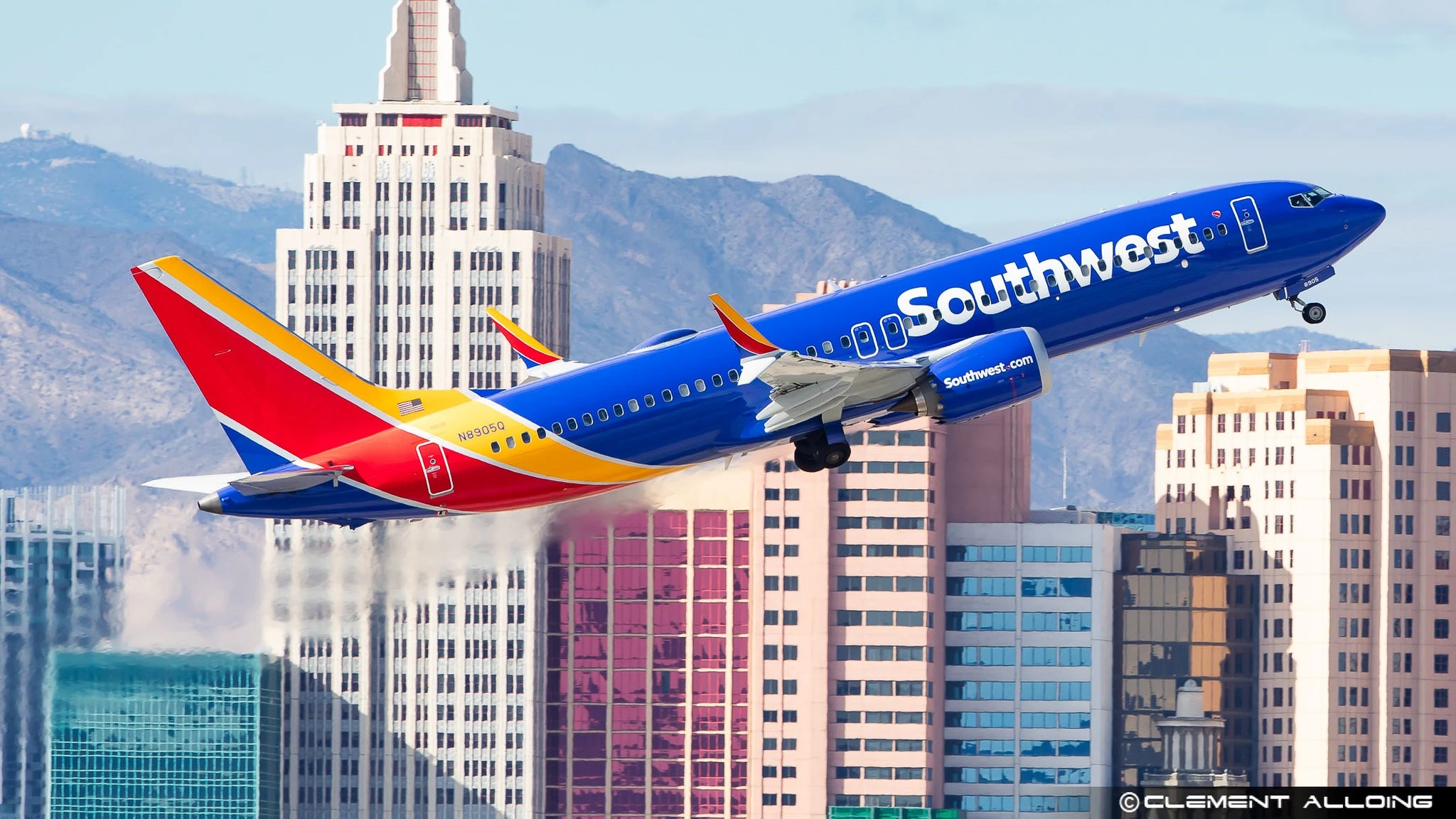
DALLAS, TEXAS— Southwest Airlines (WN) CEO Bob Jordan revealed bold plans for first class seating, airport lounges, and long-haul international flying at the Bernstein 42nd Annual Strategic Decisions Conference.
The driving force behind these changes is revenue from the airline’s co-brand credit card partnership with Chase.
Southwest Airlines’ Five-Year Vision: First Class, Lounges, and International Routes
Southwest (WN) reported operating margins up 810 basis points year-over-year in Q1 2025, leading the industry in net margin — results Jordan called the beginning of a “durable and sustainable” shift. With assigned seating, bag fees, and extra legroom already in place, the airline is now setting its sights on a far more ambitious product roadmap.

Product Expansion Driven by Customer Demand
Jordan stressed that every new product Southwest introduces responds directly to what customers say they want.
At the conference, he stated the airline’s goal is to give passengers “fewer and fewer reasons to book another airline.” This thinking extends well beyond the cabin fee changes introduced in January 2025.
Looking ahead five years, Jordan outlined a vision that includes true first class seating within the cabin, a curated network of airport lounges, and a set of 8 to 12 long-haul international destinations.
He was clear that Southwest does not intend to replicate Delta (DL), United (UA), or American Airlines (AA) with a vast global network. Instead, it aims to cover the destinations its customers most want — selectively but meaningfully.
Starlink Wi-Fi Rollout Comes First
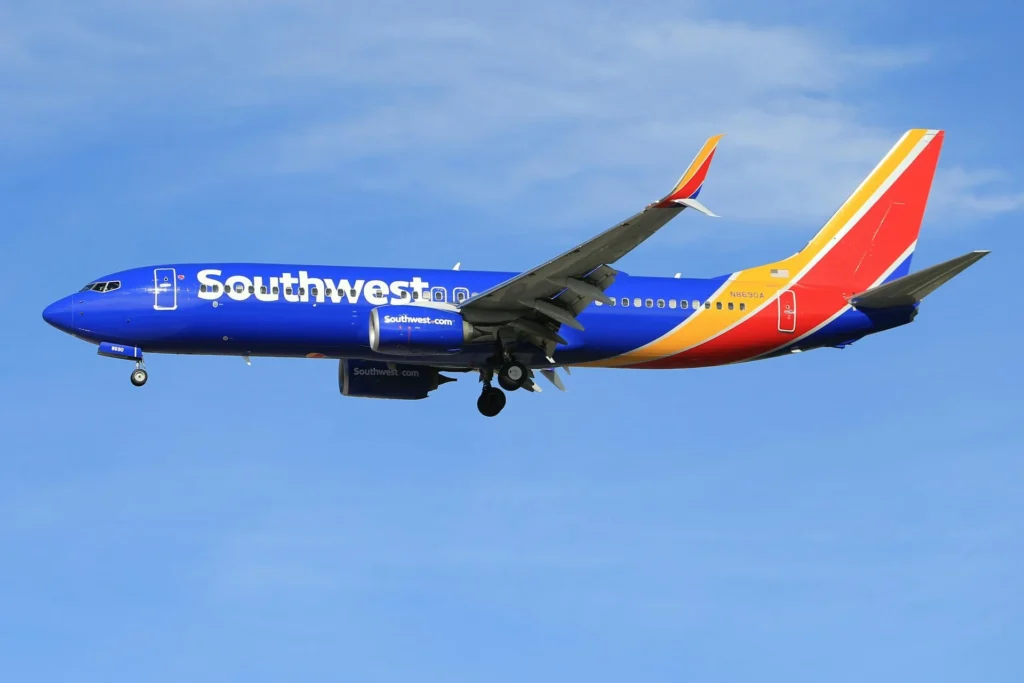
Before lounges or long haul, Southwest (WN) is racing to upgrade its in-flight connectivity. The airline has signed a deal with Starlink to bring low-earth orbit (LEO) satellite Wi-Fi to its fleet, offering speeds Jordan compared to home gaming connections.
The first aircraft has already been outfitted for testing, and approximately 300 planes are expected to have Starlink by the end of 2025.
Jordan said Southwest expects to complete full fleet conversion ahead of United (UA), calling the race “neck and neck.”
Airport Lounges: The Second Priority
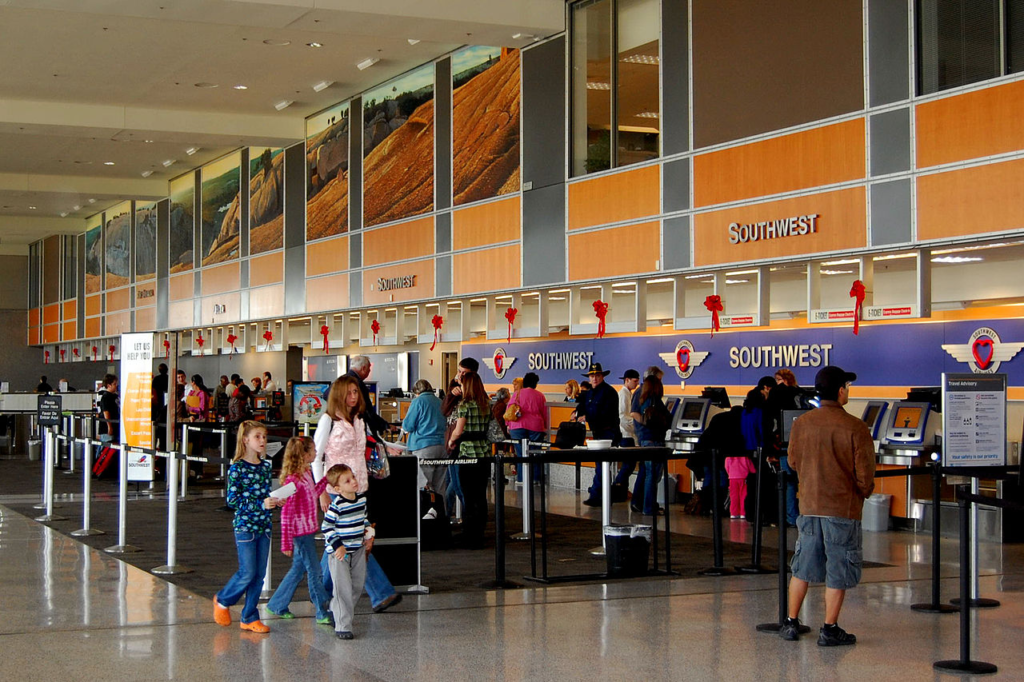
Jordan confirmed that lounge access is the second most-requested feature from Southwest customers — ahead of long-haul flying and premium cabins.
He said the airline is already leasing space for lounges, with locations in the pipeline at Honolulu (HNL), Nashville (BNA), Denver (DEN), Dallas Love Field (DAL), and Austin (AUS).
While no formal announcement was made at the conference, Jordan was the most open he has been publicly about the lounge program. He noted that demand for lounge access comes from both leisure and business travelers, not just frequent flyers.
Long-Haul International: Baltimore as the Gateway
Jordan identified Baltimore/Washington International Airport (BWI) as a natural departure point for Southwest’s future international long-haul routes. He described the long-haul strategy as “aspirational” — both for customers who want to travel to those destinations and for the airline’s co-brand credit card program.
Jordan made this connection explicit: the Rapid Rewards (WN’s loyalty program) and Chase co-brand partnership benefit directly when Southwest offers routes that inspire cardholders to spend and accumulate points, even if many of those customers never actually fly those routes.
He said the airline is targeting 8 to 12 long-haul destinations to capture the majority of the traffic its customers want, without building the full international network of its larger competitors.
Co-Brand Credit Card Revenue Is the Real Engine
Jordan tied the lounge and long-haul plans directly to the Chase Rapid Rewards co-brand credit card. Loyalty revenue and credit card co-brand income represent a major financial pillar for airlines, and Southwest is working to grow that revenue by making the Rapid Rewards program more aspirational.
The CEO said premium destinations and lounge access make the credit card a more compelling product, which in turn drives customer spending and airline revenue — independent of how many people actually fly those routes.
Rapid Rewards enrollments rose 37% in Q1 2025, and tier qualification jumped 60% year-over-year. Jordan acknowledged these gains are partly driven by the requirement to enroll in Rapid Rewards to access free Wi-Fi, meaning the figures may not fully reflect growth in credit card acquisition or deep loyalty engagement.
No Merger on the Horizon
On industry consolidation, Jordan said Southwest sees no obvious acquisition target. He ruled out JetBlue (B6) due to its debt load, called carriers like Breeze too small to move the needle, and noted that any combination between large network carriers would likely represent 40–42% market share — historically too high to clear antitrust review.
He left the door open philosophically but was direct: “There’s nothing that we’re working on.”
Cost Discipline and Fleet Strategy Support the Plan
Jordan emphasized that product upgrades will only proceed if they are margin accretive. Unit costs in Q1 2025 rose just 2.3%, with 1.2 percentage points of that increase tied directly to seats removed for extra legroom. The airline maintains a roughly 20% cost advantage over network carriers on a per-unit basis.
Southwest completed its first-ever corporate layoffs in 2024, cutting 15% of corporate staff. Jordan credited that restructuring with accelerating decision-making across the company and enabling the rapid rollout of product changes in early 2025.
On the fleet side, the airline is replacing retiring Boeing 737-700s with newer MAX aircraft, delivering an 18% improvement in operating expenses per swap.
By the early 2030s, Southwest expects to operate a nearly all-MAX fleet with minimal retirements for roughly a decade, setting up a period of low maintenance costs, low capital expenditure, and strong free cash flow.
AI Integration Across the Business
Jordan also highlighted artificial intelligence as a growing priority. Southwest is already using AI in customer care — improving response speed, predicting appropriate resolutions, and keeping humans in the loop for final decisions.
He pointed to the rise of agentic AI platforms, noting that booking engines like ChatGPT may soon handle full trip planning. Southwest is working to ensure its platforms can work with these agents without losing the ability to monetize seat upgrades and ancillary products.
Stay tuned with us. Further, follow us on social media for the latest updates.
Join us on Telegram Group for the Latest Aviation Updates. Subsequently, follow us on Google News
