

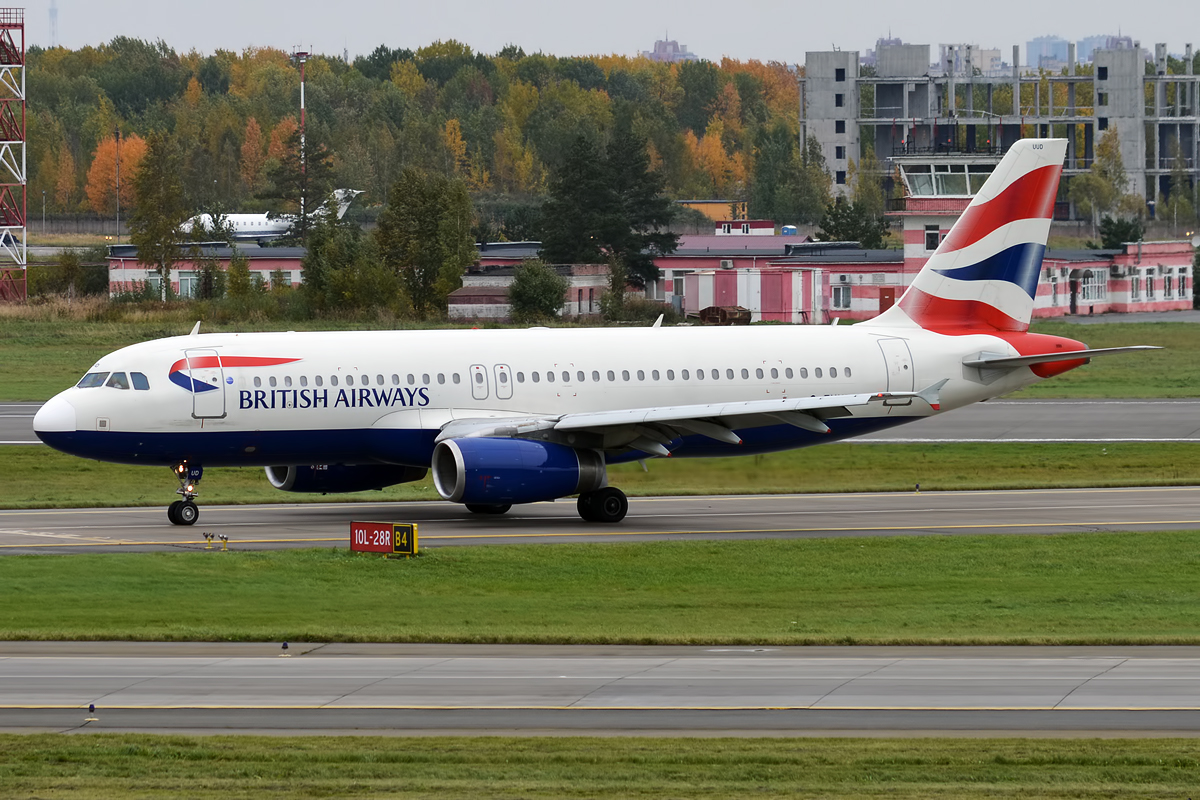
LONDON- British Airways (BA) is under fire after refusing to board a 13-year-old boy with Tourette’s syndrome on a flight from London Gatwick Airport (LGW) to Spain. The teenager reportedly shouted the word ‘bomb’ inside the terminal, prompting staff to act on safety grounds.
The decision has reopened the debate on disability rights, airline safety rules, and how carriers should handle passengers with neurological conditions. The family says they had pre-informed British Airways (BA) about the boy’s diagnosis before travelling through Gatwick Airport (LGW).
British Airways Denies Boarding to Teen
Mason Entwistle, aged 13, was travelling with his parents, Martyn and Gemma, his one-year-old sibling, and other family members when the incident took place.
The group had booked a holiday flight to Spain but were stopped before boarding. They were later forced to purchase tickets with a different airline to continue their trip.
Speaking to The Sun, Martyn accused British Airways of discrimination and said his son was left distraught. Mason reportedly apologised repeatedly and was crying on the airport floor after being told he could not board.
According to the family, the airline had been informed of Mason’s condition in advance. His mother, Gemma, carried a diagnosis letter, and Mason wore a disability lanyard at the airport. Tourette’s syndrome causes him to make involuntary sounds and movements, and his parents believe the word ‘bomb’ was an unintended verbal tic.
British Airways Defends Decision on Safety Grounds
British Airways staff denied that the refusal was an act of discrimination. The carrier stated that the decision was based purely on the safety and welfare of passengers and crew. Bomb-related statements, whether intentional or not, are treated seriously at airports worldwide.
The duty manager told the family that travel was refused due to repeated security-related statements made at the gate and near the aircraft. The manager explained that such remarks must be acted upon regardless of intent.
The airline has since offered the family a full refund. A spokesperson reiterated that the boy’s medical condition played no part in the decision and that the action followed standard aviation security protocol.
Father Insists on Continuing the Holiday
Despite the distress, Martyn decided the family should still travel. He said his wife and Mason wanted to return home, but he insisted on pushing through with the trip. He stated that he did not want his son to feel that holidays were no longer possible for him.
Martyn described the situation as a matter of principle and said his son deserved the same travel experiences as any other child.
Public Reaction Split Over the Incident
Online reactions to the incident have been divided. A section of the public criticised British Airways, arguing that Mason’s neurological condition is beyond his control and that the airline should have shown greater understanding.
Others placed responsibility on the parents, questioning why the family proceeded to the gate knowing that the word ‘bomb’ was part of the boy’s verbal tics. Some commentators have asked whether additional precautions could have been taken to manage the situation in a busy airport environment.
Understanding Tourette’s Syndrome Tics
Tourette’s syndrome can produce a range of vocal tics. These include palilalia, the involuntary repetition of one’s own words or phrases, often spoken quickly and at decreasing volume. Echolalia involves the automatic repetition of words spoken by others.
Coprolalia, one of the more well-known forms, refers to the involuntary outburst of socially inappropriate or offensive words. While coprolalia affects only a small percentage of those with Tourette’s, it often draws the most public attention due to the nature of the words involved.
Stay tuned with us. Further, follow us on social media for the latest updates.
Join us on Telegram Group for the Latest Aviation Updates. Subsequently, follow us on Google News
