

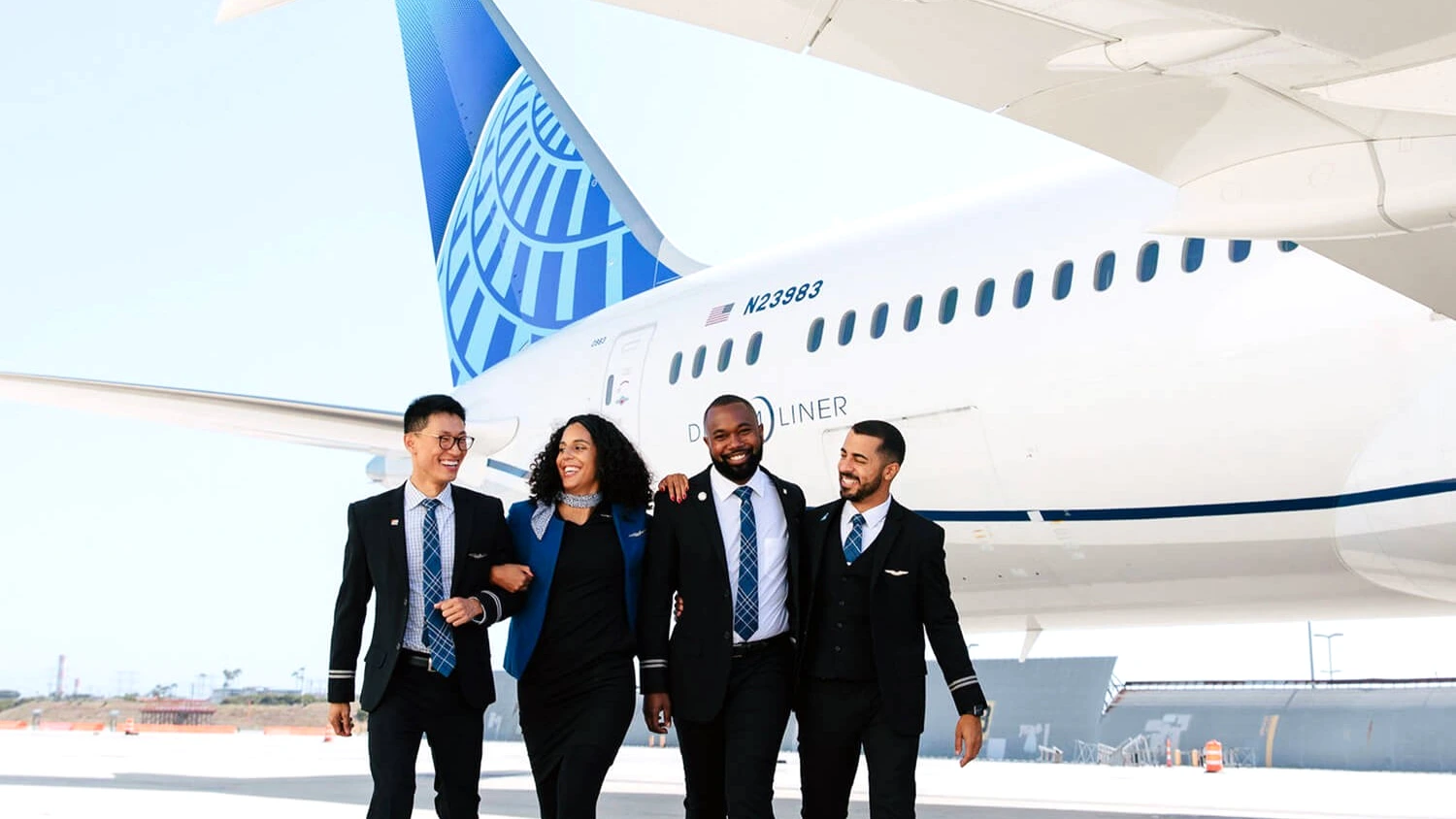
NEW JERSEY- United Airlines (UA) has secured a major legal victory after a federal judge dismissed most claims in a proposed class action filed by two former flight attendants over unpaid work. The lawsuit alleged that employees were required to perform essential duties at Newark Liberty International Airport (EWR) and other locations without compensation.
The case focused on whether United Airlines violated New Jersey wage laws by not paying flight attendants for boarding, deplaning, pre-flight preparation, and other ground duties. The court concluded that most of the claims fall under the airline’s collective bargaining agreement and must instead be handled through the labor arbitration process.
Federal Judge Sides With United Airlines
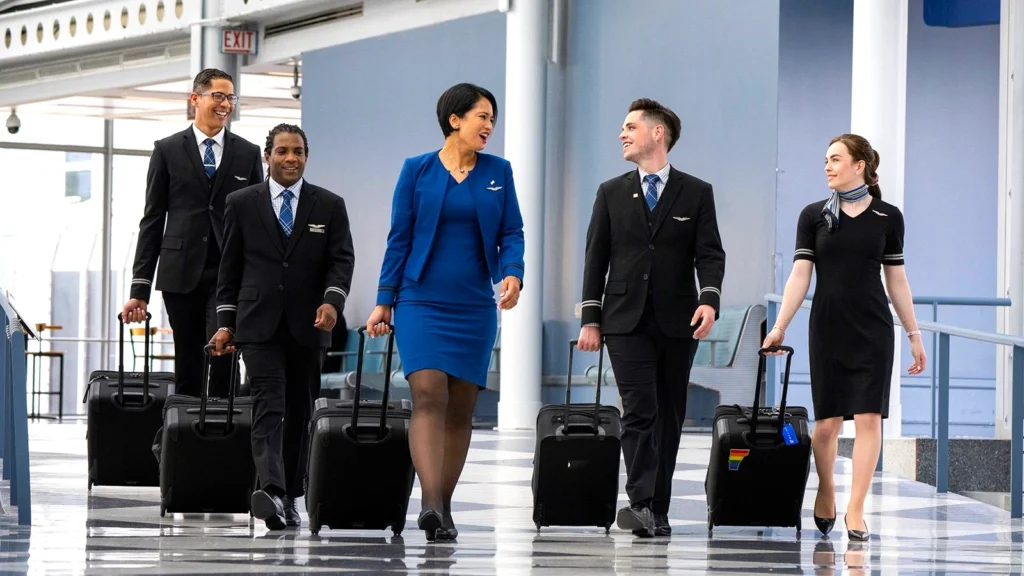
A New Jersey district court ruled largely in favor of United Airlines, dismissing nearly all claims brought by former flight attendants Ava Lawrey and Lauren Tripp.
Lawrey worked for United between July 2023 and July 2025 and was based at Newark Liberty International Airport (EWR). She alleged that the airline required flight attendants to perform mandatory duties before and after flights without compensation.
According to the lawsuit, Lawrey typically reported to work around 90 minutes before scheduled departure. During this period, she passed through TSA security, checked in at the gate, attended mandatory crew briefings, completed required paperwork, and inspected safety equipment.
She also participated in passenger boarding, a phase widely considered one of the busiest and most demanding parts of a flight attendant’s duties because of customer service responsibilities, carry-on baggage issues, and ensuring cabin safety before departure.
The lawsuit claimed that flight attendants only began receiving pay once the aircraft door was closed and the aircraft started pushing back from the gate. Compensation ended once the aircraft arrived at its destination gate, even though cabin crew could still be required to manage passenger safety during deplaning.
According to PYOK, the plaintiffs argued that these unpaid duties violated New Jersey wage and hour laws requiring employees to be compensated for all required working time.
Claims Covered by Labor Agreement
Lawrey identified several tasks that she claimed were routinely performed without pay, including:
- Mandatory reporting one hour before departure.
- Completing pre-flight documentation.
- Conducting safety equipment inspections.
- Boarding passengers.
- Providing customer service during boarding.
- Assisting passengers during deplaning.
- Remaining available between flight assignments while in uniform.
She also alleged that flight attendants frequently spent extended periods waiting between flights while remaining on duty and available for work, yet received no compensation for this time.
Texas-based flight attendant Lauren Tripp later joined the lawsuit. Although primarily based in Texas, she also worked extensively from Newark Liberty International Airport (EWR) and made similar allegations regarding unpaid work.
Railway Labor Act Central to the Decision
United Airlines asked the court to dismiss the lawsuit by relying on the Railway Labor Act, the federal law that governs labor disputes involving airlines and railroads.
The airline argued that the issues raised by the plaintiffs could not be decided without interpreting the collective bargaining agreement negotiated between United and its flight attendant union.
US District Judge Julien Xavier Neals agreed with that argument.
The judge ruled that resolving the wage claims would require interpreting the collective bargaining agreement, placing the dispute under the jurisdiction of the System Board of Adjustment rather than a federal district court.
In his opinion, Judge Neals stated that disputes requiring interpretation of the labor contract belong before the System Board and not the court.
As a result, nearly all claims were dismissed.
One Wage Slip Claim Remains
The court did not dismiss one limited portion of the lawsuit concerning information provided on United’s wage statements.
Instead, Judge Neals ordered both parties to participate in jurisdictional discovery to determine whether the Railway Labor Act also prevents the court from hearing that remaining claim.
If Lawrey and Tripp decide to continue pursuing their broader allegations, they would likely need support from their flight attendant union and pursue the matter through the grievance and arbitration process established under the collective bargaining agreement.
United Now Pays Boarding Compensation
Earlier this year, United Airlines introduced boarding pay for flight attendants as part of its latest collective bargaining agreement.
The new compensation marked the first time United began paying separately for boarding duties. However, boarding pay is calculated as a percentage of a flight attendant’s hourly flight pay rather than the full hourly wage.
Current boarding pay rates are:
| Aircraft Type | Boarding Pay Rate |
|---|---|
| Airbus A319, A320, Boeing 737-700 | 29.2% of hourly rate |
| Boeing 737-800, 737 MAX 8, 737 MAX 9, 737-900 | 33.3% of hourly rate |
| Widebody aircraft, Boeing 757, Airbus A321XLR | 41.7% of hourly rate |
Boarding compensation is paid on a per-flight-sector basis. If the boarding process takes longer than expected because of operational delays or passenger issues, flight attendants do not receive additional boarding pay.
For newly hired flight attendants working on a narrowbody aircraft such as the Airbus A320, boarding pay is approximately $10.82 per flight sector.
What the Ruling Means
The decision reinforces the legal importance of collective bargaining agreements in the US airline industry. While state wage laws remain relevant, courts generally cannot decide disputes that require interpretation of labor contracts governed by the Railway Labor Act.
Although one narrow wage statement issue remains under review, the ruling represents a significant legal victory for United Airlines. Any future attempt to challenge compensation practices will likely proceed through the union grievance and arbitration system rather than federal court.
Stay tuned with us. Further, follow us on social media for the latest updates.
Join us on Telegram Group for the Latest Aviation Updates. Subsequently, follow us on Google News
