

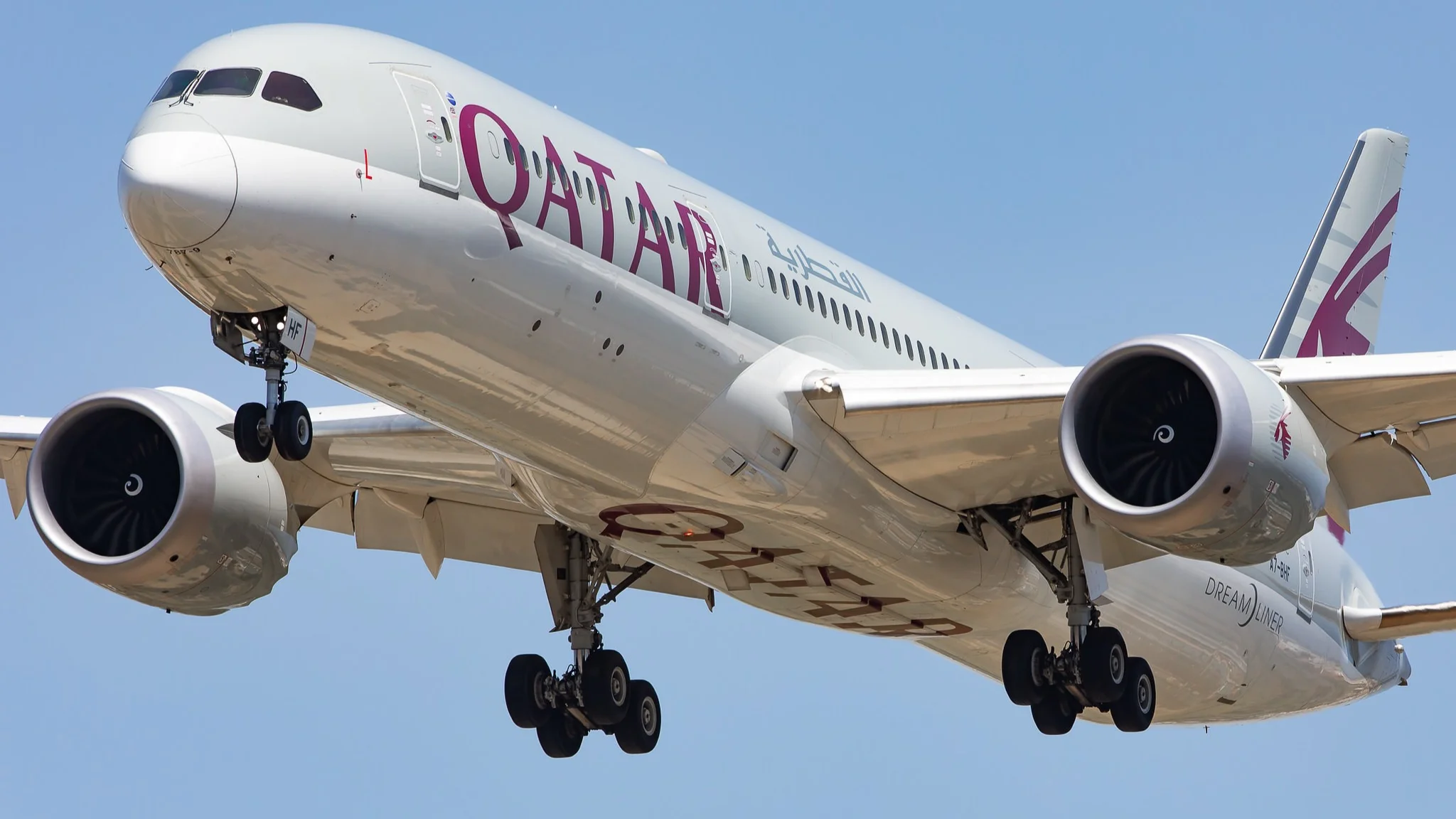
DOHA- Qatar Airways (QR), headquartered in Doha (DOH), has informed its workforce that no annual bonuses will be issued for the financial year ending March 31, 2026, despite the carrier posting a profit of nearly $2 billion.
The decision has triggered visible frustration across the airline’s roughly 60,000 employees, particularly as Gulf rival Emirates (EK) recently rewarded its staff with a profit-sharing payout equivalent to 20 weeks of basic pay.
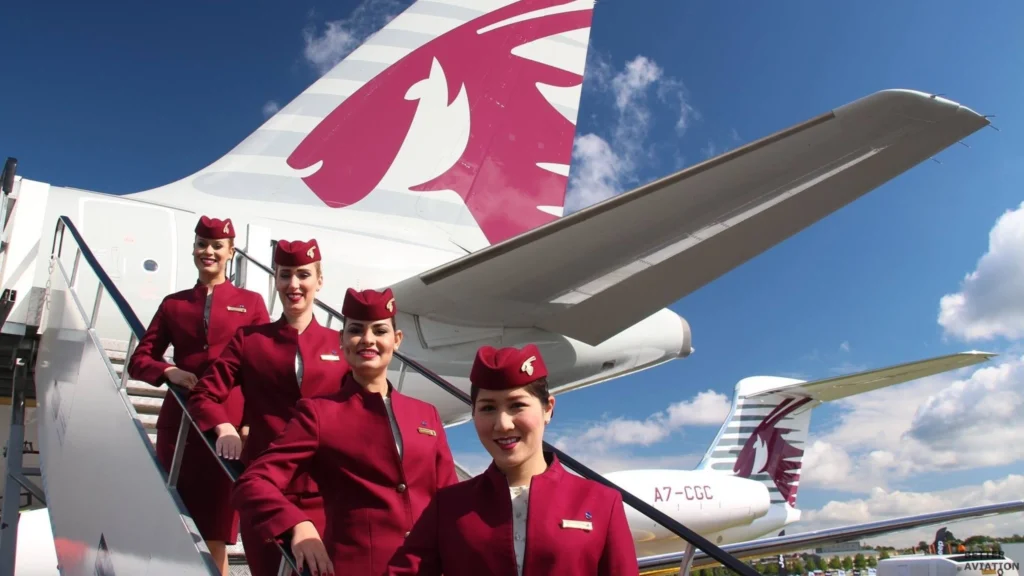
Qatar Airways $2 Billion Profit But No Bonus
Qatar Airways recently published its financial results for the period running from April 1, 2025, through March 31, 2026.
The carrier came close to a record annual profit, with figures nearing $2 billion. Performance during the final weeks of the financial year was affected by the conflict involving Iran, which prevented the airline from achieving an outright record.
In an internal memo, the airline told employees that no bonuses would be paid this cycle. Management attributed the decision to the regional geopolitical situation, which the carrier said continues to “significantly affect” operations.
The communication framed the move as a step that “prioritises long-term stability” rather than a response to weak performance.
According to OMAAT, staff morale appears notably low, with employees actively voicing their concerns.
Qatar Airways had paid reasonably decent bonuses for the previous three financial years, making this year’s reversal a notable shift in compensation practice.
Employee Concerns Over Compensation Structure
Staff reactions reflect several practical concerns tied directly to the airline’s financial year outcome.
Employees argue that strong financial results should translate into recognition for the workforce that contributed to them.
The current position effectively means the airline avoids paying bonuses both when financial results are weak and when results are strong, but the forward outlook appears uncertain.
Staff view this as the company wanting the arrangement to work in its favour under either scenario.
Pay structure adds further pressure. Compensation at Qatar Airways combines a base salary with hours flown.
Reduced flying activity in recent months has already lowered total earnings for many employees, leaving them in a more sensitive financial position when bonus payments are withdrawn.
The pattern resembles a reversed version of the criticism often directed at US carriers. In the United States, losses are frequently described as socialised through government support, while gains remain privatised.
At Qatar Airways, the current approach effectively socialises the gains across the balance sheet while privatising the impact of an uncertain forecast onto employees, though the parties involved differ from the US context.
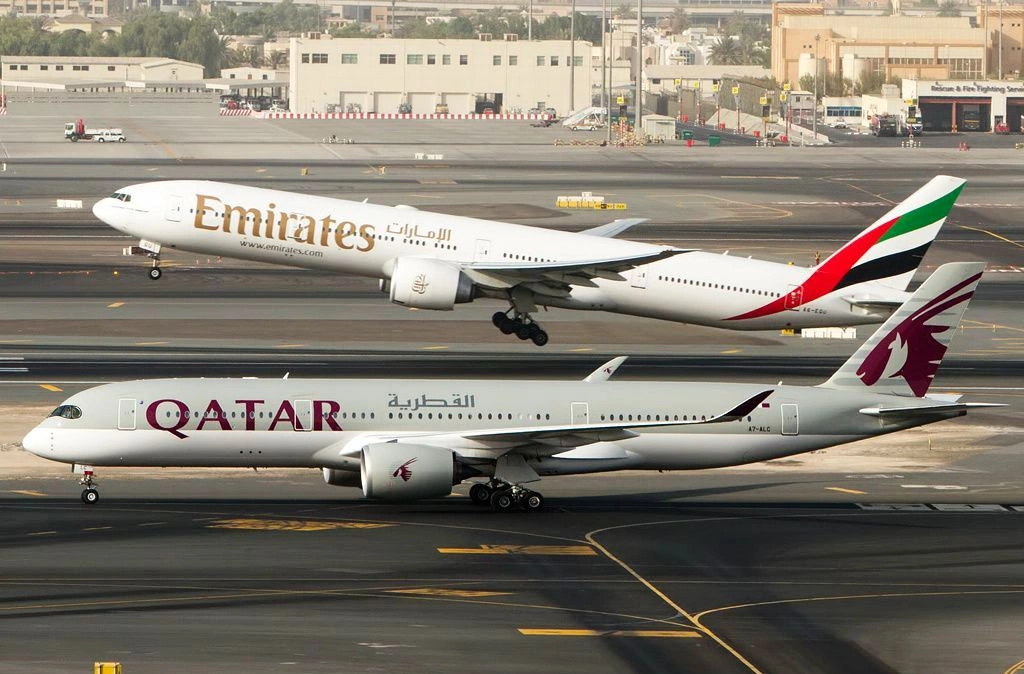
Comparison With Other Gulf Carriers
Emirates has set a high benchmark for staff compensation in the Gulf. The Dubai-based airline has recently issued bonuses approaching half of annual base pay for eligible employees, positioning it as one of the most generous carriers globally for profit sharing.
This competitive pressure had previously pushed Qatar Airways to introduce its own bonus payments, even though the amounts were a fraction of what Emirates offered.
Gulf carriers operate without unions, meaning compensation decisions sit entirely with management. Historically, Qatar Airways did not pay bonuses at all before introducing them in recent years.
The change in approach also coincides with a leadership transition at the carrier. Qatar Airways appointed a new chief executive recently, replacing a figure who held strong popularity among staff.
The bonus decision is likely to shape early perceptions of the incoming leadership in an unfavourable direction.
Recruitment Patterns Across Gulf Aviation
Application preferences among aviation professionals in the Gulf typically follow a defined order.
Emirates remains the most sought-after employer, followed by Etihad Airways (EY), Qatar Airways, Gulf Air (GF), Oman Air (WY), Saudia (SV), and then a range of limited service carriers further down the list.
Riyadh Air (RX), the new Saudi flag carrier preparing for launch, has attracted significant talent from existing Gulf airlines, including Emirates and Etihad.
Aviation professionals cite the airline’s marketing approach and the appeal of joining a new operation at the top of the seniority structure as key reasons for the move.
Strategic Implications
The bonus decision arrives at a sensitive moment for the carrier. Qatar Airways is competing for talent in a market where Emirates pays months of additional salary as profit share, and where Riyadh Air is actively recruiting from regional rivals.
Gulf carriers are operating in a genuinely difficult environment at present, and the airline’s communication frames the decision as forward-looking risk management.
The core issue, however, is that Qatar Airways is essentially arguing it cannot pay bonuses due to its negative outlook, rather than due to performance having been weak. For employees who contributed to a near-record year, that distinction is unlikely to soften the disappointment.
Stay tuned with us. Further, follow us on social media for the latest updates.
Join us on Telegram Group for the Latest Aviation Updates. Subsequently, follow us on Google News
