


International travel into the United States is once again operating at full strength, and a handful of airports now dominate the country’s global passenger flows.
These hubs are far more than departure points — they are economic engines, airline strongholds, and the first impression millions of travelers get when arriving in America.
Using 2025 international passenger traffic figures, here’s a closer look at the seven airports handling the largest volumes of overseas travelers, ranked from seventh to first, as flagged by Simple Flying.

7. George Bush Intercontinental Airport — 12.4 Million International Passengers
Houston’s primary airport has evolved into one of the most important international gateways in the southern United States. Strong ties to the energy sector, expanding airline partnerships, and increasing demand from Latin America have helped IAH post record international numbers in 2025.
The airport plays a major role in linking the US Gulf Coast with markets across South America, Europe, and Asia. Its growth has also been fueled by airlines adding more long-haul services and improving connectivity for transit passengers heading deeper into North America.
Key Highlights
- Handled 12.4 million international passengers in 2025
- Serves more than 70 international destinations
- Major gateway between the US and Latin America
- Strong business travel demand tied to the energy industry
- Important hub for long-haul connecting traffic

6. Chicago O’Hare International Airport — 14.8 Million International Passengers
Few airports in the world operate on the scale of Chicago O’Hare. Even decades after establishing itself as a global aviation powerhouse, ORD remains the Midwest’s dominant international hub.
The airport’s strength comes from its enormous airline network and ability to handle constant waves of domestic and international connections. Travelers arriving from Europe, Asia, and the Americas use Chicago as a transfer point to virtually every region of the United States.
Key Highlights
- Recorded 14.8 million international travelers in 2025
- One of the busiest overall airports in North America
- Handles nearly 857,000 aircraft movements annually
- Critical hub for both United Airlines and American Airlines
- Ongoing modernization through the O’Hare 21 expansion project
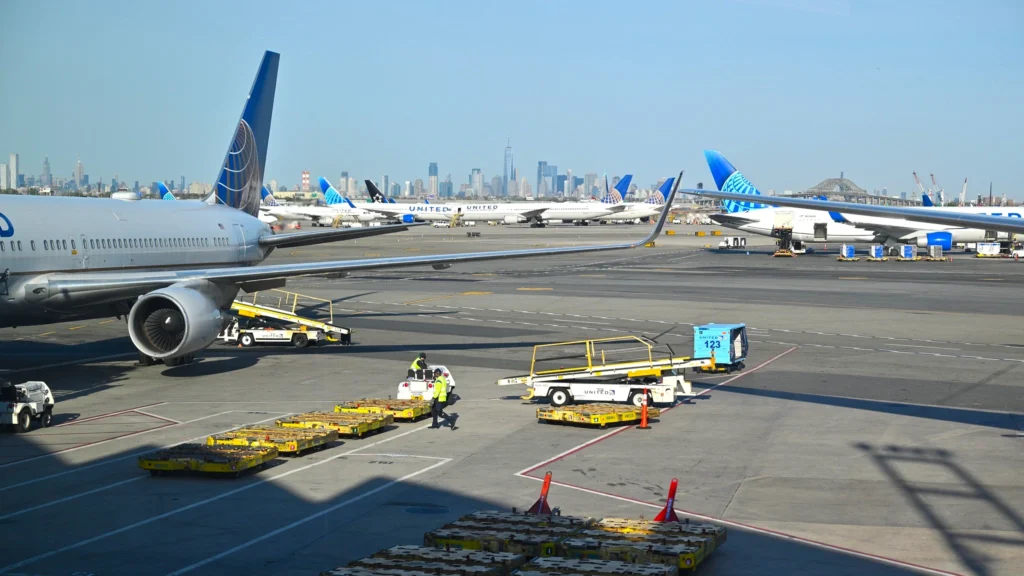
5. Newark Liberty International Airport — 15.2 Million International Passengers
Overshadowed at times by JFK, Newark has quietly become one of America’s most important international airports. Its location near Manhattan and its extensive transatlantic network make it a preferred choice for premium and business travelers.
Despite operational challenges and air traffic staffing pressures in 2025, Newark continued to post strong international numbers. The airport has increasingly established itself as more than just a secondary New York-area hub.
Key Highlights
- Served approximately 15.2 million international passengers
- Major East Coast hub for United Airlines
- Strong focus on Europe-bound traffic
- Convenient access to New York City’s business districts
- Maintained strong demand despite operational constraints
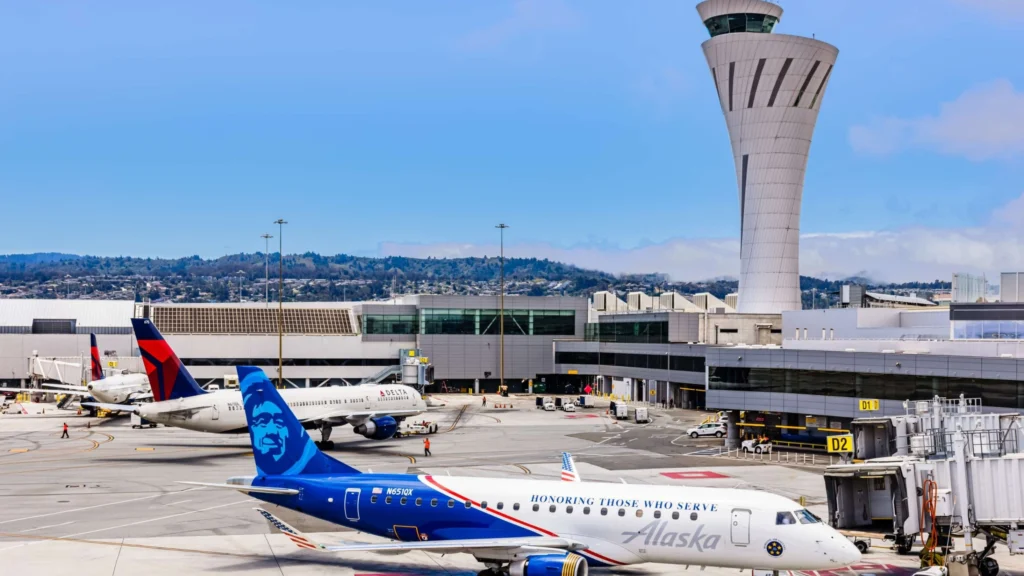
4. San Francisco International Airport — 15.9 Million International Passengers
San Francisco International Airport continues to benefit from its position at the center of the technology industry and the Pacific travel market. The airport remains one of the country’s strongest gateways to Asia, supported by consistent demand from both business and leisure travelers.
Carriers have steadily expanded flights to destinations across Japan, China, and Southeast Asia, reinforcing SFO’s role as a transpacific powerhouse. International traffic now represents a major share of the airport’s overall operations.
Key Highlights
- Reached 15.9 million international passengers in 2025
- One of the leading US gateways to Asia
- Strong demand generated by Silicon Valley business travel
- High concentration of long-haul widebody flights
- Airlines continue adding new Asia-Pacific routes

3. Los Angeles International Airport — 23.6 Million International Passengers
LAX remains the undisputed giant of the US West Coast. The airport serves as the primary entry point for travelers arriving from Asia and Oceania, while also maintaining one of the broadest international route networks in the world.
Its geographic position gives airlines a natural advantage for Pacific operations, and the sheer volume of widebody aircraft moving through LAX every day keeps it among the most complex airports globally.
Key Highlights
- Processed 23.6 million international travelers in 2025
- Largest international airport on the US West Coast
- Major gateway for transpacific traffic
- Extensive connectivity to Asia and Oceania
- One of the world’s busiest hubs for widebody operations
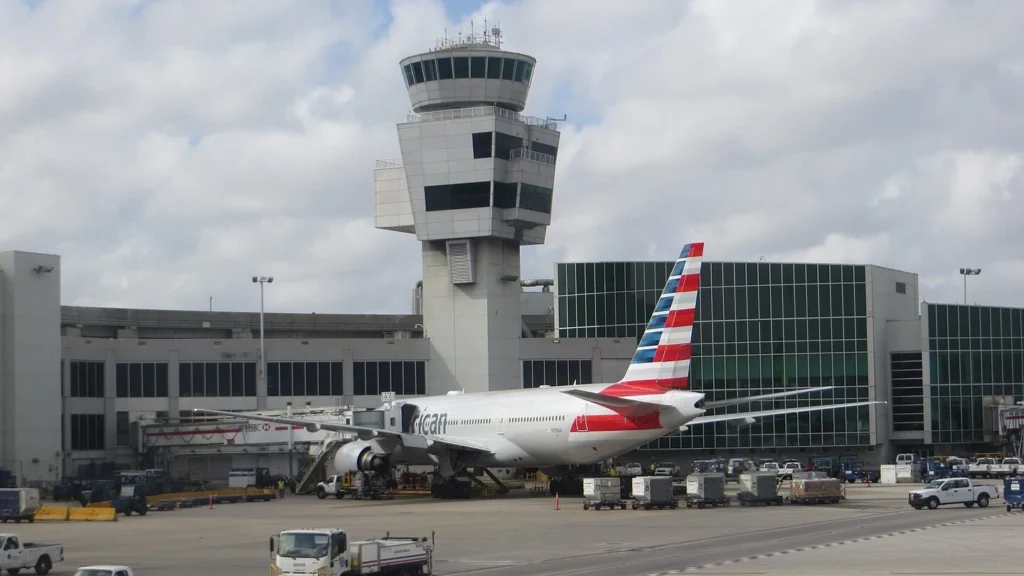
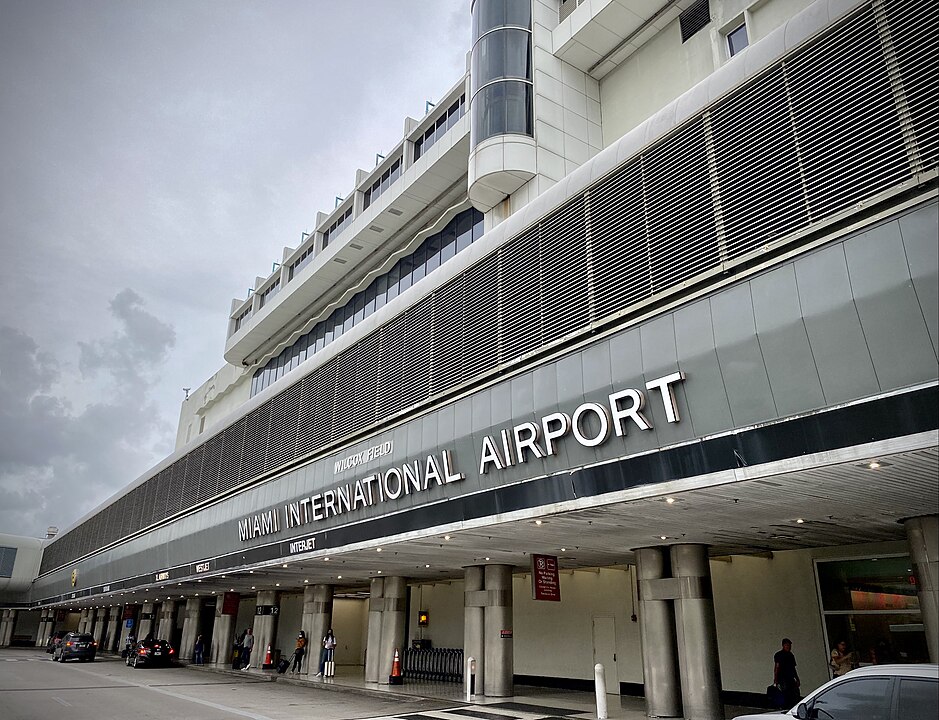
2. Miami International Airport — 24.8 Million International Passengers
Miami’s international dominance comes from a very specific strength: Latin America and the Caribbean. No other US airport moves as many passengers between North America and the southern hemisphere as MIA.
The airport functions as the centerpiece of American Airlines’ Latin American network and serves as a critical bridge for tourism, commerce, and family travel throughout the region. Beyond passenger operations, Miami is also one of the world’s leading international cargo airports.
Key Highlights
- Welcomed 24.8 million international passengers in 2025
- Largest US gateway to Latin America and the Caribbean
- Core hub for American Airlines’ regional operations
- Major center for international cargo traffic
- Strong north-south connectivity across the Americas
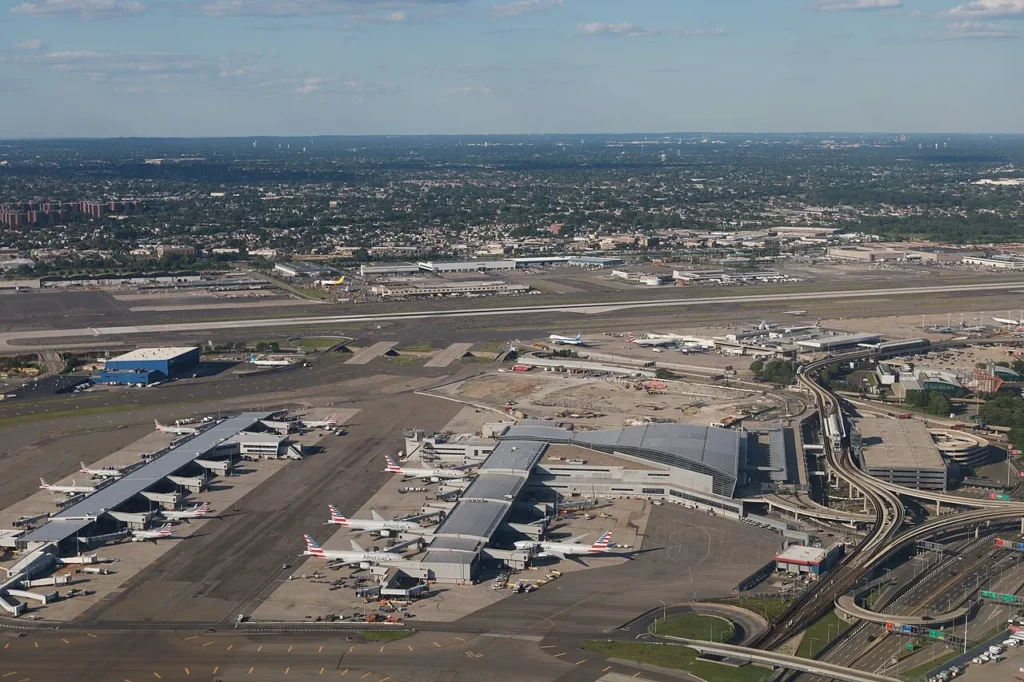
1. John F. Kennedy International Airport — 34 Million International Passengers
JFK remains the crown jewel of American international aviation. No other airport in the United States comes close to its scale when it comes to overseas passenger traffic.
With more than 90 airlines operating international flights, JFK connects New York to nearly every major global market. The airport’s influence stretches far beyond aviation — it is one of the most important transportation hubs anywhere in the world.
Massive redevelopment projects are also reshaping the airport, ensuring it remains competitive as international demand continues climbing.
Key Highlights
- Handled more than 34 million international passengers in 2025
- Largest international airport in the United States
- Serves airlines from every major global region
- Key gateway for Europe, Asia, and the Middle East
- Undergoing multi-billion-dollar modernization projects
Bottom Line
From Miami’s grip on Latin American travel to Los Angeles’ Pacific dominance and JFK’s unmatched worldwide reach, each airport fills a unique role within the broader aviation system.
Together, these seven gateways form the backbone of America’s international connectivity, moving millions of travelers between continents every year while supporting trade, tourism, and business on a global scale.
Stay tuned with us. Further, follow us on social media for the latest updates.
Join us on Telegram Group for the Latest Aviation Updates. Subsequently, follow us on Google News
