


TOKYO— A Korean Air (KE) Airbus A321neo jet aborted its landing at Tokyo Narita International Airport (NRT) after strong crosswinds destabilised the aircraft during final approach. The pilots executed a go-around just metres above the runway to recover control.
The incident unfolded amid adverse weather at Tokyo, Japan’s main international gateway. Viral video footage shared by X user @8yb_p showed the aircraft wobbling sharply before climbing back into the air, with no injuries or damage reported.
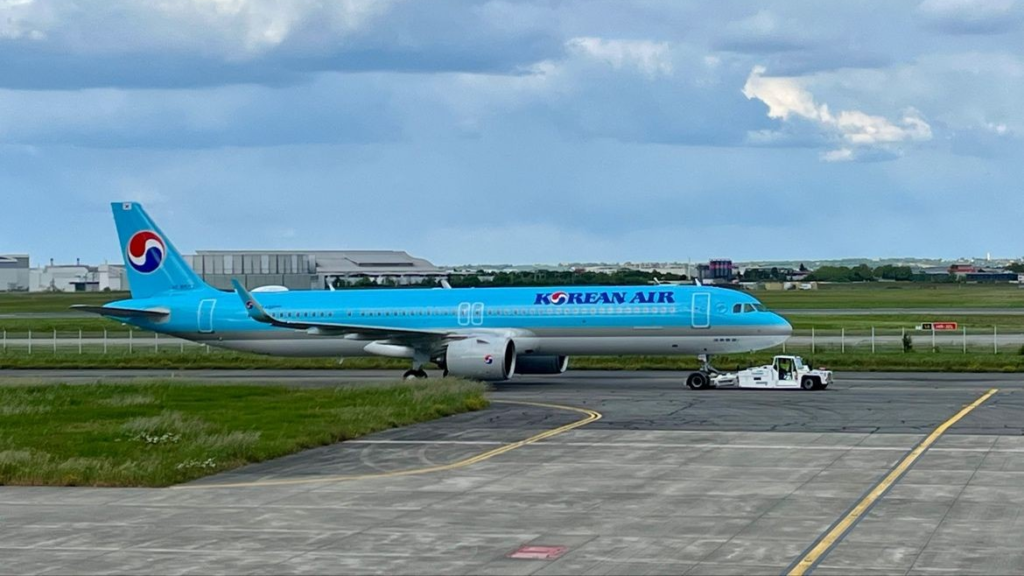
Korean Air A321neo Go Around at Tokyo Narita
The Korean Air (KE) aircraft was on short final to Narita International Airport (NRT) when powerful crosswinds disrupted its descent. Footage circulating on social media shows the jet rocking laterally as it neared the runway threshold, with the wings visibly tilting under the wind load.
Moments before touchdown, the flight crew applied full thrust and pitched the aircraft up, abandoning the landing attempt. The jet climbed away cleanly and re-entered the approach pattern for a second attempt.
A go-around is a standard procedure flown whenever the approach becomes unstable or environmental conditions threaten a safe touchdown. Pilots train extensively for the manoeuvre, and aviation regulators consider it a positive safety decision rather than a failed landing.
The flight was operated by Airbus A321neo, registered as HL8532. Further, it is a 2.6-year-old aircraft powered by two Pratt and Whitney PW1000G engines. It is one of 20 jets operated by a South Korean carrier.

Weather Conditions At Tokyo Narita
Tokyo recorded gusty surface winds during the approach, creating challenging conditions for arriving traffic at Tokyo Narita International Airport (NRT).
Crosswinds strike the aircraft from the side rather than along the runway centreline, pushing the fuselage off track and reducing directional control.
Each commercial aircraft type carries a published maximum crosswind component certified by the manufacturer. When winds exceed this limit or gust unpredictably near the surface, flight crews routinely break off the approach to protect passengers and the airframe.
Narita International Airport (NRT) sits in an exposed area east of Tokyo and frequently records strong seasonal winds, particularly during autumn and winter months.
The airport’s two parallel runways are aligned in the same direction, which can leave both exposed to a strong crosswind component during certain weather patterns.

https://commons.wikimedia.org/wiki/File:Korean_Air_HL8557_A321-272NX_HND_26-09-2024_(1).jpg
Pilot Response And Aircraft Recovery
The Korean Air (KE) flight crew stabilised the aircraft within seconds of the wobble and climbed away from the runway without incident. Air traffic control then vectored the jet for another approach.
Aviation analysts who reviewed the footage credited the crew with a textbook recovery. The pilots maintained wings-level control, applied go-around thrust at the correct moment, and avoided a hard touchdown that could have damaged the landing gear or fuselage.
No passengers or crew were injured, and the aircraft sustained no reported damage. Korean Air (KE) has not issued a public statement on the specific flight, and the video remains unverified by official aviation authorities.
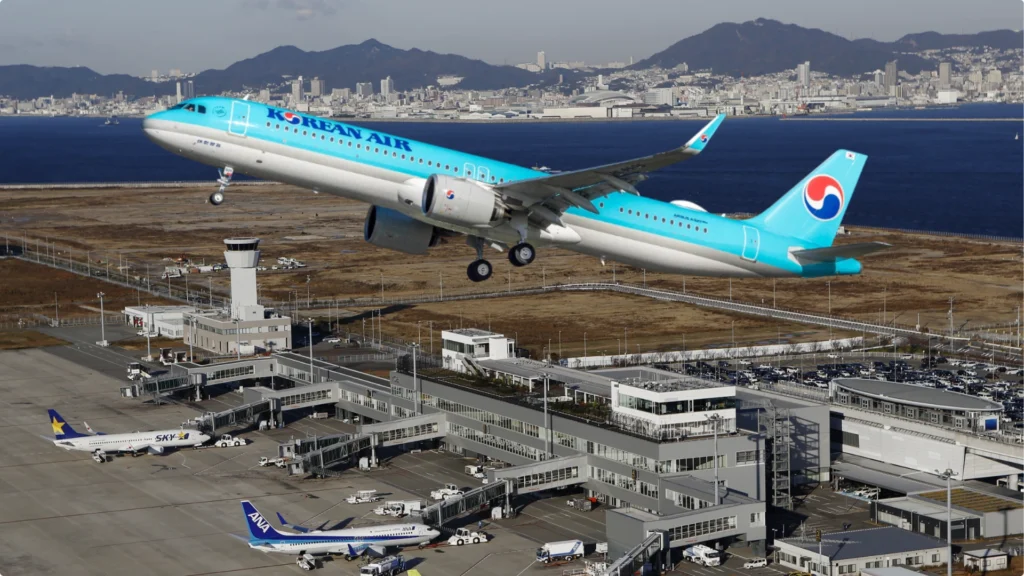
Why Go-Arounds Matter In Commercial Aviation
Go-arounds occur on a small percentage of commercial flights worldwide each year, often triggered by wind shear, runway incursions, traffic spacing issues, or unstable approaches. Industry safety bodies, including the Flight Safety Foundation, actively encourage crews to break off any approach that does not meet stabilised landing criteria.
The Korean Air (KE) incident at Tokyo Narita International Airport (NRT) illustrates how the procedure protects flights during marginal conditions. Social media users widely praised the pilots after the clip spread online, though aviation experts emphasise that such recoveries reflect routine training rather than exceptional skill.
Stay tuned with us. Further, follow us on social media for the latest updates.
Join us on Telegram Group for the Latest Aviation Updates. Subsequently, follow us on Google News
