

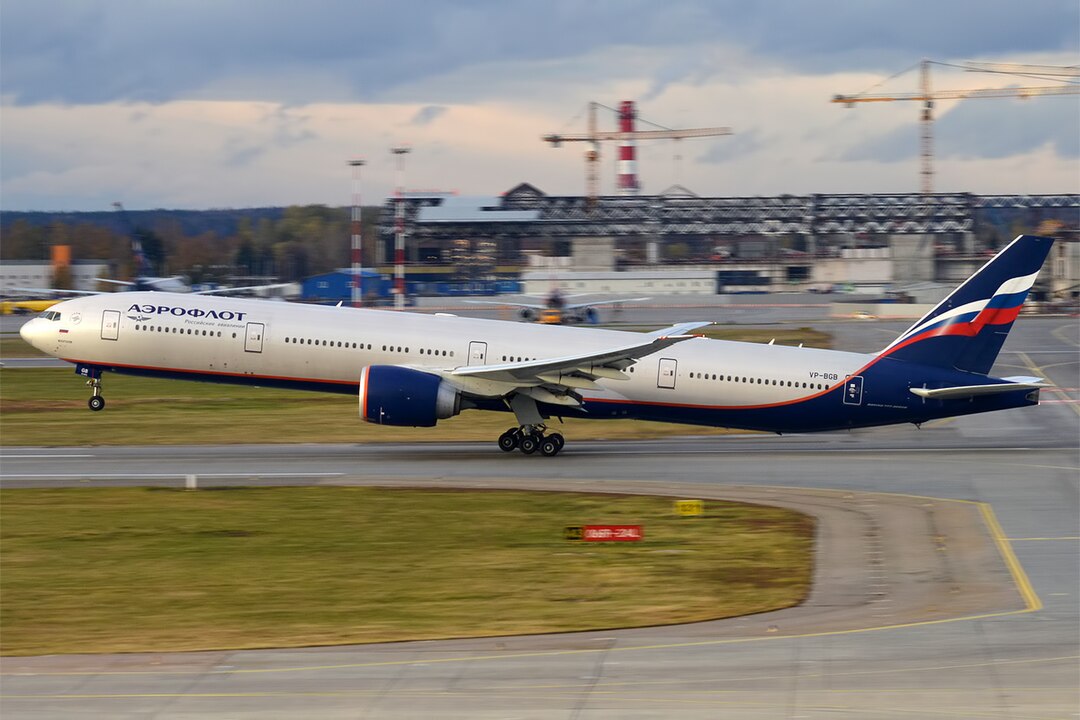
MOSCOW- Russia’s military aviation maintenance network is collapsing under sanctions pressure, forcing the Ministry of Defence to systematically recruit civilian airlines into its wartime logistics operations.
State-controlled flight units like the 223rd and 224th Flight Units, along with private cargo operators such as Aviacon Zitotrans (ZF), Abakan Air, and Volga-Dnepr Group (VI), now routinely execute military transport missions under the cover of civilian charter operations.
An investigation by Dallas-Analytics, building on earlier findings about the insolvency of Russia’s Aviaremont JSC maintenance facilities, reveals that this civil-military integration extends from restricted military airfields like Chkalovsky (CKL) and Migalovo to major commercial hubs such as Yekaterinburg’s Koltsovo Airport (SVX) and Rostov-on-Don’s Platov Airport (ROV).
The network reaches internationally through transit nodes in the UAE, Turkey, and multiple African states, where enforcement of Western sanctions remains limited.
Russia Using Commercial Airlines for Military Operations
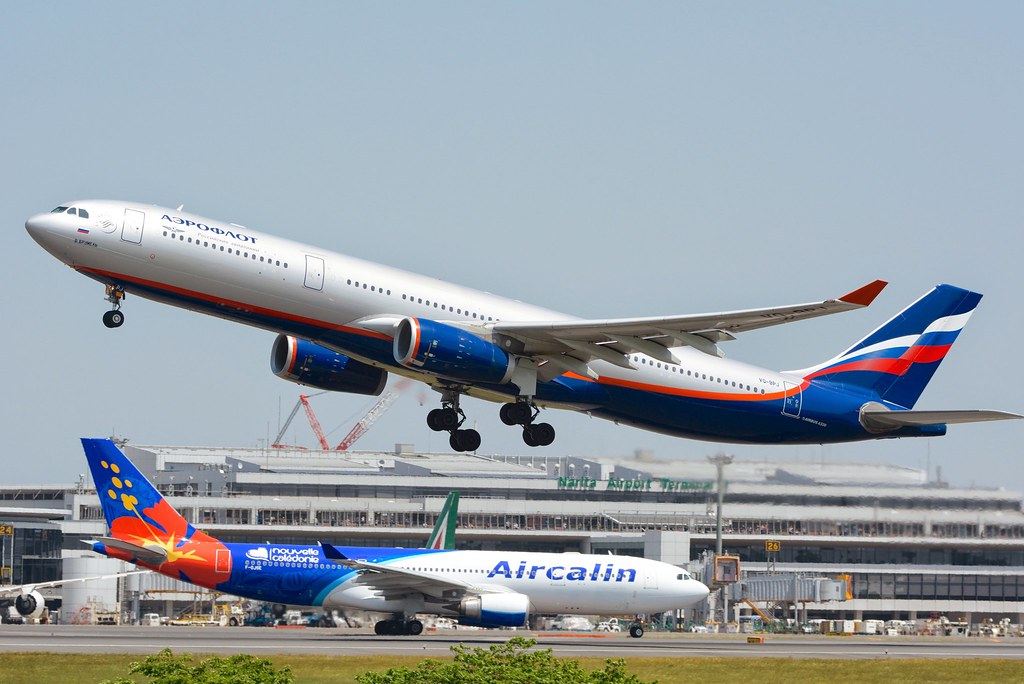
The Russian Ministry of Defence maintains a parallel fleet of aircraft on the country’s civilian aviation registry despite commanding roughly 400 to 450 dedicated military transport airframes.
The rationale is straightforward. Under international aviation law, military aircraft require diplomatic clearances to enter foreign airspace and face routine exclusion from commercial airports.
Aircraft registered as civilian and painted in commercial liveries bypass these restrictions entirely, operating through standard civil aviation protocols at international transit hubs.
A June 2022 government programme document, approved by Prime Minister Mikhail Mishustin shortly after the full-scale invasion of Ukraine, inadvertently exposed this arrangement.
The document listed Russia’s commercial aviation fleet at 1,287 aircraft as of April 2022, comprising 1,101 passenger aircraft, 84 cargo aircraft, and 42 business jets. Buried within this total were 60 airframes that perform no commercial transport functions whatsoever.
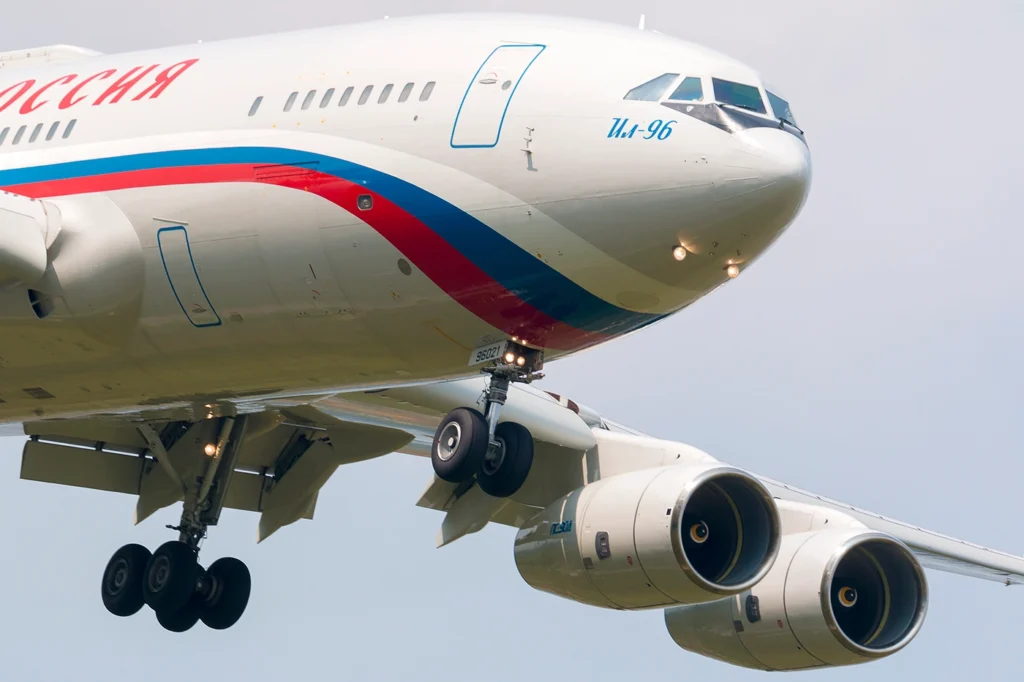
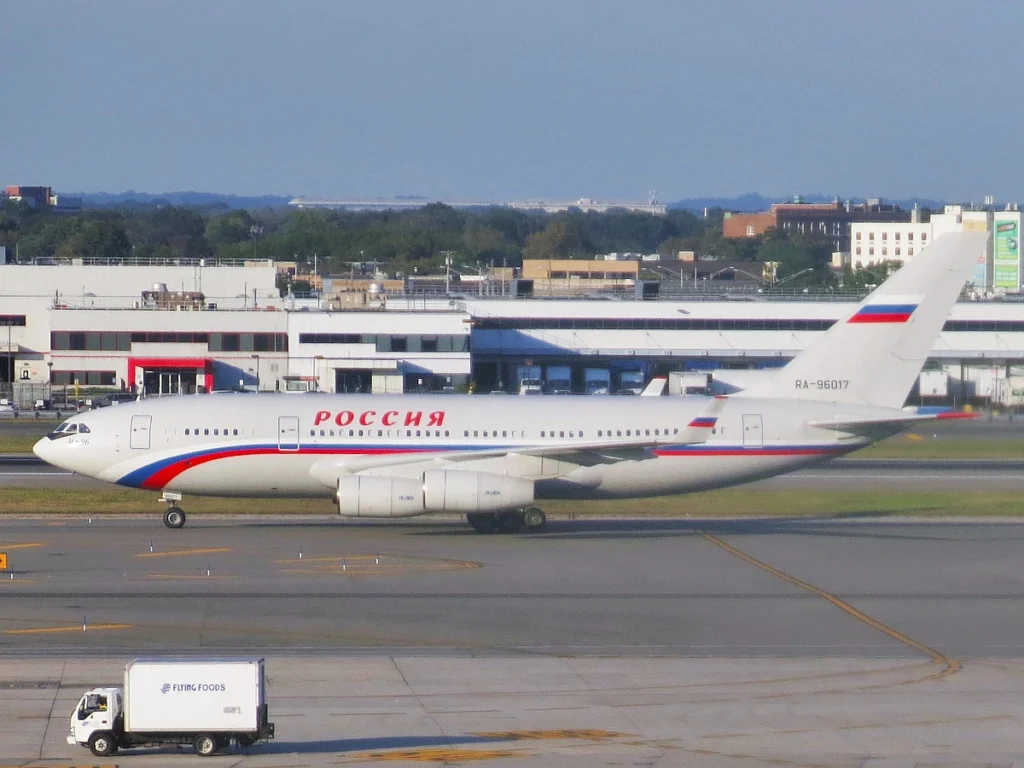
These non-commercial aircraft belong to federal state institutions, including the Special Flight Detachment Rossiya under the Presidential Administration, the Aviation Rescue Company under the Ministry for Civil Defence, JSC Production Association Kosmos, and the 223rd Flight Unit operated directly by the Ministry of Defence.
The 224th Flight Unit, a subsidiary of the MoD-controlled JSC Garnizon corporation, operates alongside the 223rd but was originally spun off from the Russian Air Force’s Military Transport Aviation division specifically to provide commercial air cargo services as cover for state logistics.
The 223rd And 224th Flight Units Under International Sanctions
International monitors and open-source intelligence analysts have tracked both flight units executing overt military operations for over a decade. The 223rd Flight Unit became widely documented as a primary logistical artery for the Wagner Group, ferrying mercenaries, weapons, and extracted resources across Syria, Sudan, Mali, and the Central African Republic.
The US Department of the Treasury designated the 223rd under sanctions in May 2023, targeting Wagner’s global supply infrastructure.
The 224th Flight Unit drew even more severe scrutiny. In January 2024, the US State Department imposed sanctions against the unit and its Director General, Vladimir Mikheychik.
The official designation cited the unit’s use of nominally civilian Ilyushin Il-76 (IL-76) freighters to transfer ballistic missiles and related material from North Korea to Russian military facilities in late 2023. These designations confirmed what flight tracking data had indicated for years: both units function as military transport extensions operating under civilian registration.
Private Cargo Operators Embedded In Defence Supply Chains
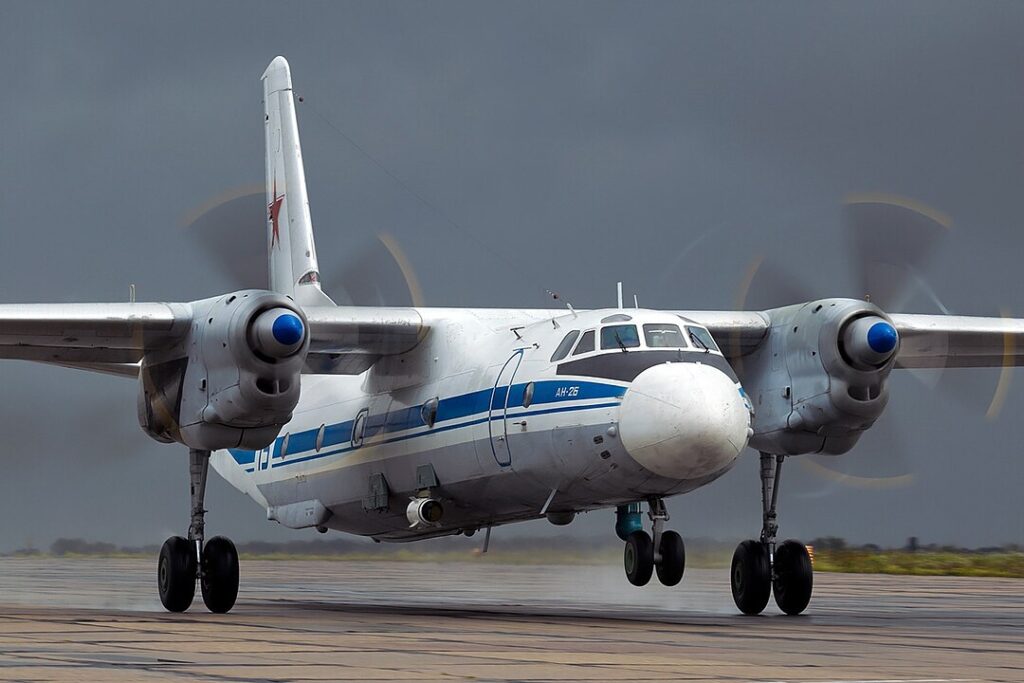
The Ministry of Defence’s reliance on private commercial operators is not a wartime improvisation. It reflects a deliberate, long-standing strategy to diversify supply lines and outsource sensitive expeditionary tasks.
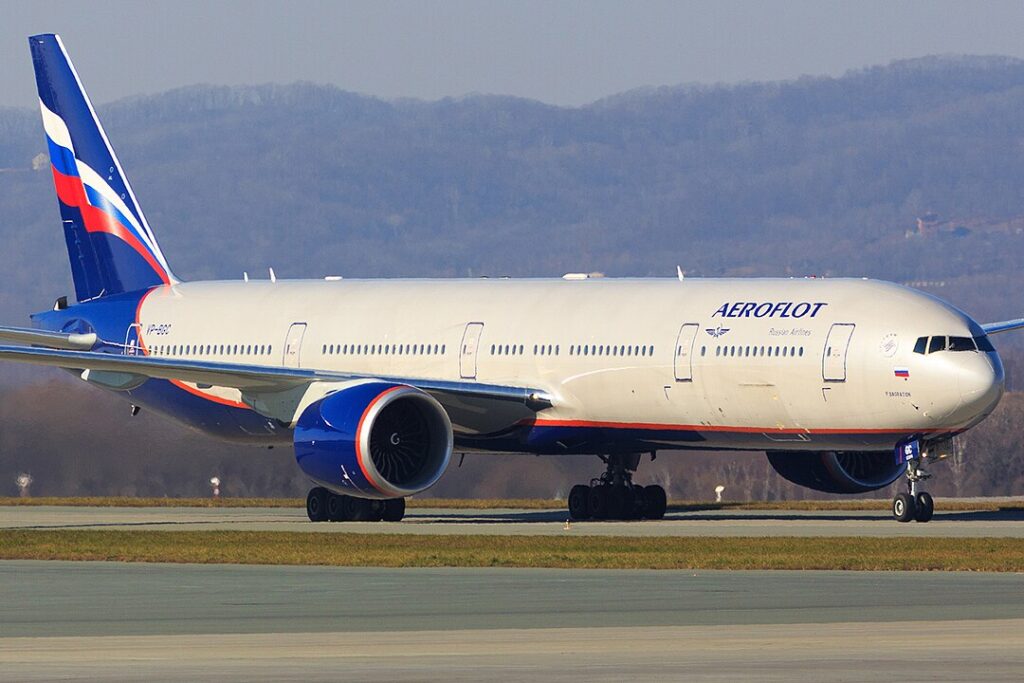
Documentary evidence obtained by Dallas Analytics confirms that Aviacon Zitotrans (ZF) transported Russian military helicopters to Laos in November 2020 under direct MoD orders, well before the 2022 invasion.
A separate documented operation at the end of 2022 involved the transport of complete missile systems and independent warheads to India. Because international aviation protocols strictly regulate such cargo, the shipments were escorted by special couriers from the Russian Ministry of Foreign Affairs.
Operators used a formal state waiver titled “Exemption from the provisions of the Technical Instructions for the Safe Transport of Dangerous Goods by Air” to circumvent standard safety protocols.
A February 2023 risk assessment form further reveals Aviacon Zitotrans flights to Damascus (DAM), commissioned by the Ministry of Defence for the transportation of dangerous goods. While the specific cargo is undisclosed, the destination and client strongly indicate weapons or munitions transfers to Russian forces in Syria.
Sanctions Evasion Through Reverse Logistics And Defence Manufacturing
The war in Ukraine has massively accelerated the integration between civilian cargo operators and sanctioned defence manufacturers.
Customs documents obtained by Dallas confirm that Aviacon Zitotrans facilitated military cargo shipments from Russia to China on behalf of key aerospace and defence producers, including the V.V. Chernyshev Moscow Machine-Building Enterprise, UEC-Klimov, and JSC Krasny Oktiabr.
The carrier also executed sensitive reverse logistics operations. Documentary evidence reveals shipments of electronic equipment from Uganda’s Ministry of Defence back to Russia, destined for the Almaz-Antey Aerospace Defence Concern, Russia’s leading developer of surface-to-air and missile defence systems.
Aviacon Zitotrans openly advertises these relationships, hosting letters of recommendation from sanctioned contractors, including the Ural Optical and Mechanical Plant and Kurganmashzavod, Russia’s primary manufacturer of infantry fighting vehicles, on its corporate website.
The broader network extends well beyond a single carrier. Abakan Air received US Treasury sanctions in June 2024 for transporting weapons and facilitating PMC operations in Africa.
The Volga-Dnepr Group (VI) pivoted aggressively to domestic military and government contracts after Western airspace bans and asset seizures destroyed its international operations. Smaller operators like Gelix Airlines execute shadow charter flights with disabled transponders, delivering cargo to joint-use military aerodromes.
Dark Flights: Civilian Passenger Airlines In Troop Deployments
The militarisation of civil aviation extends beyond freight into passenger operations. The Ministry of Defence routinely charters civilian passenger airlines to execute what analysts call “dark flights,” disabling transponders to enter closed airspace and land at restricted bases for rapid troop deployments.
I-Fly (F7) has been contracted by the MoD to transport conscripted soldiers from Siberia to Rostov-on-Don (ROV) for onward deployment to the Ukrainian front.
Ural Airlines (U6), one of Russia’s largest carriers, has been implicated in flying military personnel to closed transit hubs, including Rostov’s Platov (ROV) and occupied Simferopol (SIP). Ukrainian intelligence has filed formal charges against the airline’s leadership for facilitating these operations.
Dual-Use Aerodromes Provide Logistical Camouflage
The execution of shadow logistics depends on Russia’s legally codified network of dual-use airfields. Official government decrees governing joint-basing aerodromes permit numerous airfields to accommodate both military and commercial aviation simultaneously. This infrastructure falls into three operational categories.
Production and experimental hubs such as Ulyanovsk-Vostochny (ULY) and Zhukovsky (ZIA) operate nominally as commercial or experimental airfields while housing major defence manufacturing facilities like Aviastar-SP. These sites serve as collection points for Rostec military hardware disguised as commercial freight.
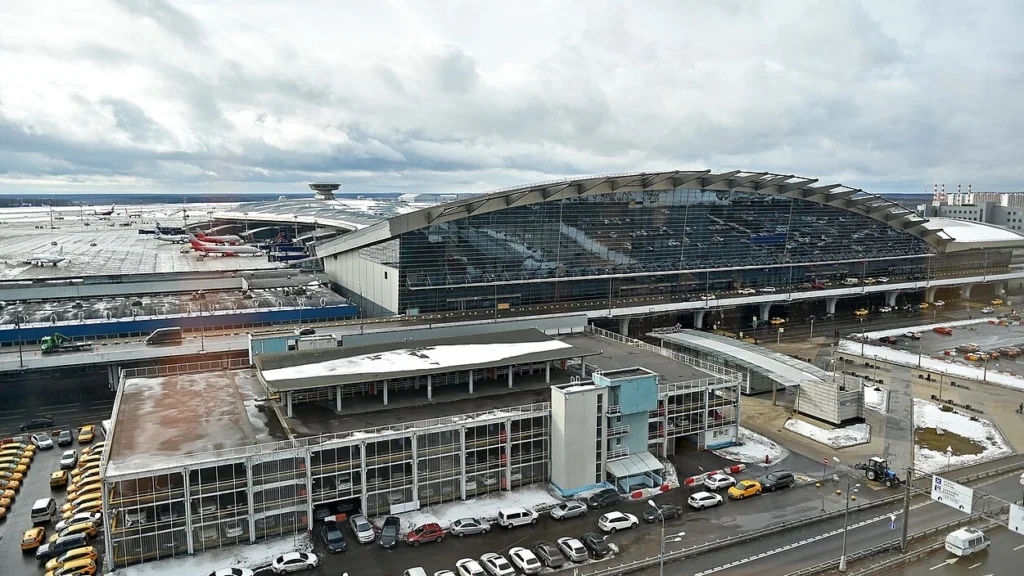
Military-civil integration nodes, including Chkalovsky (CKL), Migalovo, and Koltsovo (SVX) in Yekaterinburg, blend restricted MoD operations with civilian-registered freighter traffic. Koltsovo serves as the primary base for Aviacon Zitotrans, while Chkalovsky and Migalovo service aircraft from Gelix Airlines and the 224th Flight Unit under an official General Staff directive authorising free use of the restricted facility.
Forward operating bases at Rostov-Platov (ROV), occupied Simferopol (SIP), and Machulishchy Air Base in Belarus function as primary offloading zones for civilian aircraft carrying soldiers and heavy weaponry to the operational theatre, despite being officially closed to civilian traffic since the 2022 invasion.
The physical geography of these joint-use airfields creates direct collateral risk. Satellite imagery and flight monitoring regularly show chartered transport aircraft parked on aprons immediately adjacent to active military cantonments, air defence batteries, and tactical aviation regiments.
At busy commercial hubs like Koltsovo (SVX), the boundary between civilian passenger terminals and military logistics sectors remains dangerously porous, placing ordinary air travellers and ground crews at acute risk.

Sanctions Enforcement Gaps Across Non-Aligned Transit States
Despite comprehensive Western designations, these entities continue operating effectively. The fundamental weakness in the current sanctions regime is its limited jurisdictional reach outside Europe and North America. Non-aligned nations routinely permit sanctioned Russian cargo aircraft to land, refuel, and transit without consequence.
The UAE and Turkey serve as vital global procurement and transhipment centres. South Africa has permitted sanctioned Russian cargo aircraft to land and refuel. These jurisdictions provide safe transit corridors that sustain Russia’s auxiliary military transport network regardless of Western designations.
Analysts argue that primary entity designations are no longer sufficient to disrupt this logistical pipeline. Effective enforcement requires escalation from targeting aircraft to systematically sanctioning the foreign infrastructure that keeps them airborne, including ground handlers, aviation fuel suppliers, and civil aviation authorities in transit hubs across the Middle East, Central Asia, and Africa.
Until servicing blocked tail numbers becomes a global liability, the Russian Ministry of Defence will continue exploiting commercial aviation as a highly effective military asset.
Stay tuned with us. Further, follow us on social media for the latest updates.
Join us on Telegram Group for the Latest Aviation Updates. Subsequently, follow us on Google News
