


FALLS CHURCH, VIRGINIA- Northrop Grumman has delivered the first production unit of its Embedded GPS/Inertial Navigation System Modernization (EGI-M) to the United States Air Force and Navy.
The upgraded navigation system, designated LN-351, will initially equip the Lockheed Martin F-22 Raptor and the Northrop Grumman E-2D Advanced Hawkeye, enabling both platforms to operate reliably in GPS-jammed and GPS-denied environments.
The EGI-M uses M-code, a military-exclusive GPS signal broadcast by the latest GPS III satellites through high-gain directional antennas. This encrypted signal is significantly harder to jam than standard GPS and supports blue force tracking of U.S. military aircraft through contested airspace. All military GPS equipment acquired after fiscal year 2017 must be M-code capable under current Department of Defense requirements.
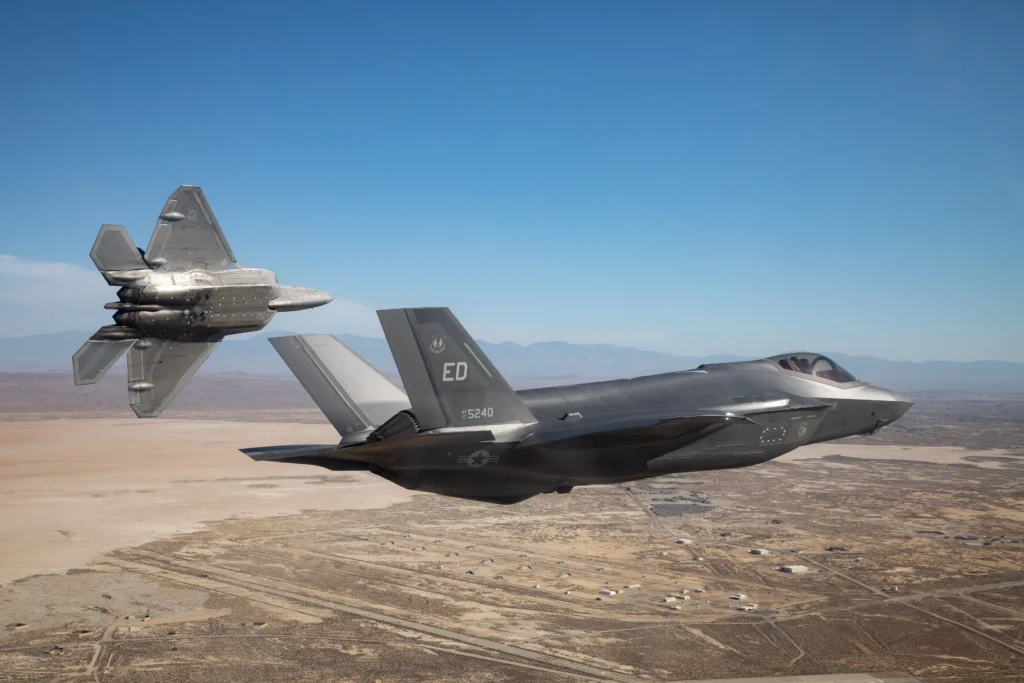
F-22 Raptor Gets Jam-Resistant Navigation System
The EGI-M represents a direct upgrade over the legacy LN-251 navigation system already in service across multiple U.S. military platforms. Northrop Grumman began engineering and manufacturing development of the system in 2018 and completed critical design review in 2020.
In May 2023, the company successfully flight-tested EGI-M aboard a Cessna Citation 560 aircraft. More recently, in February 2025, the Air Force Life Cycle Management Center conducted six performance evaluation flights covering three EGI-M variants.
Lt. Col. Christopher Grover, the PNT program office materiel leader at the Air Force Life Cycle Management Center, stated that the new receiver gives U.S. military assets the ability to operate wherever needed, with full capability and on their own timeline.
Ryan Arrington, Northrop Grumman’s vice president for navigation and cockpit systems, added that EGI-M enhances operational effectiveness while offering the flexibility to counter current threats and adapt to future mission requirements, Air and Space Forces flagged.

Key Features of the LN-351 System
The EGI-M brings three core capabilities beyond jam-resistant GPS navigation. First, its flexible software architecture can host third-party position, navigation, and timing (PNT) applications tailored to specific mission needs. This allows the system to integrate with additional sensors and track non-GPS satellites for enhanced accuracy.
Second, the modular hardware design enables direct integration with an aircraft’s existing navigation infrastructure. This approach simplifies installation and supports future technology upgrades without requiring a full system replacement.
Third, the system has already completed all required technical and performance testing. With production validation finished, EGI-M is now cleared for full-scale manufacturing.
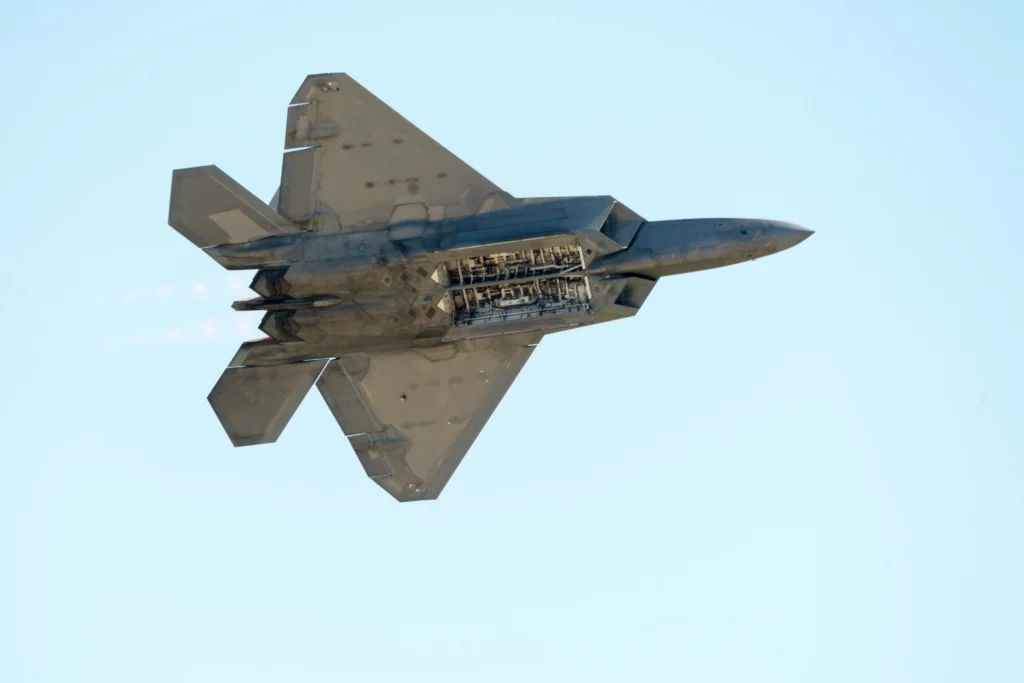
Platforms Slated for Future EGI-M Adoption
While the F-22 Raptor and E-2D Advanced Hawkeye are the first platforms to receive EGI-M, Northrop Grumman has identified several additional aircraft that could upgrade from the current LN-251 to the new system. These include the Northrop Grumman RQ-4 Global Hawk and MQ-4C Triton unmanned aircraft, the Boeing P-8 Poseidon maritime patrol aircraft, and the Sikorsky CH-53K King Stallion helicopter. Both fixed-wing and rotary-wing platforms across the U.S. military inventory are candidates for adoption.
The U.S. Air Force awarded Northrop Grumman a contract worth up to $1.39 billion over 13 years in 2019.
The deal covers production and sustainment of next-generation navigation systems for both USAF platforms and foreign military sales customers. With the first production unit now delivered, the program transitions from development into operational fielding.
Stay tuned with us. Further, follow us on social media for the latest updates.
Join us on Telegram Group for the Latest Aviation Updates. Subsequently, follow us on Google News
