

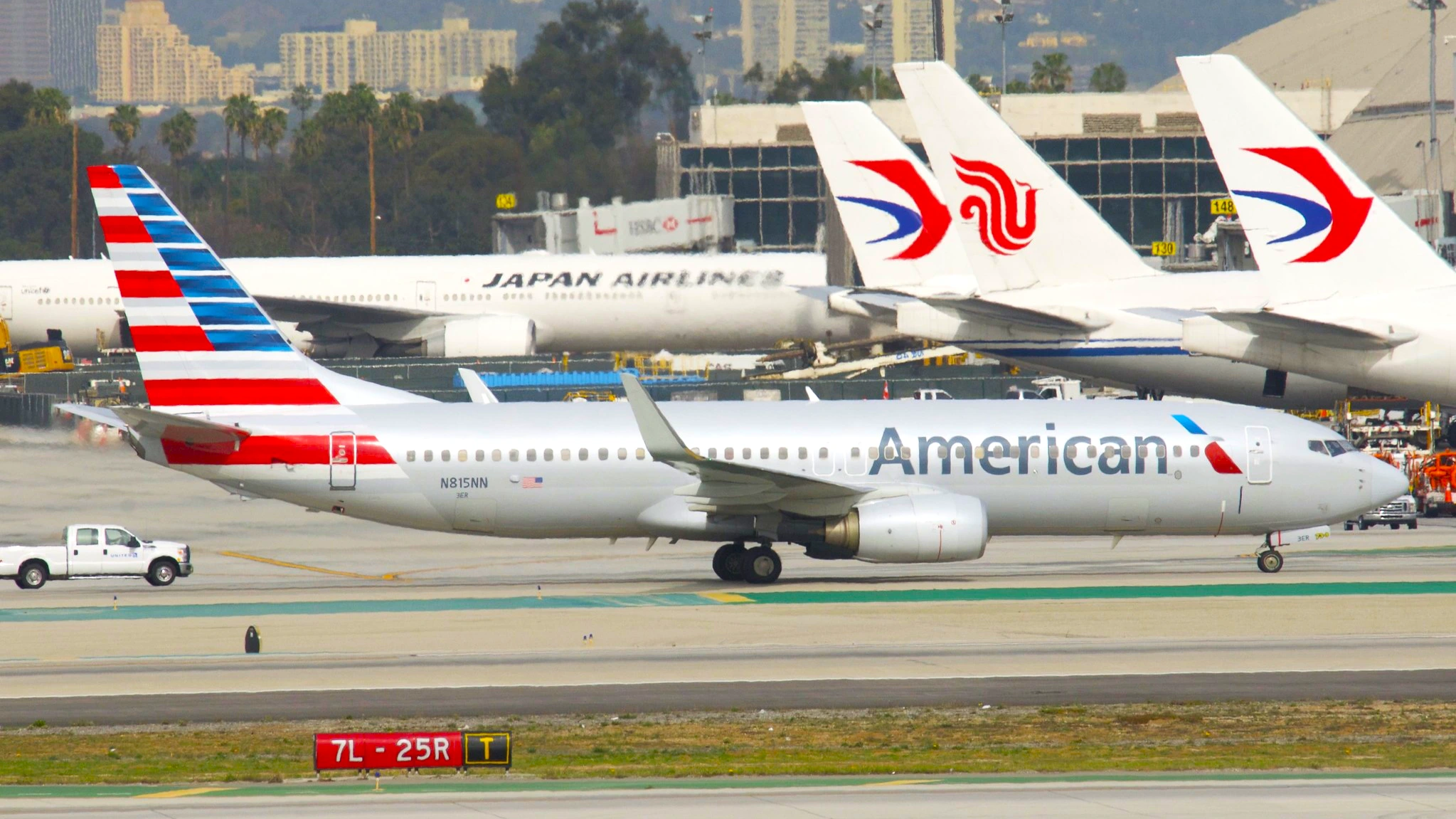
FORT WORTH- The U.S. Equal Employment Opportunity Commission (EEOC) has filed a lawsuit against American Airlines (AA) for allegedly refusing to accommodate a reservations agent who developed permanent blindness. The agency claims AA kept the employee on unpaid involuntary leave for nearly four years before terminating her during the pandemic.
The case centers on the airline’s failure to allow the agent to use screen reader software or transfer her to an alternative role. The EEOC is now seeking reinstatement and back pay, while a legal battle over software discovery adds a new layer to the dispute.
EEOC Alleges American Airlines Denied Disability Accommodation
The reservations agent was hired by American Airlines in January 2012. Six months into her employment, she sustained an injury that resulted in permanent cortical blindness, prompting her to take medical leave, ViewfromtheWing reported.
In December 2016, the agent requested to return to work. She proposed a part-time schedule and the use of JAWS (Job Access With Speech), a widely used screen reader software. The state would have provided the software at no cost to the airline, and blindness support agencies offered to help configure it.
By January 2017, American Airlines informed her that it could not accommodate her in the reservations role. The airline reached this conclusion without testing whether JAWS was compatible with its reservations systems. AA did promise to explore a transfer, but the employee was never considered for any of the several roles she inquired about.
Eight months after the initial denial, American Airlines contacted the National Federation of the Blind regarding the screen reader software. It then took another year and a half for a third-party evaluation of the reservations platform.
That assessment stated the software could not guarantee full accessibility but noted that accessibility issues could be remediated. American Airlines chose not to pursue remediation.
No further action was taken in 2019 to identify or provide accommodations. When the pandemic arrived in 2020, the airline terminated her employment once pandemic subsidy requirements permitted layoffs.
Discovery Dispute Over Software Compatibility Testing
The current legal battle involves a discovery dispute. The EEOC wants to inspect and test American Airlines’ reservations software for compatibility with accessibility tools such as JAWS. This type of request is standard in disability accommodation cases.
American Airlines has raised several objections to the discovery request. The airline argues that its software has changed significantly since the period in question (2016 to 2020), making tests on the current system irrelevant.
AA also points out that the EEOC did not request or inspect the software during its own four-year investigation from 2021 through 2025. Additionally, the airline cites the existing third-party evaluation that found the systems were not fully compatible.
The airline further notes that complying with the request would require the EEOC to access 58 separate software systems, each requiring knowledgeable American Airlines staff to assist. The airline has raised concerns about customer data protection and cybersecurity risks.
However, since the EEOC is seeking reinstatement and not just back pay, the current state of the software remains relevant. Courts can impose limits on the scope of discovery to address security concerns. Differences between current and historical software versions can also be documented during the process.
A narrower discovery order would likely require the EEOC to test JAWS on the core reservations software and potentially on systems used for specific alternative positions that were previously suggested to the employee.
American Airlines’ Expected Legal Defense
American Airlines is expected to argue that the reservations agent was not a “qualified individual” for the role, even with accommodation.
The airline will likely contend that custom scripting would not have enabled her to perform essential job functions and that making the reservations platform compatible with screen reader software would have constituted an undue hardship.
On the question of reassignment, the airline is expected to argue that no vacant position existed for which the employee was qualified, explaining the extended leave period and eventual termination.
Prior EEOC Settlement Adds Context
This lawsuit is not the first time American Airlines has faced EEOC action over disability accommodations. In 2017, American Airlines and its regional subsidiary Envoy Air settled a nationwide EEOC disability accommodation lawsuit.
In that case, the EEOC alleged the airlines failed to determine whether reasonable accommodations would allow employees to return to work.
While the 2017 settlement does not establish liability in the current case, it highlights a pattern of EEOC scrutiny on accommodation practices at American Airlines. The agency’s decision to pursue a similar case is consistent with its broader enforcement priorities.
Stay tuned with us. Further, follow us on social media for the latest updates.
Join us on Telegram Group for the Latest Aviation Updates. Subsequently, follow us on Google News
