

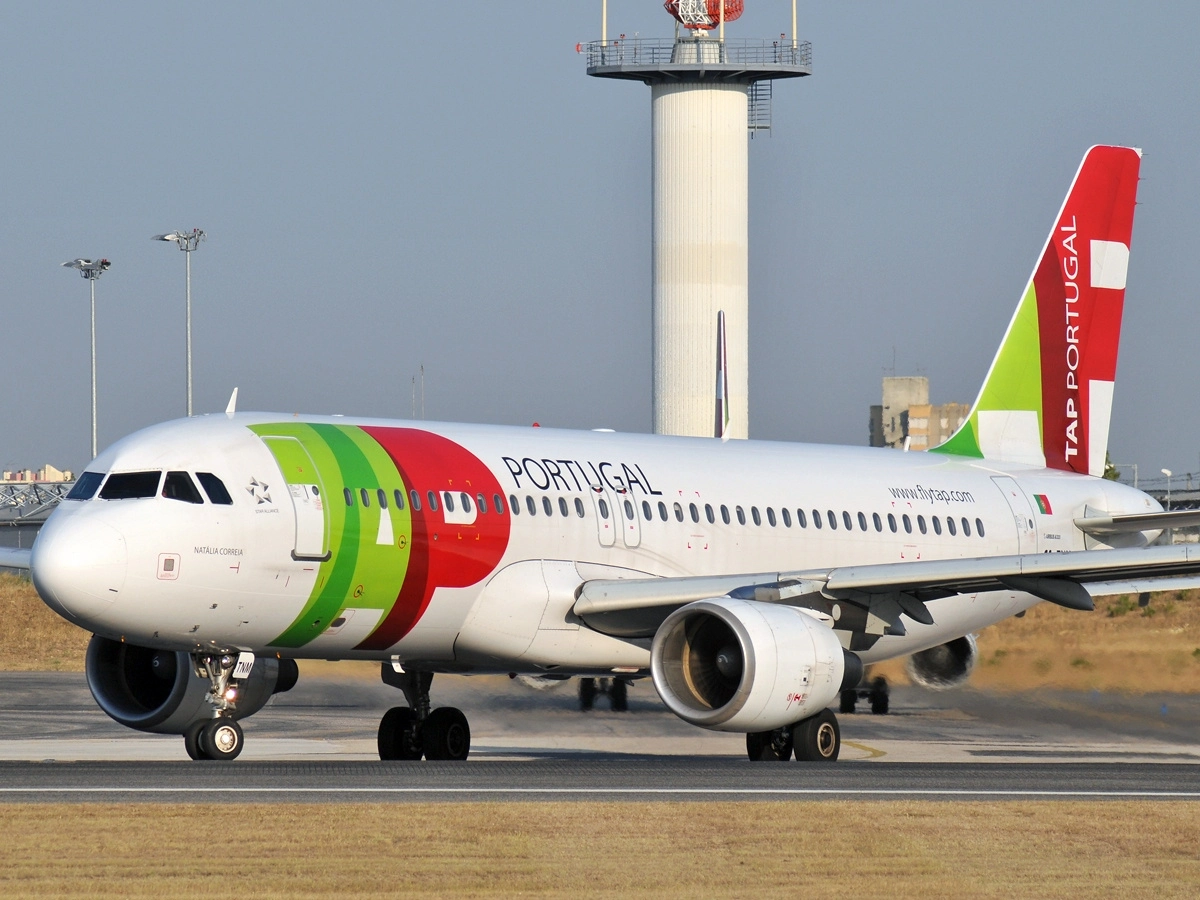
LISBON- A TAP Air Portugal (TP) business class passenger missed his flight at Lisbon Humberto Delgado Airport (LIS) after spending nearly two hours stuck in passport control lines, despite arriving over two hours before departure. The incident has raised serious questions about passenger rights and airline accountability in Europe.
The traveler, along with his fiancée and at least seven other passengers on the same flight, was denied rebooking assistance by TAP and was forced to purchase new tickets, highlighting a key difference between European and American airline policies.
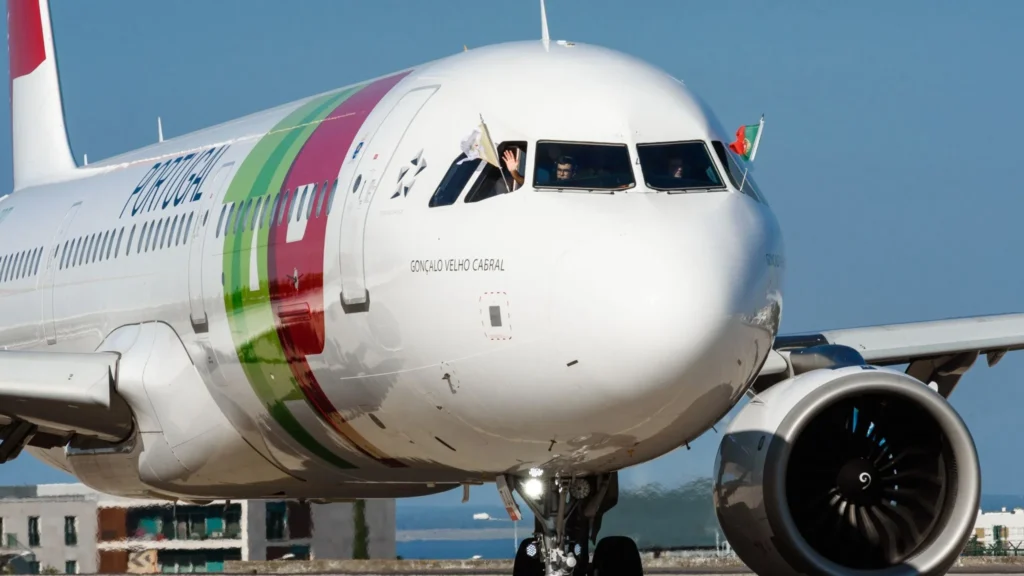
Long Passport Control Wait Leaves Passengers Stranded
The passenger was booked on a TAP Air Portugal (TP) business class itinerary from Brussels Airport (BRU) to Marrakech Menara Airport (RAK) via Lisbon (LIS).
After an overnight layover in Lisbon, he and his fiancée arrived at the airport around 7:00 AM for a 9:20 AM departure, giving themselves over two hours to clear security and passport control.
The pair moved quickly through fast-track security without issue. Airport monitors displayed an estimated 28-minute wait at passport control for non-EU passport holders. However, the actual wait stretched far beyond that. What was expected to be a 30-minute queue turned into a two-hour ordeal.
According to OMAAT, the passengers made repeated attempts to alert airport staff about their approaching departure time. They even coordinated with seven other travelers from the same flight who were caught in the same line.
Airport staff refused to allow anyone to move forward in the queue until approximately 10 minutes before the scheduled departure. The group was stamped out of Portugal at 9:10 AM and ran to the gate, only to find it had already closed, roughly five minutes before departure.
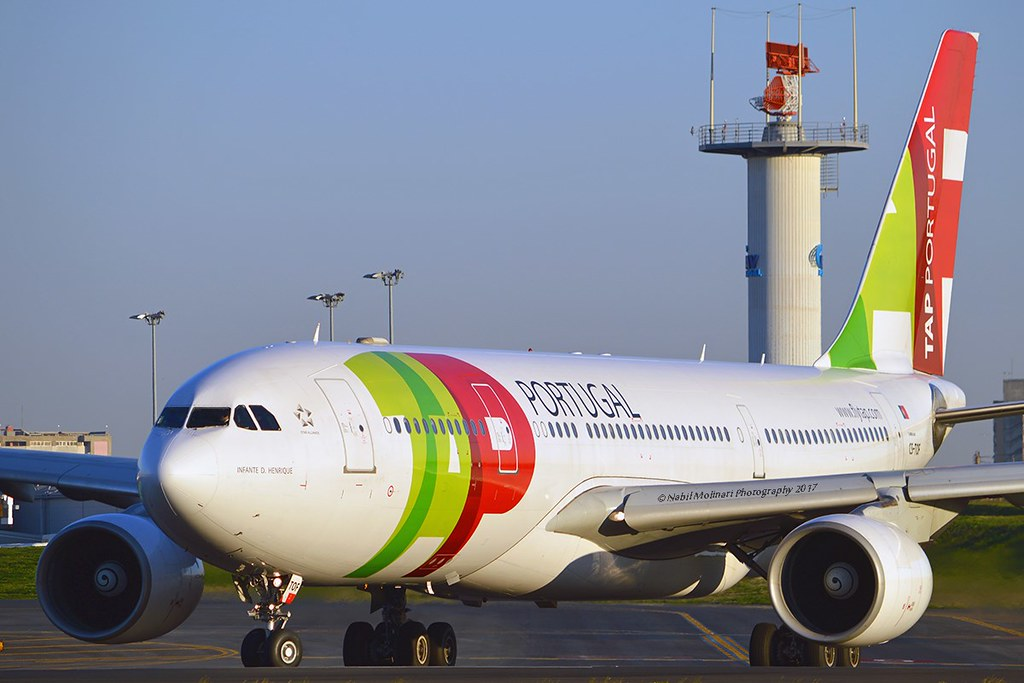
TAP’s Response and Lack of Passenger Support
Upon missing the flight, the passengers were directed to TAP’s ticket counter outside the terminal. The airline’s only offer to the paid business class passenger was the option to purchase a new ticket for a flight two days later. No complimentary rebooking, no compensation, and no alternative accommodation were provided.
The passenger ultimately booked an EasyJet (U2) flight departing later that afternoon and successfully reached Marrakech. Notably, the next TAP flight to Marrakech arrived just five minutes before his EasyJet flight, and he spotted several of the same passengers from the passport control queue on that plane.
Those travelers, originally booked in economy class, were reportedly only offered business class tickets as their sole rebooking option, at full purchase price.

EU Regulations and the Limits of Passenger Protection
European aviation is widely regarded as more regulated than other regions, particularly with protections like EC261/2004, which mandates compensation for delays, cancellations, and denied boarding.
However, this regulation does not apply when a passenger misses a flight due to circumstances outside the airline’s direct control, such as long passport control queues managed by border authorities.
Since passport control is operated by government immigration services and not by TAP or the airport operator, the airline is not legally required to compensate or rebook passengers under EU law in this scenario.
The ticket agent on duty reportedly told the passenger he should have arrived earlier, a response that adds to the frustration, given that he had already arrived more than two hours before departure.

A Systemic Problem at LIS
What makes this situation particularly difficult to accept is the scale of the problem. At least nine passengers from the same flight missed their departure due to the same bottleneck at passport control. This was not an isolated case of poor individual planning.
The volume of affected passengers points to a systemic failure in queue management at Lisbon Airport (LIS) on that morning.
When a carrier’s hub airport routinely struggles with passport control wait times, and the airline then charges passengers to rebook missed flights caused by those same delays, the situation raises genuine ethical concerns. Both TAP Air Portugal (TP) and Lisbon Airport share ties to the Portuguese government, making the lack of coordinated passenger support even harder to justify.
Airlines in the United States, while far from perfect, generally place missed-flight passengers on standby for the next available departure at no additional cost. European carriers typically operate under stricter no-show policies, where missing a flight, regardless of the reason, can void the remaining ticket value and require full repurchase.

What Passengers Can Do in Similar Situations
While there is no guaranteed legal remedy in this specific scenario, passengers facing similar situations can take several practical steps:
Travel insurance: A comprehensive policy may cover additional expenses like new ticket purchases in cases of documented, unforeseeable delays.
Document everything: Photograph queue lengths, monitor displays showing estimated wait times, and save all communications with airline or airport staff.
Request written confirmation: Ask TAP or any airline to provide a written explanation for their rebooking policy decision.
File a complaint: Submitting a complaint to the Portuguese Civil Aviation Authority (ANAC) or the European Consumer Centre may not guarantee a refund, but it creates a formal record.
Credit card travel protection: Some premium credit cards offer travel insurance that covers missed connections due to delays outside the passenger’s control.
Stay tuned with us. Further, follow us on social media for the latest updates.
Join us on Telegram Group for the Latest Aviation Updates. Subsequently, follow us on Google News
