

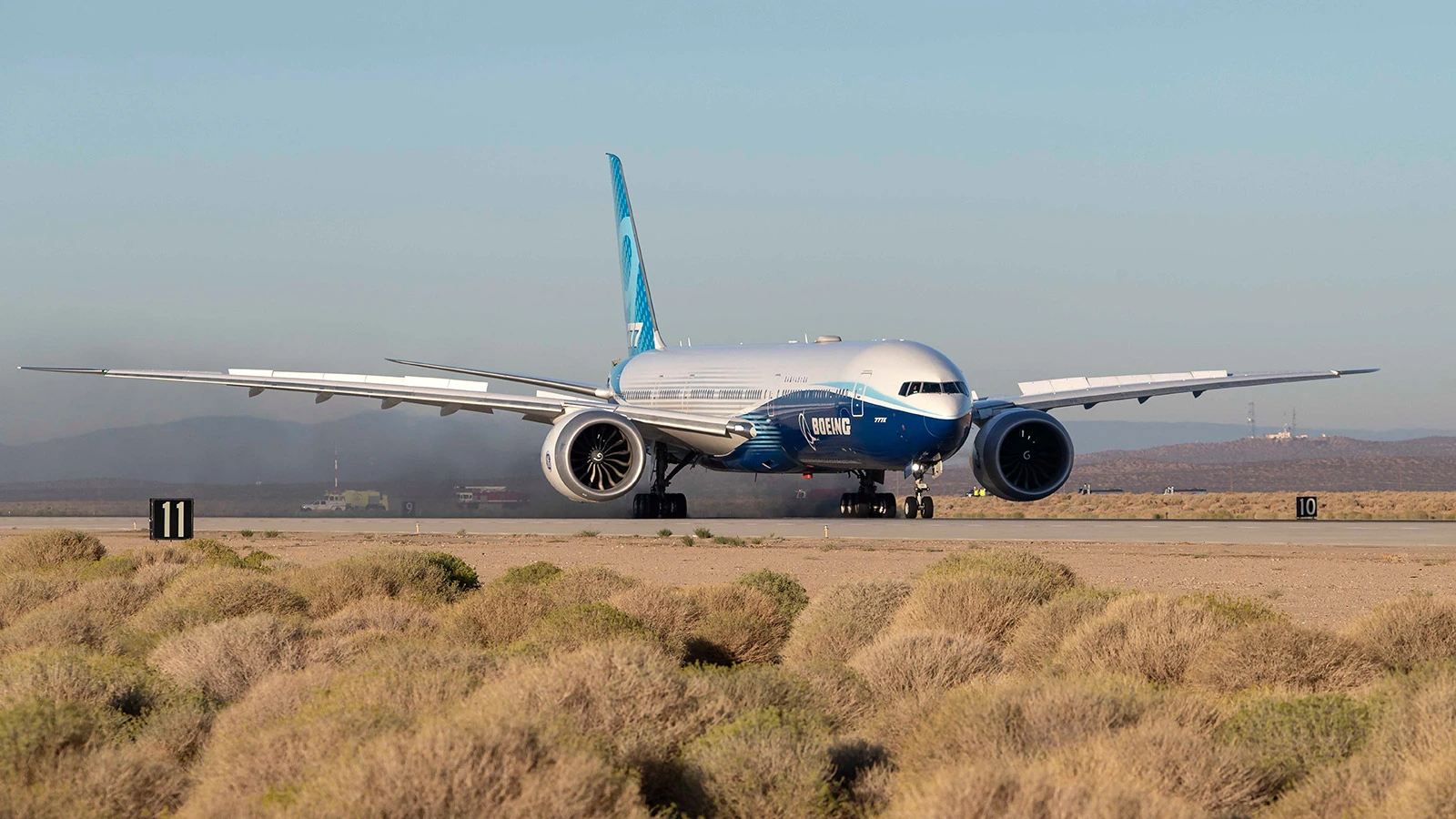
CHICAGO- Boeing advanced its certification efforts as the Boeing 777-9 completed a maximum brake energy test under extreme simulated conditions. The aircraft demonstrated its ability to safely stop during a high-speed rejected takeoff.
Engineers conducted the test at Edwards Air Force Base, where they replicated a worst-case scenario required for certification and ensured compliance with strict safety standards.

Boeing 777-9 Maximum Brake Energy Test
The Boeing 777-9 team executed one of the most demanding certification procedures, known as the maximum brake energy test.
The team loaded the aircraft to its maximum takeoff weight and accelerated it to approximately 190 knots before the pilots initiated a rejected takeoff.
Madison Strauss, 777-9 test director, described the process as one of the most highly choreographed tests in the program.
The procedure required precise coordination between the flight crew and engineering teams to ensure accurate execution.
Pilots relied entirely on the braking system, as thrust reversers were not used. Matt England, 777-9 flight test engineer, confirmed that the brakes provided 100 percent of the stopping force.
The test also used brakes intentionally machined to a fully worn condition to simulate the most unfavorable operating scenario.
Brianna Hitchcock, a flight test engineer, stated that regulations require these conditions to validate safety margins, even though normal service does not encounter them.
Thermal Limits and Brake System Performance
The braking system absorbed extreme kinetic energy during the test, generating more than one billion foot-pounds of torque. This caused brake temperatures to exceed 2,500°F (1,371°C), resulting in visible heat glow.
Capt. Heather Ross, 777-9 project pilot, explained that the team optimized conditions to transfer maximum energy into the brakes. This ensured that the system was tested at its absolute limits.
The intense heat triggered fuse plugs in the wheels to melt as designed, allowing controlled deflation of the tires. This mechanism prevents structural failure or tire bursts under extreme thermal stress.
All braking and landing gear components performed within expected parameters, confirming system reliability under severe conditions.

Emergency Response Simulation and Cooling Phase
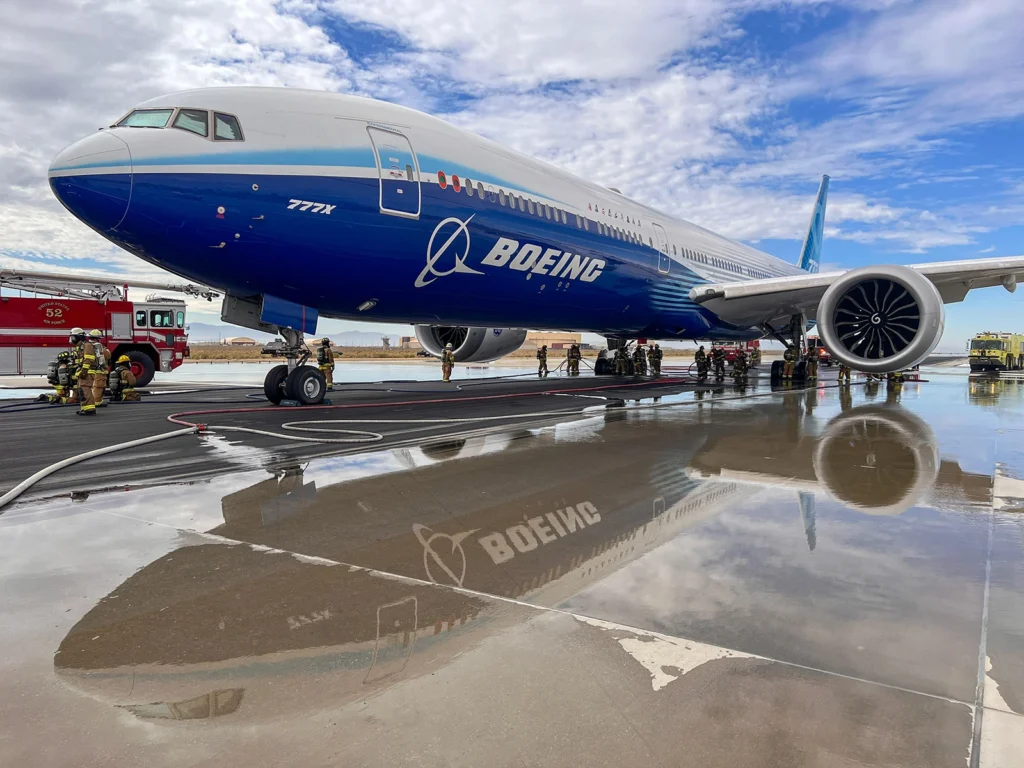
To replicate real-world airport procedures, emergency crews were positioned on standby but delayed their response for 5 minutes. This waiting period simulated actual emergency response timing following a rejected takeoff.
After the delay, ground crews approached the aircraft and applied water to cool the brakes and wheels. This phase validated both the aircraft’s durability and the effectiveness of emergency handling protocols.
Capt. Heather Ross stated that the team executed the conditions flawlessly and expressed confidence in both the aircraft and the team’s performance.
Certification Progress and Program Validation
The Boeing 777-9 continues certification testing under the supervision of the Federal Aviation Administration.
Engineers design these tests to confirm compliance across all systems, including braking, structural integrity, and operational performance.
Capt. Ross noted that extensive testing has been completed across the aircraft, with no system left unverified. This reflects the program’s comprehensive approach to certification.
The successful completion of this test highlights the team’s technical discipline and readiness for the next phase of certification.
Terry Beezhold, vice president and general manager of the 777-9 program, acknowledged the team’s dedication and resolve in completing such critical evaluations. He emphasized the importance of these efforts in progressing toward certification and delivery to customers.
Bottom Line
The maximum brake energy test confirms that the Boeing 777-9 can safely withstand extreme operational scenarios.
By exceeding required safety thresholds, the aircraft demonstrates readiness for commercial service and reinforces confidence in its certification progress.
Stay tuned with us. Further, follow us on social media for the latest updates.
Join us on Telegram Group for the Latest Aviation Updates. Subsequently, follow us on Google News
