

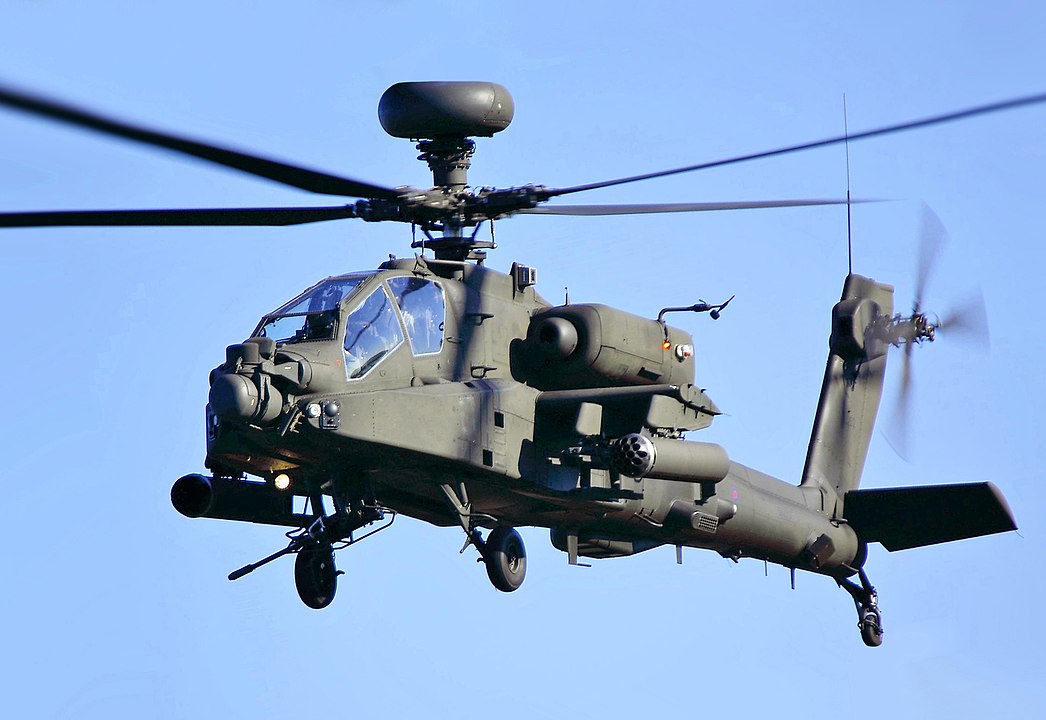
REDSTONE ARSENAL, Ala.— The U.S. Army successfully demonstrated the launch of an A700 Unmanned Aircraft System from a Boeing AH-64E Apache attack helicopter on February 26, marking a key step in integrating uncrewed aerial effects with manned aviation platforms.
This achievement, which progressed from a requirement to a demonstrated solution in less than six months, reflects the Army’s accelerated approach to battlefield innovation.
The demonstration was part of the Cross Domain Fires Concept Focused Warfighting Experiment led by the Army’s Aviation Future Capability Directorate, focusing on the coordination of crewed and uncrewed systems in contested environments.
The test positions Launched Effects as a central element of the Army’s broader aviation modernization strategy, Flight Global reported.
US Army Launches Altius-700 Drone from Apache
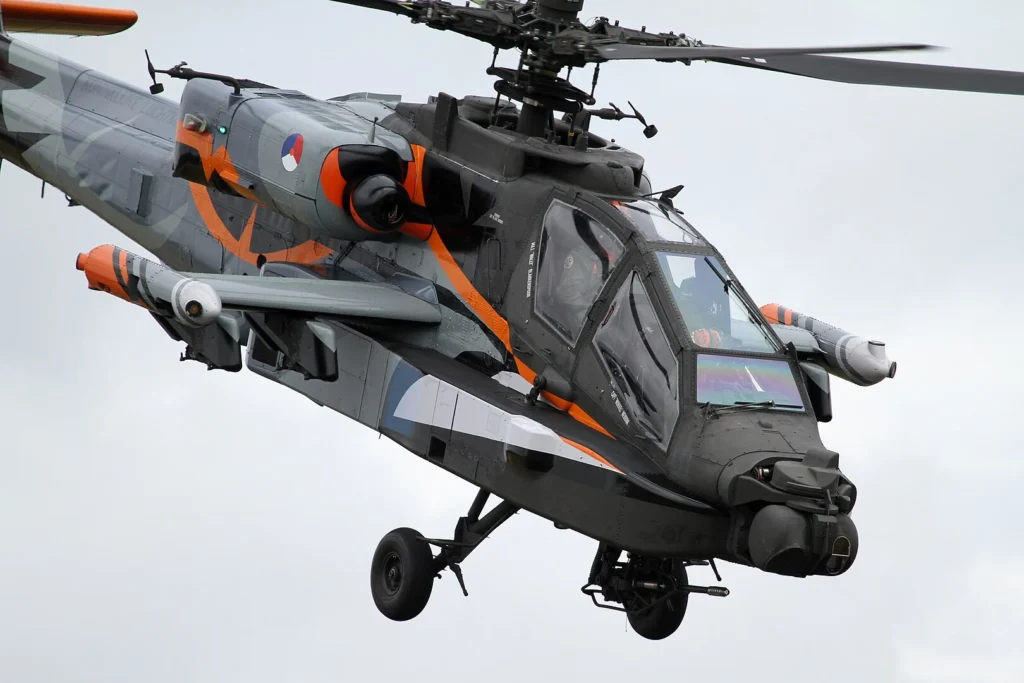
The experimental trial took place in late February at the Yuma Proving Ground in Arizona as part of the Army’s Launched Effects development programme, with an Anduril Industries Altius-700 drone serving as the test vehicle.
The Army’s Capability Program Executive Office for aviation revealed the milestone on 26 March, noting the live-fire shot was carried out less than six months after the Army issued a requirement for an air-launched UAS compatible with the AH-64E.
The Altius-700 was launched both from a hover and while the Apache was in forward motion — a distinction that matters because launches during movement are far closer to the realities of combat aviation, where aircraft may need to deploy a launched effect during maneuver, ingress, or disengagement.
The Army’s CPE aviation office confirmed the timeline was made more notable by a 43-day U.S. Government shutdown that occurred during the development, fabrication, and installation phases, yet the team still delivered a working solution by the end of February.
Altius-700 Capabilities and Mission Profile
The Altius-700 is a modular, tube-launched, seven-inch-class autonomous aerial system designed for multi-mission roles, capable of operating independently or in coordination with its launch platform.
The system supports intelligence, surveillance, and reconnaissance, signals intelligence, electronic warfare, and communications relay, with its modular architecture allowing rapid reconfiguration depending on mission requirements.
In its baseline medium-range configuration, the Altius-700 offers an operational range of up to 460 kilometers and an endurance of approximately four hours, enabling extended loitering and persistent surveillance over large operational areas.
A kinetic variant, the Altius-700M, incorporates a warhead payload of up to 33 pounds, comparable in effect to the AGM-114 Hellfire missile.
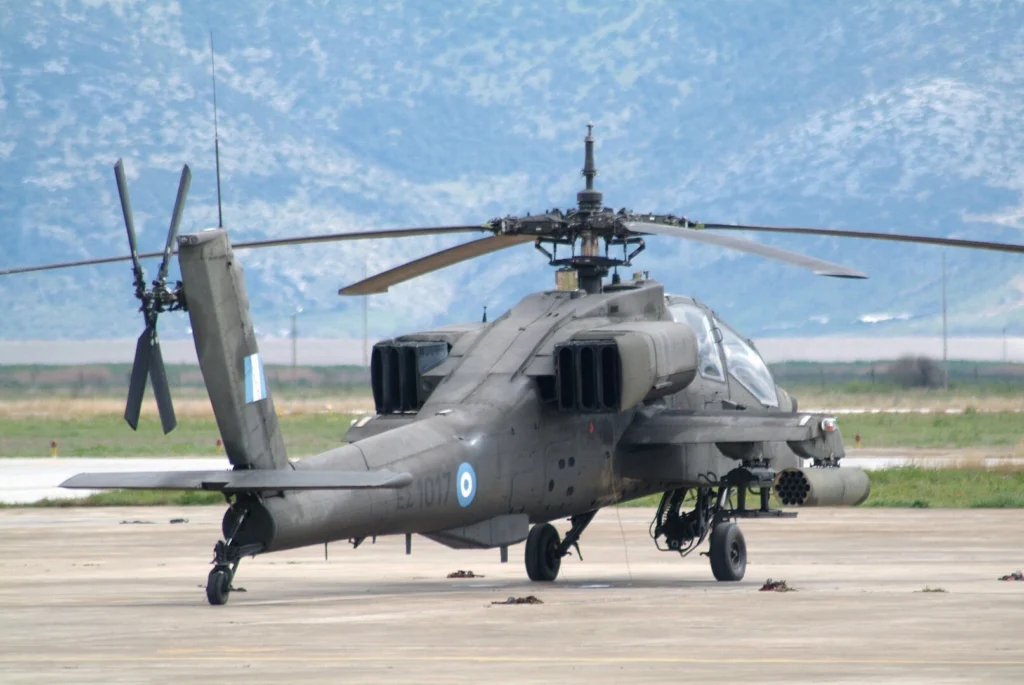
The AH-64E carries a combat range of 260 nautical miles and an endurance of 2.6 hours. Pairing it with the Altius-700 allows the Apache to extend its effective sensing and strike reach well beyond those limits while keeping crews at a safer distance from threat systems.
Prior Tests and Expanding Platform Integration
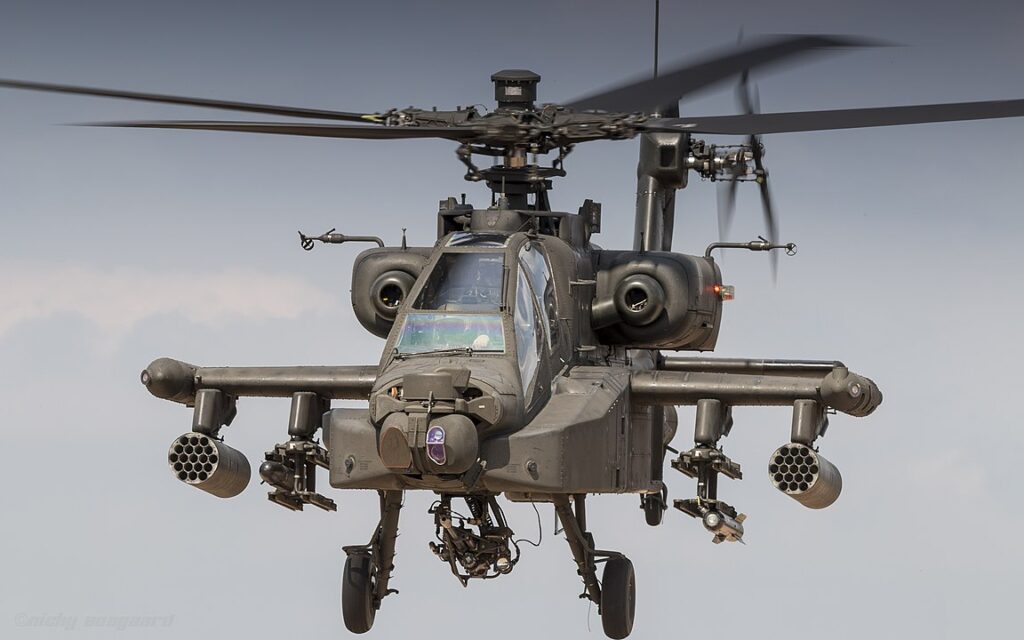
In December 2023, the Army announced a successful Altius-700 demonstration that validated launch, flight, landing, and recovery as a risk-reduction step for the wider Launched Effects program, followed by the first flight tests of its Launched Effects-Medium Range prototype system in March 2024.
Altius drones had previously been deployed from a modified Sikorsky UH-60 Black Hawk in a 2020 demonstration, which included transmitting reconnaissance data over a distance of more than 32 nautical miles.
In late 2025, the Army issued Sikorsky a $43 million contract to overhaul the UH-60M fleet with structural enhancements and digital backbone capabilities needed to integrate air-launched UAS.
Strategic Role in Army Aviation Modernisation
The broader significance is doctrinal. The U.S. Army states it is rapidly integrating layered uncrewed aircraft systems and launched effects across formations in a combined arms fight synchronized with fires and maneuver, aimed at defeating near-peer adversaries.
The demonstration showed how the Apache-Altius pairing can allow commanders to push sensing forward and employ unmanned systems to confront adversaries, keeping soldiers out of the initial line of fire.
The Army envisions a family of modular battlefield effectors that can be air- or ground-launched to deliver reconnaissance, electronic warfare, and kinetic strike capabilities on demand.
The Apache-launched Altius-700 offers a glimpse of how future aviation formations may function not simply as attack assets, but as airborne nodes that launch uncrewed systems to extend sensing, support targeting, and create distance between friendly crews and the enemy’s first point of contact.
Stay tuned with us. Further, follow us on social media for the latest updates.
Join us on Telegram Group for the Latest Aviation Updates. Subsequently, follow us on Google News
