

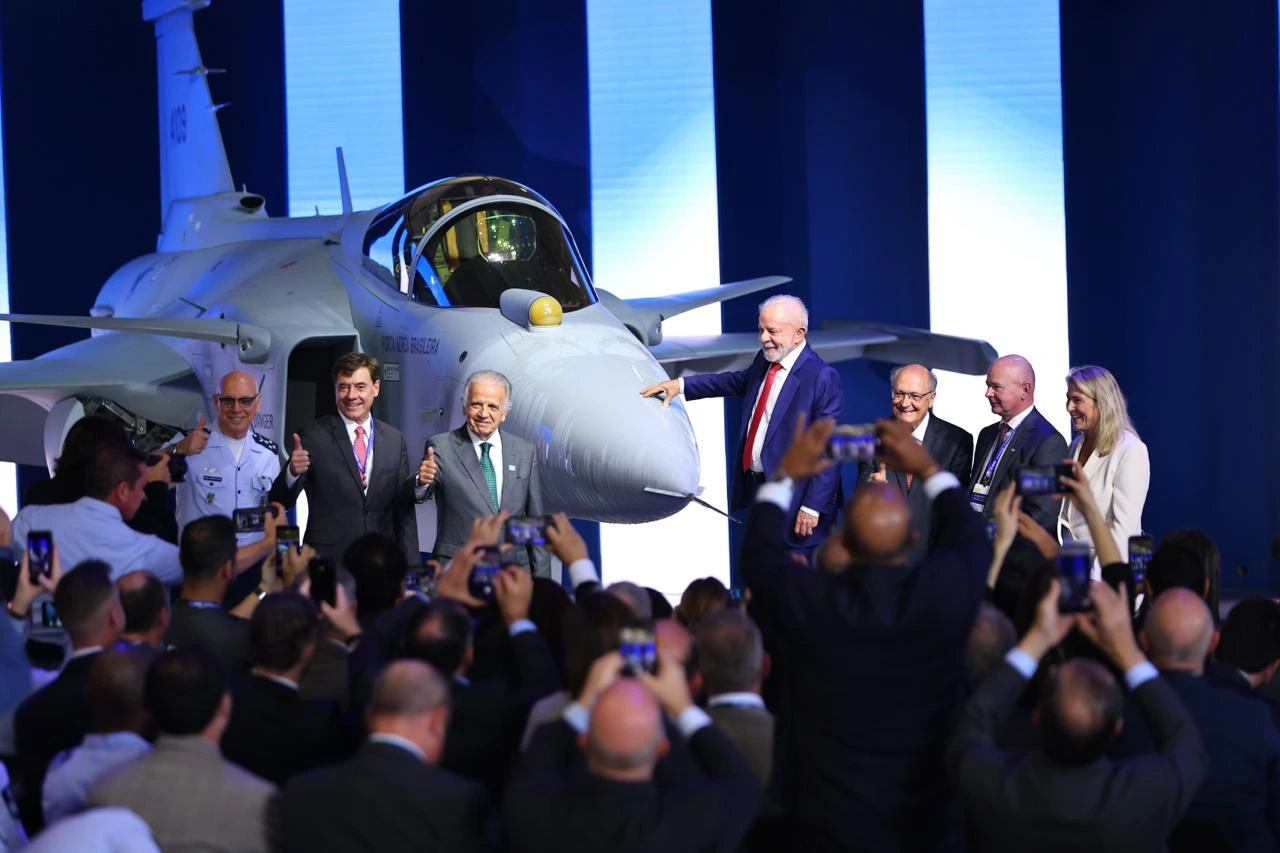
GAVIÃO PEIXOTO- Brazil has achieved a major milestone in aerospace manufacturing as Embraer, in partnership with Saab and the Brazilian Air Force, officially presented the first Gripen E fighter jet produced locally. The unveiling took place at Embraer’s industrial facility in São Paulo state, marking a significant step in the country’s defense capabilities.
The milestone highlights Brazil’s growing position in advanced military aviation. With this development, the nation joins a select group of countries capable of manufacturing next-generation supersonic fighter aircraft domestically.
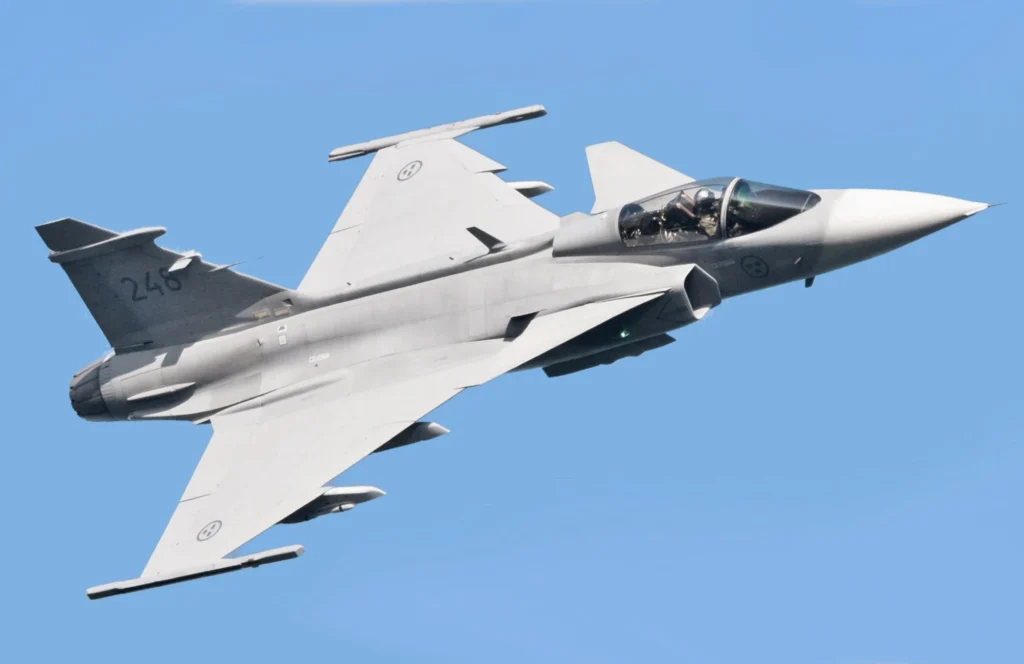
Embraer’s Local Production Milestone
The Gripen E fighter unveiled in Brazil forms part of a broader defense agreement signed in 2014. The contract includes the development and production of 36 aircraft, consisting of 28 single-seat Gripen E jets and eight two-seat Gripen F variants.
Production takes place at Embraer’s Gavião Peixoto facility, supported by both local and international suppliers. Aerostructures are also manufactured at Saab’s Brazilian unit, ensuring technology transfer and industrial growth within the country.
Before entering operational service, the newly produced aircraft will undergo rigorous ground and flight testing. Once cleared, it will join the Brazilian Air Force fleet stationed at Anápolis Air Base, where several Gripen jets are already active.
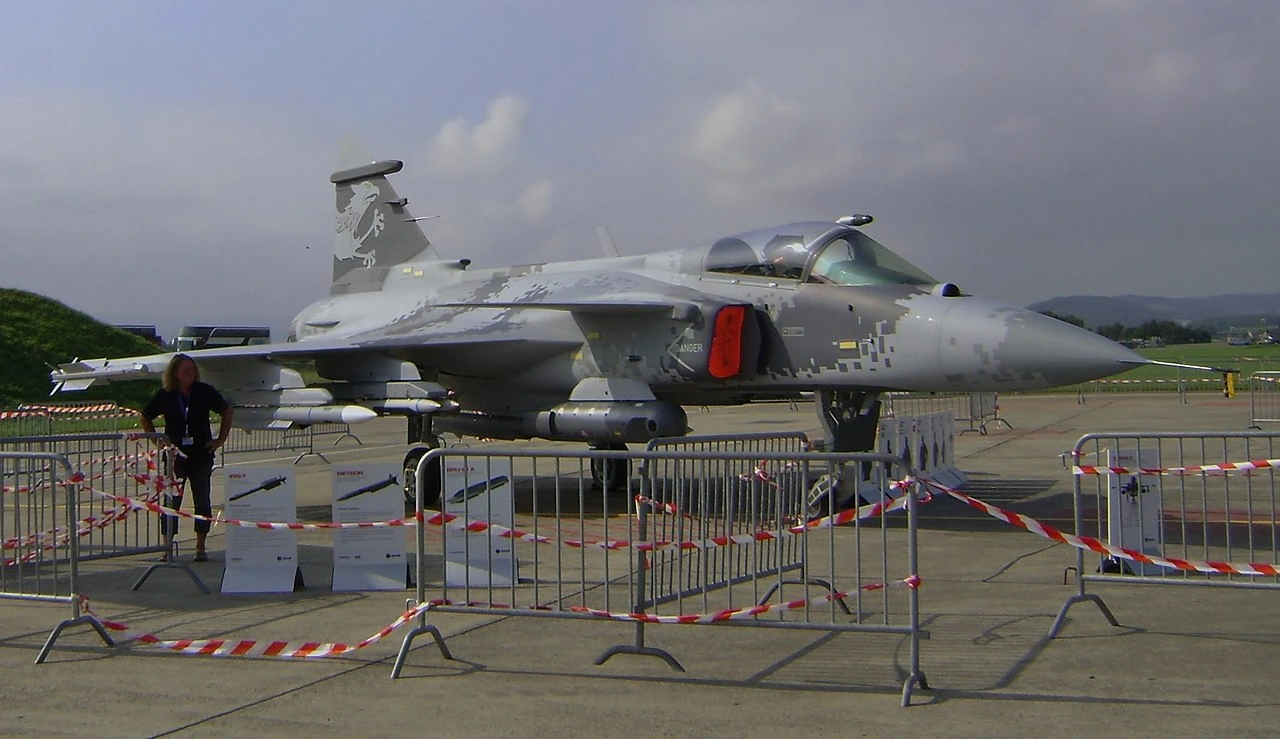
https://commons.wikimedia.org/wiki/File:Gripen_E_modell.JPG
Strategic Partnership for Gripen Program
The Gripen program reflects a long-term collaboration between Brazil and Sweden. Both countries have worked closely to develop industrial capabilities, share expertise, and strengthen defense cooperation.
Executives from Embraer and Saab emphasized that the project goes beyond aircraft production. It supports technological development, job creation, and positions Brazil as a potential export hub for advanced fighter jets.
The partnership also demonstrates a shared commitment to innovation and operational readiness. By building aircraft locally, Brazil enhances its strategic autonomy and reduces reliance on foreign manufacturing.
Gripen E Capabilities
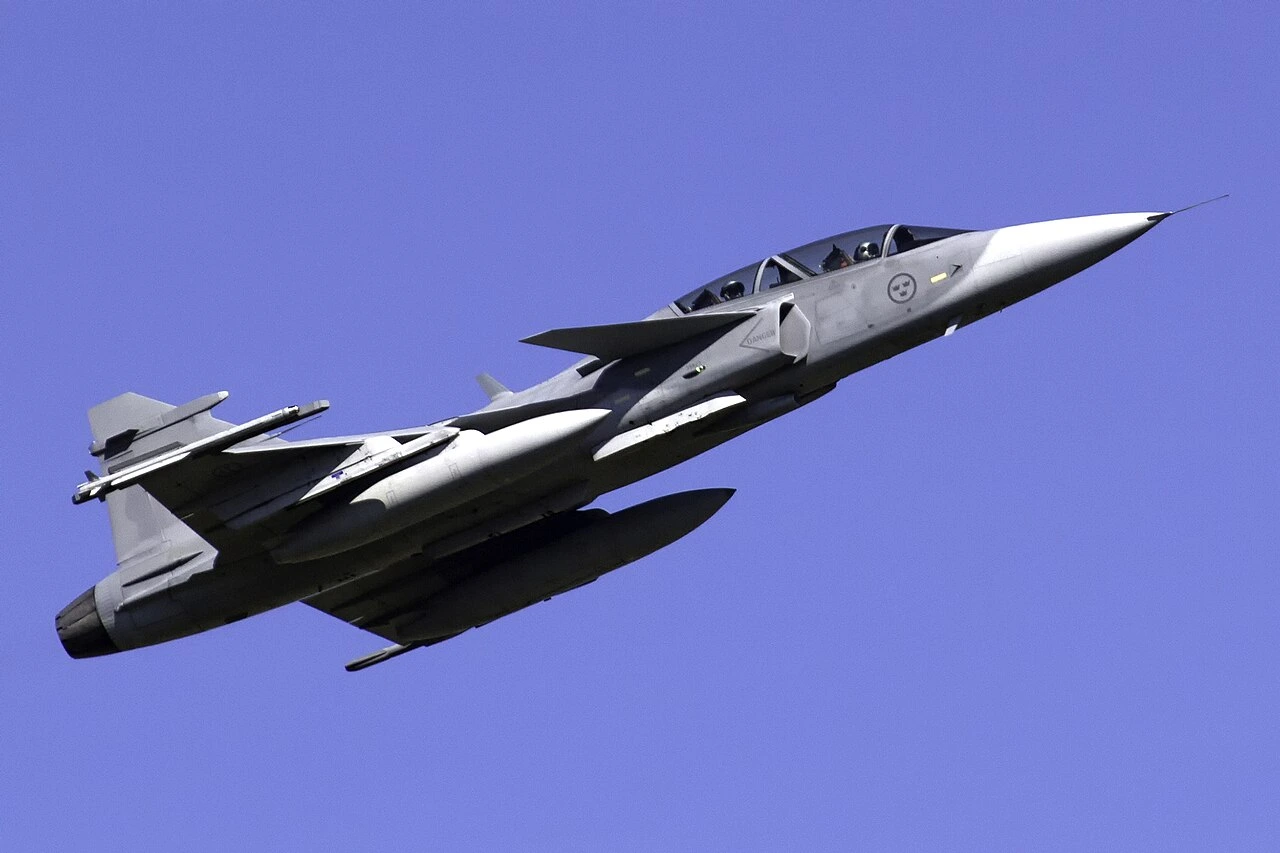
The Gripen E is regarded as one of the most advanced multi-role fighter jets in operation today. It is designed to perform a wide range of missions, including air defense, reconnaissance, and precision strike operations.
The aircraft integrates modern avionics, advanced sensors, and network-centric systems. These features allow it to share real-time data across platforms, improving situational awareness and mission coordination.
Additionally, the fighter offers strong performance in complex combat environments. Its sensor fusion capability enables pilots to process large amounts of information quickly, enhancing decision-making and threat response.
The Brazilian Air Force has already deployed Gripen jets in operational roles, including Quick Reaction Alert missions. These missions help safeguard national airspace and strengthen defense readiness across key regions.
ALSO READ: Embraer Launching Two New Praetor Business Jets Variants
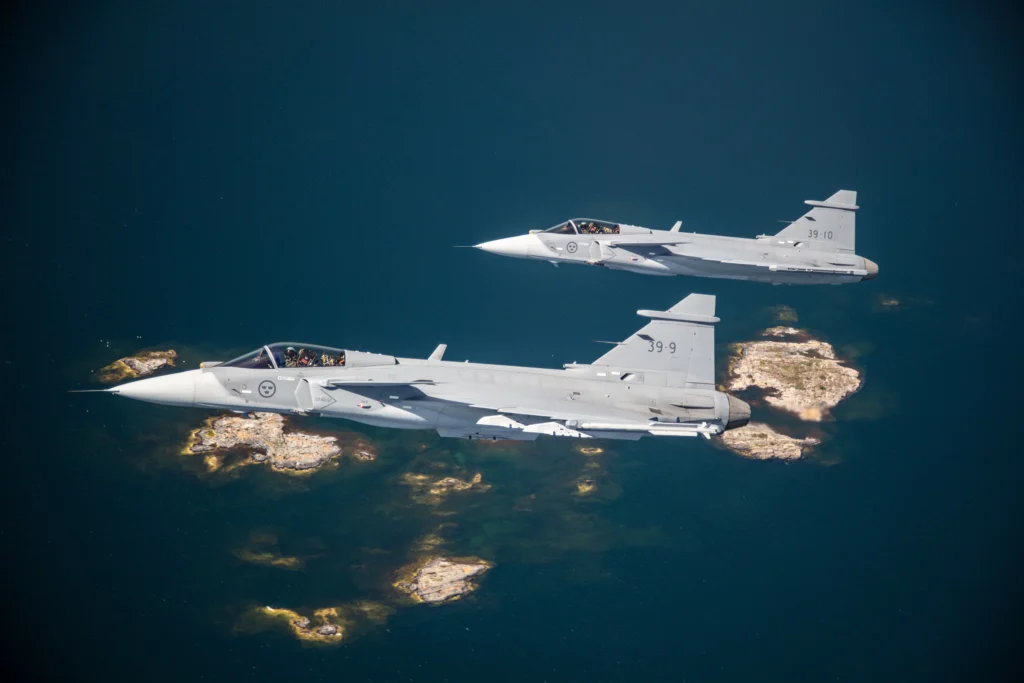
About Gripen E Fighter Jet
Saab’s Gripen E-series is a next-generation fighter aircraft engineered to counter advanced threats across complex, contested environments. Built for air forces managing wider territories or pronounced threat landscapes, the Gripen E delivers combat superiority through smart technology and rapid adaptability.
The aircraft has secured 117 orders across four nations, with Sweden ordering 60, Brazil 36, Colombia 17, and Thailand 4, establishing the Gripen E as a credible and growing force in modern air power.
Gripen E Fighter: Capabilities, Design, and Combat Advantage
Airframe and Performance
The Gripen E measures 15.2 meters in length with a wingspan of 8.6 meters and a maximum take-off weight of 16,500 kg. It is powered by the GE F414G engine, producing 98 kN of thrust. The aircraft features 10 hardpoints for weapons and pods, supporting a wide range of mission profiles including air-to-air, air-to-surface, and reconnaissance operations.
The twin-seat Gripen F variant shares identical dimensions and performance figures but extends its length to 15.9 meters to accommodate the second crew member. Both variants support air-to-air refuelling and achieve a combat turnaround time of just 15 to 25 minutes with a minimal ground crew.
Human Machine Collaboration and AI Integration
Saab designed the Gripen E as a direct extension of the pilot’s cognitive and physical capabilities through its Human Machine Collaboration (HMC) framework. The cockpit features a Wide Area Display (WAD) that presents mission data in a clear, user-friendly format to support rapid decision-making during complex operations.
Embedded AI capability assists pilots in selecting, launching, and guiding weapons in real time, coordinating actions across a tactical air unit. The intuitive HMC system reduces pilot workload significantly, allowing faster and more accurate decisions under pressure.
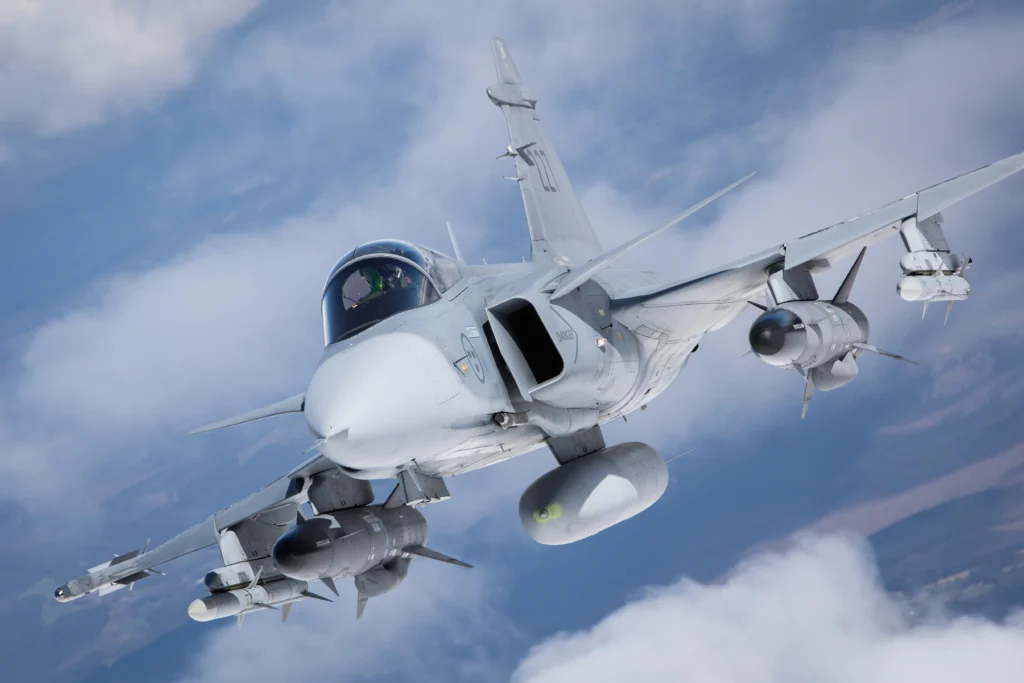
Sensor Suite and Situational Awareness
The Gripen E carries a new Active Electronically Scanned Array (AESA) radar combined with an Infrared Search and Track (IRST) system. Together, these sensors enable cross-domain data gathering and real-time sensor fusion across an entire tactical unit.
Information collected from all platforms and battlefield sensors is processed, linked, and presented with precision, giving pilots unmatched situational awareness. This allows Gripen E to see first, understand first, and act first, maintaining the decisive edge over adversaries in highly contested environments.
Electronic Warfare System
Gripen E features a fully integrated electronic warfare (EW) system with spherical coverage, offering both offensive and defensive capabilities simultaneously. The system performs real-time signal analysis, countermeasures management, and extensive Electronic Intelligence (ELINT) collection.
Operating as an electronic shield, the EW system can penetrate enemy anti-access zones, disrupt adversary radar and communications, and suppress threats without revealing the aircraft’s position. One aircraft in a unit can remain active while others go passive, collectively securing the first missile launch opportunity and the first kill.
Weapons and Lethality
With 10 hardpoints, the Gripen E can carry up to seven Meteor Beyond Visual Range Air-to-Air Missiles alongside two Within Visual Range IRIS-T missiles. This configuration delivers best-in-class long-range engagement capability while maintaining close-combat readiness.
The aircraft supports seamless integration of weapons and pods from global suppliers, reducing the complexity and cost typically associated with stores integration on competing platforms.
Avionics Architecture and Adaptability
Gripen E’s revolutionary avionics architecture separates mission-critical software from flight-critical systems. This design allows software updates to be completed within hours, enabling air forces to adapt their aircraft’s capabilities between Day 1 and Day 2 of a conflict without requiring recertification.
This approach eliminates the need for expensive and disruptive mid-life upgrades, ensuring continuous technological superiority as new threats and systems emerge. Saab’s model effectively renders traditional fighter generation classifications obsolete.
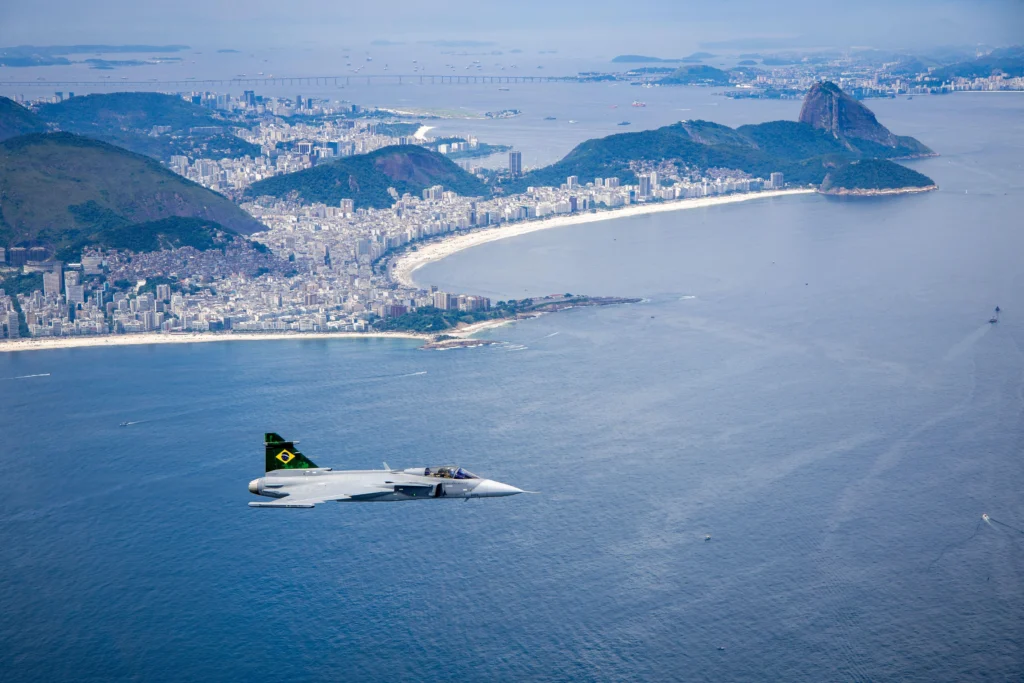
Operational Readiness and Maintainability
Gripen E is built for maximum availability in extreme operating conditions. It can function in harsh climates and operate from dispersed road bases or unprepared airstrips, requiring minimal ground support infrastructure.
Low maintenance requirements per flight hour mean the aircraft spends less time grounded and more time operational. A full air-to-air combat turnaround takes between 15 and 25 minutes, ensuring rapid re-engagement capability during active operations.
Interoperability
The Gripen E is designed to operate within allied joint force structures across air, ground, and sea domains. Its compatibility with common communication systems, standard datalinks, and a wide range of NATO-compatible weapons makes it a practical and cost-effective choice for interoperable multinational operations.
Stay tuned with us. Further, follow us on social media for the latest updates.
Join us on Telegram Group for the Latest Aviation Updates. Subsequently, follow us on Google News
