

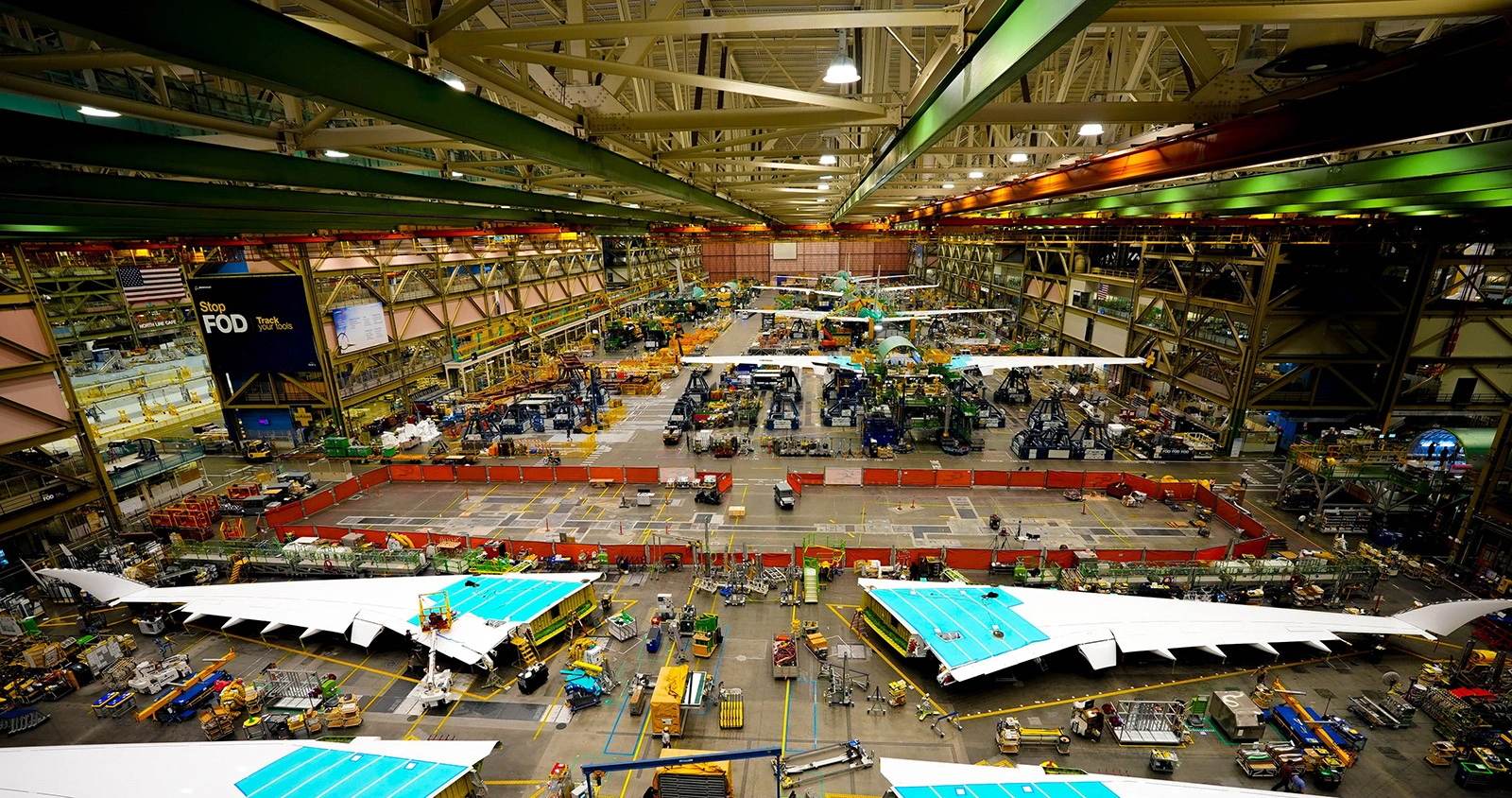
EVERETT- Boeing is advancing production of the 777-8 Freighter, marking key milestones at its Everett facility while reinforcing demand for next-generation cargo aircraft.
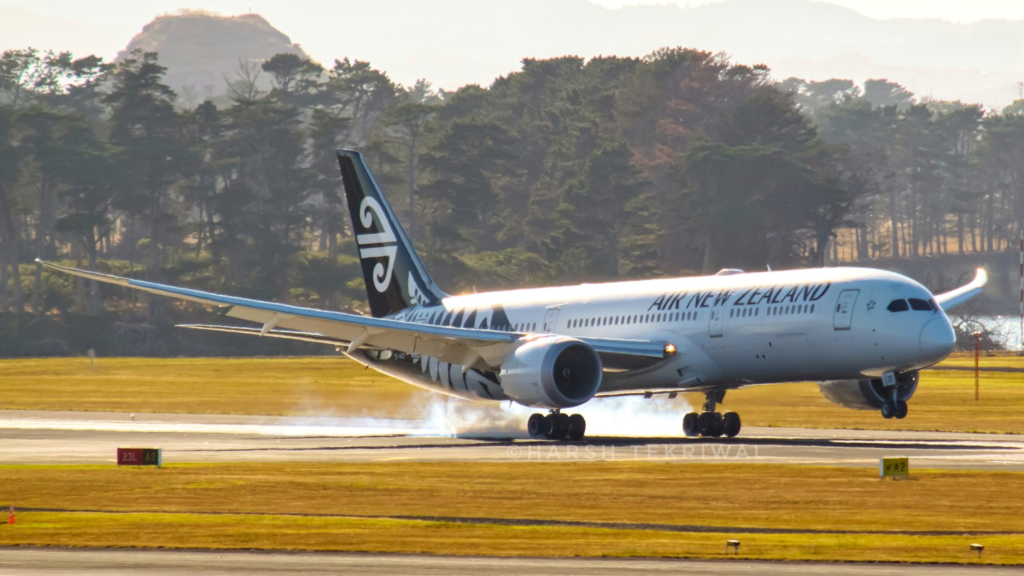
At the same time, upgrades to the 787 Dreamliner family are expanding payload and range capabilities for airlines such as Air New Zealand (NZ) operating from Auckland (AKL).
Boeing Begins 777-8 Freighter Assembly
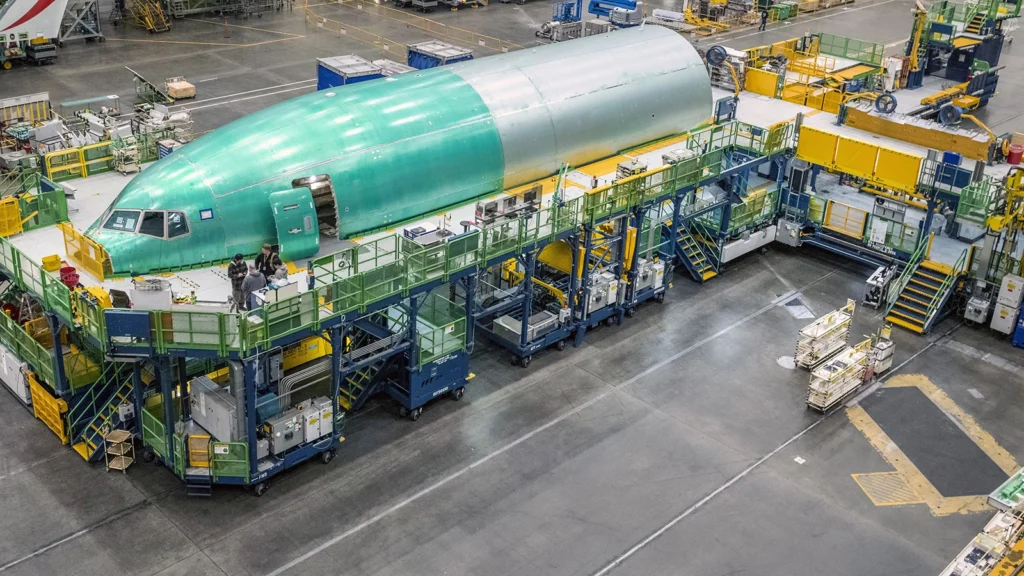
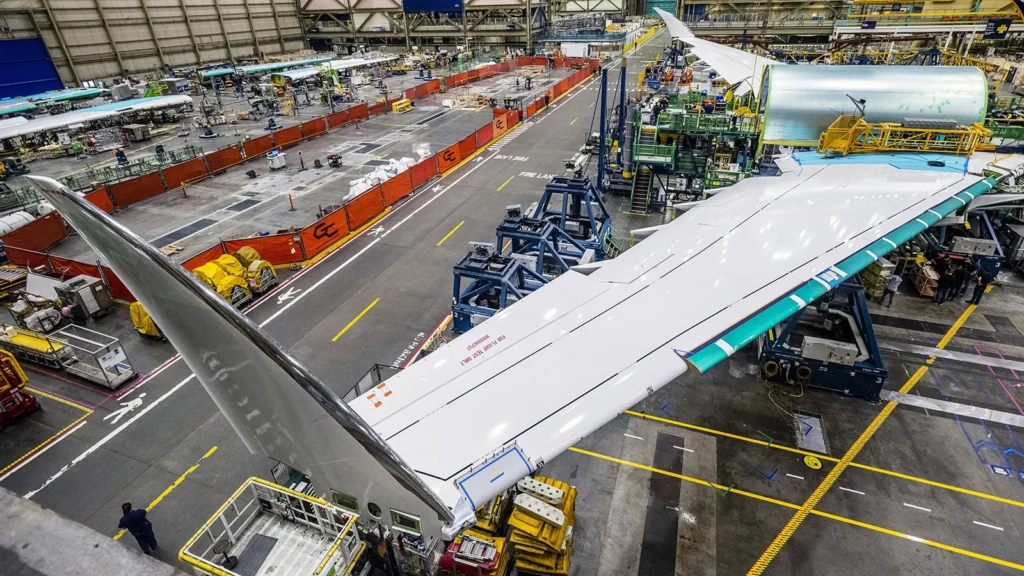
Boeing has reached a critical production stage for the 777-8 Freighter with the completion of the wing-body join at its Everett facility. This milestone involves attaching the aircraft’s composite wings, which span 235 feet, to the fuselage. It represents a major step in structural assembly and signals progress toward final production phases.
Teams are also installing systems and wiring in the forward and aft fuselage sections. These activities are essential to preparing the aircraft for testing and eventual delivery. The 777-8 Freighter program has already secured 68 orders globally, reflecting strong market demand for efficient, long-range cargo aircraft.
Engineers and production teams highlight that building a new aircraft introduces operational challenges, including coordination across supply chains and adapting to new installation procedures. However, ongoing experience is expected to improve efficiency as production scales.
Key Milestone in 777-8 Development
The wing-body join is one of the most complex stages in aircraft manufacturing. It requires precise alignment and integration of structural components to ensure aerodynamic performance and structural integrity.
The 777-8 Freighter builds on the legacy of the 777 Freighter, offering improved efficiency and payload capability. Boeing positions this aircraft as a critical solution for cargo operators seeking long-term operational flexibility and cost efficiency.
Production teams emphasize collaboration as a key factor in overcoming early-stage challenges. As assembly processes mature, workflow optimization is expected to reduce build times and improve consistency.
ALSO READ: FAA Orders Boeing 787 Fix After Radio Signal Flaw, US Airlines Face $8 Million Repair Bill
FAA Certifies Higher Takeoff Weight for 787 Dreamliner
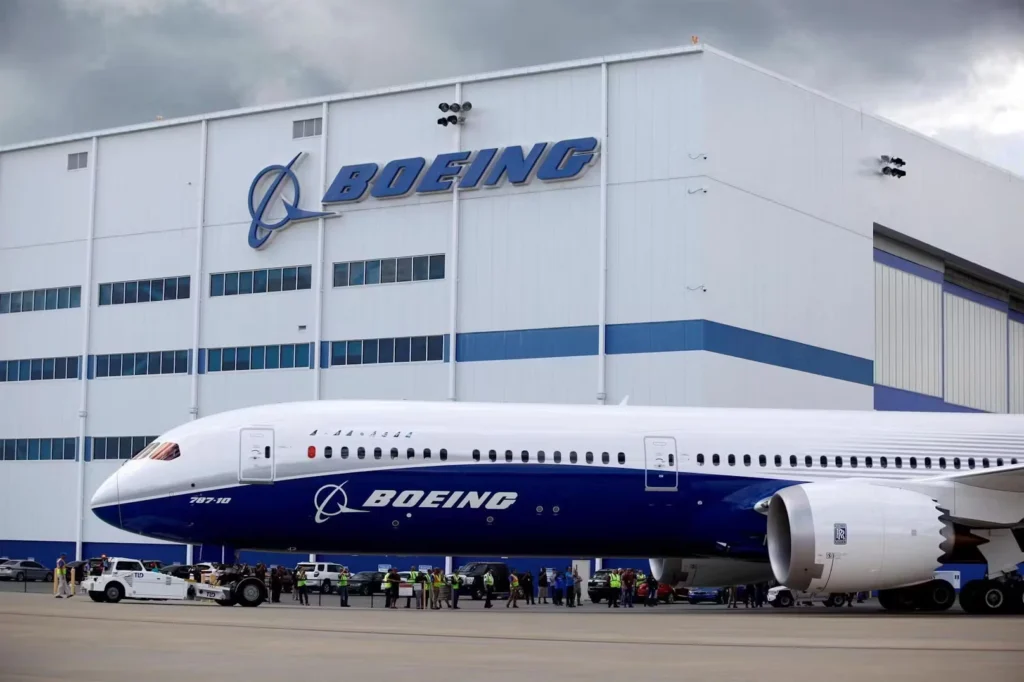
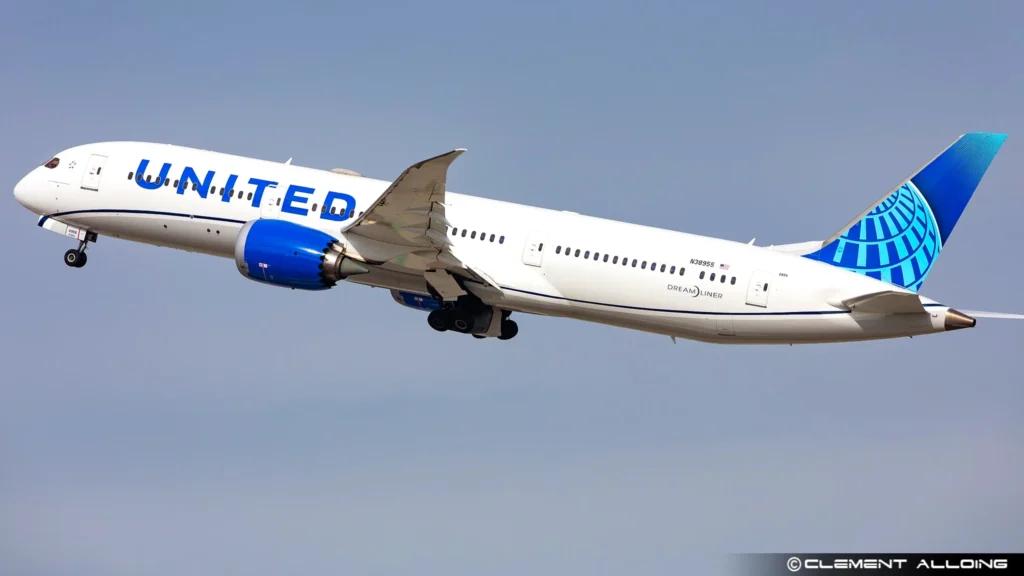
The U.S. Federal Aviation Administration (FAA) has certified an increased maximum takeoff weight for the 787-9 and 787-10. This enhancement allows airlines to either carry more cargo or extend flight range, depending on operational needs.
All 787-9 and 787-10 aircraft built from December 2025 onward are structurally capable of supporting the higher weight. Airlines can choose to activate this capability at delivery or later, depending on network and cost considerations.

Performance Gains for Airlines
The increased maximum takeoff weight delivers measurable performance improvements:
- 787-9 gains approximately 10,000 pounds, enabling around three metric tons of additional payload or over 300 nautical miles of extra range
- 787-10 gains approximately 14,000 pounds, enabling around five metric tons of additional payload or over 400 nautical miles of extra range
These enhancements maintain the Dreamliner’s fuel efficiency advantage while improving operational flexibility. Airlines can optimize route planning, expand capacity, and improve profitability without compromising efficiency.
Airline Adoption and Strategic Impact
Air New Zealand (NZ) is among the first carriers preparing to operate the upgraded 787-9.
The airline plans to use the added capability to support ultra-long-haul routes and increase payload capacity, aligning with its network expansion strategy.
Since entering service, the 787 family has enabled more than 530 new nonstop routes worldwide. The increased takeoff weight further expands route possibilities, allowing airlines to serve underserved markets and improve global connectivity.
Certification and Long-Term Evolution
The certification of increased takeoff weight reflects extensive engineering validation and regulatory coordination. Boeing conducted a detailed analysis to ensure structural performance, safety, and system reliability at higher operating weights.
The upgrade comes more than a decade after the 787 entered service, demonstrating Boeing’s ongoing approach to product development. With over 1,250 Dreamliners delivered, continuous enhancements ensure the platform remains competitive and aligned with evolving airline requirements.
Stay tuned with us. Further, follow us on social media for the latest updates.
Join us on Telegram Group for the Latest Aviation Updates. Subsequently, follow us on Google News
