


DELHI- Air India (AI) plans to implement a strict health and fitness compliance policy for its cabin crew, linking BMI levels to active duty status. The move aims to standardize fitness benchmarks across operations at its primary hub, Indira Gandhi International Airport, Delhi (DEL).
The policy, effective May 1, will apply to both active crew and trainees. It introduces defined BMI thresholds and outlines consequences such as derostering and loss of pay for non-compliance.

Air India Cabin Crew Weight Restrictions
Air India has formalized Body Mass Index as the core metric to assess cabin crew fitness. A BMI range of 18 to 24.9 is classified as normal and represents the desired standard for all crew members.
Crew members with a BMI below 18 fall under the underweight category. These cases may still be considered acceptable if the individual clears a medical evaluation and functional fitness assessment. The airline has indicated that operational capability remains a key factor in such decisions.
A BMI between 25 and 29.9 is categorized as overweight. This range is conditionally acceptable, provided the crew member successfully completes the required functional assessment. The emphasis remains on the ability to perform onboard duties effectively.
However, a BMI of 30 or above is classified as obese and is not considered acceptable under the policy. This category triggers immediate administrative action.

Operational Impact and Compliance Measures
Cabin crew identified as underweight or overweight will be removed from active rosters until they pass the functional assessment. Failure to meet assessment criteria will result in placement under loss of pay status until compliance is achieved.
For crew members categorized as obese, the policy mandates immediate derostering along with loss of pay. These individuals must return to an acceptable BMI range within a defined timeframe set by the airline.
Air India has also stated that continued failure to meet BMI standards may lead to corrective action. While specific disciplinary steps are not detailed, the policy signals stricter enforcement compared to earlier guidelines.

Policy Objectives and Industry Context
The airline describes the initiative as a preparatory step toward implementing enhanced fitness standards in the future. The current phase focuses on awareness, lifestyle improvement, and familiarization with compliance procedures.
This policy comes as Air India continues its restructuring under the Tata Group, which acquired the airline in January 2022. Over the past four years, the airline has phased out a large portion of its legacy workforce and is aligning operations with global service and safety standards.
By integrating measurable fitness criteria, Air India aims to ensure that cabin crew maintain the physical capability required for safety-critical roles, including emergency response and passenger assistance.
Air India Cancels 2,500 West Asia Flights
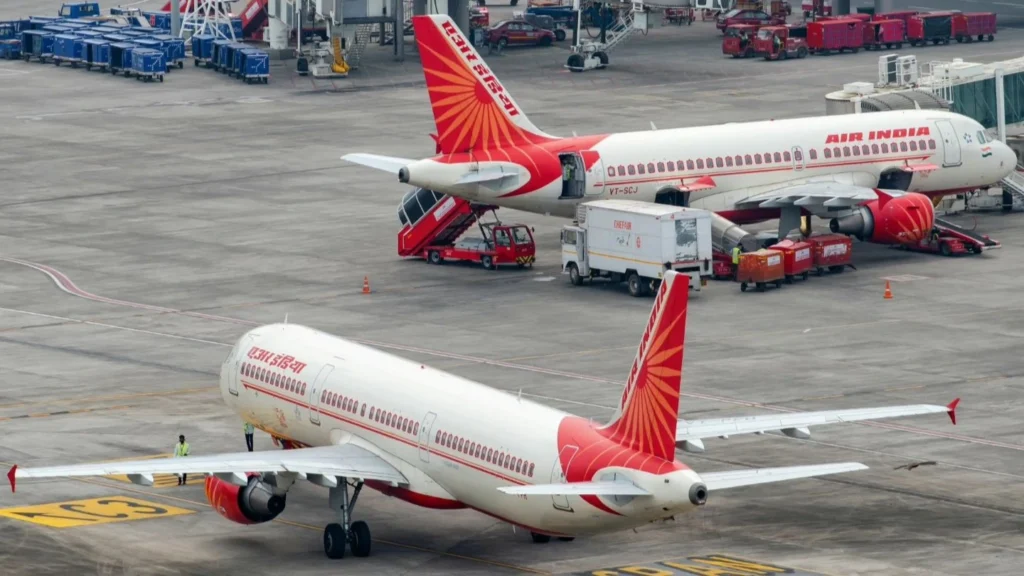
Air India has cancelled nearly 2,500 flights to West Asia over three weeks, citing safety risks linked to the ongoing Iran conflict. The airline is currently operating at only 30% capacity across affected routes.
The disruption spans key Middle East hubs such as Dubai (DXB), Doha (DOH), and Tel Aviv (TLV), where airspace closures and safety concerns have forced major schedule changes.
Air India has significantly reduced its operations to West Asia as geopolitical tensions continue to disrupt aviation activity in the region. According to CEO Campbell Wilson, the airline’s schedule has become highly unstable due to restricted airspace and airport closures.
Over the past three weeks, approximately 2,500 flights have been cancelled. Current operations stand at just 30% of normal capacity, reflecting the severity of the disruption. The airline has prioritized safety, avoiding routes that fall outside acceptable risk thresholds.
Wilson noted that Air India’s exposure to the Middle East is substantial, making it particularly vulnerable to regional instability. The airline operates extensive routes connecting India with Gulf countries, Europe, and beyond through this corridor.
Rising Fuel Costs and Financial Pressure
The conflict has triggered a sharp increase in jet fuel prices, which have more than doubled in recent weeks. This rise is expected to impact financial performance starting next month.
To manage costs, Air India has introduced a fuel surcharge on new ticket bookings. However, the airline faces pricing limitations, as higher fares could reduce passenger demand. This creates a delicate balance between cost recovery and maintaining load factors.
Longer Flight Paths Impact Global Routes
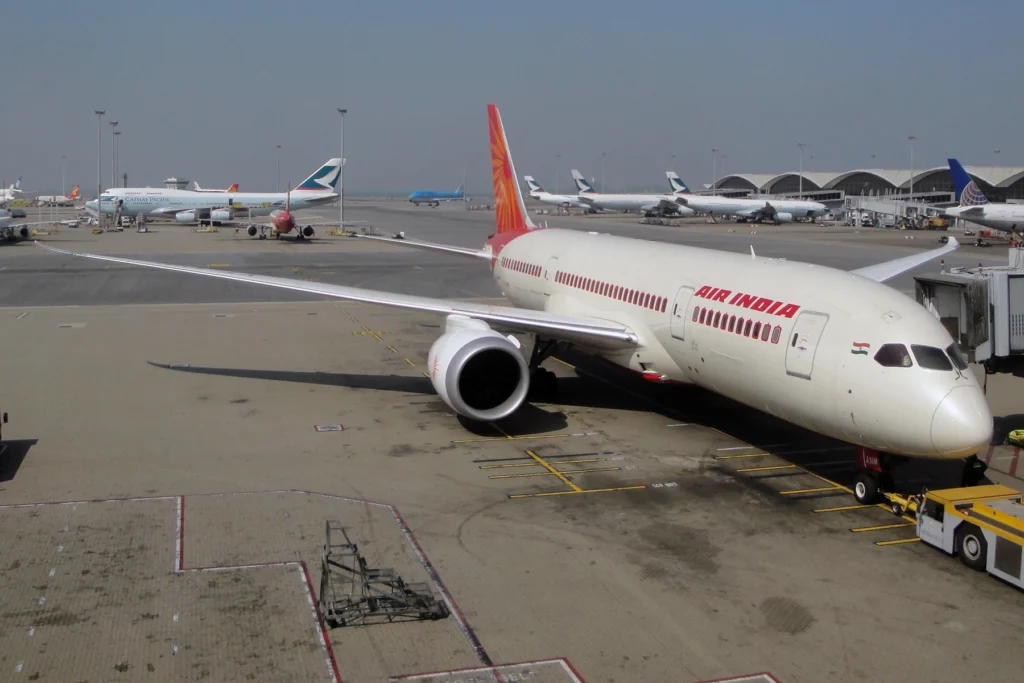
Flights to Europe, the United Kingdom, and North America are now taking longer routes to avoid restricted airspace. These detours increase both fuel consumption and travel time.
Air India had already been operating extended routes following earlier geopolitical events. The current situation has further compounded operational complexity and cost pressures.
Shifting Demand Patterns Across Markets
While demand in the Middle East corridor has weakened, Air India is seeing pockets of growth in Europe and North America. The airline is deploying additional capacity in these markets to offset losses elsewhere.
This strategy contrasts with some global carriers that are reducing operations due to rising fuel costs. Air India is attempting to balance network disruptions with emerging demand opportunities.
Operational Challenges and Safety Focus
Air India teams, especially those stationed in affected regions, continue to monitor the situation closely. Operations are being adjusted in real time as conditions evolve.
The airline has emphasized that safety remains the top priority. Internal teams across airports, flight operations, and customer service are working to manage disruptions and maintain service standards.
Wilson acknowledged the strain on employees and credited the staff for maintaining operational stability during a highly volatile period.
Stay tuned with us. Further, follow us on social media for the latest updates.
Join us on Telegram Group for the Latest Aviation Updates. Subsequently, follow us on Google News
