

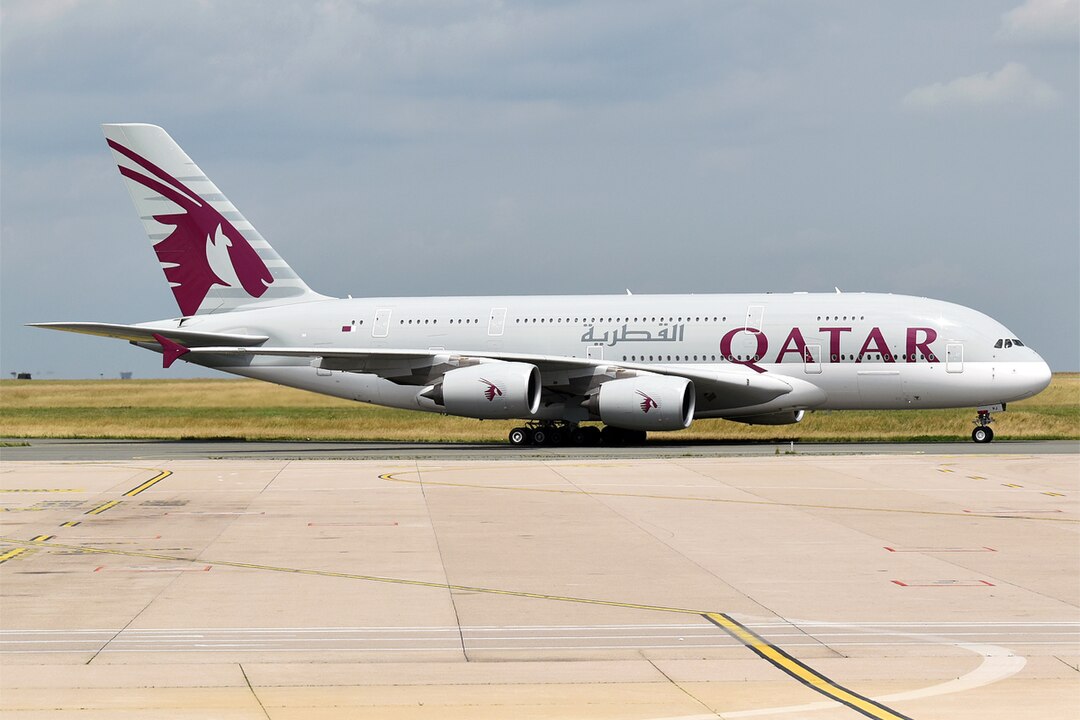
DOHA— Qatar Airways (QR) has gradually scaled back the deployment of its Airbus A380 fleet as the airline reshapes its long-haul network and modernizes operations.
The Doha-based carrier once used the double-decker aircraft on several major international routes from Hamad International Airport (DOH), but multiple destinations have now lost regular A380 service.
Data comparing historical operations from 2014 to 2025 with the airline’s planned 2026 schedule shows that several cities are no longer served by the superjumbo.
Routes connecting Doha with Perth Airport (PER), Guangzhou Baiyun International Airport (CAN), Melbourne Airport (MEL), Frankfurt Airport (FRA), and Hartsfield–Jackson Atlanta International Airport (ATL) previously saw A380 flights but have since transitioned to smaller aircraft.
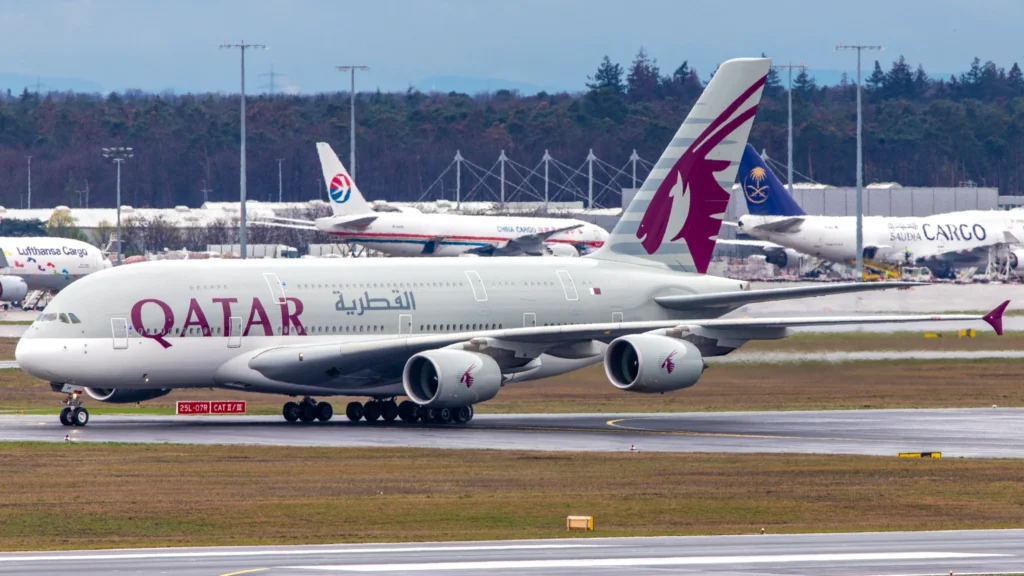
Qatar’s A380 Routes Dropped
Qatar Airways introduced the Airbus A380 several years after other major global airlines. The carrier received its first aircraft in September 2014 and eventually operated a fleet of ten superjumbos configured with 517 seats.
Over the past decade, the aircraft served multiple long-haul routes from Doha. However, scheduling changes and fleet strategy adjustments have resulted in the removal of the A380 from five specific routes.
According to Simple Flying, the routes that no longer see Airbus A380 operations include:
- Perth – served with the aircraft between 2018 and 2020, and again from 2022 to 2025
- Guangzhou – operated with the A380 from 2016 until 2020
- Melbourne – served by the aircraft between 2017 and 2020
- Frankfurt – briefly operated from 2019 to 2020
- Atlanta – hosted a one-time A380 flight on June 1, 2016
The Atlanta flight was a special one-off service marking the launch of the airline’s route to the world’s busiest airport. Such deployments are occasionally used by airlines to celebrate milestone route inaugurations.
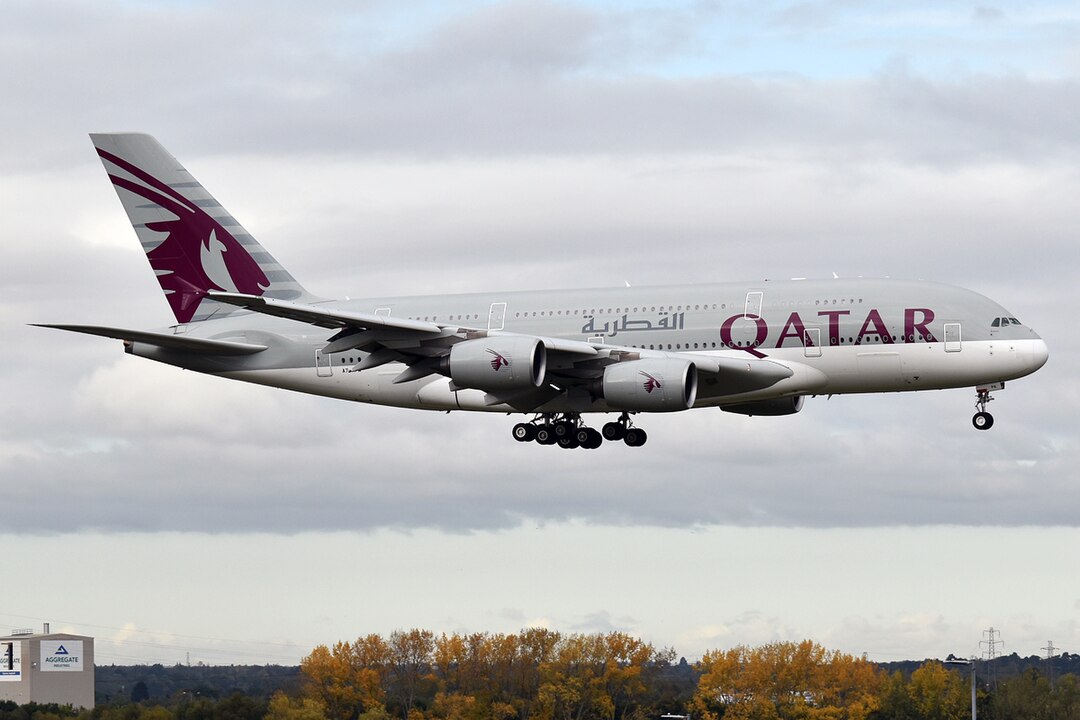
History of Qatar’s Perth A380 Operations
Among the discontinued routes, Perth recorded the highest number of Airbus A380 operations. Qatar Airways began serving Western Australia in 2012 using Boeing 777 aircraft before upgrading the route to the larger superjumbo in May 2018.
The 5,031-nautical-mile journey between Doha and Perth became one of the airline’s most notable long-haul A380 services. On most days, the 517-seat aircraft operated daily flights, offering first-class suites, a premium business cabin, and a spacious economy section.
In June 2025, the airline replaced the A380 with the Boeing 777-300ER. The smaller aircraft offers 354 seats and removes first class from the route, though the number of business class seats decreased only slightly.
The change coincided with Virgin Australia launching Perth–Doha flights using Qatar Airways-operated Boeing 777 aircraft. The partnership increased overall capacity between the cities while allowing the airline to better align aircraft size with passenger demand.
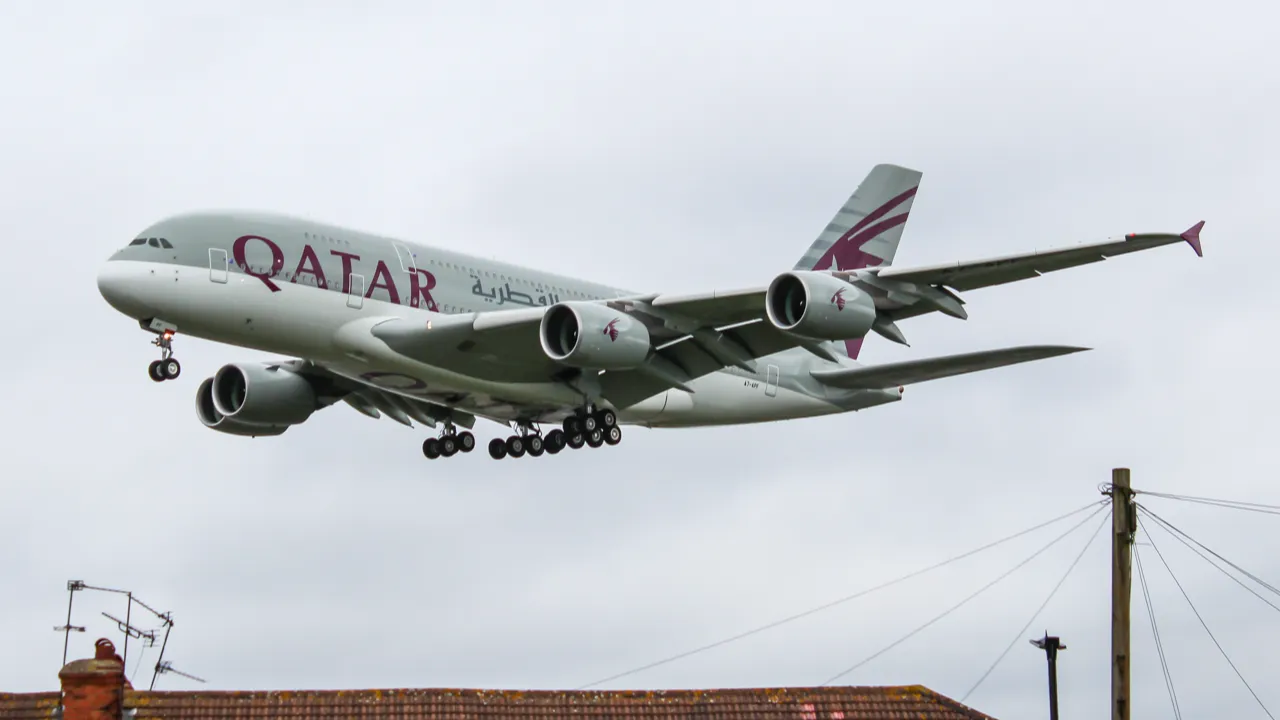
https://commons.wikimedia.org/wiki/File:A7-APF_A380_Qatar_(34010862996).jpg
Frankfurt Service Changes
Frankfurt was the only European destination that permanently lost Airbus A380 service in the airline’s network restructuring. Qatar Airways operated the aircraft daily between Doha and the German hub from March 2019 until March 2020.
The route ended its superjumbo operations when global travel demand collapsed during the pandemic. Unlike other destinations such as London Heathrow and Paris Charles de Gaulle, the A380 has not returned to Frankfurt.
The aircraft once played a notable role at Frankfurt Airport. In 2019, the airport ranked among the busiest A380 hubs worldwide, hosting operations from several airlines, including Emirates, Lufthansa, Singapore Airlines, Thai Airways, and Qatar Airways.
Today, however, fewer airlines operate the type globally, and many carriers have shifted toward smaller, more fuel-efficient widebody aircraft. Qatar Airways’ decision to redeploy its fleet reflects this broader industry trend toward flexibility and efficiency.
Stay tuned with us. Further, follow us on social media for the latest updates.
Join us on Telegram Group for the Latest Aviation Updates. Subsequently, follow us on Google News
