

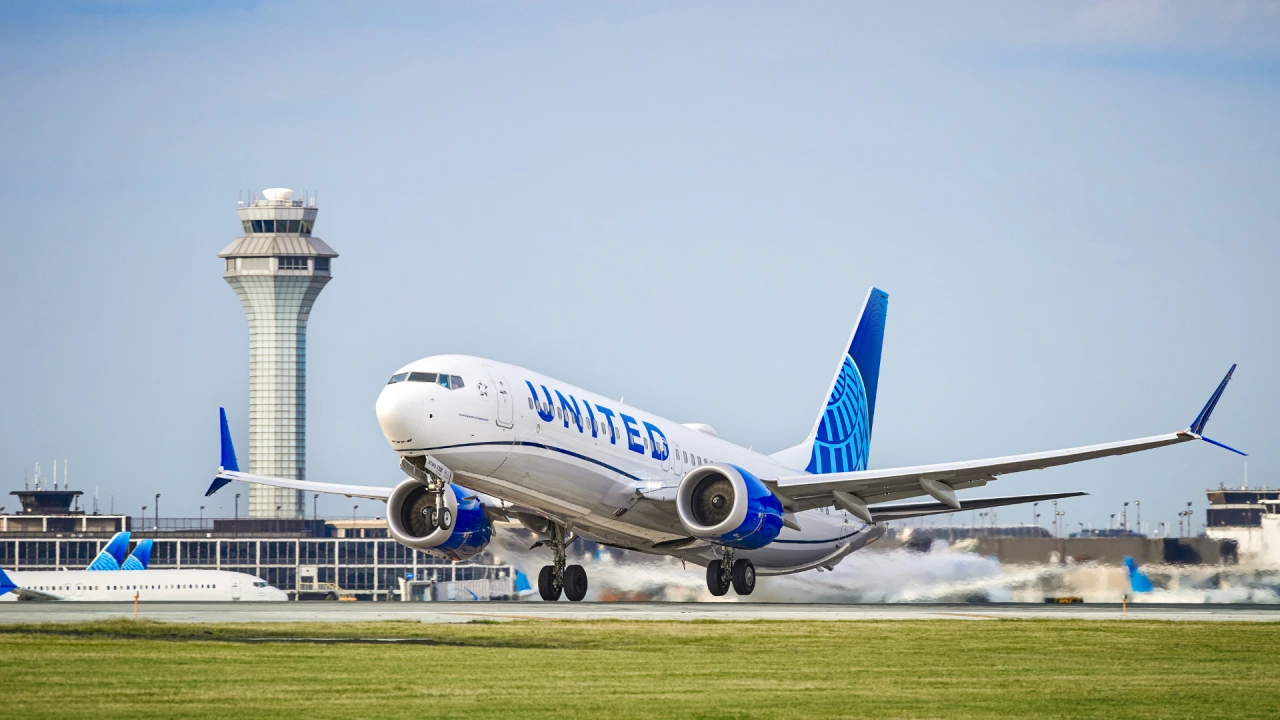
CHICAGO- United Airlines (UA) has transformed its operations and strategy over the past decade, moving from a period of instability to an aggressive growth phase.
Internal slides from an employee presentation highlight improvements in fleet size, network reach, and premium seating.
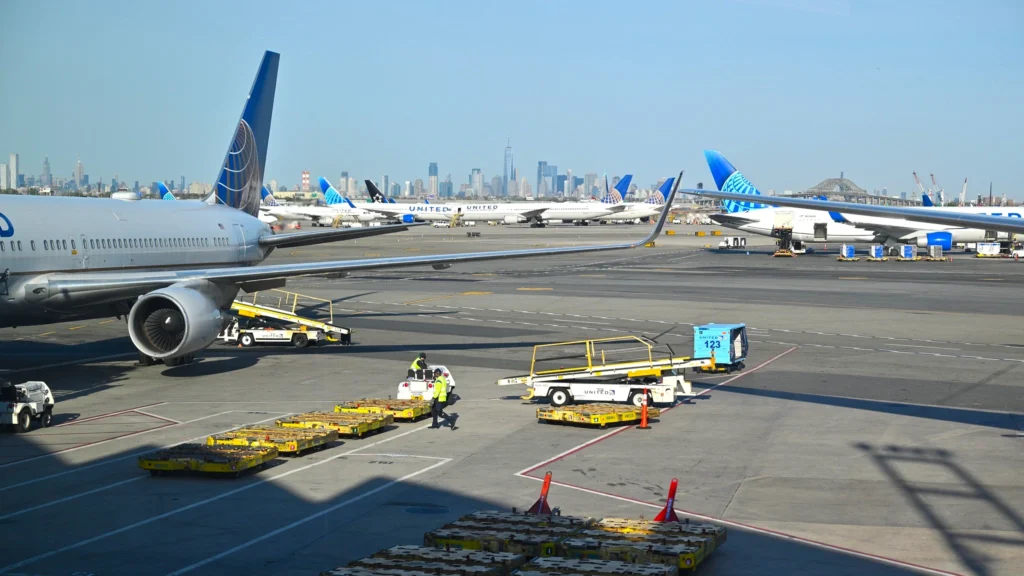
The airline operates major hubs including Chicago O’Hare International Airport (ORD) and Newark Liberty International Airport (EWR).
The presentation shows strong performance improvements across several metrics, though different base years are used in comparisons, which makes the gains appear larger.
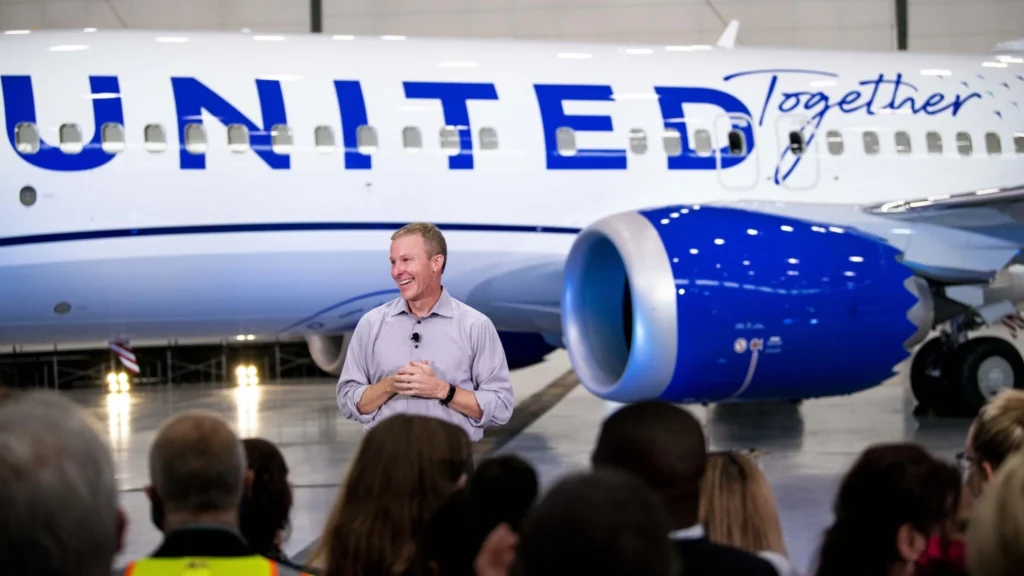
United Airlines Leaked Internal Slides
During the early 2010s, United struggled with declining customer satisfaction and operational challenges.
The airline faced criticism for aging aircraft interiors, low employee morale, and a shrinking route network. Under former CEO Jeff Smisek, the airline reduced its domestic presence and cut approximately 1,200 flights after the Continental merger.
Leadership changes marked the beginning of a turnaround. When Oscar Munoz became CEO in 2015, he focused on improving employee engagement and rebuilding trust within the workforce.
These changes influenced customer service and internal culture while supporting product improvements across the airline’s cabins.
A major strategic shift occurred after Scott Kirby joined the airline as president. United had previously reduced its network and avoided direct competition.
In some cases, the airline operated regional jets on busy routes such as New York to Atlanta. Kirby introduced a growth strategy that rebuilt the network and used existing assets more efficiently.
The expansion plan initially faced criticism from Wall Street analysts. However, the strategy aimed to increase the airline’s relevance in markets beyond its hubs.
Greater market presence supported loyalty program growth and encouraged more customers to adopt United co-branded credit cards, which generate high-margin revenue.
Pandemic Strategy and Product Investment
During the COVID-19 pandemic, United leaned into growth while many airlines reduced long-term investment. The airline placed large aircraft orders and announced a major product refresh program that included new cabin interiors and improved onboard technology.
United also installed seatback entertainment screens across much of its fleet and introduced Starlink satellite internet through a partnership with SpaceX.
While the connectivity upgrade improved passenger experience, the airline also planned to monetize the screens and connectivity through targeted premium advertising.
These initiatives were designed to increase customer satisfaction and open additional revenue streams while supporting the airline’s broader premium strategy.
Massive Fleet Renewal Program
United is executing one of the largest fleet renewal efforts in the aviation industry. At the end of the most recent reporting period, the airline’s firm aircraft orders included:
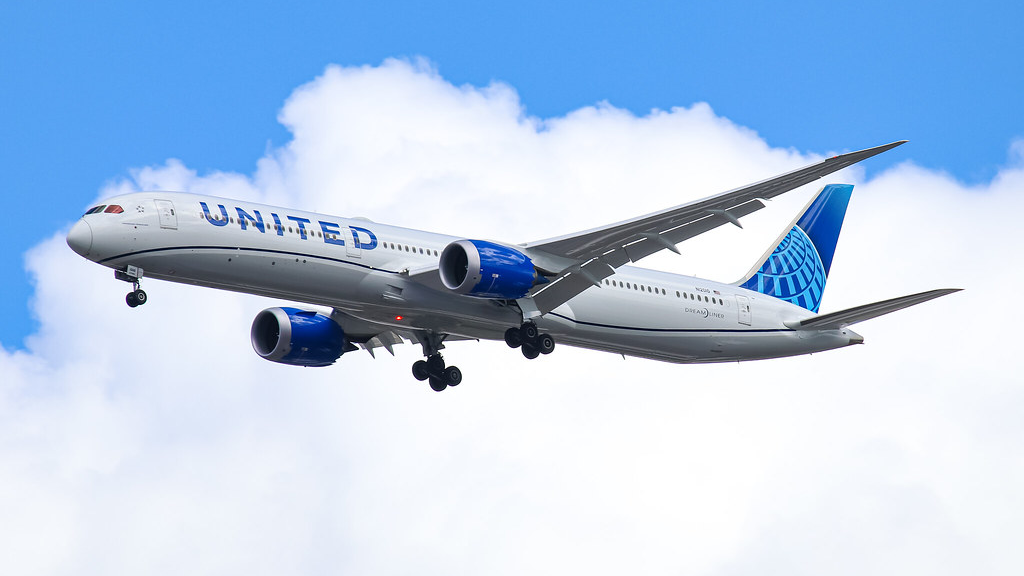
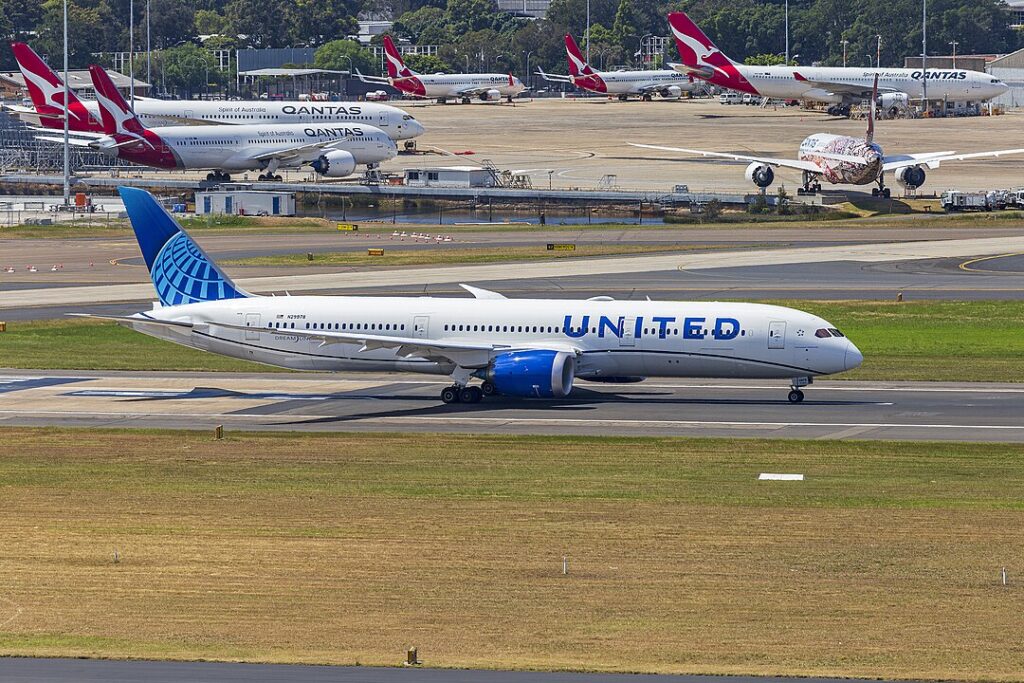
- 150 Boeing 787 Dreamliner
- 270 Boeing 737 MAX
- 119 Airbus A321neo
- 50 Airbus A321XLR
- 45 Airbus A350 scheduled for delivery after 2027
The airline’s United Next program anticipates more than 630 aircraft deliveries through 2034. However, internal slides highlighting the fleet expansion omit the Airbus A350 order, even though those aircraft remain part of the long-term fleet plan.
Aircraft Upsizing and Premium Seat Growth
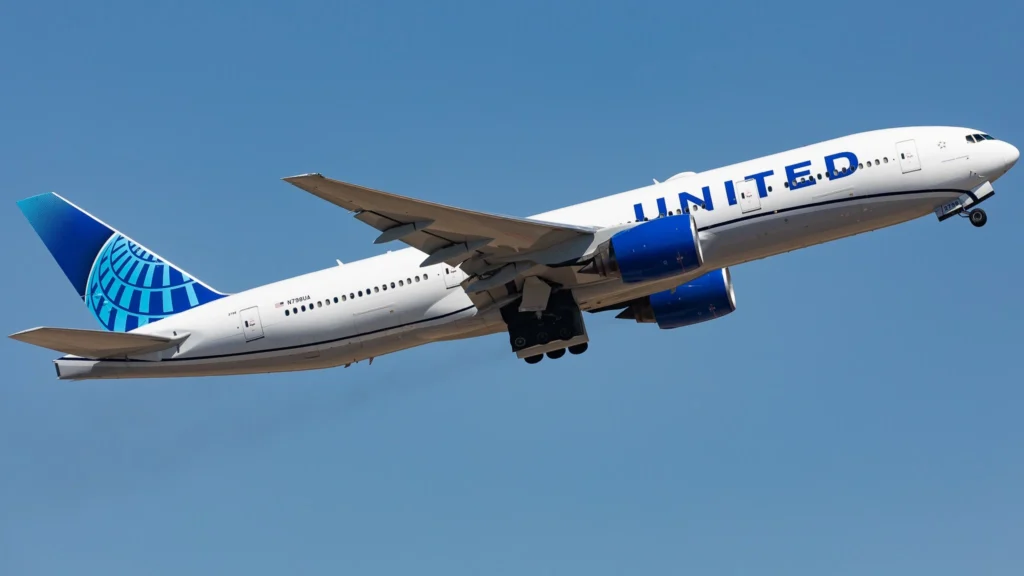
United’s strategy includes increasing seats per domestic departure by nearly 30 percent. The airline also plans to expand premium seating capacity by about 75 percent by 2026.
Much of this growth results from aircraft upgauging. Smaller regional jets are being replaced with larger mainline aircraft that offer more seats and additional premium cabins. This change increases capacity per flight and expands premium availability.
However, increased seats per flight do not necessarily mean the airline has gained market share. Instead, the strategy focuses on deploying larger aircraft and improving cabin configurations across existing routes.
Polaris Cabin and Product Competition
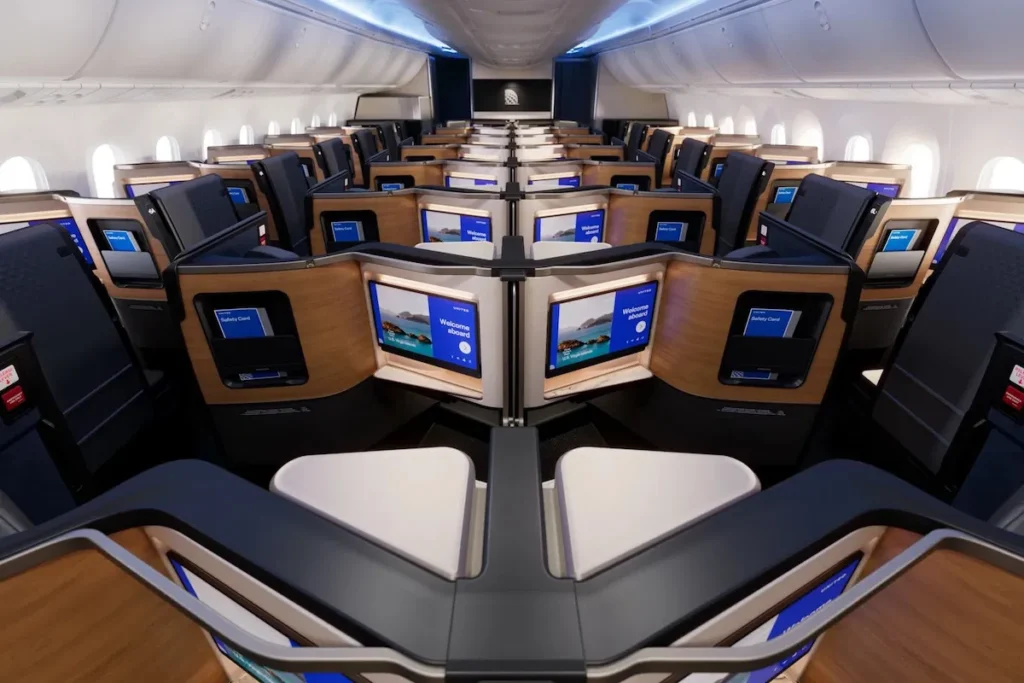
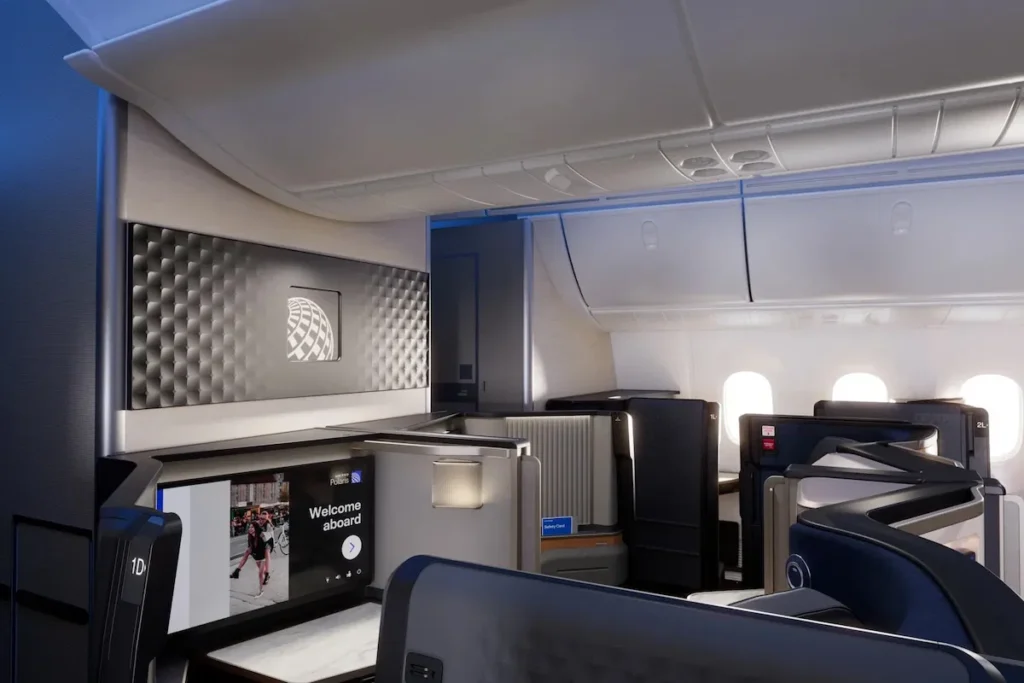
United introduced its Polaris business class seat in 2016. The design provides lie-flat seating and direct aisle access, allowing the airline to offer a competitive long-haul product compared with earlier cabin layouts.
The Polaris seat design originated during the cost-reduction period of the Smisek era. The cabin was designed to fit within the same footprint as the airline’s previous six-abreast business class configuration on the Boeing 777.
While the seat improved United’s competitiveness at launch, rival products from Delta Air Lines (DL) and American Airlines (AA) have since advanced further.
United plans to introduce an upgraded Polaris seat with privacy doors on select new aircraft. These improvements will appear primarily on newly delivered planes rather than across the entire existing fleet.
Hub Market Position and Competitive Landscape
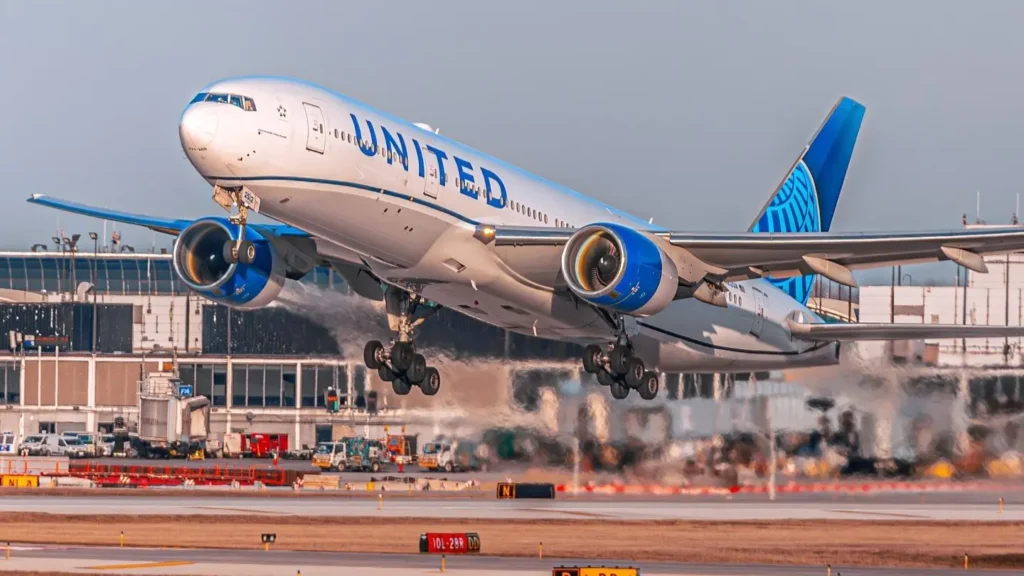
United’s internal slides claim the airline holds the number-one position in six of its seven hub markets. The airline operates large hubs at airports such as:
- Denver International Airport (DEN)
- San Francisco International Airport (SFO)
- Washington Dulles International Airport (IAD)
However, some comparisons rely on broader geographic definitions. Newark, for example, is sometimes grouped with the wider New York market even though slot-restricted airports such as John F. Kennedy International Airport (JFK) and LaGuardia Airport (LGA) operate under different competitive conditions.
Similarly, the presentation refers to the “Bay Area” market even though United was already the dominant airline at San Francisco before the recent expansion.
Changes in competitor strategy also influence these results. American Airlines reduced aircraft capacity during the pandemic, limiting its ability to expand operations in Chicago and Los Angeles.
At Washington, American’s operations at Ronald Reagan Washington National Airport (DCA) face runway and slot constraints that prevent widebody operations.
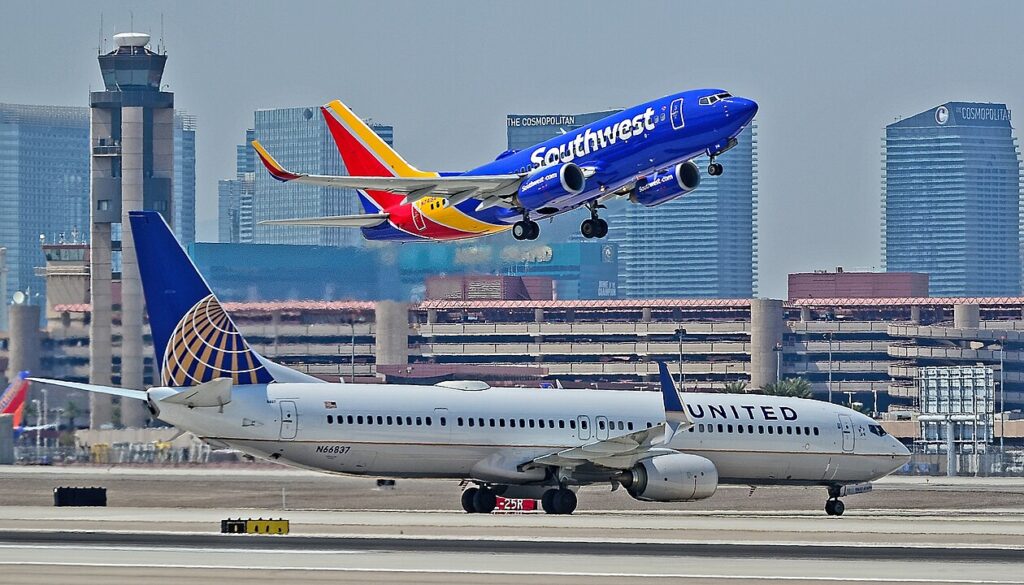
United’s growth at Denver also coincided with operational challenges faced by low-cost carriers such as Southwest Airlines (WN) and Frontier Airlines (F9), which previously competed heavily in the market.
Premium Growth Compared With Competitors
United’s internal slides state that the airline is expanding premium seating faster than competitors. This claim partly reflects timing rather than absolute leadership.
United began expanding premium capacity from a lower baseline. Meanwhile, Delta’s future seat growth is heavily focused on premium cabins, and American Airlines has recently started increasing premium seating across its fleet.
As a result, United’s rate of increase appears larger even though the airline may not offer a more premium overall product compared with its competitors.

Loyalty Revenue and Credit Card Strategy
Co-branded credit cards remain a major source of airline profitability. United’s partnership with JPMorgan Chase generated approximately $3.2 billion in partner-related operating revenue during the most recent reporting year.
Although United improved the terms of its credit card agreement in 2020, the deal still trails those held by Delta and American in overall financial value. However, United has surpassed American Airlines in total credit card spending.
The airline has adjusted its loyalty program structure to encourage card adoption. Non-cardmembers often face higher mileage redemption prices for award tickets, while cardholders receive more favorable pricing and mileage benefits.
Baseline Selection and Slide Interpretation
Internal slides in the presentation use multiple base years to demonstrate improvement. Some comparisons use 2019 as the final pre-pandemic benchmark. Others use 2016 as the starting point.
The year 2016 represents one of the airline’s weakest operational periods. The company had recently cut approximately 1,200 flights and had not yet begun large-scale network rebuilding. Using that year as a baseline creates a more dramatic before-and-after comparison.
According to View from the Wing, the airline’s operational improvements are real, but the presentation’s choice of baseline years amplifies the perceived scale of progress.
United’s Current Industry Position
United Airlines has improved significantly over the past decade. The airline expanded its fleet, rebuilt its domestic network, and introduced new premium products across its aircraft.
These changes have strengthened the airline’s position as a leading U.S. flag carrier. However, Delta Air Lines continues to lead the industry in premium perception and product consistency.
American Airlines experienced several years of decline before recent efforts to rebuild its premium offering.
United’s strategy has improved competitiveness and market relevance, but the airline continues working to close gaps in product quality and customer experience, particularly on long-haul flights.
Stay tuned with us. Further, follow us on social media for the latest updates.
Join us on Telegram Group for the Latest Aviation Updates. Subsequently, follow us on Google News
