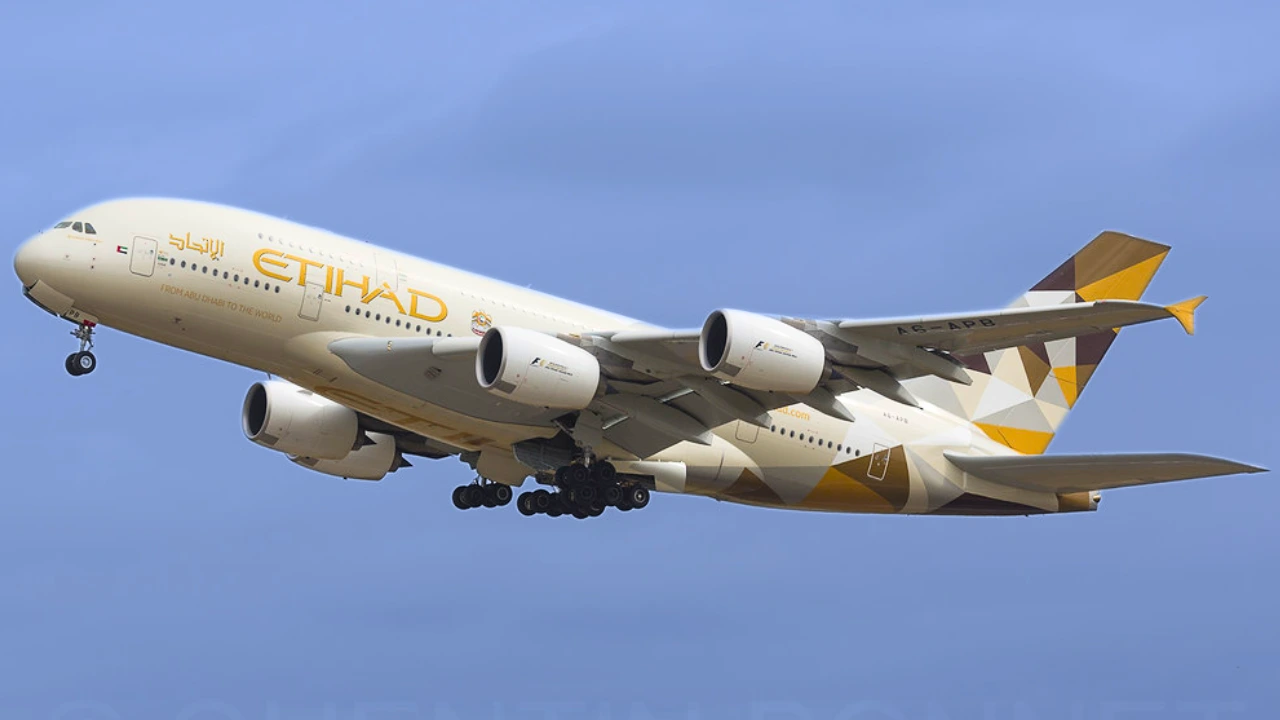
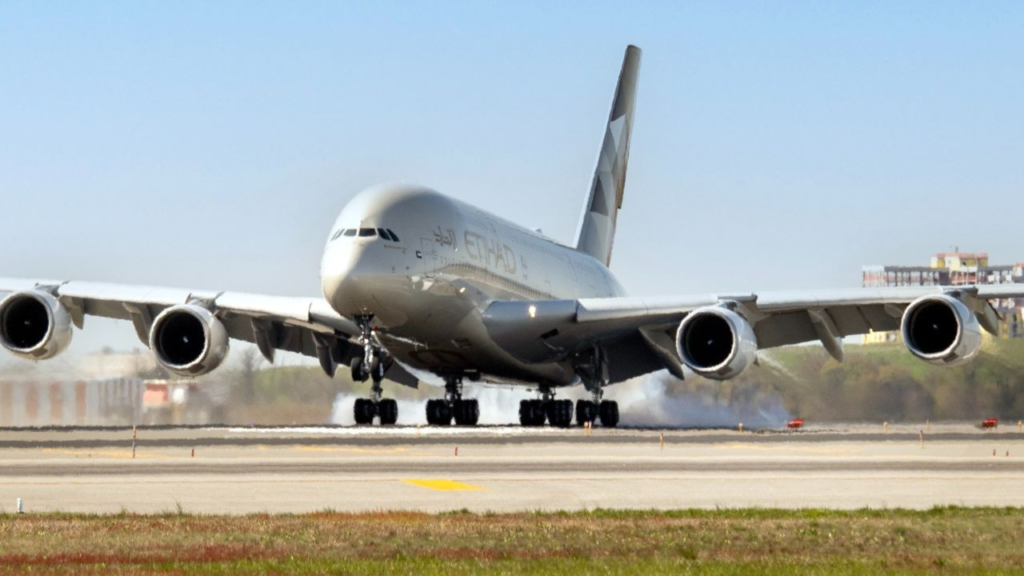
ABU DHABI– Etihad Airways (EY) has officially ended Airbus A380 operations on six international routes from its hub at Abu Dhabi International Airport (AUH), marking a significant shift in its long-haul network strategy. The UAE-based carrier, one of the few remaining operators of the Airbus A380, continues to streamline deployment of its 486-seat superjumbo fleet.
Etihad currently has nine Airbus A380 aircraft, with seven active in service and one additional aircraft recently returned to Abu Dhabi after storage in France. While the airline continues to operate the double-decker jet on select high-demand routes, it has permanently withdrawn the type from key airports across Australia, the United States, Asia, and India.
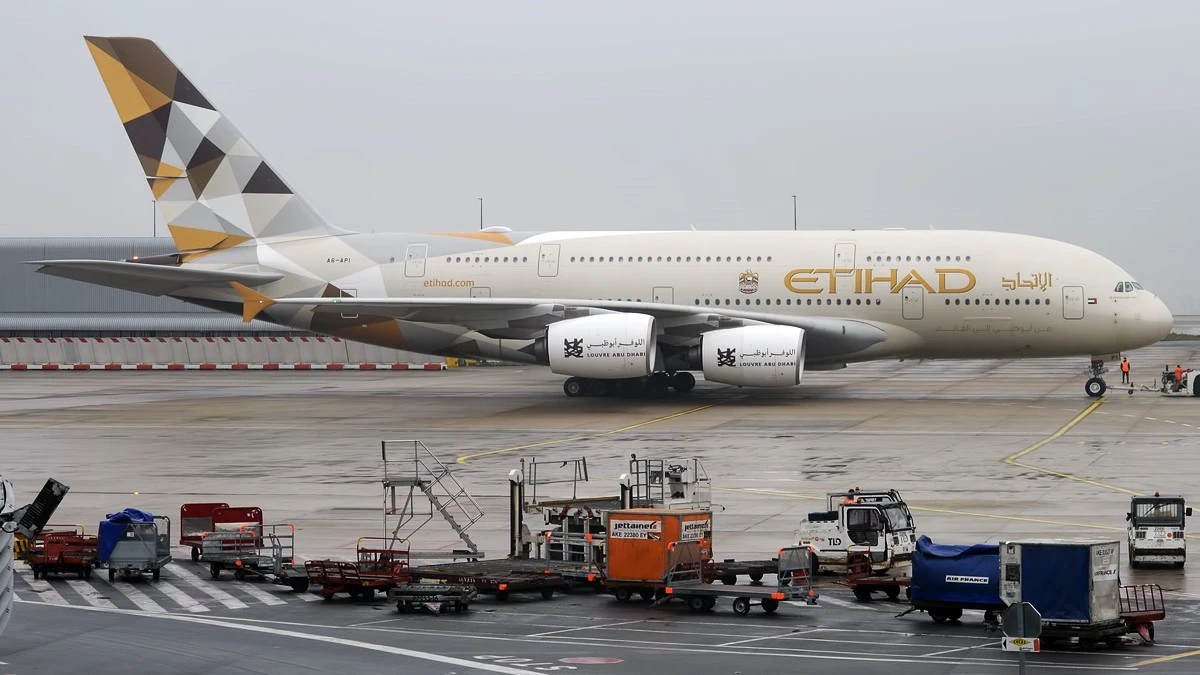
Etihad’s A380 Routes Discontinued
Etihad first introduced the Airbus A380 in December 2014 on flights between Abu Dhabi and London Heathrow Airport. Over the following decade, the airline expanded A380 services to 11 global destinations. However, six of those airports no longer receive the aircraft.
The discontinued A380 routes include:
- John F. Kennedy International Airport (JFK)
- Sydney Airport (SYD)
- Melbourne Airport (MEL)
- Chhatrapati Shivaji Maharaj International Airport (BOM)
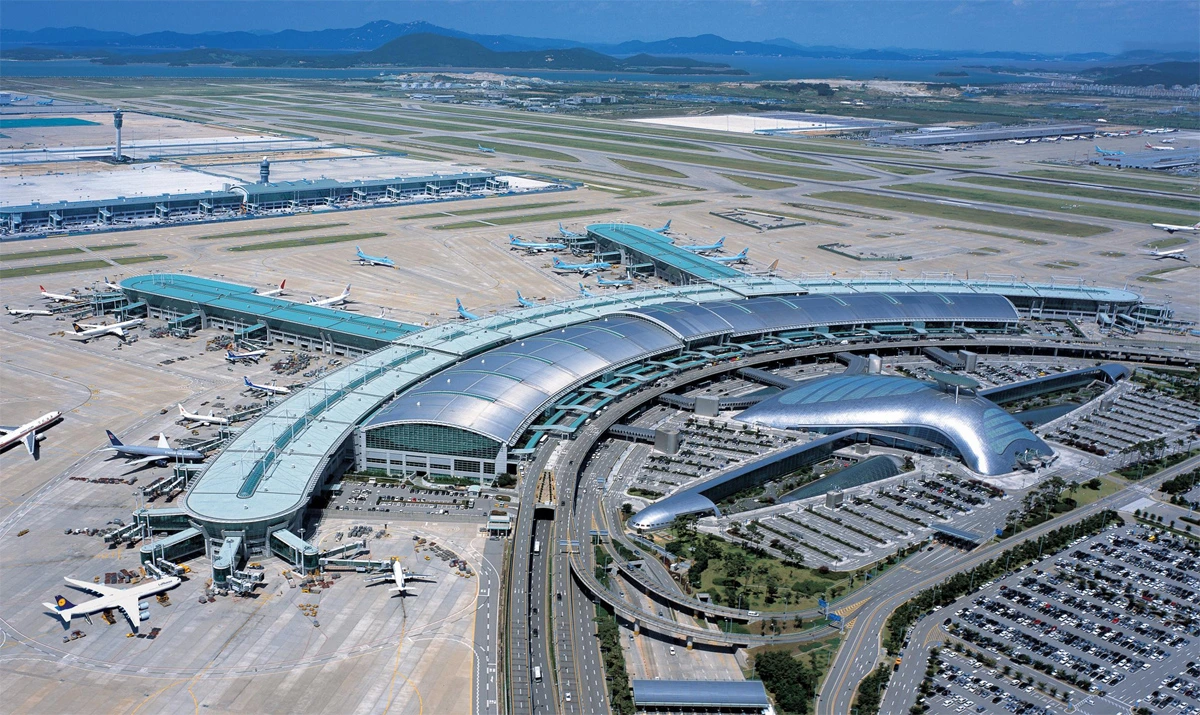
- Incheon International Airport (ICN)
- King Abdulaziz International Airport (JED)
New York JFK recorded the highest number of A380 departures among the discontinued routes. Etihad operated 2,413 A380 departures to JFK between 2015 and 2020, and again from 2024 to mid-2025.
Sydney followed with 2,194 departures, including periods of double daily A380 operations. Melbourne and Mumbai saw shorter A380 deployment windows, while Seoul Incheon and Jeddah had limited or short-term superjumbo service.
The withdrawal from Sydney and Melbourne means Etihad no longer operates the A380 to Australia. Similarly, ending services to New York JFK removes the aircraft from the United States market.
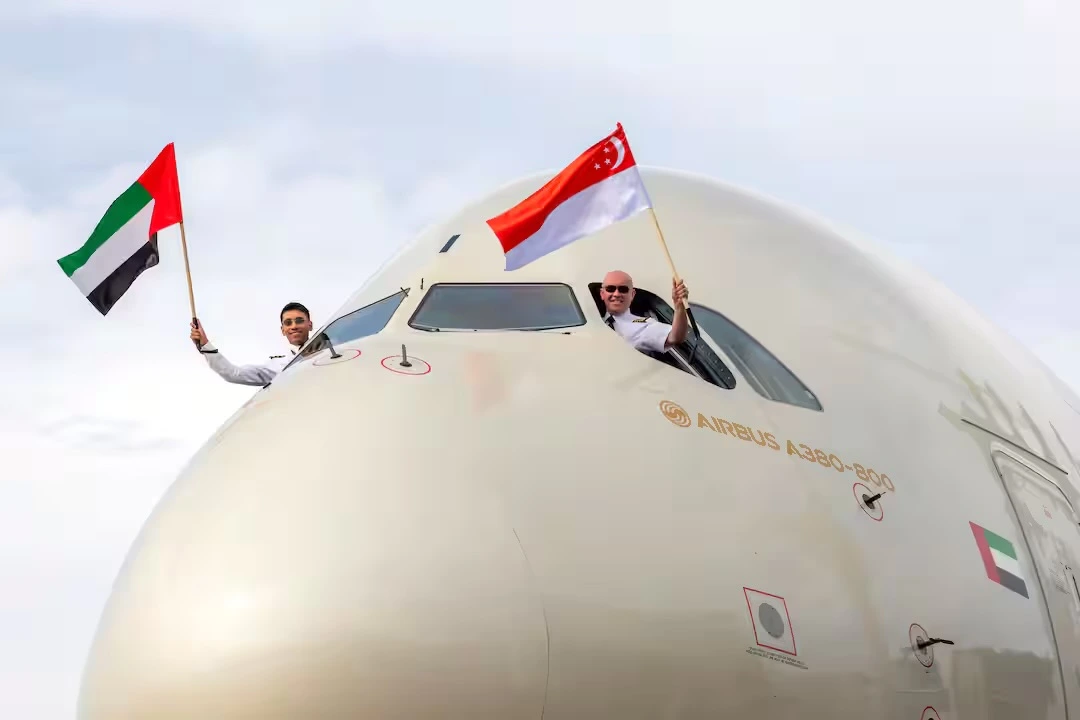
Etihad’s A380 New York Service Changes
Etihad operated its final Airbus A380 flight to New York JFK on June 23, 2025. The airline replaced the superjumbo with the Airbus A350-1000, configured with 371 seats in two classes.
While the A350-1000 introduced Etihad’s latest business class product, the change eliminated First Class Apartments and The Residence suites from the route. The redeployment also freed up A380 capacity for other long-haul markets.
Between July and November 2025, Etihad carried 162,677 round-trip passengers on the JFK route. Compared to the same period in 2024, seat capacity declined by 9 percent, while traffic fell by 10 percent, leading to a slight drop in load factor from 88.5 percent to 87.3 percent.
Current A380 Network
According to Simple Flying, in 2026, Etihad plans 2,104 Airbus A380 departures from Abu Dhabi, representing its fourth-highest annual deployment on the type.
The aircraft now operates to five destinations: London Heathrow, Paris Charles de Gaulle Airport (CDG), Singapore Changi Airport (SIN), Narita International Airport (NRT), and Toronto Pearson International Airport (YYZ).
Tokyo Narita will see Etihad’s first-ever A380 service beginning June 17, 2026. Singapore joined the A380 network last year, expanding the airline’s high-capacity footprint in Southeast Asia.
With these adjustments, the Airbus A380 now accounts for nearly 8 percent of Etihad’s widebody operations. The airline continues to deploy the aircraft strategically on routes where premium demand and slot constraints justify its high capacity.
Stay tuned with us. Further, follow us on social media for the latest updates.
Join us on Telegram Group for the Latest Aviation Updates. Subsequently, follow us on Google News