

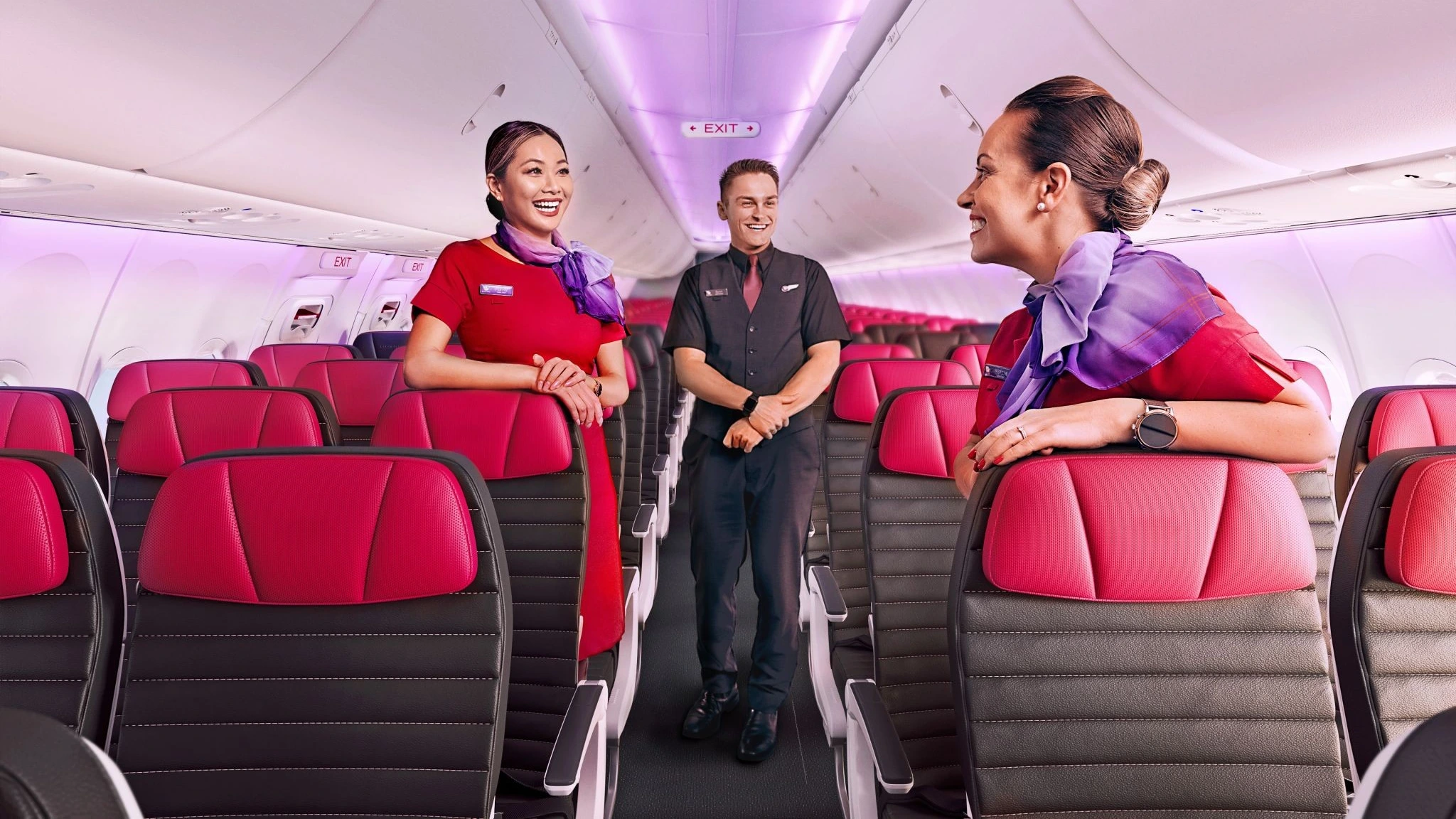
ATLANTA- Removing shoes during a flight may feel comfortable, but aviation professionals strongly discourage it for hygiene and safety reasons.
Aircraft cabins undergo limited cleaning between flights, which increases exposure to bacteria and contaminated surfaces.
Former flight attendants and airline employees warn that cabin floors and lavatories carry more germs than passengers expect.
Keeping shoes on reduces direct contact with spilled liquids, bodily fluids, and debris left behind during rapid aircraft turnarounds.
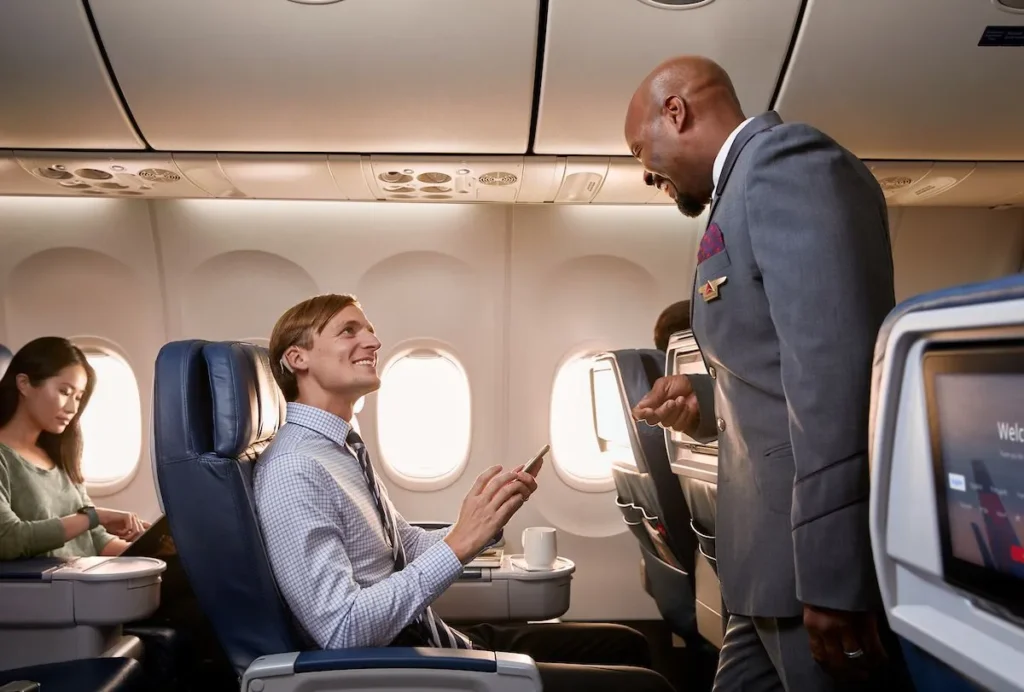
Advise Against Going Barefoot on Planes
Air travelers often overlook common in-flight behaviors, from extended skincare routines to falling asleep against strangers.
However, removing shoes crosses a hygiene boundary that aviation professionals consistently oppose.
According to Travel + Leisure, former flight attendant Natalia Yepes compared walking barefoot on an airplane to walking shoeless on a public bus.
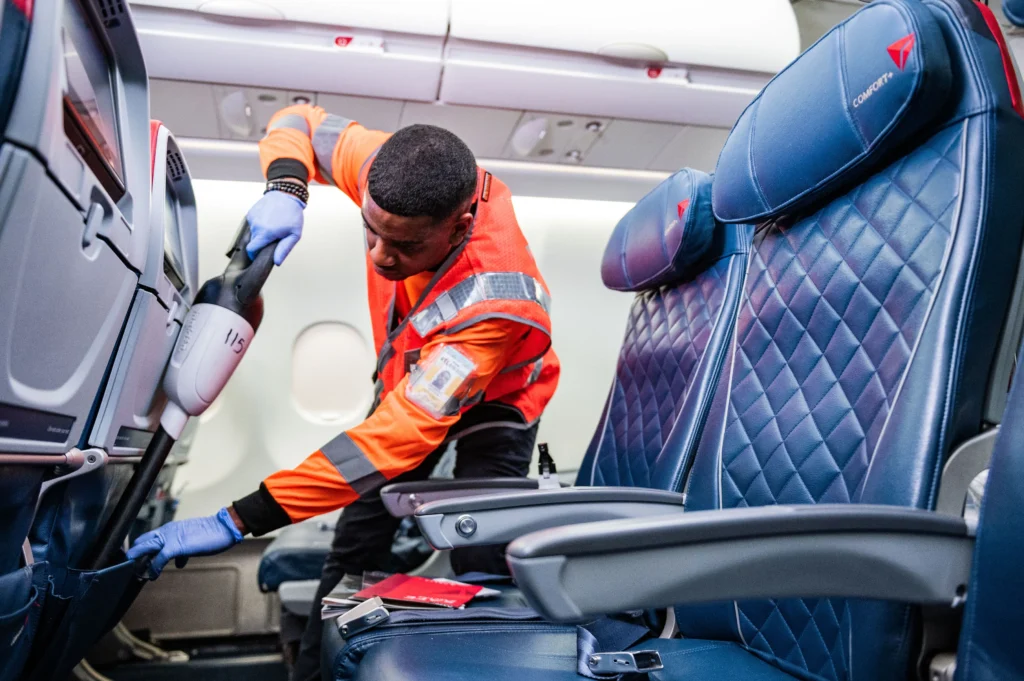
Hundreds of passengers move through a single aircraft each day. Cleaning crews typically have 10 minutes or less during turnarounds.
Their priority is to keep the plane visually clean by removing crumbs and large debris, not disinfecting every surface.
Yepes, who now owns Adventuresque Travel Boutique, explained that floors accumulate bacteria, dirt, and moisture throughout repeated flight segments. The limited turnaround time prevents deep sanitation between most departures.

Aircraft Lavatories Present the Highest Hygiene Risk
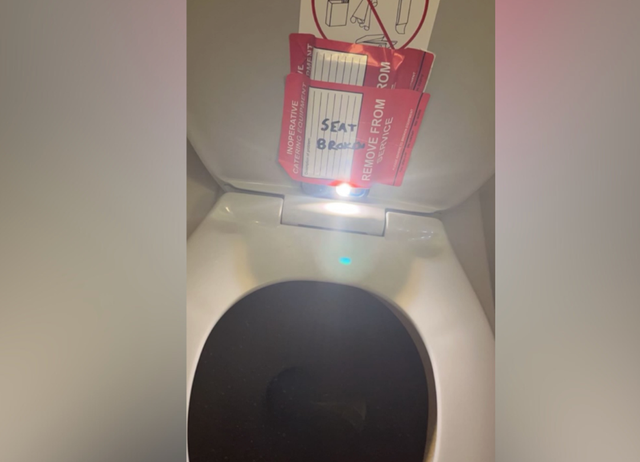
Travel advisor and former airline employee Kerwin McKenzie has flown on 213 airlines. He also worked on the ramp and previously cleaned airplane toilets. Based on that experience, he describes aircraft lavatories as consistently unsanitary.
Passengers frequently spill beverages in the aisle or miss the toilet in cramped restrooms. These fluids collect on the floor.
Socks do not protect because fabric absorbs liquids. When passengers walk through lavatories in socks, moisture and bacteria soak through to the skin.
McKenzie strongly advises passengers to never enter an aircraft bathroom without shoes. He also recommends sanitizing hands immediately after leaving or using paper to hold the door handle, then discarding the paper afterward.
Germ Transfer Beyond the Aircraft
Walking barefoot or in socks increases contamination risk beyond the flight. After exposure to lavatory floors or aisle spills, passengers often put their shoes back on before landing.
This traps bacteria inside the footwear. As McKenzie explained, travelers may then bring those germs home.
Under-seat flooring is not cleaner than lavatory floors. Vacuuming usually occurs only when aircraft remain parked overnight at a terminal.
During regular daily operations, planes receive quick wipe-downs rather than deep sanitation.
Cabin Courtesy and Passenger Comfort
Removing shoes may also create discomfort for other passengers. Odors that seem mild to one traveler may disturb others in a confined cabin.
Aircraft seating provides limited personal space, and courtesy supports a more comfortable environment.
Yepes maintains a firm position against going shoeless during flights. She stated that she has never met a crew member who supports the practice. Industry professionals widely agree that footwear should remain on throughout the journey.
Safety During Unexpected Evacuations
Emergencies require immediate movement. Cabin floors, jet bridges, or runways may contain sharp debris or hot surfaces. Wearing shoes improves traction and reduces injury risk during rapid evacuations.
Passengers who keep their footwear on remain prepared for sudden instructions from crew members. This simple precaution supports both personal safety and operational efficiency.
Choosing Comfortable and Hygienic Travel Footwear
Passengers do not need to sacrifice comfort to maintain hygiene. Lightweight sneakers, breathable closed shoes, or flexible slip-ons allow comfort during long flights while protecting against contaminated flooring.
Selecting proper travel footwear balances convenience, sanitation, and safety. Keeping shoes on throughout the flight remains a practical and crew-endorsed standard.
Stay tuned with us. Further, follow us on social media for the latest updates.
Join us on Telegram Group for the Latest Aviation Updates. Subsequently, follow us on Google News
