

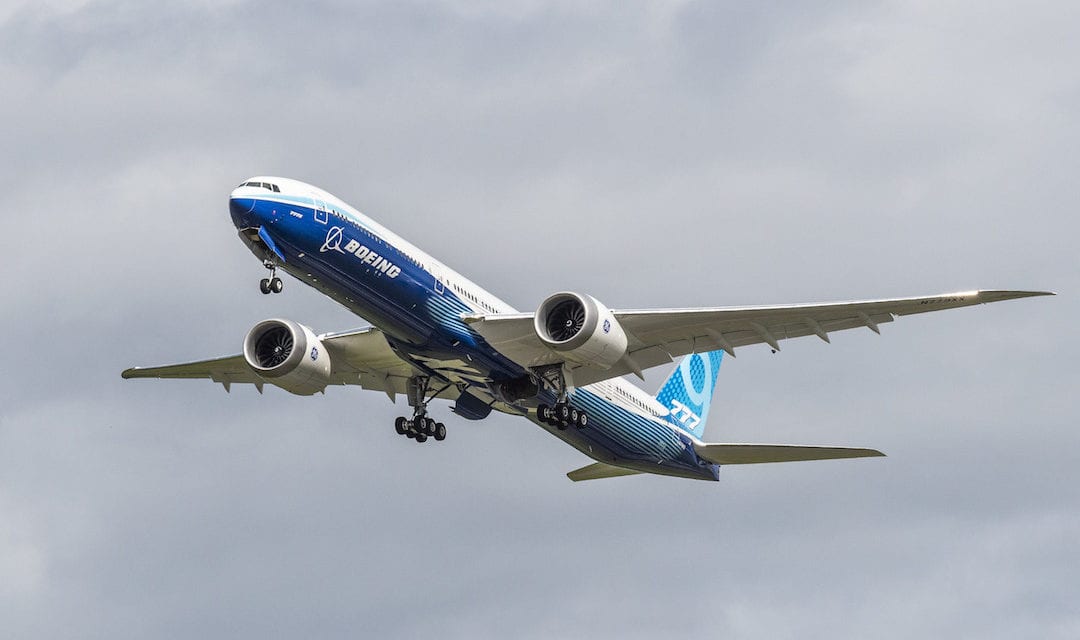
Boeing is preparing to introduce the 777X, its latest widebody aircraft, with a safety feature never before certified on a commercial jet of this size. While airlines such as Lufthansa (LH) are expected to be among the first operators, the aircraft’s most discussed innovation is not inside the cabin but at the tips of its massive composite wings.
Designed to operate at major global hubs including Dubai International Airport (DXB) and Frankfurt Airport (FRA), the Boeing 777X integrates folding wingtips to maintain airport compatibility. However, regulators required more than a mechanical solution, leading to a system that can actively prevent pilots from initiating takeoff if the wingtips are not fully extended and locked.
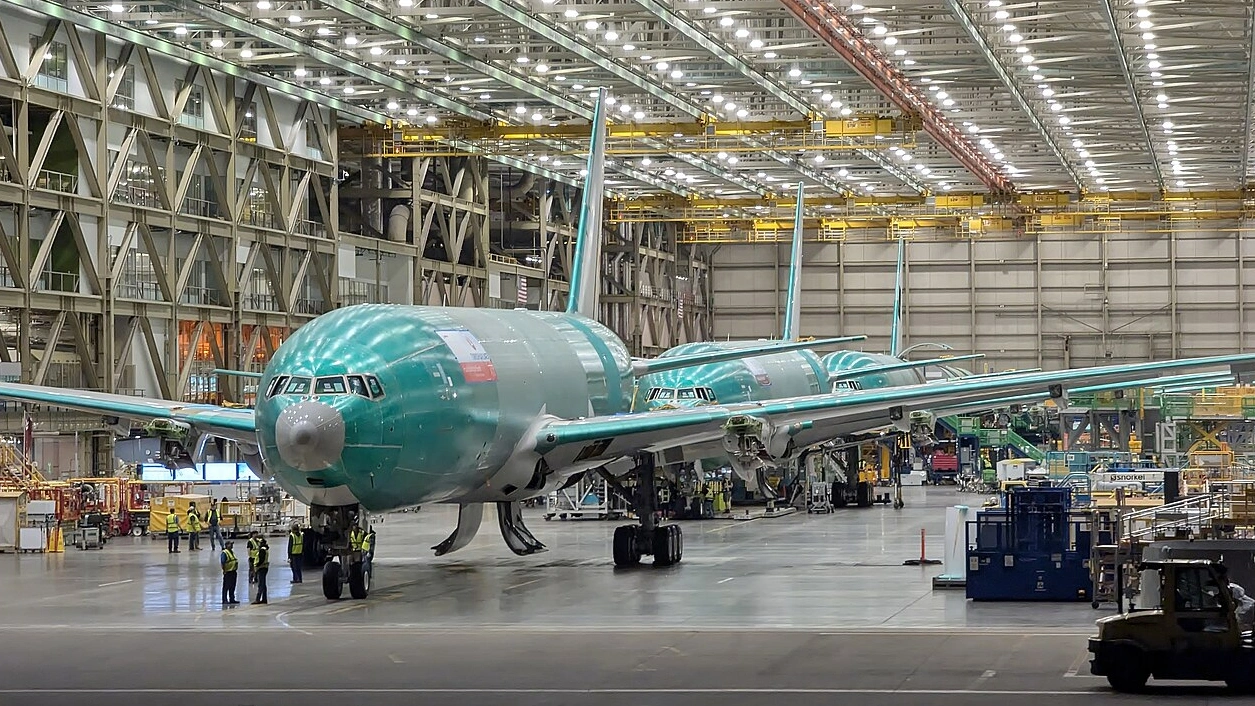
https://commons.wikimedia.org/wiki/File:Boeing_Everett_Factory_-_777X_fuselages.jpg
Boeing 777X’s Folding Wingtips Design
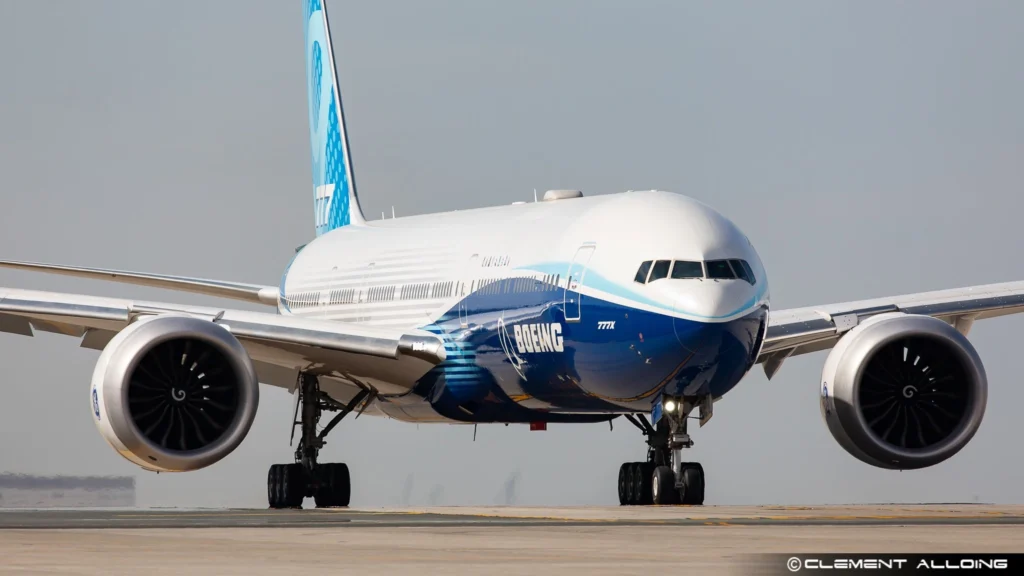
The Boeing 777X features the widest wingspan of any twin-engine commercial aircraft when fully extended, measuring approximately 235 feet.
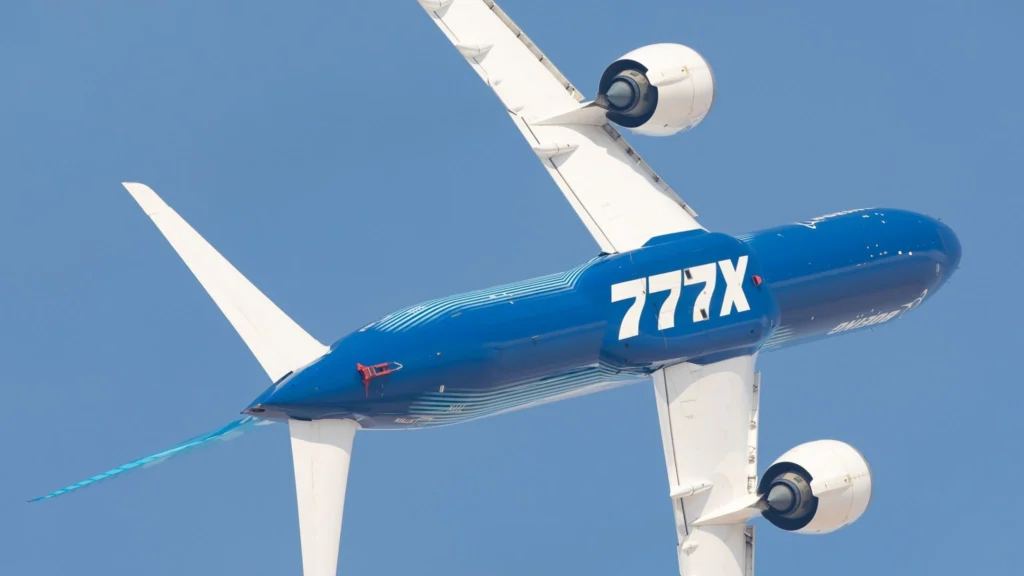
On the ground, its folding wingtips reduce the span to around 212 feet, allowing it to fit into Code E airport gates originally designed for earlier 777 variants.
Unlike folding wings used in military aviation for storage on aircraft carriers, the 777X system supports daily airline operations. Engineers built the folding sections as part of the primary wing structure, ensuring they can withstand aerodynamic loads encountered during climb, cruise, and descent.
To improve reliability, Boeing eliminated fuel tanks and primary flight control surfaces from the folding portion of the wing. This design reduces mechanical complexity and limits the number of systems that pass through the hinge mechanism.
Despite these simplifications, the folding wing structure introduced a new certification challenge.
Because the wingtips directly affect lift and aerodynamic performance, regulators classified their position as a safety-critical configuration state.
Takeoff Protection System
Regulatory authorities determined that an incorrect wingtip configuration during takeoff could create a catastrophic risk. A reduced wingspan changes lift distribution and climb performance, especially at heavy weights or on shorter runways.
Traditional takeoff configuration systems typically rely on warning alerts if flaps or trim settings are incorrect. However, authorities concluded that a simple warning would not provide enough protection for a movable primary wing structure.
As a result, the 777X incorporates an active takeoff inhibition system. The aircraft continuously monitors wingtip position and lock status using multiple independent sensors.
If the wingtips are not fully extended and mechanically secured, cockpit alerts escalate as the aircraft approaches the takeoff phase. Most importantly, the aircraft’s logic prevents progression into a high-speed takeoff roll when the required configuration is not confirmed.
This approach shifts the safety barrier earlier in the departure sequence. Instead of relying on pilots to respond during acceleration, the system blocks the unsafe condition before the aircraft commits to flight.

https://commons.wikimedia.org/wiki/File:777X_Roll-Out_(40407373023)_(cropped).jpg
Certification And Safety Impact
Because existing airworthiness regulations did not address folding primary wing structures on large transport aircraft, authorities issued special certification conditions for the 777X.
These conditions required redundant monitoring systems and clear cockpit indications during taxi and lineup.
Pilots control the wingtip system through a dedicated overhead switch. During preflight and taxi, cockpit displays clearly show whether the wingtips are folded, in transition, or fully locked for flight.
Once airborne, the aircraft disables the ability to move the wingtips. Mechanical locks and system protections ensure the wing behaves as a continuous lifting surface under aerodynamic and structural loads.
The system also accounts for environmental conditions on the ground. Certification standards required the folded configuration to withstand strong crosswinds and gust loads without compromising aircraft stability.
This layered protection strategy reflects lessons learned from historical configuration-related accidents in aviation. Regulators recognized that checklist interruptions, fatigue, or operational distractions can contribute to errors, particularly during busy ground operations.
By integrating takeoff inhibition directly into flight control logic, the 777X establishes a new benchmark in commercial aircraft safety design.
It demonstrates a shift from warning-based systems toward preventive automation that eliminates certain error pathways altogether.
Bottom Line
The extended certification timeline for the 777X partly reflects the complexity of validating this novel system.
Engineers and regulators had to define acceptable failure probabilities, redundancy requirements, and human-machine interface standards for a feature never before implemented on a widebody jet.
When the aircraft enters service, the folding wingtip safety architecture will not only protect 777X operations but may also influence future aircraft programs.
As manufacturers pursue higher efficiency through larger composite wings, similar active configuration safeguards could become standard practice.
Stay tuned with us. Further, follow us on social media for the latest updates.
Join us on Telegram Group for the Latest Aviation Updates. Subsequently, follow us on Google News
