

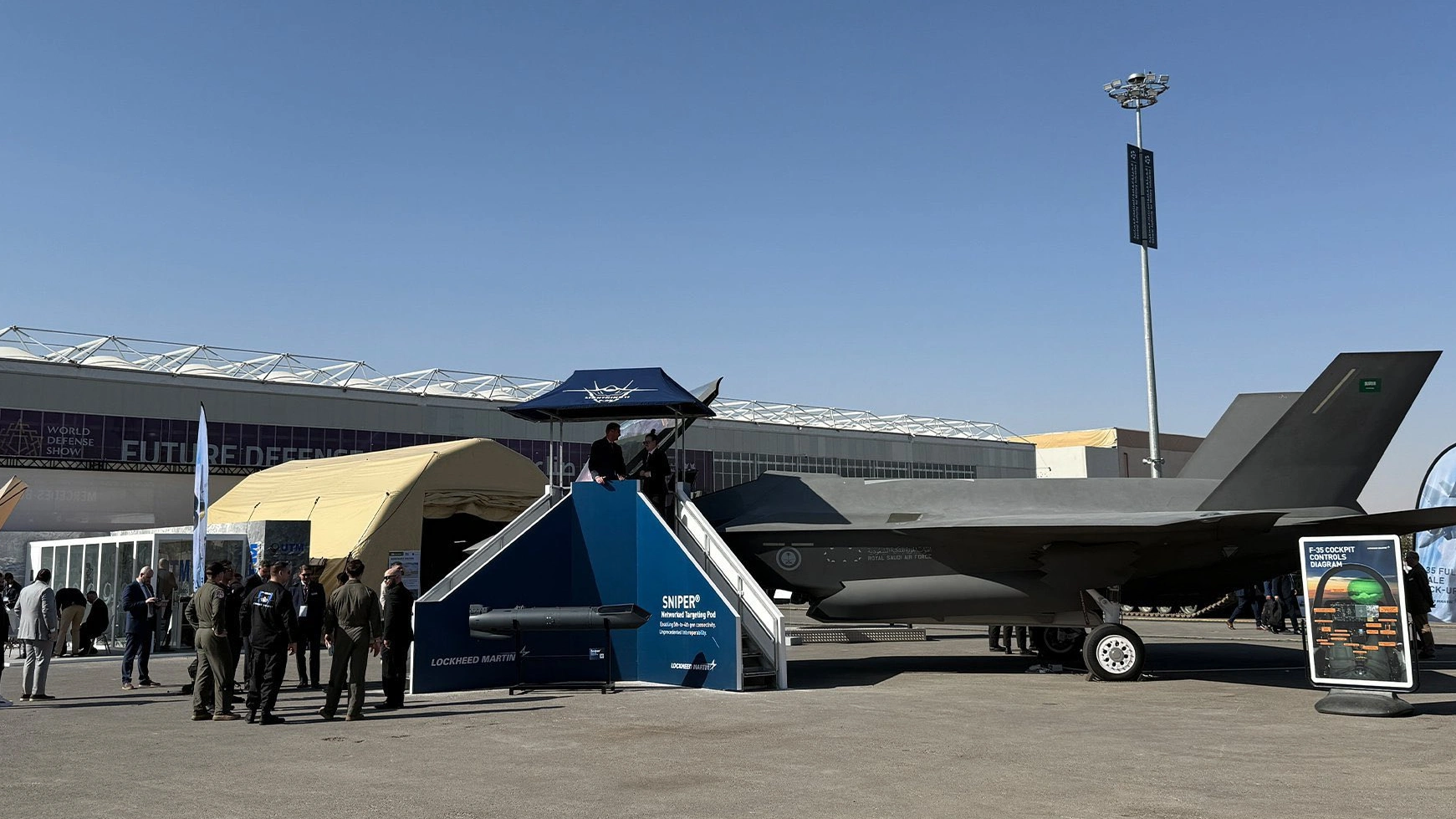
SAUDI ARABIA— A full-scale mockup of the Lockheed Martin F-35 Lightning II bearing Royal Saudi Air Force markings has drawn attention at the World Defense Show in Riyadh (RUH). The appearance of the stealth fighter model has reignited debate over whether Saudi Arabia will finally acquire the fifth-generation aircraft or face delays similar to those that stalled the United Arab Emirates’ bid.
The World Defense Show returned on February 8, 2026, bringing together major defense manufacturers from the United States, Europe, Russia, and China. The Saudi-hosted event has become a key platform for signaling future procurement priorities and industrial partnerships.
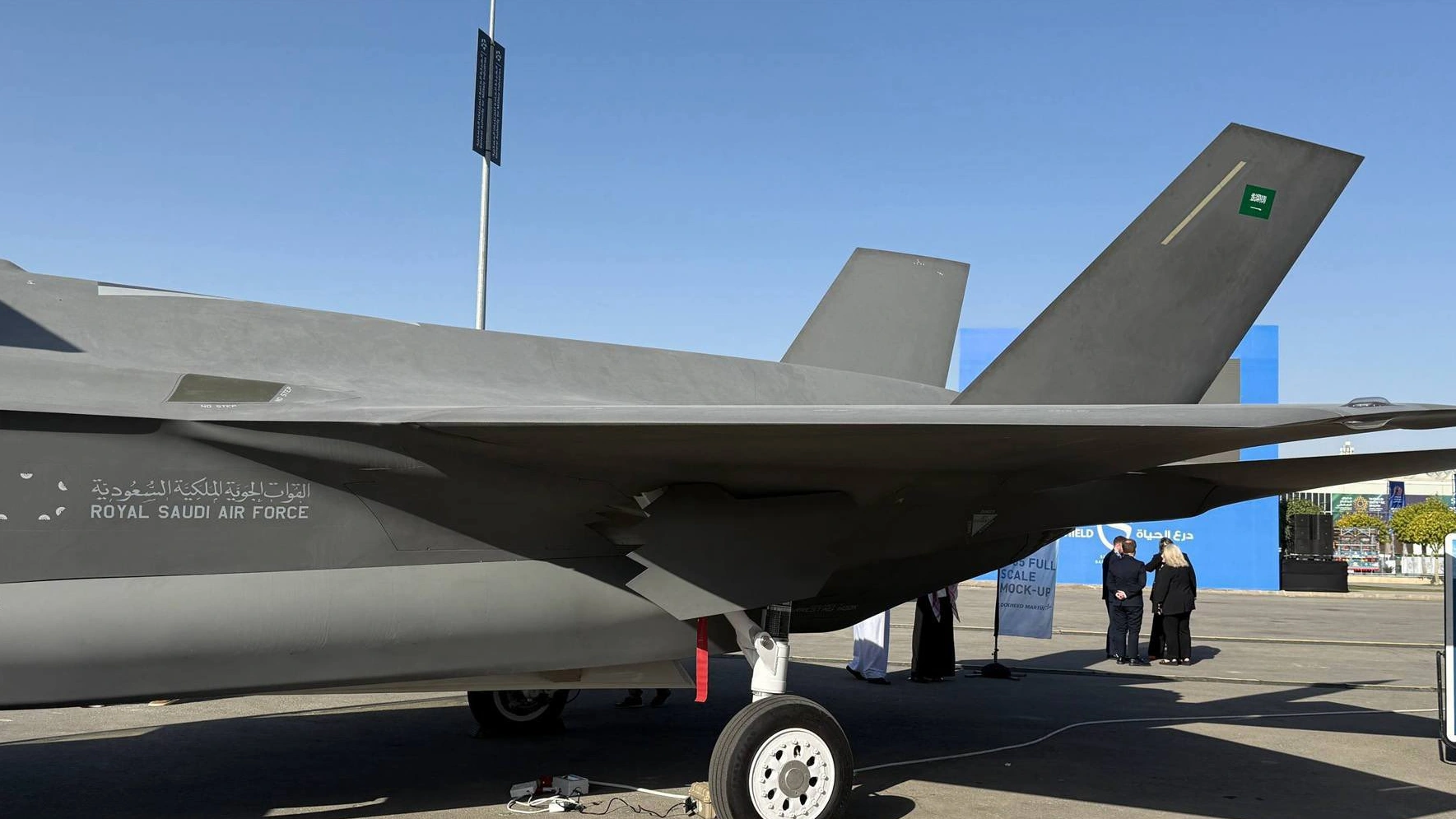
F-35 Mockup Display in Saudi Arabia
The F-35 Lightning II display stood out as one of the most closely watched exhibits at the event. The aircraft model featured Saudi insignia on the tail and fuselage, attracting crowds and intense scrutiny from regional and international observers.
Saudi Arabian Military Industries confirmed it was showcasing more than 60 domestically developed defense products. These span aerospace systems, electronics, command-and-control platforms, and maintenance solutions aimed at strengthening local defense capabilities.
The mockup appeared months after Saudi Arabia received US approval to pursue the aircraft. The authorization followed a strategic defense agreement signed in Washington in November 2025, which designated the kingdom as a key non-NATO partner.
While the approval marked a diplomatic milestone, it did not constitute a finalized sale. No formal contract or delivery schedule for the stealth fighter has been announced by either government.
Defense analysts view the public display as a signal of intent rather than confirmation. The mockup could also reflect a marketing effort by the manufacturer, aligned with Saudi ambitions to modernize its air force.

Saudi’s F-35 Acquisition Outlook
According to Eurasian Times, Saudi Arabia has sought access to the F-35 since at least 2017 as part of a broader effort to upgrade the Royal Saudi Air Force. The stealth fighter would represent a major leap in capability, offering advanced sensors, low observability, and networked combat features.
However, approval to negotiate does not guarantee delivery. Any deal would still require congressional oversight, technology safeguards, and alignment with US regional security policies.
One potential hurdle remains Israel’s qualitative military edge, a long-standing US policy that ensures Israel maintains superior military capabilities in the region. Opposition tied to this principle could slow or complicate any final agreement.
Despite these challenges, the timing of the mockup’s appearance suggests momentum. Saudi officials have increasingly emphasized defense self-reliance and strategic alignment with Western partners.
Lessons From the UAE
The United Arab Emirates offers a cautionary precedent. Abu Dhabi pursued the F-35 for more than a decade and came close to securing a deal after US approval in 2020.
Despite signing preliminary agreements, the process stalled under a subsequent US administration. Concerns over technology security and the UAE’s ties with China ultimately derailed the purchase.
Frustrated by delays, the UAE pivoted to alternative suppliers and finalized a major order for French Rafale fighters in 2021. The F-35 discussions were later described as effectively dormant.
For Saudi Arabia, the UAE experience underscores the complexity of acquiring the F-35. Strategic alignment, technology assurances, and geopolitical considerations will likely prove decisive.
The F-35 mockup in Riyadh has therefore become more than a static display. It reflects Saudi aspirations, US strategic calculations, and a regional arms landscape shaped as much by politics as by capability.
Stay tuned with us. Further, follow us on social media for the latest updates.
Join us on Telegram Group for the Latest Aviation Updates. Subsequently, follow us on Google News
