


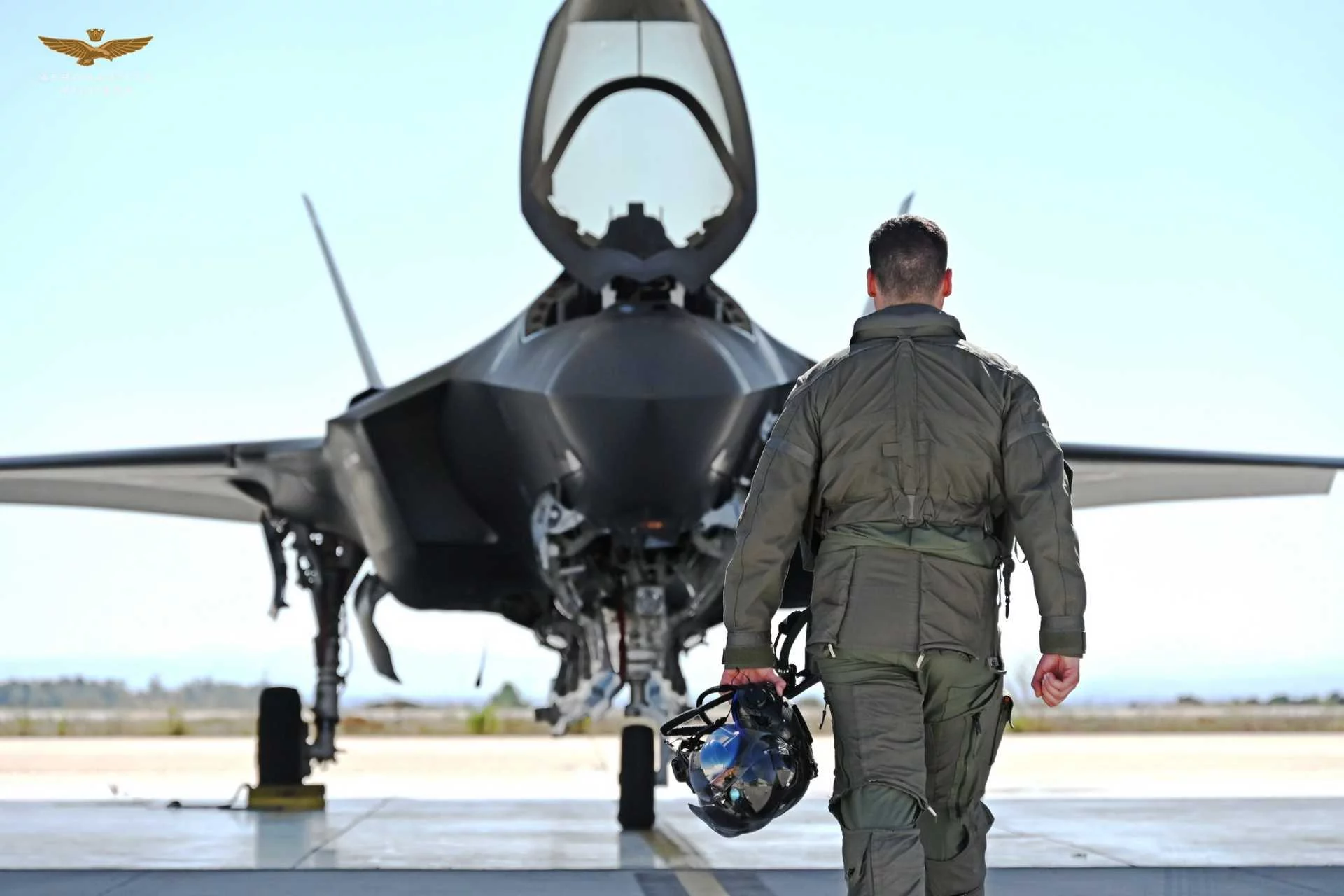
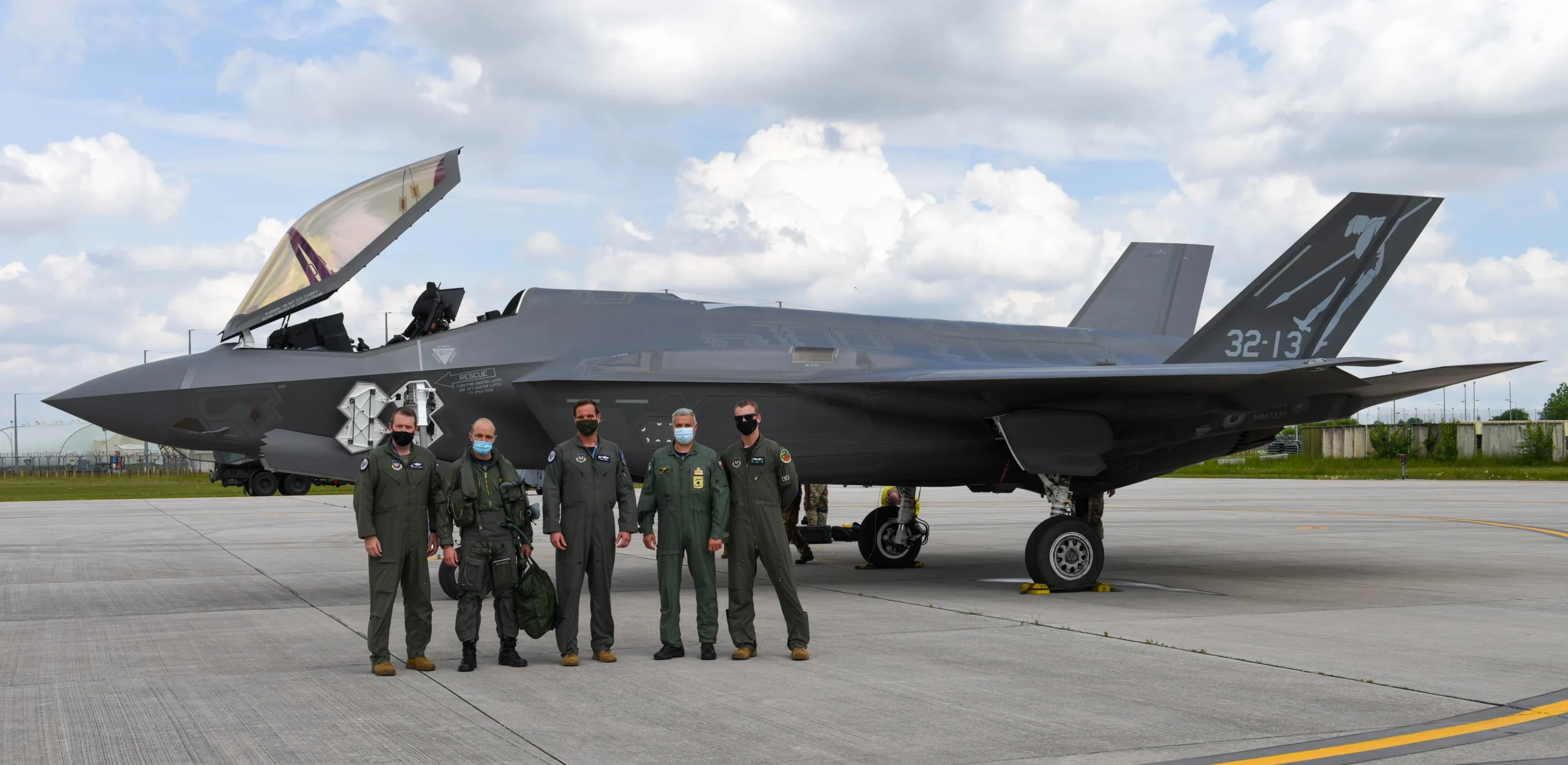
MADRID– F-35A Lightning II stealth fighters from the Vermont Air National Guard are repositioning across Europe as the United States strengthens its military footprint in the U.S. Central Command region. Six jets recently shifted from Rota Air Base (ROZ) to Morón Air Base (OZP) after an earlier delay tied to a refueling aircraft incident.
Another six F-35As arrived at RAF Lakenheath in the United Kingdom, a key transit hub for deployments toward the Middle East. The aircraft had previously operated in the Caribbean before flying back to Vermont and then crossing the Atlantic in coordinated movements.
F-35A Europe Movements
The six jets that reached Morón had initially diverted to Rota following a KC-46A Pegasus aerial refueling aircraft mishap at Morón.
After ground operations stabilized, the fighters completed their short relocation within Spain. Their staged positioning keeps multiple deployment options open.
Separately, six additional F-35As landed at RAF Lakenheath at approximately 8 p.m. local time. Lakenheath hosts U.S. Air Force F-35 units and routinely supports transatlantic fighter flows heading toward the Middle East.
If all 12 aircraft proceed to the CENTCOM area of responsibility, they will reinforce an expanding tactical aviation presence. U.S. planners are increasing readiness amid heightened tensions with Iran and ongoing regional instability.
Growing Airpower Presence
The potential F-35A deployment would add to an already diverse mix of aircraft in the region.
U.S. forces have positioned F-15E Strike Eagles, A-10 Thunderbolt II close air support jets, and E/A-18G Growler electronic warfare aircraft at Muwaffaq Salti Air Base in Jordan.
At sea, the aircraft carrier USS Abraham Lincoln is operating with embarked F-35C stealth fighters, F/A-18E/F Super Hornets, and EA-18G Growlers. The carrier strike group recently entered the CENTCOM region after transiting from the Indo-Pacific.
In parallel, more than 100 cargo aircraft have reportedly transported air defense systems and support equipment into the Middle East, reported TWZ.
However, strategic bombers such as the B-2 Spirit or B-52 Stratofortress have not yet repositioned forward, unlike during past standoffs with Tehran.
Carrier Strike Options
Former President Donald Trump has indicated he is considering deploying a second aircraft carrier strike group to the Middle East if negotiations with Iran collapse. A U.S. official confirmed discussions are underway, though no final decision has been announced.
The USS Gerald R. Ford Carrier Strike Group remains in the Caribbean following recent operations. Other U.S. Navy carrier groups are in varying stages of readiness, limiting immediate deployment flexibility.
Despite the visible buildup, analysts note that current tactical aircraft numbers may not support a prolonged high-intensity air campaign. Additional fighter squadrons would likely be required for sustained operations, particularly if missions expand beyond air defense roles.
Diplomatic engagement continues alongside military preparations. Israeli Prime Minister Benjamin Netanyahu is scheduled to meet U.S. leadership in Washington to discuss Iran, Gaza, and broader regional security concerns.
Bottom Line
Iranian officials maintain that their nuclear and missile programs remain non-negotiable, though recent remarks suggest conditional flexibility regarding uranium enrichment levels. Meanwhile, U.S. defense leaders have reiterated that military options remain available if diplomacy fails.
As F-35A stealth fighters edge closer to potential forward deployment, the evolving airpower posture underscores Washington’s dual-track strategy of deterrence and negotiation in the Middle East.
Stay tuned with us. Further, follow us on social media for the latest updates.
Join us on Telegram Group for the Latest Aviation Updates. Subsequently, follow us on Google News
