

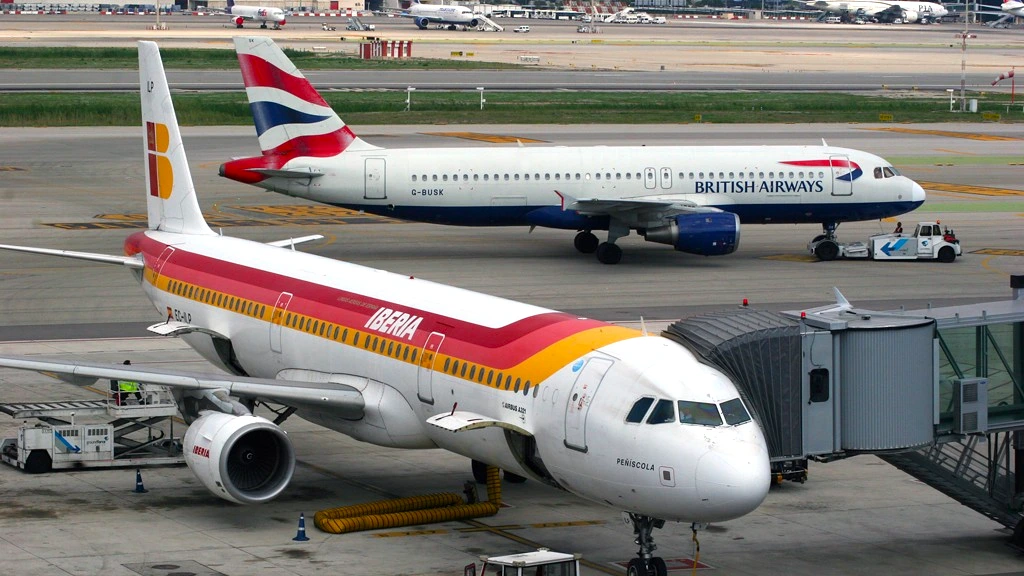
LONDON— A travel experiment by a UK-based YouTuber has reignited debate over whether flying or rail travel is truly faster between Edinburgh and London. The comparison pitted a British Airways flight (BA) against a high-speed train, tracking real door-to-door journey times rather than published schedules.
The challenge began in Edinburgh and ended in London, using city-center locations rather than airport terminals alone. By timing every stage of each journey, the test aimed to reflect how travelers actually experience long-distance domestic travel in the UK.

https://commons.wikimedia.org/wiki/File:British_Airways_A321_(G-EUXJ)_@_FCO,_March_2009.jpg
Train vs Flight: Travel Time Comparison
Scott Manson, creator of the travel-focused YouTube channel Planes, Trains, Everything, undertook the race to settle a question he had first raised years earlier. This time, the experiment ran to completion, producing a clear but narrow result.
Manson started both journeys from Princes Street in Edinburgh and finished near Oxford Street in central London. He used a stopwatch to measure the full end-to-end duration, including transfers, waiting time, and security procedures.
According to the Daily Record, the rail journey delivered a total time of 4 hours, 53 minutes, and 25 seconds. That figure came in slightly under the published estimate of five hours for the route.
The flight journey recorded a total time of 4 hours, 49 minutes, and 22 seconds. Flying, therefore, proved faster by just over four minutes, a margin that depended heavily on smooth airport processing.
Manson noted that minor delays or longer queues could easily erase that advantage. He said the result highlighted how close the two options are when measured realistically rather than by advertised travel times.

Comparing Cost and Comfort
Beyond speed, the experiment examined comfort and overall travel experience. Manson described the train journey as calmer and more predictable, especially when compared with the airport environment.
He found the airport experience more stressful due to security checks and crowding, even at a smaller London airport. By contrast, the rail journey allowed uninterrupted travel without additional screening.
Cost also played a significant role in the comparison. Tickets booked roughly two months in advance showed the train priced at £60, while the flight cost £95.
Last-minute pricing altered the balance. Rail fares increased sharply closer to departure, while flight prices rose even further, particularly once ground transport to and from airports was included.
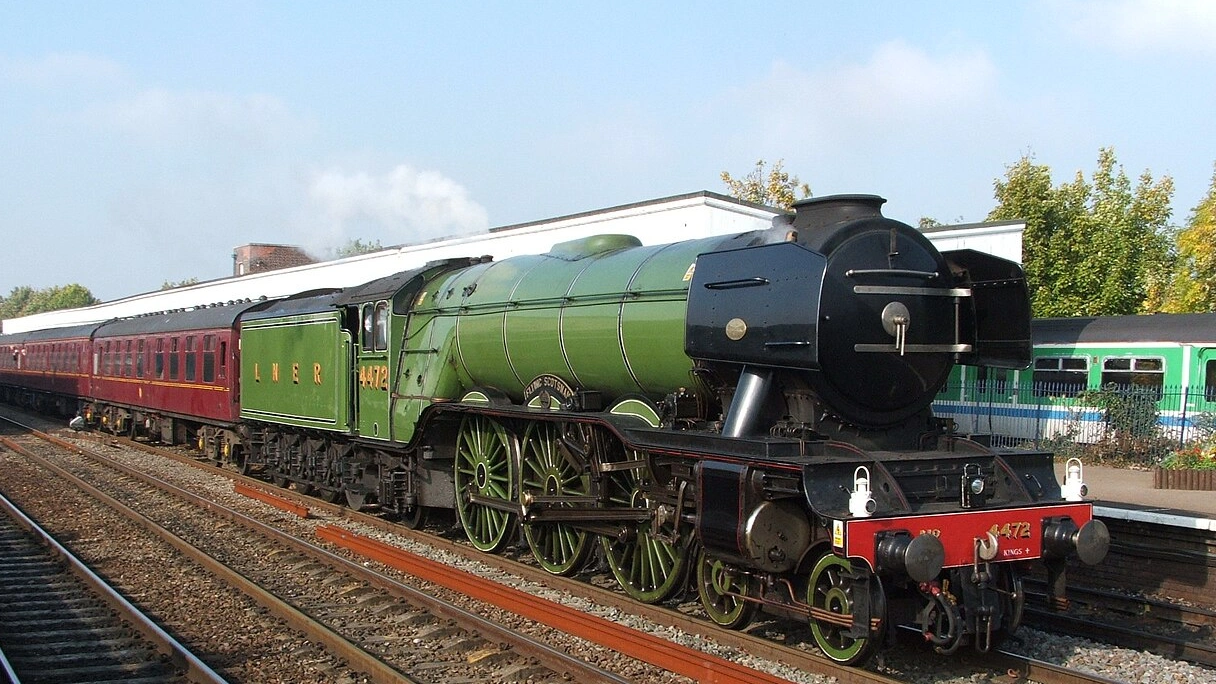
https://commons.wikimedia.org/wiki/File:Flying_Scotsman_2005.jpg
Environmental Impact of Flight vs Train
The experiment also assessed environmental impact, revealing a substantial difference between the two modes of transport. The train journey produced an estimated 12.5 kilograms of carbon dioxide per passenger.
The flight generated approximately 165 kilograms of carbon dioxide for the same journey. This made rail travel significantly greener, even though it was marginally slower.
Manson said the emissions gap was the most decisive difference between the options. He concluded that sustainability considerations could outweigh minor time savings for many travelers.
Despite the flight’s narrow time advantage, the outcome showed no clear winner in practical terms. The final result depended on priorities such as cost stability, environmental impact, and tolerance for airport procedures.
The experiment suggests that high-speed rail remains highly competitive with domestic air travel in the UK. For travelers moving between city centres, the train continues to offer a compelling balance of speed, comfort, and sustainability.
Stay tuned with us. Further, follow us on social media for the latest updates.
Join us on Telegram Group for the Latest Aviation Updates. Subsequently, follow us on Google News
