

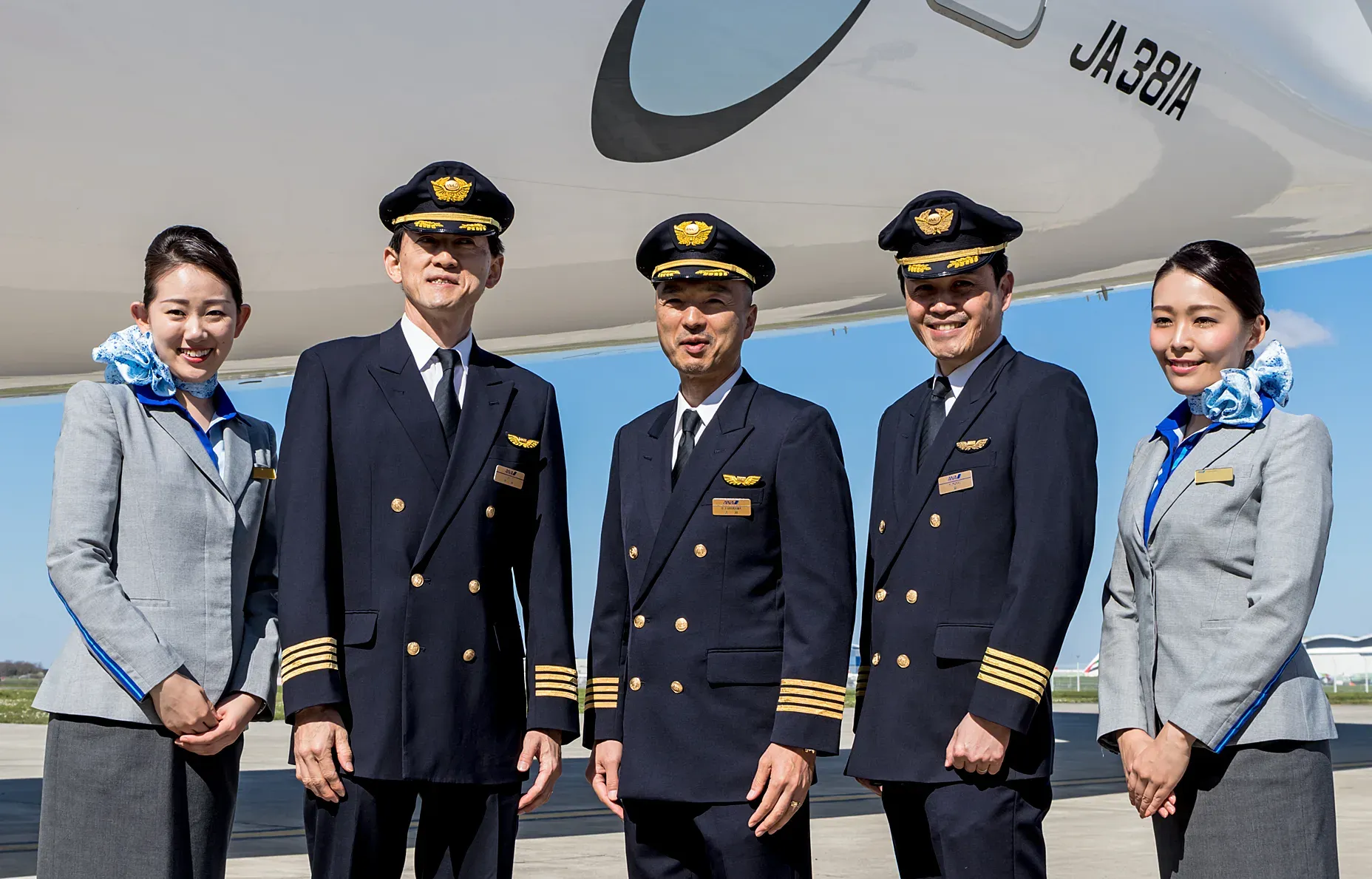
All Nippon Airways (NH), commonly known as ANA, is Japan’s largest airline by fleet size and passenger numbers. Headquartered in Tokyo, ANA operates domestic flights across Japan and a broad international network spanning Asia, Europe, North America, and Oceania.
With hubs at Tokyo Haneda and Narita, the airline is recognised for its high service standards, strong safety culture, and disciplined operational approach. Over decades of growth, ANA has built a reputation as a stable employer with structured career paths and a well-established pilot progression system.
Unlike some newer carriers, ANA’s pilot pay structure is deeply influenced by seniority, experience, and aircraft type. Salaries are generally reliable, rising predictably as pilots gain years of service and command experience.
Japan’s aviation market places a premium on long-term employment stability and collective agreements, so pay increases reflect both experience and the airline’s tradition of incremental growth. In 2025-26, ANA remains a highly desirable airline for pilots prioritising stability, structured training, and predictable salary progression.
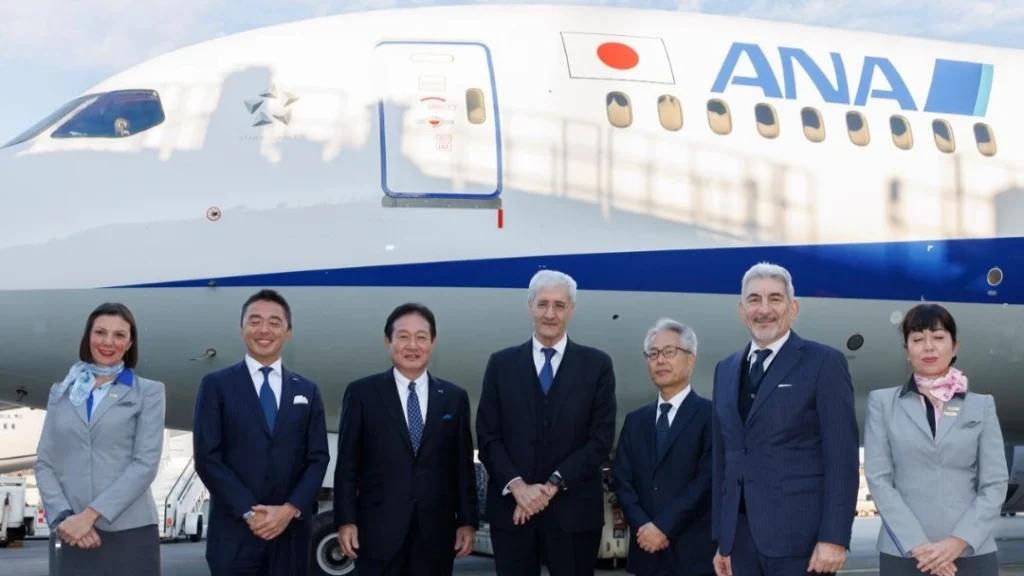
ANA Pilot Salary in 2026
ANA First Officer Salary
First officers at ANA in 2025-26 earn a structured base salary that rises with experience, aircraft type, and seniority.
Entry-level first officers typically earn around ¥10,500,000 per year (approximately USD 68,000), reflecting both Japan’s structured compensation model and a base salary designed for stability rather than dramatic early earnings increases.
As pilots gain flight hours and operational experience, they move through salary steps that recognise their growing competence and reliability.
With several years of service, many first officers reach a pay range of roughly ¥18,000,000 to ¥22,000,000 per year (around USD 117,000 to USD 143,000 per year). This mid-range reflects pilots who have moved onto busier rosters and possibly wider-body assignments, adding overseas allowances, layover payments, and premium flight credits where applicable.
Seasonality in flying — such as high summer demand to and from Japan — can result in monthly variations but does not significantly alter the annualised totals.
Senior first officers, particularly those operating larger aircraft or more complex international sectors, can see compensation rise further.
With additional duty allowances, recurrent training incentives, and stable roster patterns, experienced first officers may reach total annual packages in the region of ¥23,000,000 to ¥25,000,000 per year (approximately USD 150,000 to USD 163,000 per year).
These figures typically include standard domestic pay combined with long-haul allowances and any applicable bonuses awarded under company policy.
ALSO READ: Japan Airlines Pilot Salary in 2026

ANA Captain Salary
Captains at All Nippon Airways are compensated at higher tiers, reflecting their command responsibilities and years of accumulated experience.
In 2025-26, new captains promoted from first officer status generally earn base salaries starting around ¥26,000,000 per year (about USD 170,000 per year), though this base can vary slightly depending on fleet and seniority.
With additional seniority, captains typically earn between ¥30,000,000 and ¥36,000,000 per year (roughly USD 196,000 to USD 235,000 per year). This range generally applies to captains flying larger domestic and regional assignments as they settle into regular command duties.
Commanding wide-body aircraft such as the Boeing 777 or 787 on international services often places captains toward the upper end of this range due to increased allowances for long-haul flight hours, overnight layovers, and premium segments.
Senior captains with long tenure and significant command experience — especially those on continuous international rosters — may reach annual compensation near ¥38,000,000 to ¥42,000,000 per year (around USD 249,000 to USD 275,000 per year) or above when all allowances and bonuses are included.
Premium payments tied to extended duty blocks, leadership roles such as check airman or instructor, and performance recognition also contribute to higher total earnings, making long-term command positions financially rewarding.
ALSO READ: Singapore Airlines Pilot Salary in 2025
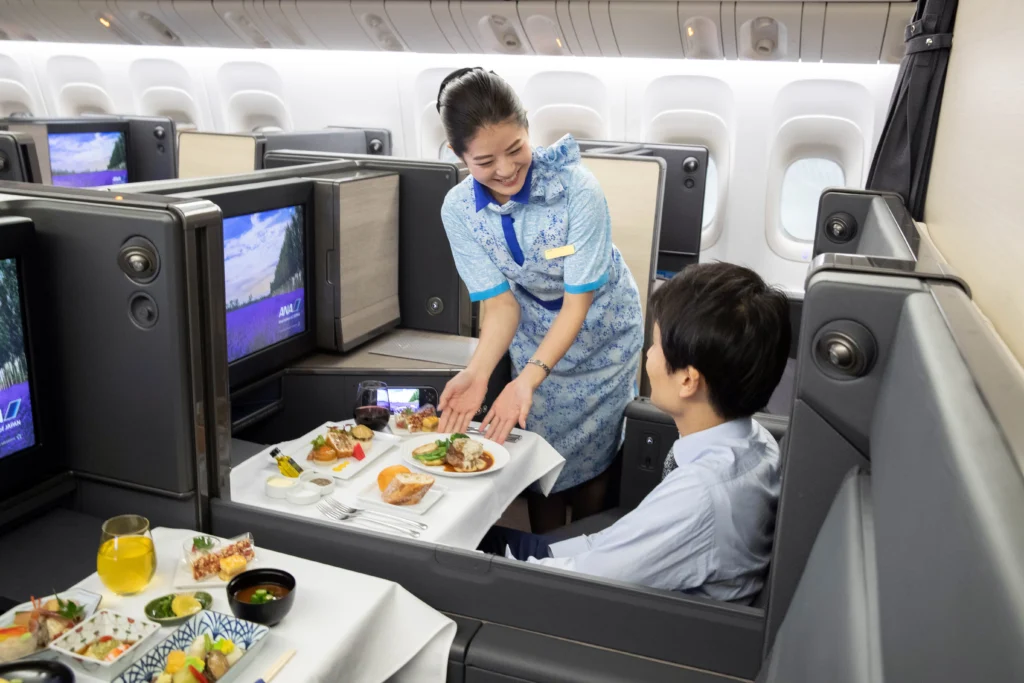
Benefits Enjoyed by ANA Pilots
ANA’s pilots are eligible to enjoy the following benefits in addition to their salaries
- Travel Privileges – Pilots and their eligible family members receive discounted or standby travel on All Nippon Airways and partner carriers, making both domestic and international travel more affordable and accessible.
- Overnight and Layover Allowances – When pilots operate flights involving overnight stays or long sectors, they receive allowances designed to cover hotel, meals, and incidental costs associated with time away from base.
- Medical and Insurance Coverage – Comprehensive health and life insurance plans are provided to pilots and their dependents, offering support for medical needs and financial protection in case of unforeseen health events.
- Retirement and Pension Schemes – Pilots participate in employer-supported pension schemes, contributing toward long-term financial security and retirement planning in line with Japanese employment norms.
- Contract Completion Bonuses – Longer employment periods often include bonus payments tied to contract milestones, rewarding loyalty and continuous service with the airline.
- Training and Career Development Opportunities – Pilots benefit from structured recurrent training, simulator sessions, and fleet transition programmes designed to improve skill and qualifications throughout their careers.
- Work-Life Balance – ANA provides regulated rest periods and leave provisions to maintain pilot wellbeing and compliance with safety standards, giving pilots time to rejuvenate between duty cycles.
- Well-Being Resources – Access to mental health support, stress management tools and employee assistance programmes helps pilots manage the demands of commercial aviation.
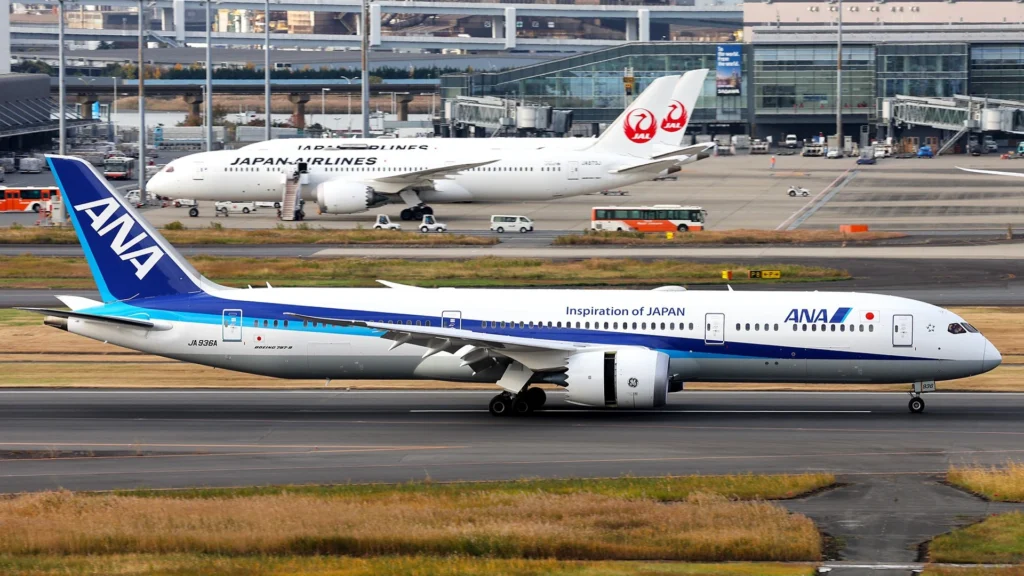
Aircraft Flown by All Nippon Airways Pilots
ANA’s fleet includes the following aircraft.
- Airbus A320neo – 11
- Airbus A321-200 – 4
- Airbus A321neo – 22
- Airbus A380-800 – 3
- Boeing 737-800 – 39
- Boeing 767-300ER – 15
- Boeing 777-200 – 2
- Boeing 777-200ER – 8
- Boeing 777-300 – 4
- Boeing 777-300ER – 13
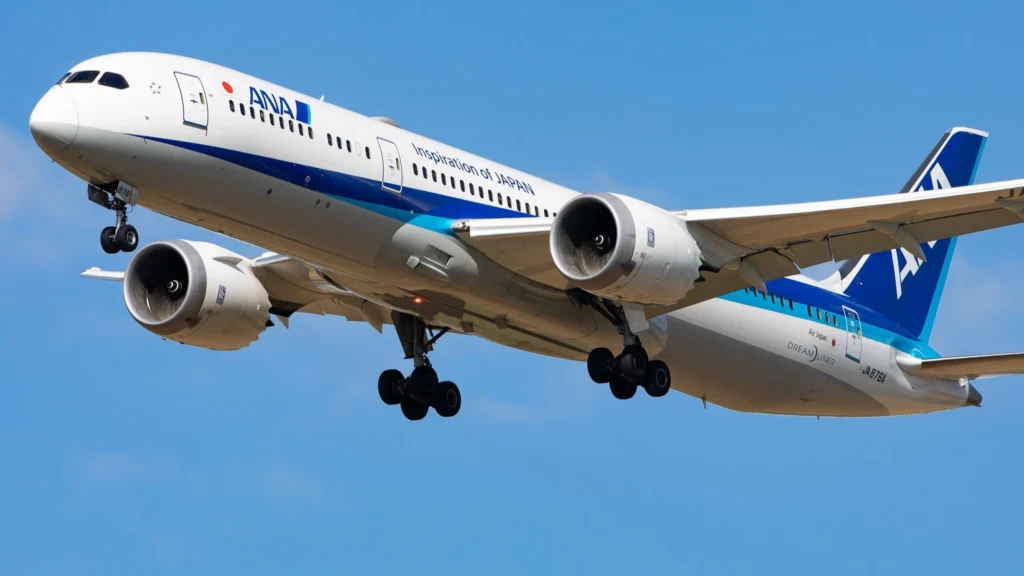
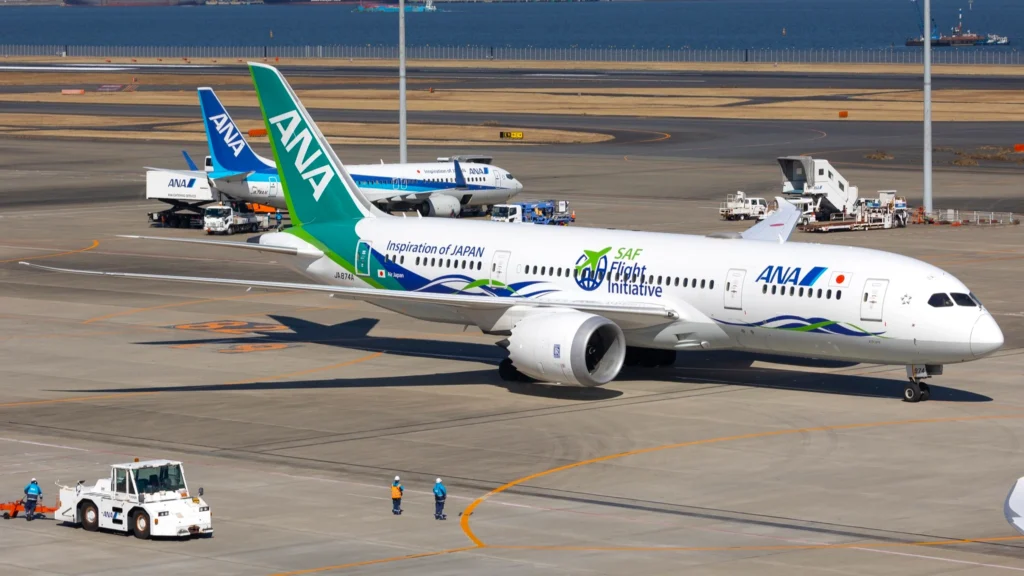
- Boeing 787-8 – 34
- Boeing 787-9 – 44
- Boeing 787-10 – 10
In addition to its existing fleet, ANA has the following planes on order.
- Airbus A321neo – 14
- Boeing 737 MAX 8 – 38
- Boeing 777-9 – 9
- Boeing 787-9 – 27
- Boeing 787-10 – 6
- Embraer E190-E2 – 15

Requirements To Become a Pilot for ANA
All Nippon Airways pilot candidates are expected to meet all the following requirements, and the flying hours necessary for a role depend on the experience the carrier is seeking.
- Applicants must hold a valid Airline Transport Pilot Licence or equivalent licence recognised under Japanese civil aviation regulations.
- Candidates must possess a current Class 1 medical certificate confirming full physical and mental fitness for airline operations.
- Strong proficiency in English, both spoken and written, is required for safe and efficient communication in international flight operations.
- Applicants should have the required minimum total flight hours for first officer or captain roles as defined by ANA and the Japanese regulatory authority.
- Commercial jet experience, especially multi-crew airline experience, is highly preferred for first officer and captain vacancies.
- Candidates must demonstrate excellent decision-making, situational awareness, and leadership skills necessary for safe flight operations.
- Effective teamwork, communication, and interpersonal skills are essential for operating in a cockpit environment.
- Applicants must have the legal right to work in Japan and meet any visa or regulatory requirements necessary for employment.

Hiring Process
- Application – Prospective pilots submit an online application through the ANA careers website, including pilot licences, logbook summaries, medical certificates, and a detailed resume.
- Screening – The recruitment team reviews submissions to confirm eligibility criteria such as licence status, flight hours, and medical fitness.
- Aptitude Testing – Shortlisted candidates complete written or online assessments that evaluate aviation knowledge, reasoning, and situational awareness.
- Simulator Evaluation – Candidates who pass initial assessments are invited to a simulator session where flying skills, crew coordination, decision-making, and emergency responses are evaluated.
- Interview Stage – Pilots attend interviews with senior flight crew and HR representatives, focusing on technical understanding, communication skills, and cultural fit.
- Medical and Background Checks – Final candidates undergo a comprehensive Class 1 medical examination and background verification before an official employment offer is made.
Bottom Line
In 2026, All Nippon Airways remains a strong option for pilots valuing structured career progression, reliable pay increases, and long-term stability.
While its salary scale may be modest compared with some Western carriers, ANA’s predictable progression, comprehensive benefits, and strong training culture make it an appealing career destination for pilots who prioritise steady growth, operational excellence, and work-life balance in a major Asia-Pacific airline.
ANA Pilot Salary FAQs
In 2026, first officers at ANA typically earn between ¥12.6 million and ¥25.0 million per year, depending on experience and aircraft assignment.
Captains generally earn between ¥26.0 million and ¥42.0 million per year, with senior captains on long-haul fleets often toward the higher end of the range.
Yes, ANA pilots receive discounted travel for themselves and eligible family members across the airline’s network and partner carriers.
Stay tuned with us. Further, follow us on social media for the latest updates.
Join us on Telegram Group for the Latest Aviation Updates. Subsequently, follow us on Google News
