


Japan Airlines (often referred to simply as JAL) is the national flag carrier of Japan, headquartered in Tokyo with major hubs at Tokyo Haneda, Narita International, and Osaka Kansai airports.
Founded over 70 years ago, the airline operates a mix of domestic, regional, and international routes across Asia, Europe, North America, and Oceania. JAL’s fleet includes modern wide-body aircraft such as the Boeing 777 and Boeing 787 as well as narrow-body types for domestic services, making it one of the most respected and trusted carriers in the Asia-Pacific region.
In 2026, Japan Airlines continues to be an attractive destination for pilots seeking a stable career within Japan’s structured seniority system. The airline remains grounded in Japan’s work culture, with rigorous training, a discipline-oriented environment, and steady career progression.
Pilot compensation at JAL reflects this stability, with salaries that rise predictably with experience, aircraft type, and rank, while offering bonuses at the end of standard contract periods.
Japan Airlines Pilot Salary in 2026

First Officer Salary at Japan Airlines
First officers at Japan Airlines in 2026 typically earn a base monthly salary ranging from ¥1,050,000 to ¥2,300,000 per month, which works out to approximately USD 7,200 to USD 15,800 per month.
On a yearly basis, this translates to an annual income of roughly ¥12.6 million to ¥27.6 million per year, depending on aircraft type, experience level, and assigned routes. Pilots flying international services generally earn more than those operating domestic sectors due to longer duty periods and additional allowances.
With increased seniority, first officers move steadily toward the upper end of the pay range. Those assigned to wide-body aircraft or long-haul operations benefit from higher total yearly earnings, supported by overseas allowances and stable rosters.
In addition to base pay, first officers are eligible for a contract completion bonus at the end of their service term, which further enhances total compensation over time.
Captain Salary at Japan Airlines
Captains at Japan Airlines earn significantly higher salaries in recognition of their responsibility and experience. In 2026, captain pay typically ranges from ¥2,100,000 to ¥3,100,000 per month, equivalent to approximately USD 14,500 to USD 21,300 per month.
Annually, this places total base earnings between ¥25.2 million and ¥37.2 million per year, with variations depending on fleet type, seniority, and operational role.
Senior captains operating long-haul international routes often earn toward the top end of this range, especially when flying larger wide-body aircraft.
Captains are also eligible for a contract completion bonus at the end of a standard service period, which adds a meaningful financial incentive for long-term commitment. These structured increases make command positions at Japan Airlines financially predictable and stable over the long run.
ALSO READ: Qantas Pilot Salary in 2025

Benefits Enjoyed by Japan Airlines Pilots
In addition to their salaries, Japan Airlines pilots are entitled to the following benefits:
- Travel & Standby Scheme – Pilots and eligible family members receive access to discounted and standby travel across the Japan Airlines network and partner carriers, allowing for affordable domestic and international travel.
- Duty Allowances – When pilots operate flights involving overnight stays or extended duty periods, they receive allowances designed to cover accommodation, meals, and incidental expenses, which are dependent on the duration of layover, etc.
- Insurance Coverage – Japan Airlines provides comprehensive medical coverage and life insurance benefits, offering financial protection and healthcare support for pilots and their families. There is also a loss of license insurance offered to pilots.
- Retirement Scheme – Pilots participate in employer-supported pension plans that help build long-term financial security after retirement from active flying duties.
- Contractual Bonus – Pilots receive completion bonuses at the end of designated service terms, rewarding continuity and long-term commitment to the airline.
- Training & Career Development – Ongoing simulator sessions, recurrent training, and fleet transition opportunities are provided to ensure pilots maintain the highest safety and operational standards.
- Work-Life Balance – Pilots receive structured leave entitlements and regulated rest periods, promoting fatigue management and sustainable work-life balance.
- Wellness & Support Programmes – Mental health and wellbeing resources are available to help pilots manage operational stress and maintain long-term fitness for duty.
What Aircraft Do They Fly?
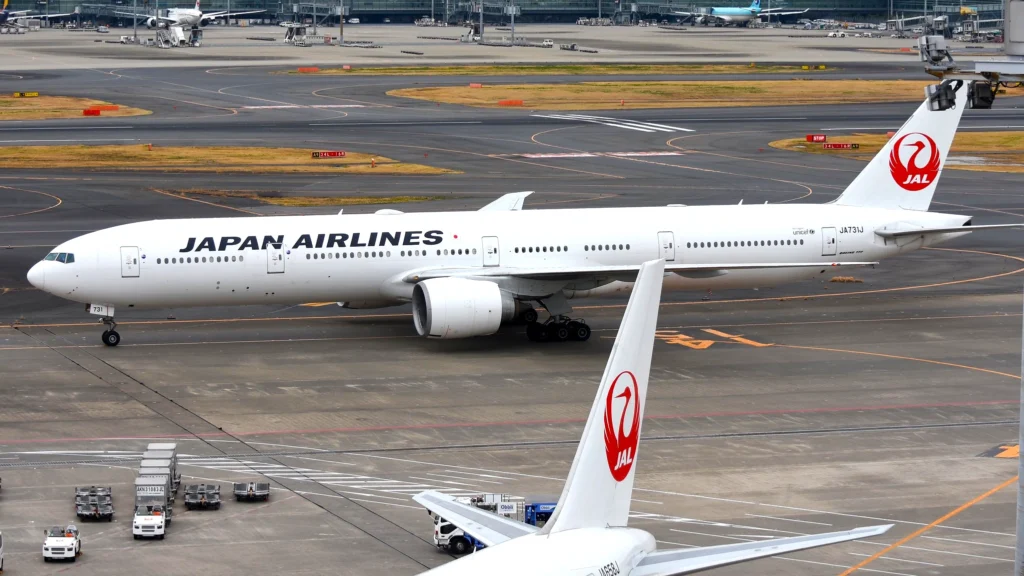
Japan Airlines pilots operate a mixed fleet that includes the following aircraft types:
- Airbus A350-900 – 16
- Airbus A350-1000 – 10
- Boeing 737-800 – 42
- Boeing 767-300ER – 24
- Boeing 777-300ER – 9
- Boeing 787-8 – 23
- Boeing 787-9 – 22
Besides its existing setup, JAL has the following on order:
- Airbus A321neo – 11
- Airbus A350-900 – 22
- Airbus A350-1000 – 3
- Boeing 737 MAX 8 – 38
- Boeing 787-9 – 10
Requirements To Become A Pilot For Japan Airlines
- Applicants must hold a valid Airline Transport Pilot Licence that is recognised by the Japanese civil aviation authority and meets all regulatory standards for commercial airline operations.
- Candidates must possess a current Class 1 medical certificate, confirming full physical and psychological fitness to operate commercial aircraft without operational limitations.
- Pilots are required to demonstrate strong English language proficiency, both spoken and written, to ensure clear communication with air traffic control, flight crew, and international operational partners.
- Applicants must meet Japan Airlines’ minimum total flight hour requirements, with specific thresholds varying depending on whether the vacancy is for a first officer or a captain position.
- Recent commercial jet experience is strongly preferred, particularly experience gained in a multi-crew airline environment operating under standard operating procedures.
- Candidates must display sound decision-making skills, situational awareness, and the ability to remain composed under high workload and time-critical conditions.
- A high standard of professionalism is required at all times, including adherence to safety procedures, operational discipline, and company policies.
- Applicants must demonstrate strong teamwork and communication skills, with the ability to operate effectively within a culturally diverse cockpit environment.
- Pilots are expected to show flexibility in scheduling and operational deployment, including the ability to operate both domestic and international routes as required.
- Candidates must have the legal right to live and work in Japan, including the ability to obtain and maintain any required visas or work authorisation.
- A clean professional record is essential, with no history of serious disciplinary action, licence suspension, or safety-related violations.
- Applicants must be willing to undergo recurrent training, simulator checks, and company-specific qualification programmes as part of continued employment.
ALSO READ: Emirates Pilot Salary in 2025
Hiring Process for Japan Airlines Pilots
- Application – Candidates submit an online application with licenses, flight records, medical certification, and supporting documentation.
- Initial Screening – Applications are reviewed to confirm eligibility, flight experience, and certification validity.
- Aptitude Assessments – Selected applicants complete cognitive and technical assessments related to airline operations.
- Simulator Evaluation – Candidates undergo a simulator session to assess aircraft handling, situational awareness, and crew coordination.
- Interview Stage – Interviews with senior pilots and HR representatives focus on technical knowledge, professionalism, and cultural alignment.
- Medical and Background Checks – Final candidates complete medical examinations and background verification before receiving an offer.
Bottom Line
In 2026, Japan Airlines offers pilots a stable and predictable career path supported by structured salary progression, comprehensive benefits, and long-term employment security.
While overall pay levels may be lower than some Western carriers, the combination of steady income, bonuses, and strong organisational stability makes Japan Airlines an appealing option for pilots seeking long-term professional consistency within Asia’s aviation market.

JAL Pilots Salary FAQs
First officers typically earn between ¥12.6 million and ¥27.6 million per year, depending on experience and fleet assignment.
Captains usually earn between ¥25.2 million and ¥37.2 million per year, excluding additional completion bonuses.
Yes, pilots receive contract completion bonuses that supplement their overall earnings.
Stay tuned with us. Further, follow us on social media for the latest updates.
Join us on Telegram Group for the Latest Aviation Updates. Subsequently, follow us on Google News
